Understanding Transcription Services Cost: A 2026 Guide

When you start looking into transcription services, one of the first things you'll likely notice is the huge range in pricing. From my own experience navigating this landscape, costs can swing from as low as $0.10 per audio minute for a quick automated transcript to well over $3.00 per minute for a high-stakes legal document transcribed by a certified professional. The biggest factor behind this gap comes down to one key choice: are you using an automated AI service or a skilled human transcriber?
Breaking Down Transcription Costs: Human vs. AI
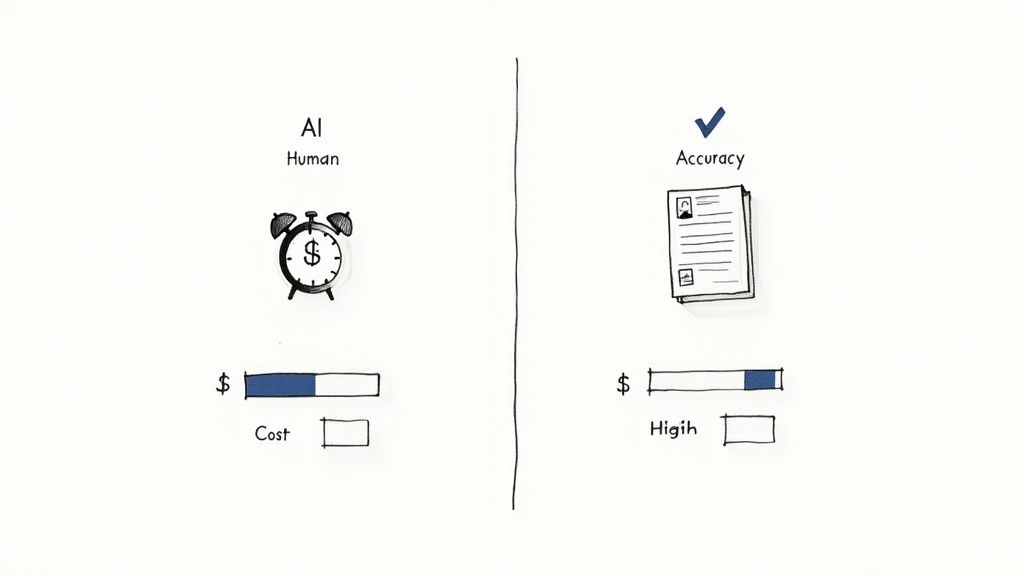
Trying to understand transcription costs is a bit like comparing a self-driving car to a chauffeured limousine. One offers incredible efficiency and is light on the wallet, powered by smart technology. The other delivers a premium, white-glove service with an expert human touch. Which one is right for you depends entirely on what you need to accomplish.
AI transcription is the speed-and-scale option. It's lightning-fast, incredibly affordable, and a fantastic tool for straightforward audio. If you have a clean recording of a meeting, a standard lecture, or a one-on-one interview and just need a working draft you can search through, AI is often the perfect fit.
But when the details truly matter, nothing beats a human. I've learned that professional transcribers bring a level of nuance, contextual understanding, and accuracy that AI just can't match yet. For anything complex—like legal depositions, detailed medical notes, or focus groups with multiple overlapping speakers—that human expertise is absolutely essential.
Human vs. AI Transcription At a Glance
To make the choice a little clearer, it helps to see the core differences side-by-side. Think of this table as a quick cheat sheet for figuring out which service aligns with your needs and budget.
This quick comparison shows that the decision isn't just about the price tag. It’s about what you get for your money and what level of quality your project demands.
The choice between human and AI isn't just about price—it's about aligning your budget with your project's accuracy requirements. A small investment in a human expert can prevent costly errors down the line for critical files.
Picking the right path from the start is key. Knowing when to use each type of service can have a huge impact on both your budget and the quality of your final transcript. If you want to see how different providers stack up, you can check out our in-depth guide to the best online transcription service. With this foundation in place, we can now dig into the specific pricing models and all the little factors that will shape your final cost.
How Transcription Pricing Models Work
Trying to figure out how much transcription will cost? It helps to first get a handle on how providers bill for their services. It’s a bit like picking a cell phone plan—you've got pay-as-you-go, unlimited plans, and special packages for power users. The world of transcription isn't so different, with a few key models that determine your final bill.
The most common way you'll see pricing structured is per audio minute. This is the industry go-to for both human and AI services, mainly because it's straightforward and easy to predict. You simply pay for the length of your audio or video file, no matter how much talking is actually in it.
This model can be a surprise for first-timers, especially when it comes to human transcription. I'm often asked, "Why the high price for just one minute of audio?" The answer is all about the work involved. A skilled human transcriber usually spends four to six minutes of focused effort to accurately transcribe a single minute of audio. That time is spent listening, typing, rewinding to catch tricky words, and proofreading to ensure everything is perfect.
Deeper Dive into Pricing Structures
While paying by the minute is the standard, it's not your only choice. As different needs have popped up, so have other billing methods that might be a better fit for what you're doing. Knowing the alternatives can help you lock in a much better deal.
Per-Hour Billing: For huge or continuous projects, some services offer a per-hour rate. This is less common for simple, one-off jobs and is typically for businesses with a steady stream of work, like a law firm needing daily dictations transcribed.
Subscription Models: The boom in AI has made subscription-based models incredibly popular. Services like HypeScribe often have monthly or yearly plans that give you a bucket of transcription minutes or tokens for a fixed price. If you have regular transcription needs, this is often the way to go, as it usually drops the effective per-minute cost significantly.
Think of it this way: Understanding the different models—per minute, per hour, and subscription—is like knowing the rules of the game. It lets you compare services beyond just the sticker price and find the one that truly fits your project and budget.
The Growing Market for Transcription
This variety in pricing is a direct result of a booming and dynamic industry. In the U.S. alone, the transcription market is a massive player, valued at around USD 30.42 billion. This isn't just a niche service; it's a critical tool for sectors like law, medicine, media, and education.
And it's only getting bigger. Projections show the market growing at a compound annual growth rate of 5.2% from 2025 to 2030, which just goes to show how essential it's become. You can dig into more data on the U.S. transcription market size to see what's driving this growth. For you, this expansion is great news—it means more competition, more options, and a better chance of finding the perfect service for your needs.
Key Factors That Influence Transcription Costs
I've learned from experience that not all audio is created equal, and transcription quotes reflect that reality.
Think of it like getting a quote from a contractor to paint a room. A simple, empty room with smooth walls is a quick job. But if the walls are cracked, need sanding, and are filled with furniture that has to be moved? The price goes up. Transcription works the same way.
Several key things can add time and effort to the job, which naturally bumps up the final price. Knowing what they are puts you in control, helping you manage costs before you even hit record.
How Different Factors Impact Transcription Pricing
Let's look at a practical breakdown. The table below shows how these different variables can take a standard transcription rate and increase it, sometimes significantly.
Understanding these drivers is the first step to getting the most value for your money. A little prep work on your end can lead to big savings on the final invoice.
Audio Quality Is King
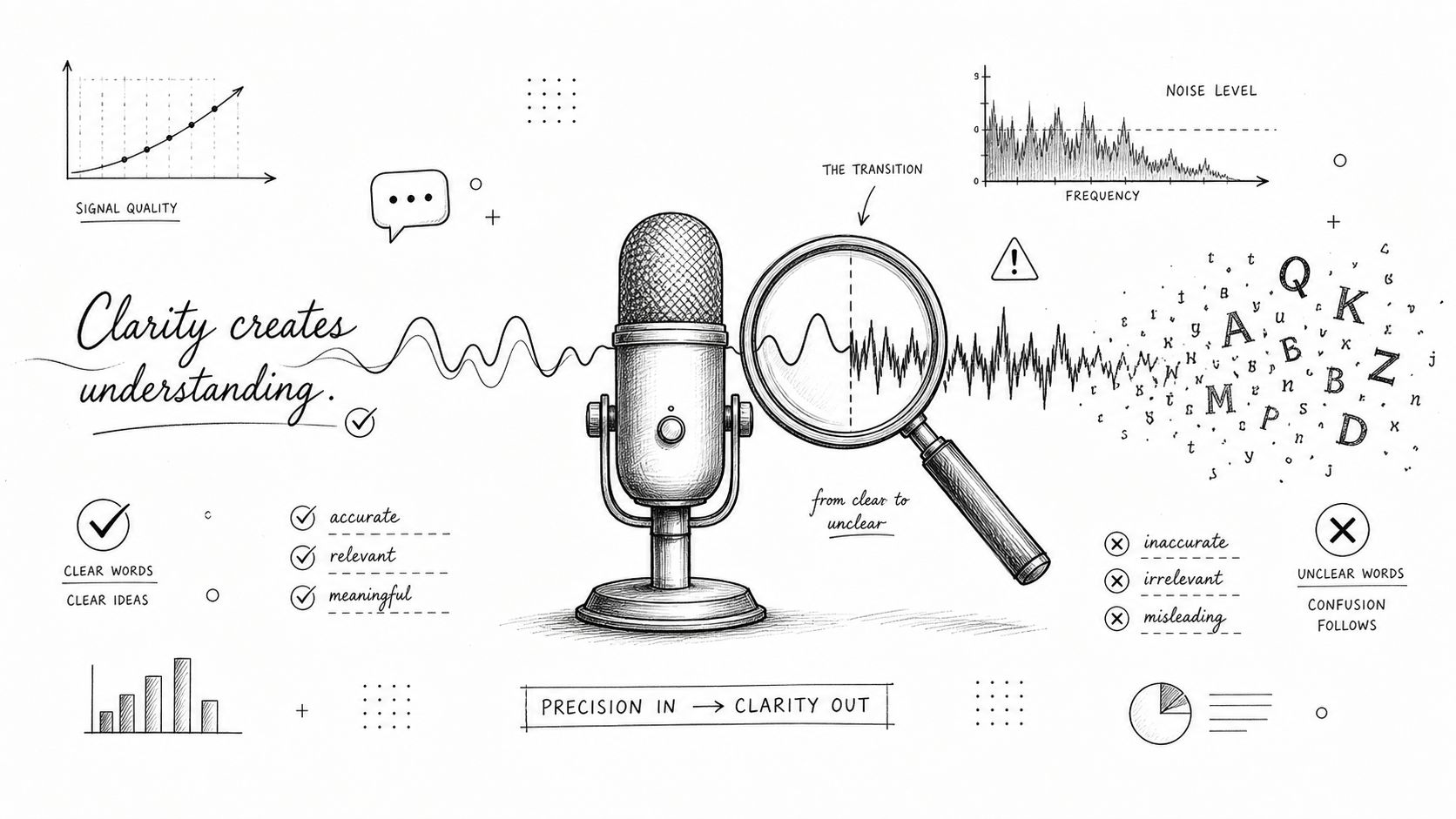
If there's one thing that moves the needle on price more than anything else, it's the quality of your audio recording. A crystal-clear file is a breeze for both AI and human transcribers to work through. But when the audio is messy, the complexity—and the cost—shoots right up.
Several common issues can tank your audio quality and inflate your bill:
- Background Noise: Trying to transcribe a conversation recorded in a bustling coffee shop or a windy park is a nightmare. The transcriber has to constantly stop and rewind just to separate the speech from the clatter.
- Poor Mic Placement: Recording a meeting by placing your phone in the middle of a giant conference table? The voices will sound distant and muffled, making them incredibly difficult to understand.
- Echo and Reverb: Large, empty rooms with hard surfaces are the enemy of clean audio. The echo can distort voices so much that words become a jumbled mess.
Honestly, the single best way to cut your transcription costs is to record in a quiet space with a decent microphone. A little bit of prep saves a lot of money on the back end.
The Complexity of the Conversation
Beyond the technical quality of the recording, what's actually being said matters a great deal. A straightforward, one-on-one interview is one thing; a chaotic roundtable discussion is another beast entirely.
The number of speakers, their accents, and how fast they talk all add layers of difficulty. A simple interview with two clear speakers is far easier than a focus group with five people all jumping in and talking over each other.
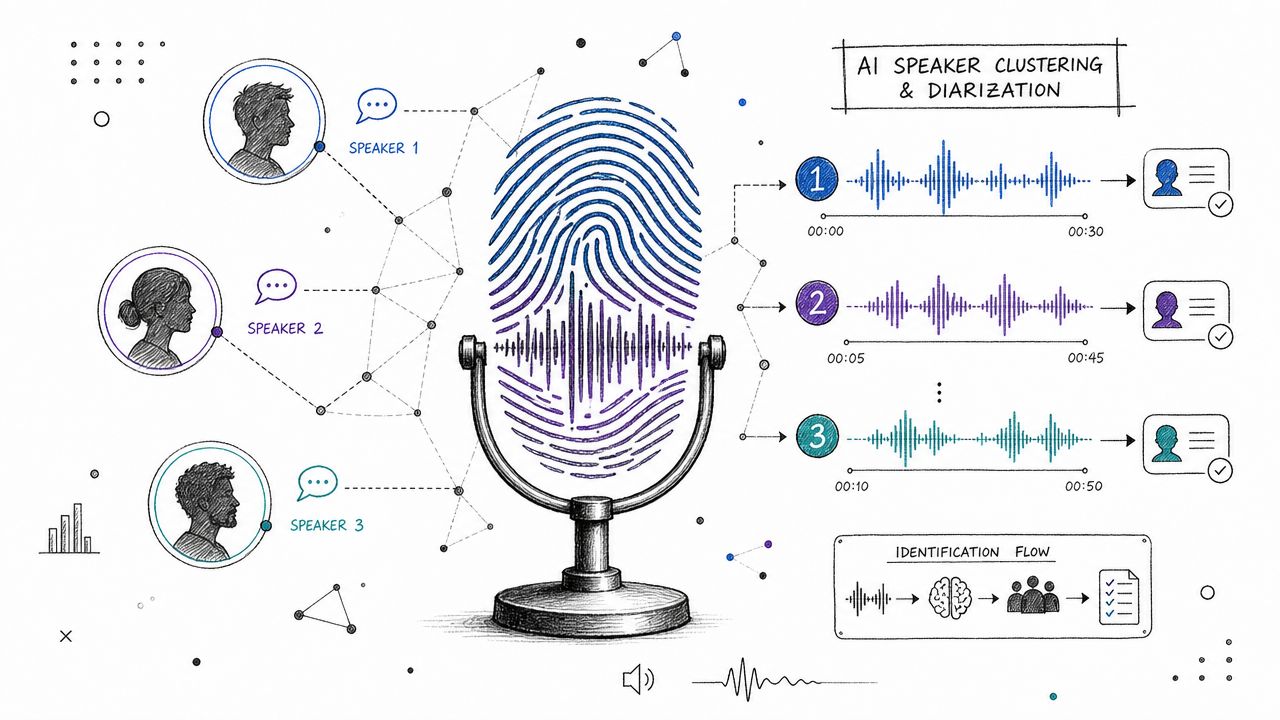
For example, any file with multiple speakers means the transcriber has to identify who is speaking and when, which is extra work. Throw in some heavy accents or highly technical jargon, and the job gets even tougher. The transcriber might need to research specialized terms to make sure everything is accurate. This is exactly why transcription services cost more for complex conversations.
Turnaround Time and Special Requests
Last but not least, your own requirements for the final transcript play a big role in the cost. The deadline is a classic example. A standard turnaround might be 24 hours, but if you need it back in just two hours, you're going to pay a premium for that rush service.
The level of detail you ask for also makes a difference. Most standard transcripts are "clean verbatim," which means filler words like "um," "ah," and "you know" are removed to make the text easier to read. But if you need a strict verbatim transcript—one that captures every single sound, stutter, and false start—that takes a lot more meticulous effort. These special requests demand more time and attention, and the price will reflect that.
Choosing Between Human and AI Transcription
One of the biggest decisions you'll make that shapes your transcription services cost is whether to go with a human expert or an AI algorithm. This isn't just about the price tag; it's a strategic choice between speed and nuance, affordability and absolute precision. Each has its place, and the right call really boils down to what you need the final transcript for.
AI transcription is a game-changer when it comes to speed and cost. Think of it as your go-to for a quick first draft or for straightforward, high-volume work. If you have a clean audio file—say, a solo lecture or a simple internal meeting—an AI service can churn out a usable transcript in minutes, costing you just a fraction of what a human would charge.
But when accuracy is everything, human transcription is still the undefeated champion. For anything sensitive or complex, like legal proceedings, medical records, or content you plan to publish, you need the trained ear of a professional. A person can decipher overlapping speakers, understand crucial context, and handle thick accents in ways that AI just can't match... yet.
When to Use AI Transcription
Automated transcription is your best friend when speed and budget are the top priorities. It's an incredibly powerful way to turn massive amounts of audio into searchable, workable text without breaking the bank.
Here are a few scenarios where AI is the perfect fit:
- Internal Team Meetings: Need to quickly create searchable notes and pull action items from your last team huddle? AI is the fastest way to get it done.
- First Drafts: If you just need a rough transcript to review, find key quotes, or use as a reference, AI provides an excellent and affordable starting point.
- Simple, Clear Audio: For one-on-one interviews or lectures with crystal-clear sound and minimal background noise, AI often delivers impressive accuracy.
- Content Indexing: Want to make your entire library of podcasts or video interviews searchable? AI is the only practical way to process that kind of volume. You can dig deeper into this with our guide on auto transcribe software.
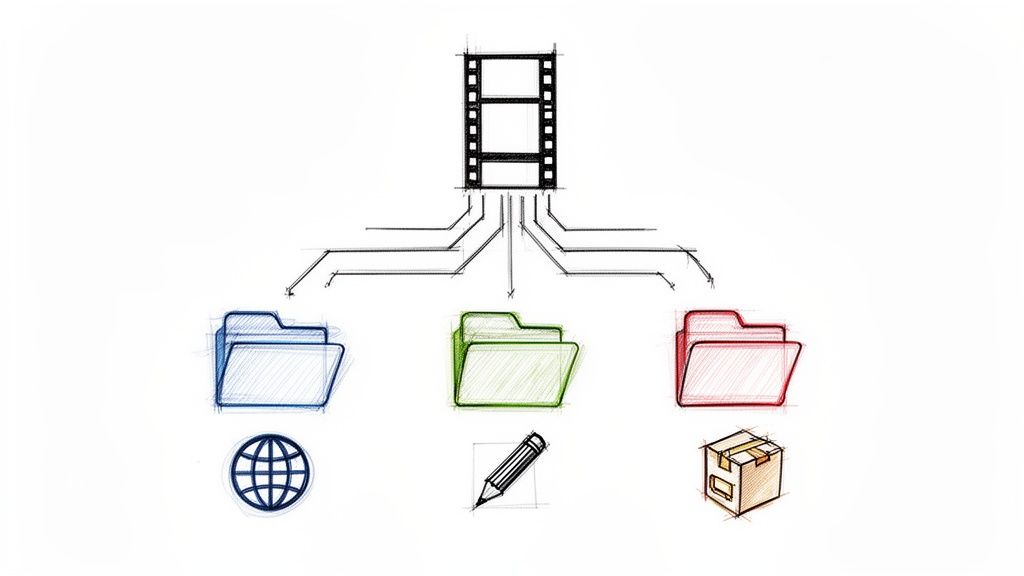
This infographic offers a great visual for figuring out which path makes the most sense based on your project's needs.
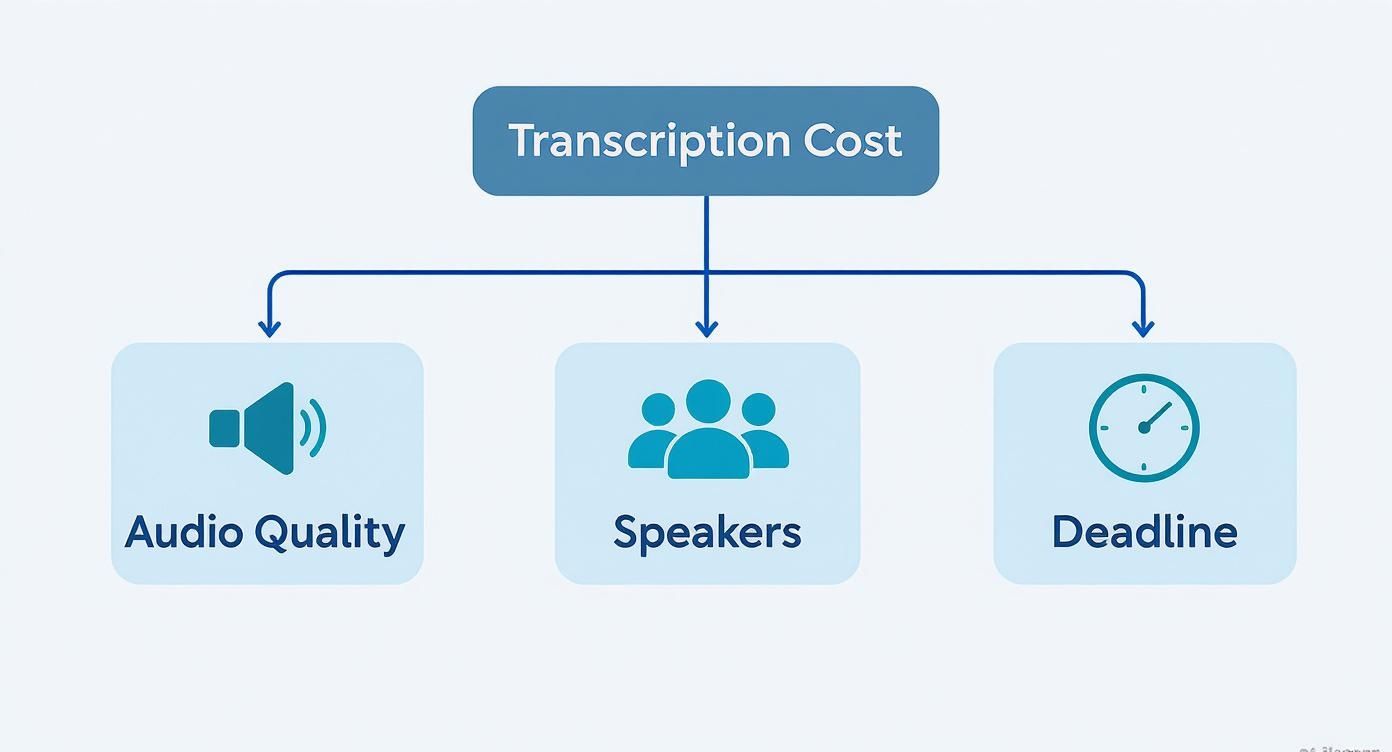
As you can see, the moment you add variables like multiple speakers, poor audio quality, or a demand for high accuracy, the more the path points toward a human-powered solution.
When Human Transcription Is Essential
For some projects, settling for anything less than near-perfect accuracy is a non-starter. In these situations, paying for a professional human transcriber isn't a luxury—it's a necessity.
The core trade-off is clear: AI offers speed and low cost, while humans provide unmatched accuracy and contextual understanding. The right choice aligns your budget with the quality demands of your specific project.
Human services are mission-critical where every single word carries weight. This includes legal depositions, where one wrong word could change the outcome of a case, or medical dictations where a mistake could impact patient safety. The same goes for any public-facing content, like subtitling a marketing video for a global audience, where errors can make your brand look unprofessional.
There's no denying that AI is reshaping this entire field. The global AI transcription market, valued at USD 4.5 billion, is on a trajectory to hit USD 19.2 billion by 2034. This explosion in automation is pushing costs down and shifting the industry away from labor-heavy per-minute rates toward more flexible, software-based pricing. This trend makes AI an even better deal for everyday tasks, while also highlighting the premium value of human experts for truly high-stakes work.
Why Specialized Transcription Costs More
Not all words carry the same weight, and this is especially true in professional fields like law and medicine. While a standard transcription might be just fine for a casual team meeting, the transcription services cost naturally goes up when the subject matter gets technical and the stakes are high. This isn't just an arbitrary upcharge; it's a direct reflection of the expertise, security, and absolute precision needed for the job.
Think of it like hiring an electrician. You could get a general handyman to change a light fixture, no problem. But would you trust them to rewire a hospital’s intensive care unit? Of course not. For that, you need a licensed, specialized professional who understands the complex codes and life-or-death risks. Specialized transcription works on the same principle, demanding certified transcribers who have deep knowledge in a specific field.
The High Stakes of Medical and Legal Fields
In healthcare, accuracy is everything. A medical transcript becomes a permanent part of a patient's health record, directly influencing diagnoses, treatments, and ongoing care. A single misplaced decimal or a misunderstood medical term could have devastating consequences. That’s why medical transcriptionists have to be fluent in complex terminology and follow strict HIPAA compliance rules to the letter to protect patient privacy.
The legal world is just as demanding. Court depositions, witness statements, and judicial hearings must be transcribed with complete fidelity. The final transcript is an official legal record, and one tiny error could be enough to jeopardize an entire case. This kind of work requires a solid grasp of legal jargon that is a world away from everyday conversation. To get a better sense of how this differs from other language services, you can explore the key differences between transcription and translation in our detailed guide.
Why a Specialist Is Worth the Investment
Trying to cut corners with a general transcription service for these highly sensitive files is a huge gamble. The risks aren't just about simple typos; they can spiral into serious problems:
- Compliance Violations: Improperly handling sensitive medical data can lead to massive fines and serious legal repercussions.
- Costly Errors: A mistake in a legal transcript could trigger appeals or even an overturned verdict, costing far more in the long run than the transcription itself.
- Reputational Damage: Inaccurate records can seriously damage the credibility of a medical practice or a law firm.
Specialized services provide the security, compliance, and precision that professional standards demand. Investing in an expert isn't just about getting the words right; it's about mitigating risk and protecting your organization from costly consequences.
The sheer size of the global medical transcription market proves just how critical this specialization is. It’s projected to hit USD 8.26 billion by 2032, with North America making up roughly 78% of that demand. This growth is fueled by healthcare providers outsourcing nearly 71% of this work to make sure they’re meeting the highest standards of accuracy and efficiency. When you see numbers like that, it's clear the higher cost of specialized transcription is a necessary investment in quality and security.
Common Questions About Transcription Costs
When you're trying to figure out transcription, the pricing can feel a bit all over the place. Let's clear the air and tackle some of the most common questions people have about the costs. Once you know what to expect, you can budget smarter and feel confident you're not overpaying.
Getting a handle on the typical market rates is the best place to start. It gives you a baseline to measure any quote against, making sure you get a fair price for the quality you need.
What Is a Fair Price Per Minute for Transcription?
What's "fair" really depends on whether a human or a machine is doing the work.
For AI transcription, you should be looking at a range of $0.10 to $0.25 per audio minute. This is a fantastic deal for straightforward recordings where you just need the gist of the conversation and can live with a few small errors.
When you need a human touch for higher accuracy, the price tag naturally goes up. A fair rate for human transcription starts around $1.25 to $1.50 per minute for good, clear audio with a standard turnaround. That price can easily jump to over $3.00 per minute if you're in a hurry, the audio is muffled, or the subject matter is complex (think medical or legal jargon). It’s all about matching your budget to how accurate the final transcript needs to be.
How Can I Reduce My Transcription Costs?
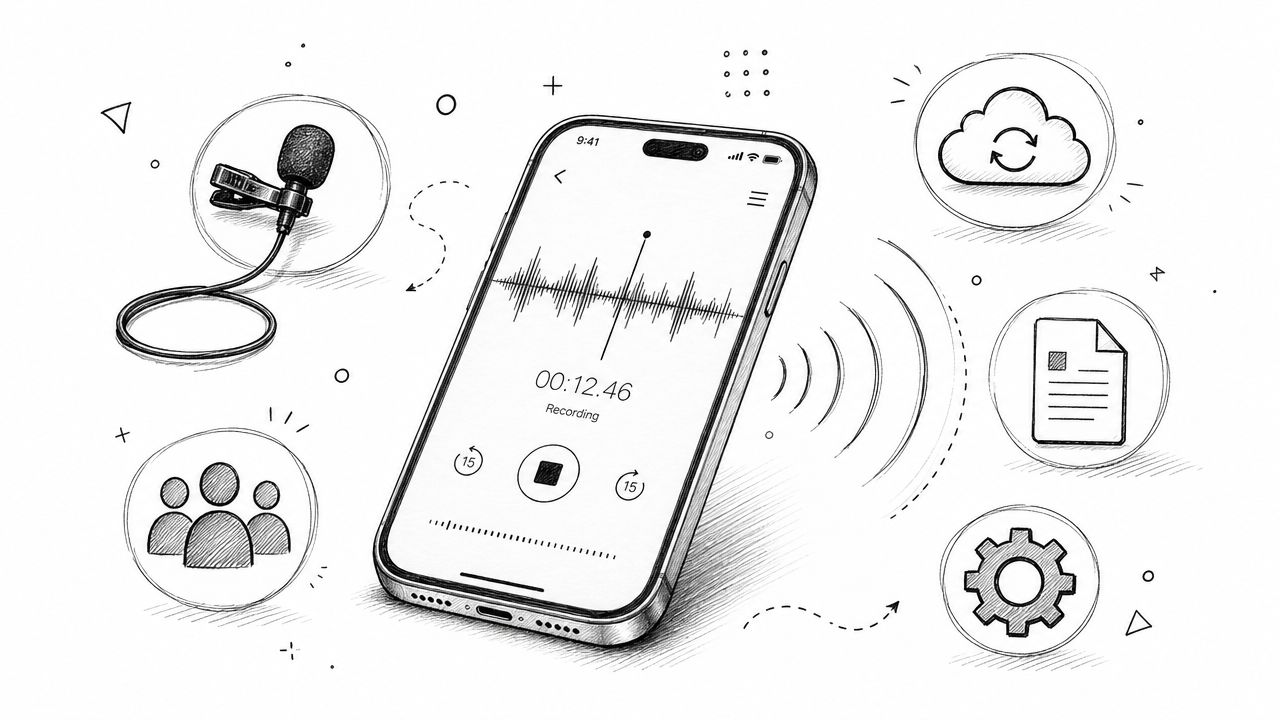
If you want to save money, the single most effective thing you can do is give the transcriber a high-quality audio file. It’s that simple. Record in a quiet room, use a decent microphone, and try to prevent people from talking over one another. You’d be surprised how much money that little bit of prep can save you.
The cleaner your audio file, the less work it is for both AI and human transcribers. This efficiency translates directly into lower costs, especially when dealing with services that add surcharges for poor quality.
A few other ways to keep costs down:
- Don't rush it: Rush jobs always cost more. If your project isn't urgent, choosing a standard turnaround time will help you dodge those premium fees.
- Use AI for the first pass: For internal meeting notes or rough drafts, running your audio through an affordable AI service is a great cost-saving move. You can then give it a quick proofread yourself to clean it up.
Is Hiring a Freelancer Cheaper Than an Agency?
On paper, a freelancer might quote you a lower per-minute rate, but that doesn't tell the whole story. An agency offers a different kind of value. They usually have a whole quality assurance process with multiple checks, they guarantee their delivery times, and they can handle big projects without breaking a sweat.
When you hire a freelancer, you're the one who has to vet them, check their work for quality, and scramble to find a replacement if they suddenly go dark. For anything business-critical, the peace of mind and guaranteed quality from an agency are often worth the slightly higher price tag.
Do I Pay for Silent Parts of My Audio File?
You bet. The standard "per audio minute" model bills for the total length of the file, silent gaps and all. That’s because the transcriber still has to listen through those silent moments just in case a quiet voice pops up.
If you have a file with long, obvious stretches of silence—maybe long pauses during a presentation—a good tip is to edit them out before you submit the file. It’s a quick way to trim down the final cost.
Ready to turn your audio and video into accurate, actionable text in seconds? HypeScribe uses advanced AI to deliver lightning-fast transcripts, summaries, and key takeaways, helping you move from conversation to execution effortlessly. Experience the future of transcription by visiting https://www.hypescribe.com to start your free trial today.