How to Improve Verbal Communication Skills: Speak Confidently

If you've ever felt that your words aren't landing the way you want them to, I want you to know one thing: great speakers aren't born, they're built. Improving how you speak isn't about some innate talent you either have or don't. It's a skill, and like any other skill, it gets better with a practical system of practice and honest feedback. My own journey involved taking a hard look at my speaking habits, running through targeted exercises for clarity and pacing, and using modern tools like transcription to see what I actually sound like to others.
This isn't about becoming a world-class orator overnight. It’s about making small, consistent improvements that build real, lasting confidence.
Why Clear Verbal Communication Is Your Biggest Career Asset
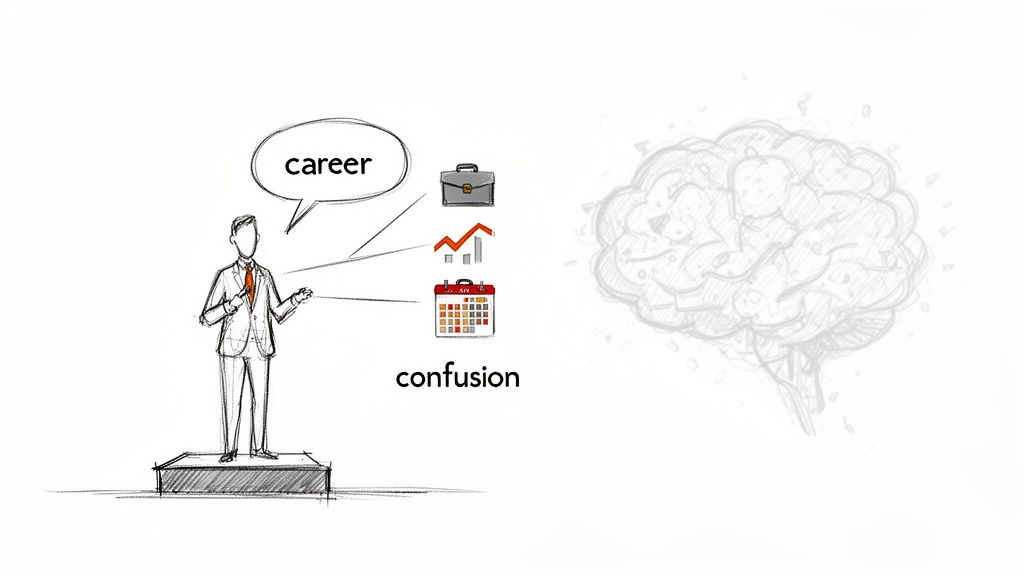
In a world filled with remote teams and back-to-back virtual meetings, how you speak is more than just a "soft skill"—it’s the engine that drives your career forward. Every interaction, from a high-stakes client pitch to a casual team update, is a moment to build trust and demonstrate your competence.
When communication breaks down, the results are real and costly. Consider this: U.S. companies lose an estimated $1.2 trillion annually due to poor communication. That breaks down to a staggering $12,506 wasted per employee every year. These aren't just abstract numbers; they prove that strong verbal skills have a direct impact on business success.
Moving Beyond the Myth of "Natural Talent"
It’s easy to look at a great speaker and think they were just born that way. But from my experience, I can tell you that effective communication is a skill, honed through deliberate effort and consistent practice. It’s not about changing your personality, but about sharpening the tools you already have. It's also worth considering how your accent can affect your career and the perceptions it might create.
Think about it this way: your ideas could be revolutionary, but if they're delivered with a shaky voice, muddled language, or a confusing structure, they lose their power. People can’t get behind what they don’t fully understand.
Your career growth often hinges on those pivotal moments—articulating a complex idea, winning over a skeptical stakeholder, or rallying your team. Mastering how you speak ensures you’re ready when those moments arrive.
The Power of a Systematic Approach
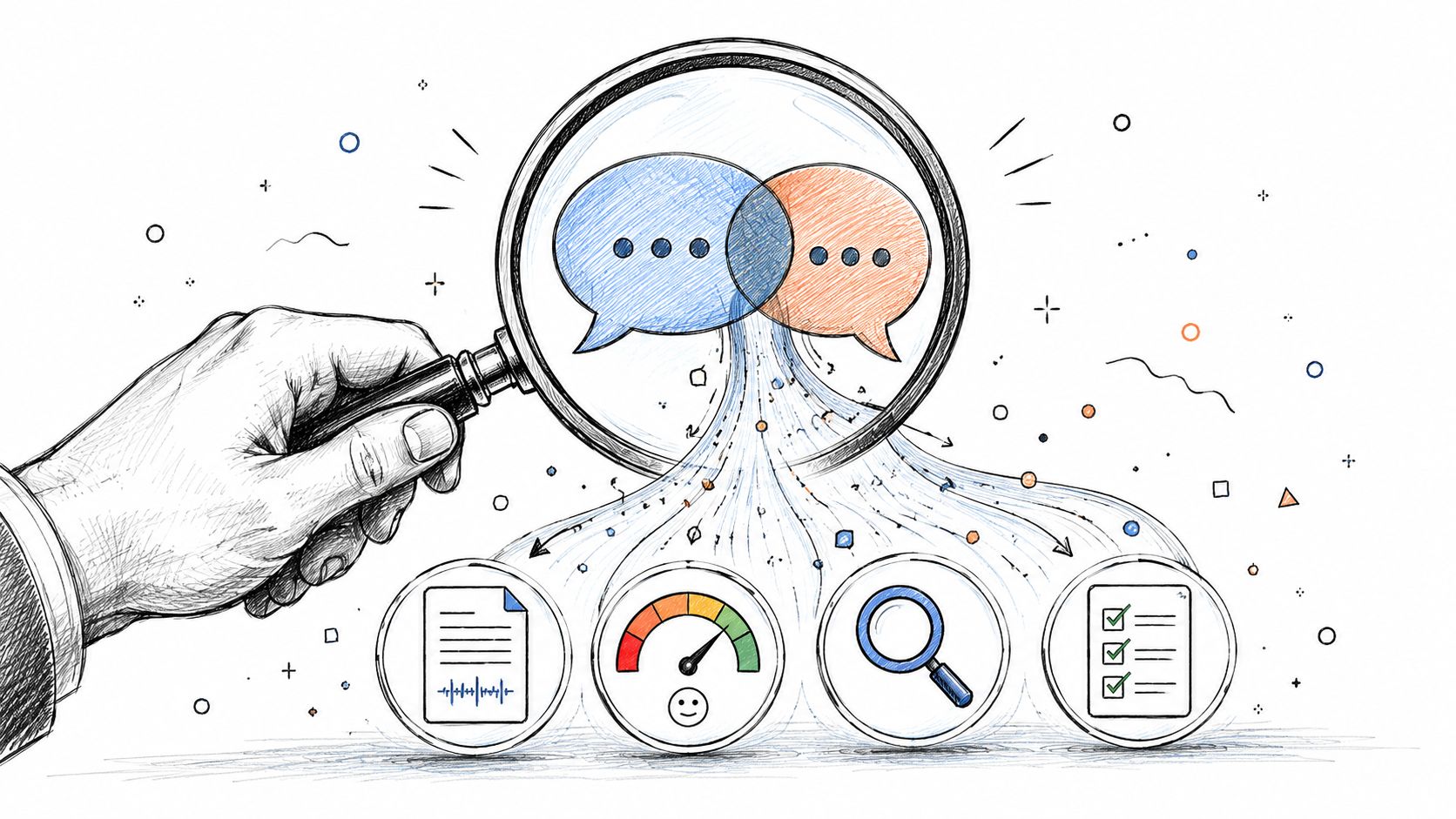
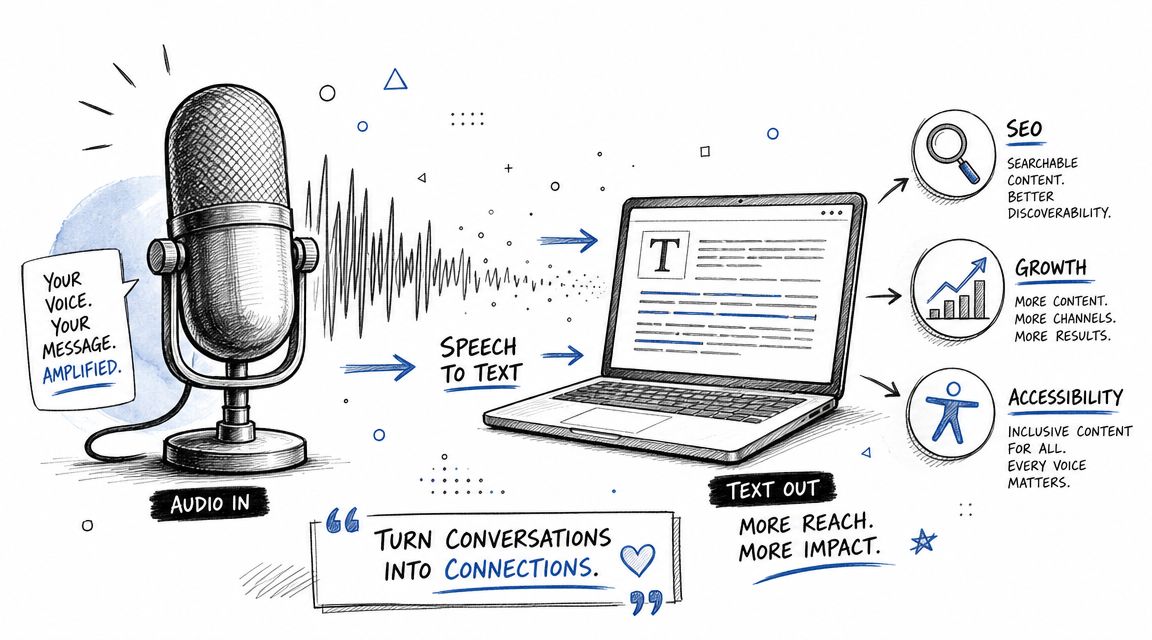
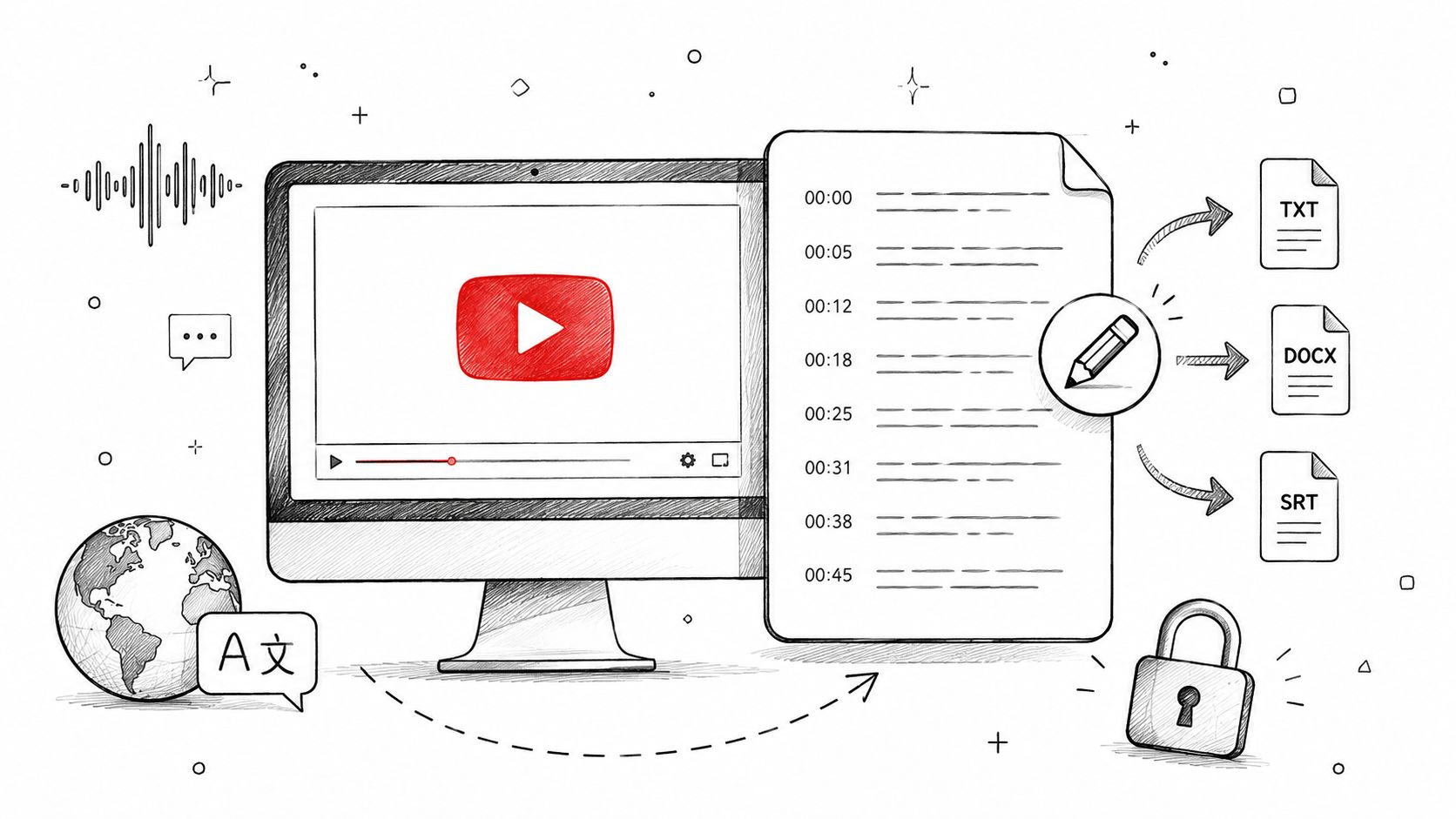
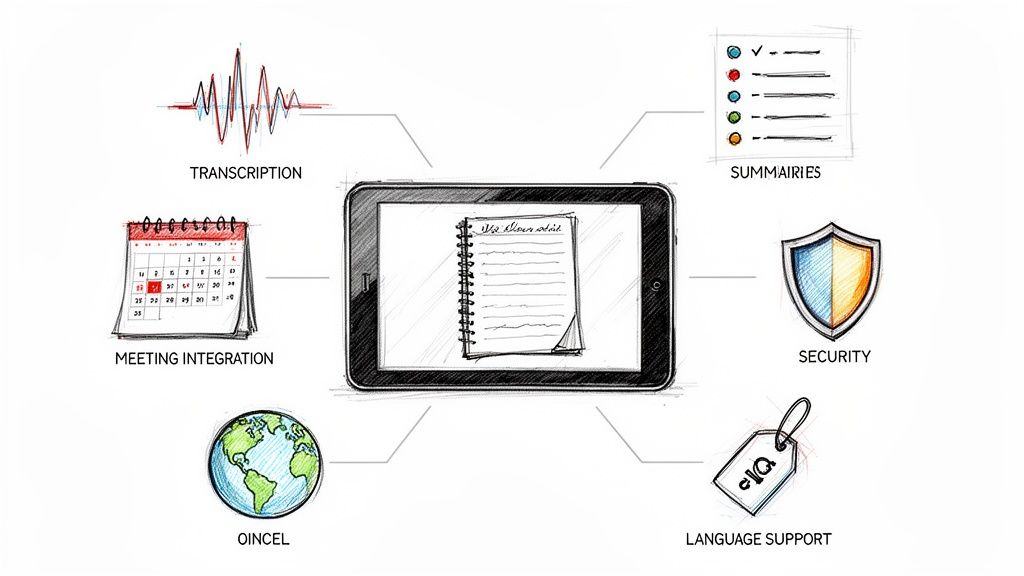
To genuinely improve your verbal communication skills, you need a system. Guesswork won't cut it. You need objective feedback, and this is where tools like transcription services become a game-changer. By turning your spoken words into text, you create a powerful feedback loop that gives you an unbiased look at your own speech patterns.
You can instantly spot:
- Filler Words: You'll finally see just how often you lean on "um," "ah," "like," and "you know."
- Pacing and Pauses: You can pinpoint where you're rushing or where your pauses feel awkward.
- Repetitive Phrasing: You'll identify the crutch words and phrases you use over and over without even realizing it.
This data-driven feedback turns a vague goal like "I want to be a better speaker" into a concrete, actionable plan. Since better speaking has a direct impact on team performance, it’s worth exploring other practical ways to improve workplace communication. Ultimately, investing in this skill is one of the smartest investments you can make in your own future.
How to Honestly Assess Your Current Speaking Habits
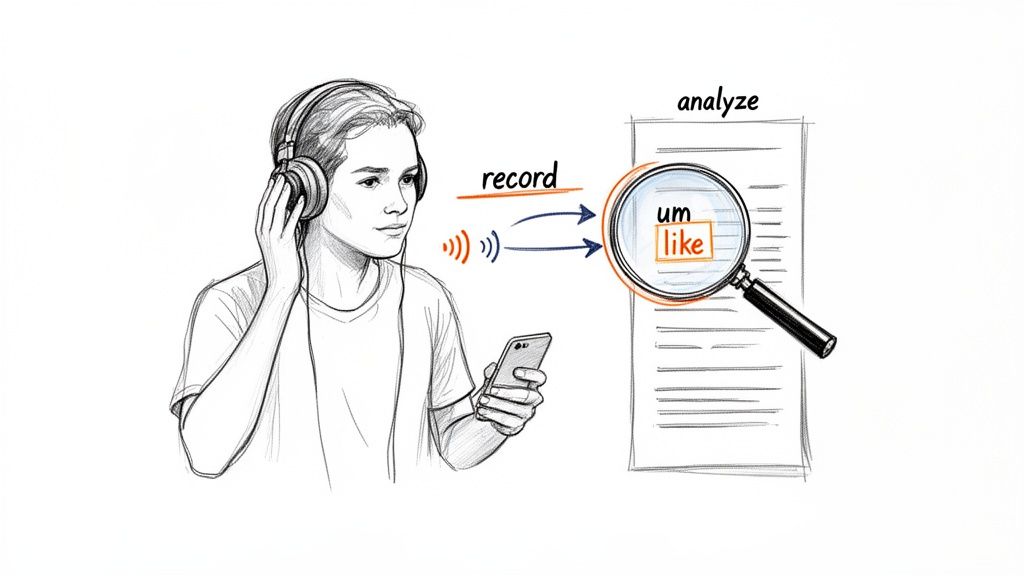
Before you can improve, you need an honest baseline of where you are right now. It’s one thing to have a vague feeling that you "talk too fast" or "say 'um' a lot," but it’s another thing entirely to have cold, hard data staring you in the face.
The goal here isn't self-criticism. It’s about becoming an objective observer of your own speech. By capturing how you actually sound in different professional scenarios, you can stop guessing and start targeting the real issues that are holding you back. This is the foundation for making changes that actually stick.
Capture Your Speech in Different Settings
Your speaking style isn't static; it changes depending on who you're talking to and how much pressure you're under. To get a complete picture, I recommend recording yourself in a couple of different situations.
Try to capture audio from at least two distinct environments:
- High-Stakes Moments: This could be a client pitch, a tough negotiation, or a big presentation. This is where your communication tics tend to surface under pressure.
- Low-Stakes Conversations: Record a casual team meeting, a one-on-one with a trusted colleague, or even just you rehearsing a talk out loud. This reveals your more natural, everyday speaking rhythm.
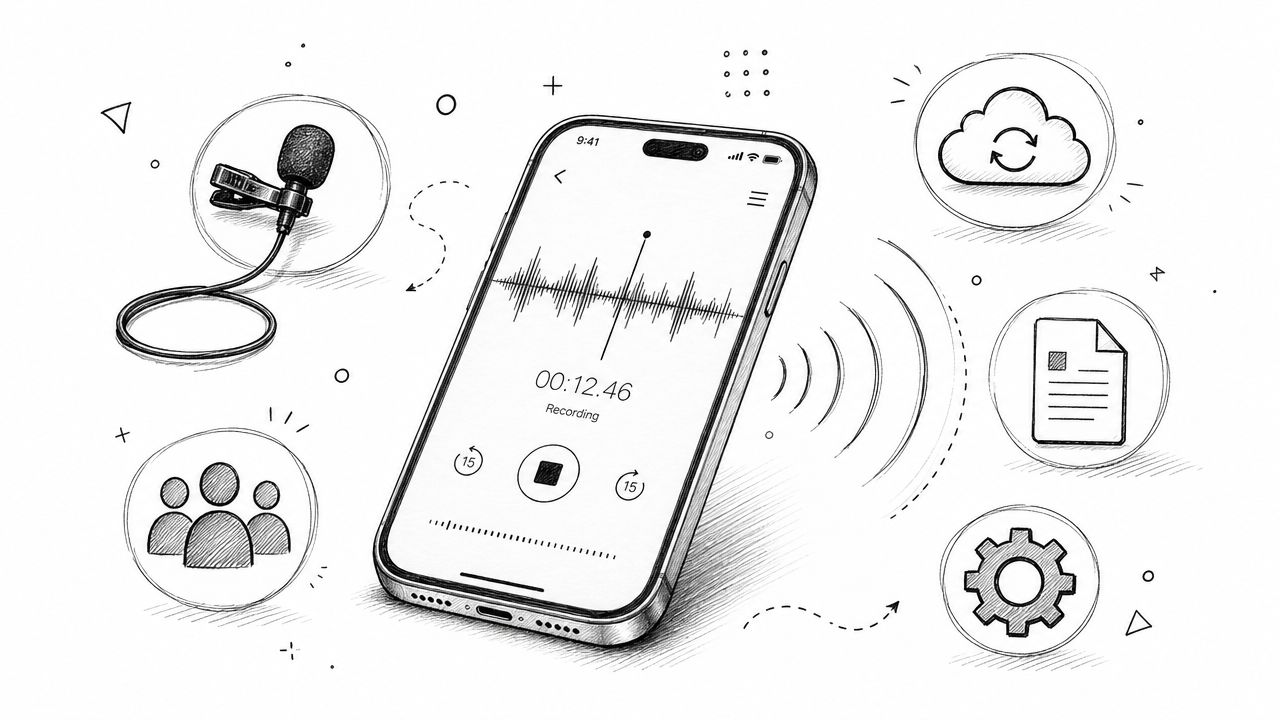
You don't need fancy equipment for this. The voice memo app on your phone or your computer’s built-in recorder is more than enough. The point is to get a clean recording that captures how you really sound.
Turn Your Voice into Actionable Data
I’ll be honest—listening back to your own voice can be cringeworthy. I've been there. But it’s a crucial step. The problem is, just listening often isn't enough because our brains are great at glossing over our own verbal stumbles.
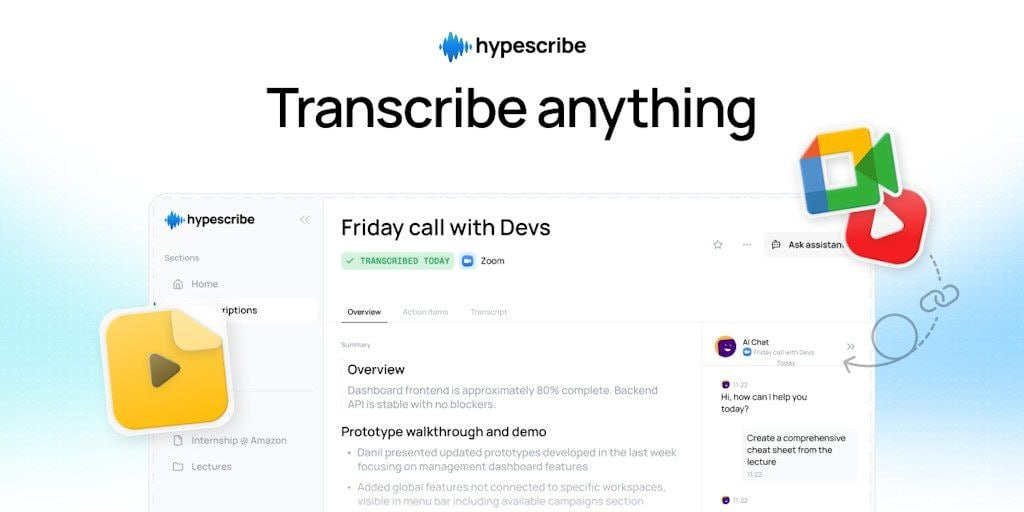
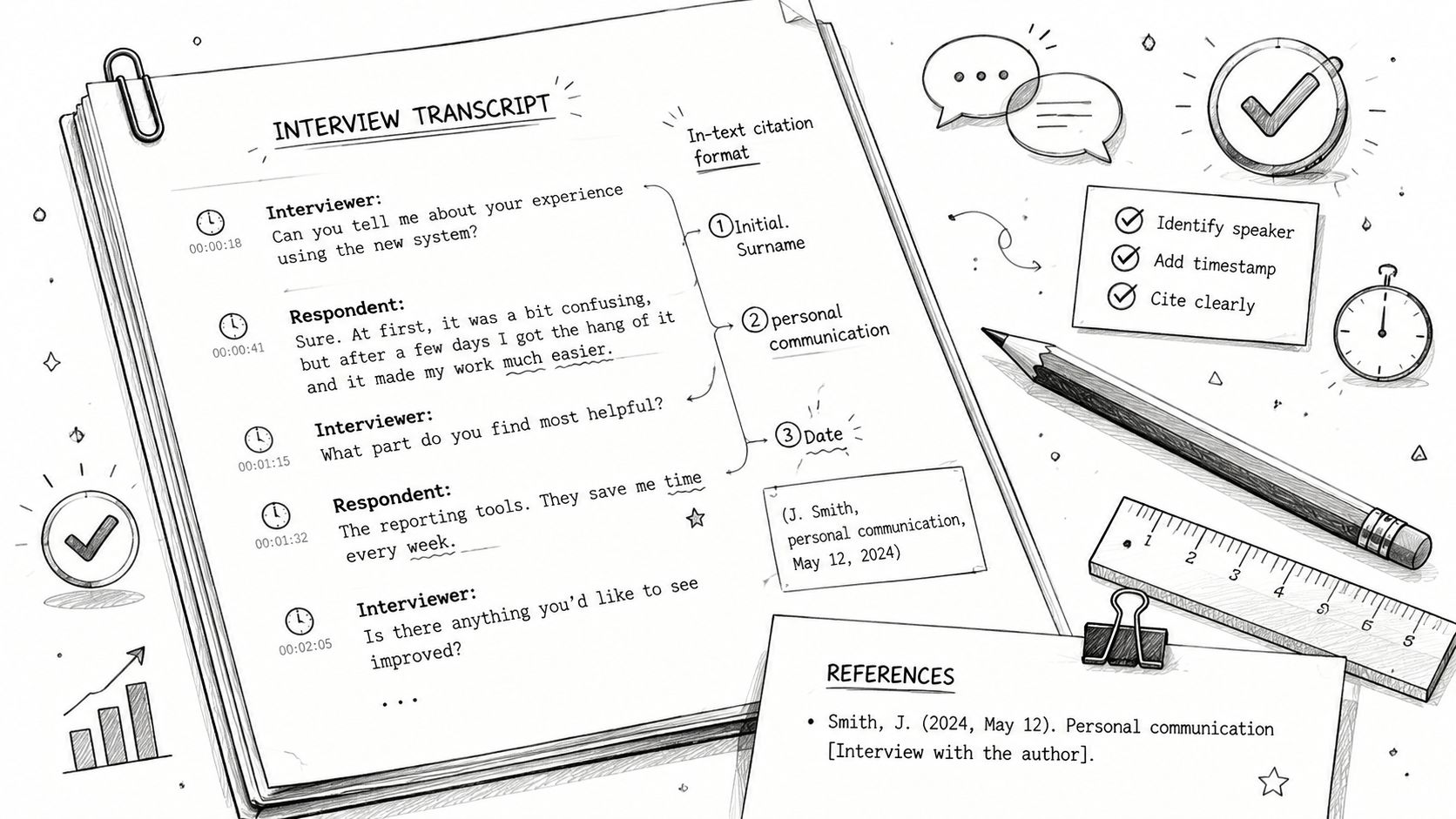
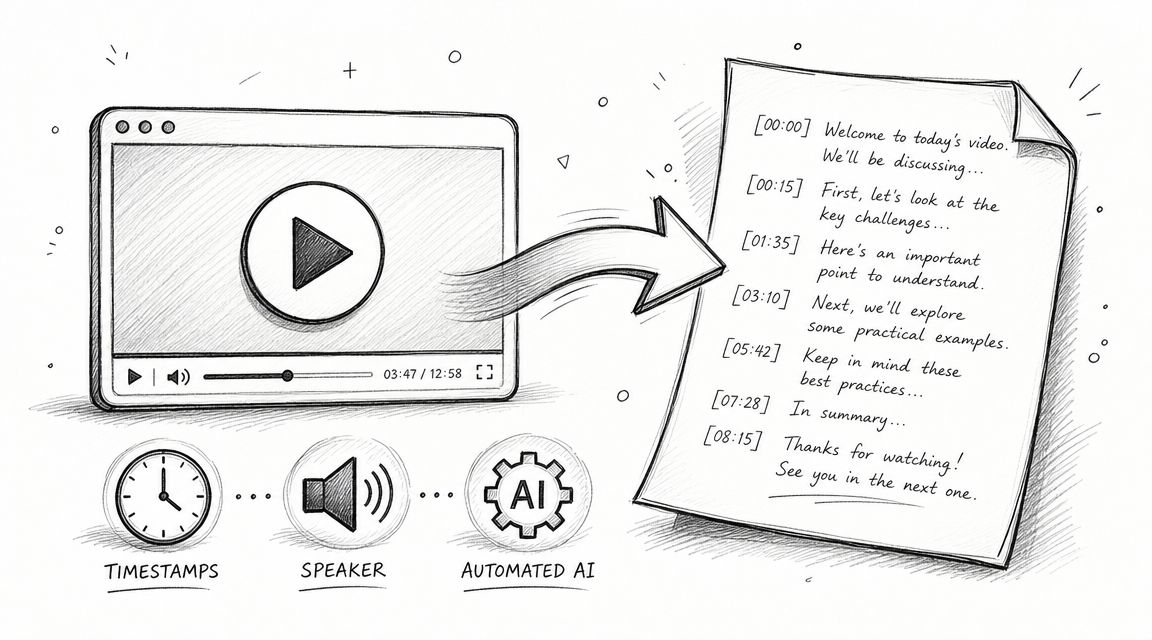
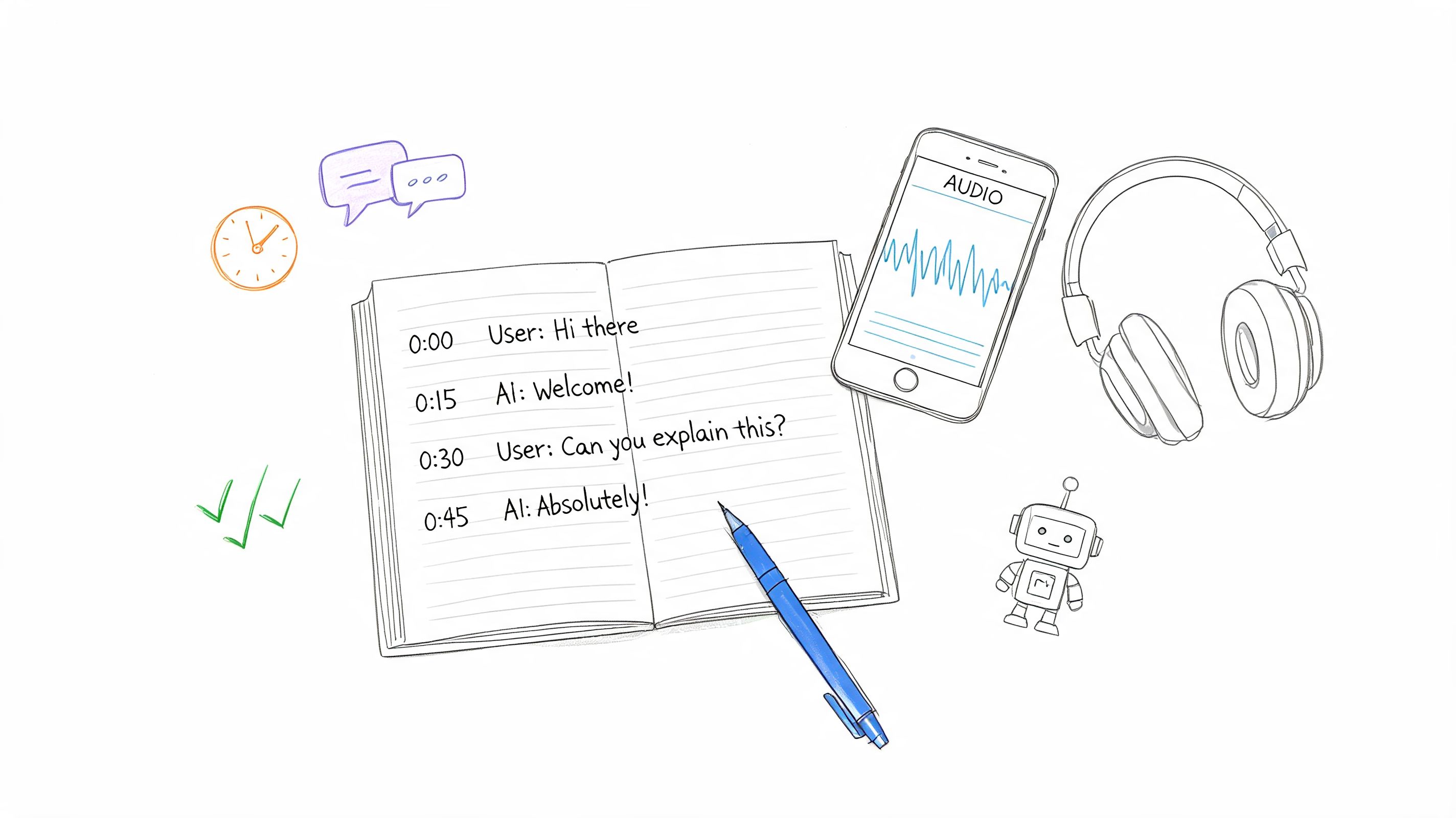
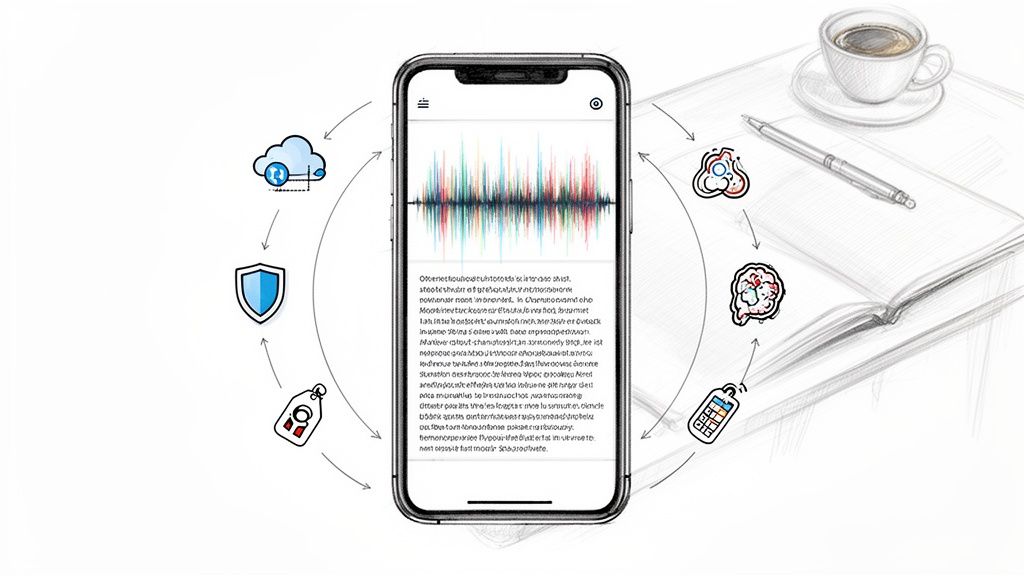
This is where transcription tools are an absolute game-changer. When you convert that audio into text, your habits become undeniable. A service like HypeScribe can process your audio in moments and give you a searchable transcript to work with.
Seeing your speech laid out in black and white transforms the abstract into the concrete. Suddenly, you're not just a "fast talker"—you're someone who used 19 filler words in a five-minute update and repeated the phrase "at the end of the day" four times.
With a transcript in hand, you can conduct a proper self-audit. You're no longer operating on feelings; you're working with hard evidence. This allows you to build a personal improvement plan that tackles your actual weak spots.
Your Personal Speaking Habits Checklist
Now that you have your transcripts, it's time to dig in. Use this table to analyze your transcribed speech and find concrete areas for improvement. This is the exact process I used to identify my own patterns.
This detailed self-assessment is the most critical step you can take. It gives you the clarity to move from just being aware of your habits to taking direct action, setting you up perfectly for the targeted exercises that will truly sharpen your delivery.
Practical Exercises for Greater Clarity and Impact
Knowing you need to improve is one thing, but actually doing it requires a plan. Forget vague advice like "just practice more." Real progress comes from targeted exercises that pinpoint and fix specific weaknesses in your speaking habits, from the way you form your words to the way you structure your ideas.
The goal isn't to become a different person. It's about refining how you deliver your thoughts so they land with maximum clarity and impact. These are practical drills you can do anywhere, and they only take a few minutes a day to build powerful, lasting habits.
Sharpening Your Articulation with Enunciation Drills
Mumbling or slurring words is one of the fastest ways to lose your audience. Clear articulation ensures every word you say is crisp and easy to understand. Think of it as the foundation of everything else.
One of the oldest tricks in the book is still one of the best: tongue twisters. They force your mouth, tongue, and lips into the precise movements needed for clear speech.
Try these classics, and really focus on exaggerating each sound:
- "Red leather, yellow leather." Repeat this ten times in a row. It’s fantastic for separating those tricky "L" and "R" sounds.
- "She sells seashells by the seashore." This one is perfect for sharpening your "S" and "Sh" sounds, which can easily blur together.
- "Peter Piper picked a peck of pickled peppers." A classic for a reason. It works the explosive "P" sound, giving your words more punch and definition.
Spend just two minutes a day on these—maybe during your commute or while you're getting ready. Consistency is what matters here. Over time, you’re building muscle memory, making crisp enunciation your natural default, not something you have to force.
Finding Your Natural Rhythm with Pacing Exercises
Speaking too quickly is a common sign of nerves or over-excitement. It makes you hard to follow and can come across as a lack of confidence. On the flip side, speaking too slowly can make you sound hesitant or, even worse, cause your audience to tune out.
A simple metronome app on your phone can be a game-changer for mastering your pace.
Here’s a simple exercise I've found incredibly effective for finding your ideal speaking rhythm:
- Find Your Baseline: Start with the metronome set to a moderate pace, around 140 beats per minute (BPM). This is a pretty standard conversational speed for most English speakers.
- Read Something Aloud: Grab a book, an article, or even one of your own transcribed meeting notes. Try to speak one syllable for each beat of the metronome.
- Adjust and Experiment: Does 140 BPM feel rushed? Slow it down to 120. Feel like you’re dragging? Nudge it up to 150. You're looking for a rhythm that feels confident and natural, not robotic.
- Practice Your Pauses: Once you find a comfortable pace, practice reading a paragraph and intentionally pausing for two or three beats at every period or comma. This builds the crucial habit of using silence to add emphasis.
Pacing isn't just about speed; it's about control. Mastering it allows you to hold your audience's attention, emphasize key points, and project an aura of calm authority.
This exercise recalibrates your internal clock, helping you develop a more measured and impactful delivery in actual conversations. If you're looking for a comprehensive guide on building this kind of self-assurance, there are some great insights on how to speak to people and master confident conversations.
Structuring Your Thoughts with Mental Frameworks
How many times have you been put on the spot in a meeting, only to find yourself rambling? A lack of structure can completely undermine a brilliant idea. Mental frameworks give you a simple, repeatable formula for organizing your thoughts in real-time.
One of the most effective is the PREP framework. It’s a dead-simple, four-step model for making a clear and persuasive point.
- P - Point: Start with your main point or conclusion. Lead with the headline.
- R - Reason: Explain the why behind your point. What's your core justification?
- E - Example: Back it up with a specific example, some data, or a quick story.
- P - Point: Wrap it up by restating your main point, reinforcing the key takeaway.
Let's see how this works. Imagine your manager asks for your opinion on switching to a new project management tool.
Without PREP: "Well, I think the current tool is okay, but it can be kind of slow, and I’ve heard good things about the new one. It seems like it has more features, and maybe the team would like it better because collaboration might be easier. So, yeah, maybe we should consider it."
It's weak, unstructured, and unconvincing. Now, let’s try it again with the PREP framework.
With PREP:
(Point) "I believe we should switch to the new software."(Reason) "My main reason is that it integrates directly with our sales and support platforms, which would eliminate all the manual data entry that’s slowing us down."(Example) "For instance, last week, Sarah’s team spent nearly four hours just moving customer feedback into our project board. The new tool automates that entirely."(Point) "That's why I'm confident switching is the right move for our team's productivity."
The difference is night and day. The second response is clear, confident, and persuasive. Just practicing the PREP framework in your head prepares you to articulate your thoughts with structure and authority whenever you're asked for your opinion.
While nonverbal cues are important, mastering the spoken word is what truly separates standout professionals. It’s no surprise that recruiters now rank verbal communication as the most crucial skill they look for. Yet, a staggering 40% of employees worldwide say their teams suffer from a lack of collaboration due to communication gaps—a problem these exercises are designed to fix.
By integrating these drills into your routine, you’re moving from just knowing you should improve to actively building the skills that will help you communicate with greater clarity and undeniable impact.
Building a Powerful Feedback and Practice Loop
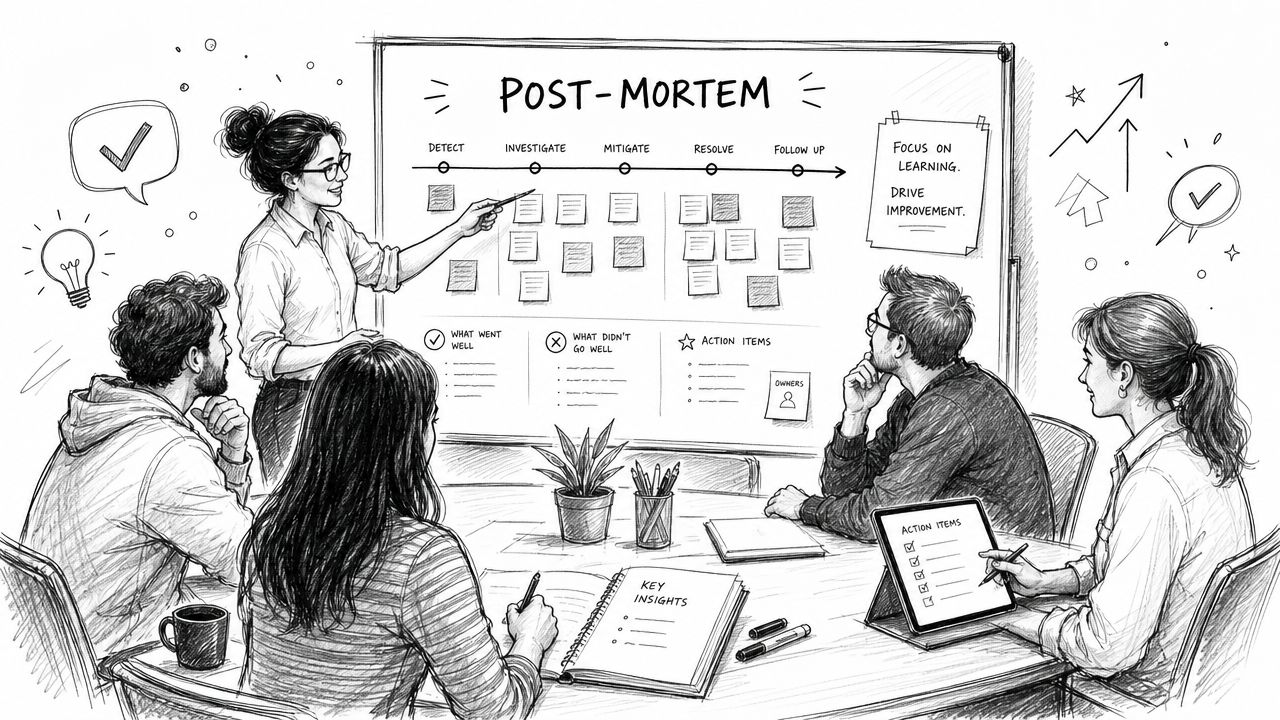
The exercises we've covered are great for building muscle memory, but the real breakthroughs happen when you take those skills out of the practice room and into the real world. To truly sharpen your verbal communication, you need a system: practice, get feedback, analyze what happened, and then do it all over again.
This isn't about waiting for some high-stakes presentation to see if you've improved. It's about finding small, everyday moments to deliberately apply what you're learning. This continuous loop is what turns conscious, clunky effort into natural, unconscious confidence.
Finding Your Practice Ground
Your office is a fantastic training ground, full of low-stakes opportunities to practice without the pressure of a make-or-break client pitch. The trick is to start seeing these routine interactions as valuable reps.
Keep an eye out for chances to put your skills to the test in these situations:
- Team Meeting Updates: Don't just list off tasks. Try structuring your update using the PREP framework—make a clear Point, give a Reason, provide a brief Example, and then restate your Point. It’s a game-changer.
- Explaining a Concept: The next time a coworker is confused, fight the urge to just slack them a link. Take a minute to explain it out loud, focusing on your articulation and keeping a steady pace.
- One-on-One Check-ins: These are perfect for honing your active listening. Try paraphrasing what your manager or colleague says to confirm you’ve understood them correctly. "So, if I'm hearing you right..." is a powerful phrase.
These moments are your sweet spot for practice because the pressure is off. If you stumble or feel a bit awkward, who cares? The consequences are minimal, but the learning experience is huge.
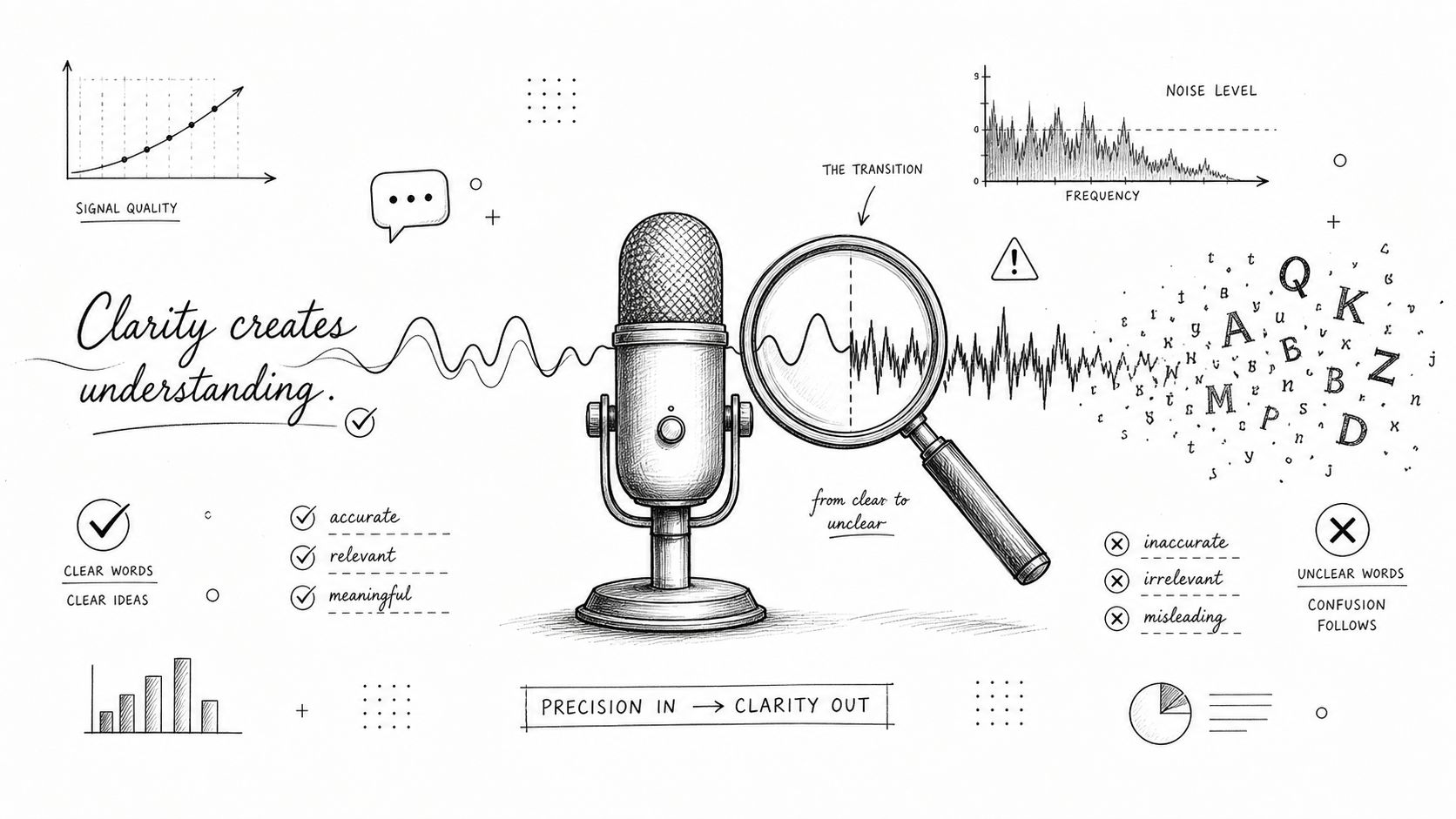
This flowchart breaks down the key components of verbal clarity you should focus on during these practice sessions.
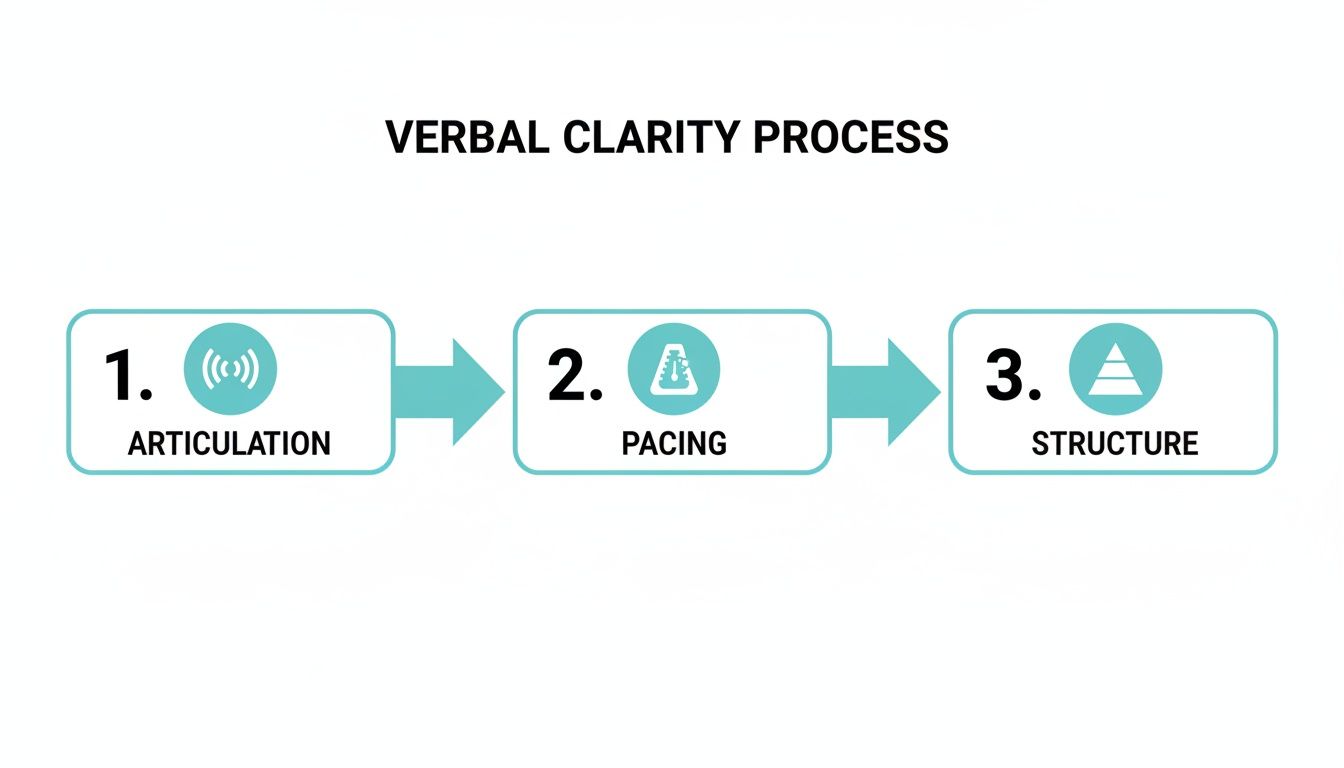
As you can see, it all starts with crisp articulation, is supported by controlled pacing, and is held together by a logical structure.
Using Technology for Objective Feedback
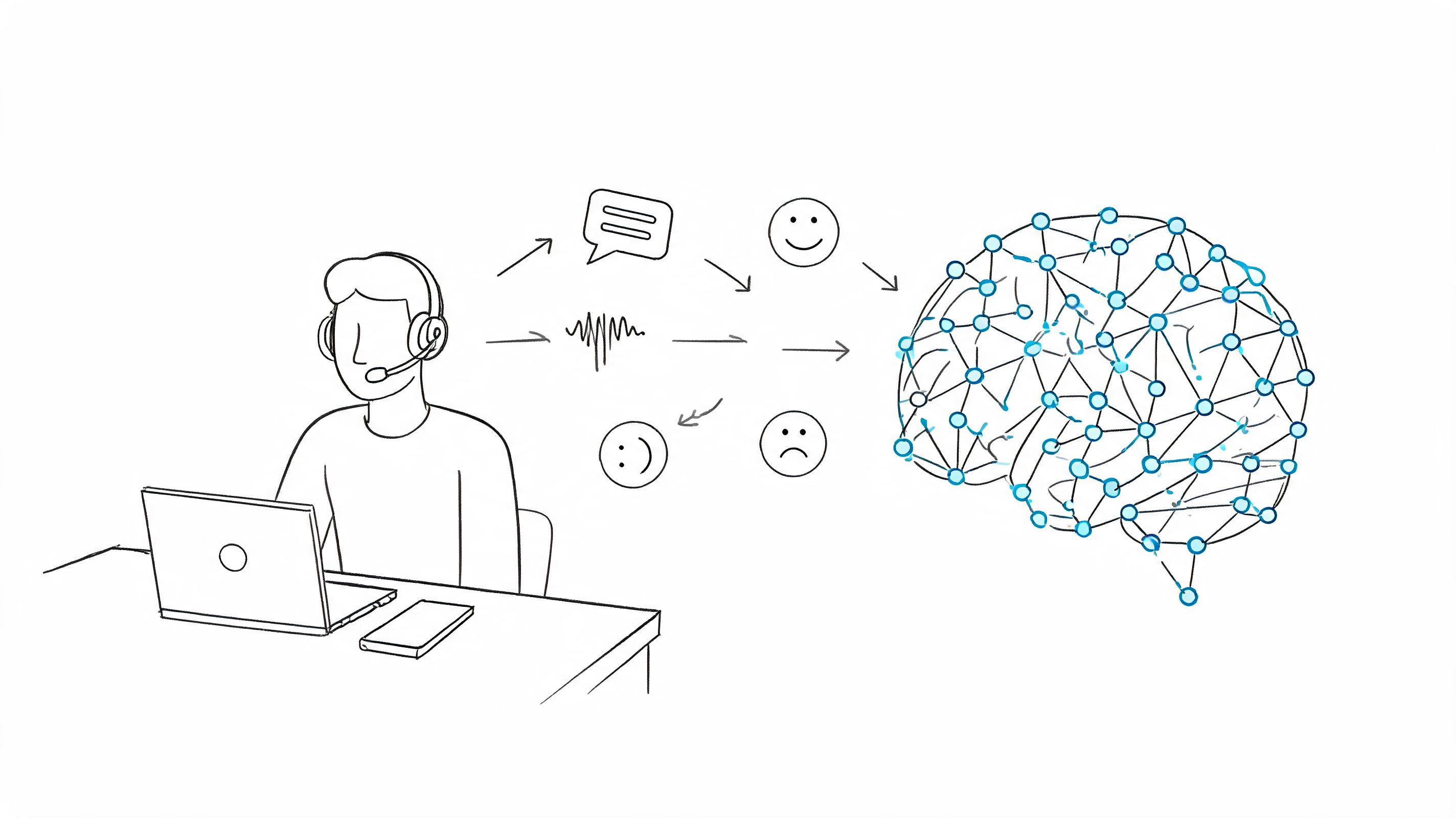
Let's be honest: our self-perception is often wildly inaccurate. You might walk out of a meeting feeling like a communication rockstar, but the objective data could tell a completely different story. This is where technology becomes your unbiased coach.
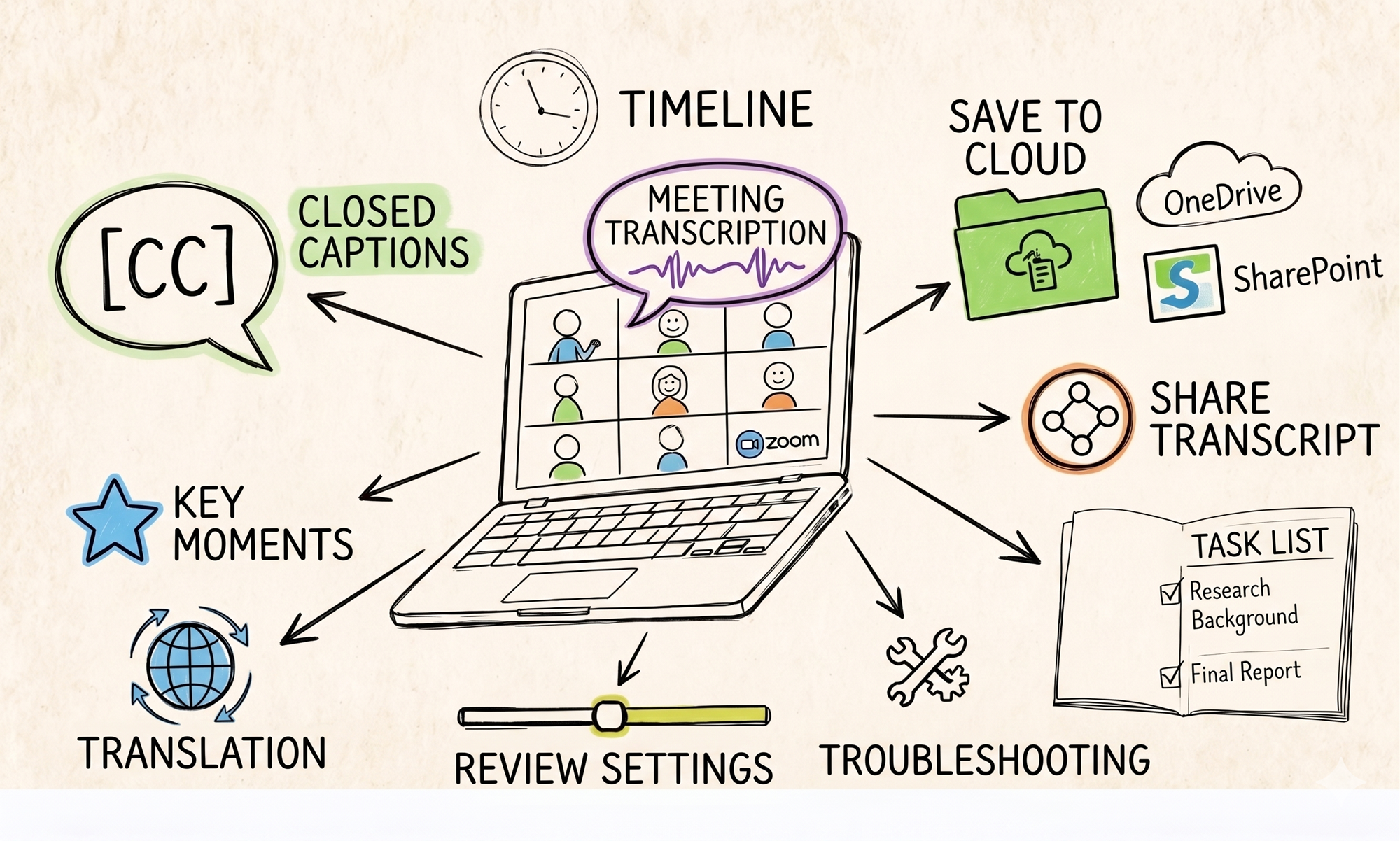
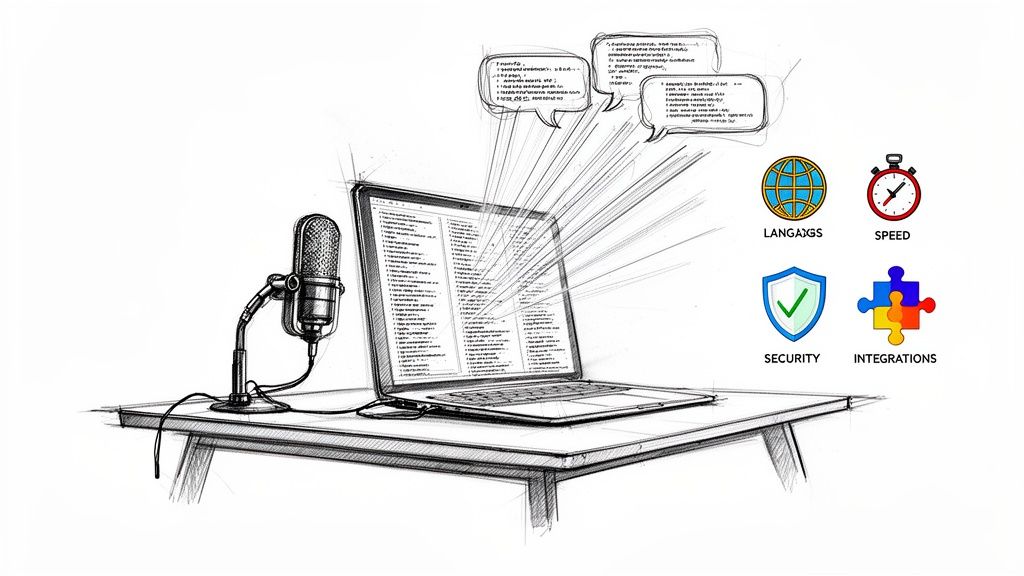
Recording and transcribing your meetings gives you a word-for-word receipt of your performance. It strips away the emotion and just gives you the raw script to analyze. You can literally Ctrl+F for your filler words ("um," "like," "you know"), check how concise your explanations really were, and see if you accidentally dominated the conversation. If you're curious about the mechanics, there are great guides that walk you through how to record and transcribe meetings for this exact purpose.
Technology gives you feedback that is refreshingly neutral. It doesn't have an opinion or a bias; it just shows you exactly what you said. That raw data gives you a crystal-clear path for improvement.
Make it a goal to review one transcript a week. Pull up your self-assessment checklist and compare. Are the filler words going down? Are your sentences getting tighter? This data-driven approach is the ultimate accountability partner.
How to Ask for Genuinely Useful Feedback
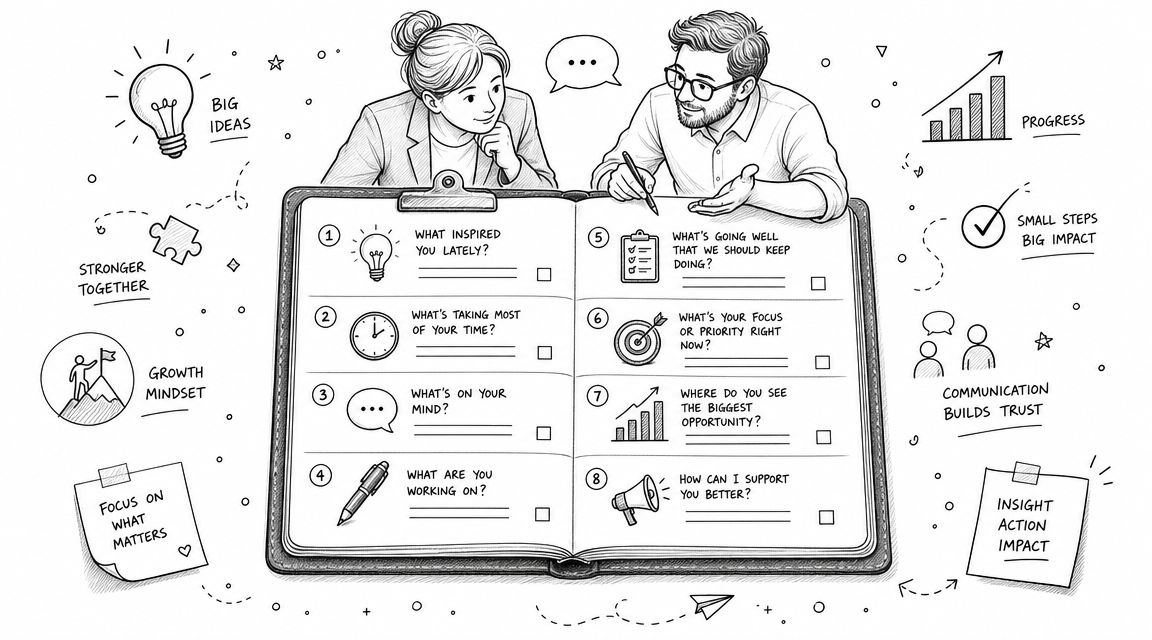
While tech tells you what you said, trusted humans can tell you how it landed. They give you the crucial context of a message's impact. The problem is, asking a generic question like "How'd I do?" is a surefire way to get a generic, unhelpful answer like "It was great!"
To get feedback you can actually use, you have to ask specific, targeted questions. This forces the other person to think critically instead of just being nice.
Next time, swap the vague questions for ones like these:
- "Was there a specific point in my update where things got confusing?"
- "I noticed you got quiet when I was explaining the new process. What was going through your mind right then?"
- "What's the one thing I could have done to make my main point more persuasive?"
- "When I presented the Q3 data, how was my pacing? Did it feel rushed, too slow, or about right?"
These questions dig past the polite "good job" and get you to the actionable insights. They signal that you're serious about improving. Find one or two colleagues you trust and start asking for this kind of specific feedback. Their perspective is an invaluable piece of your growth puzzle.
Mastering Persuasion and Active Listening
Speaking clearly is a fantastic start, but speaking with influence? That’s what really makes you stand out. Once you’ve nailed the basics and people can understand your message without effort, the next step is to make that message persuasive.
This is where you move beyond the simple mechanics of speech and into the psychology of a real conversation—it's about understanding who you're talking to, framing your ideas in a way that resonates, and gently guiding the dialogue.
But here’s something a lot of people miss: powerful persuasion isn't just about talking. It’s about listening. In fact, one of the most effective tools you have is active listening. It helps you tune into the unspoken needs and motivations of others, which in turn makes every word you say more relevant and impactful.
The Power of Strategic Questioning
Trying to persuade someone by just repeating your point rarely works. It often just puts them on the defensive. A much smarter way to bring someone around to your way of thinking is to guide them to the conclusion themselves through thoughtful, strategic questions.
Instead of telling them what to think, you ask questions that frame the problem and lead them down a logical path.
Let's say you're trying to get your team to adopt a new project management tool. The brute-force approach is to say, "We have to do this." A more influential approach would be to ask:
- "What’s the single biggest bottleneck you run into when we hand off projects?"
- "If you could get rid of one repetitive task from your week, what would it be?"
- "How much time do you think we're losing each week because of all the manual data entry?"
These questions don't feel like a sales pitch. They’re collaborative. You’re inviting your colleagues to identify the problem on their own, which makes them far more receptive to the solution you eventually offer. It turns a potential argument into a shared problem-solving session.
Framing Your Ideas for Maximum Impact
How you frame an idea is often more critical than the idea itself. The same proposal can be met with enthusiasm or resistance based entirely on its presentation. The best communicators know how to frame their messages to align with the priorities and values of their audience.
For example, when pitching new software to your manager, you wouldn't get very far by talking about how cool the interface looks. Instead, you’d frame it around the things that matter to them: efficiency gains, cost savings, and risk reduction.
Key Takeaway: Persuasion is all about connecting your solution to your audience's existing problems and goals. Before you speak, ask yourself: "What does this person care about most, and how does my idea help them get it?"
This subtle shift—from "what I want to say" to "what they need to hear"—is the bedrock of influential communication. Understanding these audience motivations is a key principle of conversation intelligence, which is all about analyzing conversational data to get better results. To learn more, it's worth reading up on what conversation intelligence is and how you can apply its principles.
Active Listening: Your Secret Weapon
We tend to think of communication as an active skill focused on speaking. But truly exceptional communicators understand that what you don't say can be just as important.
Active listening isn’t just waiting for your turn to talk. It's the practice of listening to genuinely understand. This shows the other person you’re engaged, builds trust, and ensures you have the full picture before you jump in with a response.
This goes way beyond just being quiet. It involves specific techniques that show you’re locked in.
Here are two of the most essential active listening techniques:
- Paraphrasing: Restate the other person's point in your own words. Something like, "Okay, so if I'm hearing you right, your main concern is that the new timeline doesn't leave enough breathing room for proper quality testing." This instantly validates their point and gives them a chance to clarify if you’ve misunderstood.
- Asking Clarifying Questions: These are simple questions to get more detail and show you're paying attention. "Could you walk me through an example of what you mean?" or "When you say it's 'too complicated,' which part feels that way?" These questions prove you value their opinion and want to understand it completely.
By mastering both persuasion and active listening, you elevate your verbal skills from simply sharing information to actually building consensus, inspiring others, and driving real action.
Your Questions Answered: A Practical Guide to Better Communication
When you decide to work on your speaking skills, a lot of questions pop up. It's a journey, not an overnight fix, so knowing what to expect can keep you on track. Let's dig into some of the most common questions I hear from people who are serious about improving how they communicate.
I'll give you some straight, no-nonsense answers to help you get the most out of the process, use the right tools, and make sure your new skills stick around for good.
How Long Does This Actually Take?
This is usually the first thing people ask, and the honest answer is: it depends. But you can absolutely see real progress in specific areas—like cutting out "ums" and "ahs" or slowing your pace—within just a few weeks of daily practice. Think of it like building muscle memory for your mouth.
Bigger goals, like becoming a masterful storyteller or projecting unshakeable confidence, are more of a long game. We're talking several months of consistent work. The secret isn't a weekend cram session; it's the small, focused efforts you make every single day that build up to massive, lasting change.
What's the Single Most Effective Thing I Can Do?
If you want the biggest impact from a single activity, here it is: record yourself speaking and then read the transcript. This is a game-changer. It gives you hard, objective data on your habits, taking you from just thinking you talk too fast to knowing it. It’s the bedrock of real improvement.
As for an active exercise, the one that pays off immediately is consciously slowing down and putting a deliberate pause between your sentences. It’s a simple trick, but it gives your audience a moment to absorb what you’re saying and makes you sound far more thoughtful and in control.
Combining self-analysis through transcription with the simple act of slowing down is a powerful one-two punch that will accelerate your progress faster than anything else.
Can I Get Better Without Giving Big Speeches?
Yes, one hundred percent. The myth that you need a stage to practice is what stops most people before they even start. The truth is, the best practice happens in your everyday, low-stakes conversations.
Here are a few places to work on your skills without the pressure:
- Team Stand-ups: When it's your turn to give an update, use it as a chance to practice the PREP framework.
- One-on-Ones: These are golden opportunities to practice active listening. Try paraphrasing what your colleague says before you respond.
- Calls with Friends: Practice telling a quick, interesting story. Give it a clear beginning, a middle, and an end.
The idea is to build the right habits when the pressure is off. Once these skills feel natural in comfortable settings, you'll find they show up automatically when the stakes are higher.
How Can I Practice Active Listening on Zoom Calls?
Virtual meetings are a minefield of distractions, making it tough to truly listen. The first step is simple but crucial: turn off every notification and put your phone completely out of sight. Create a bubble of focus.
As someone is talking, jot down a few of their key points. Then, before you jump in with your own thoughts, paraphrase what you heard. Something as simple as, "Okay, so if I'm hearing you right, the main issue is..." works wonders. It does two things: it confirms you understood correctly, and it shows the other person you were actually listening.
Ready to see what your speaking patterns really look like? HypeScribe delivers incredibly fast and accurate transcriptions, turning your spoken words into data you can act on. Stop guessing and start improving with a tool built to give you the feedback you need. Pinpoint your filler words, check your pacing, and get a clear picture of your clarity. Try it today.