How to create a board meeting agenda that drives decisions

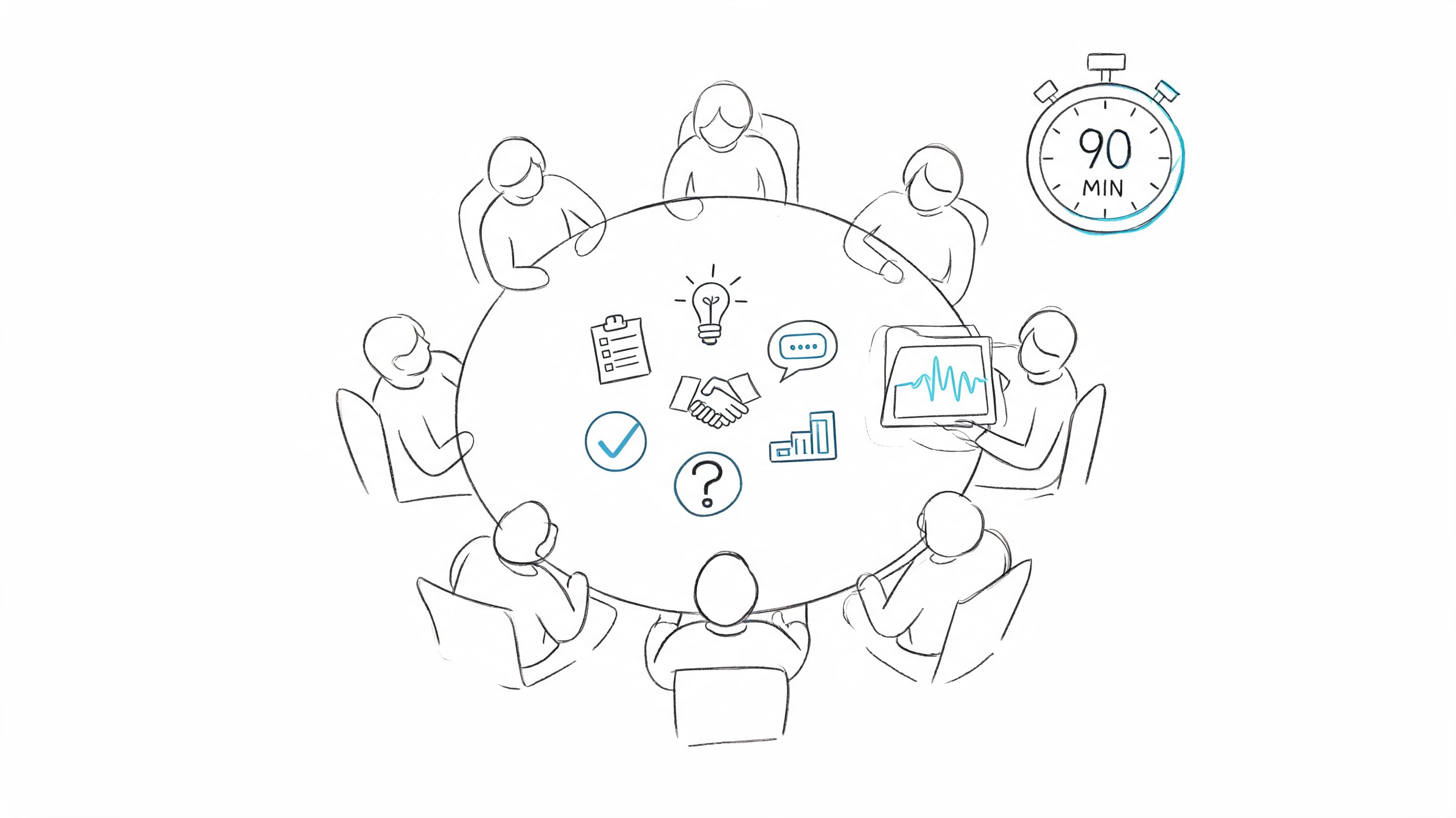
A great board meeting agenda is more than a list of topics. It's a strategic tool that focuses discussion, respects everyone's time, and pushes the organization toward clear, decisive action. From my experience helping boards transform their meetings, I can tell you that a thoughtfully designed agenda is the single biggest factor separating a high-impact session from a waste of everyone's afternoon.
Why a strategic agenda is more than a to-do list
We've all been there: board meetings that drag on, circle the same points, and end with no real decisions made. You walk away wondering what was actually accomplished. The culprit is almost always a weak agenda treated like a laundry list instead of the powerful strategic document it should be.
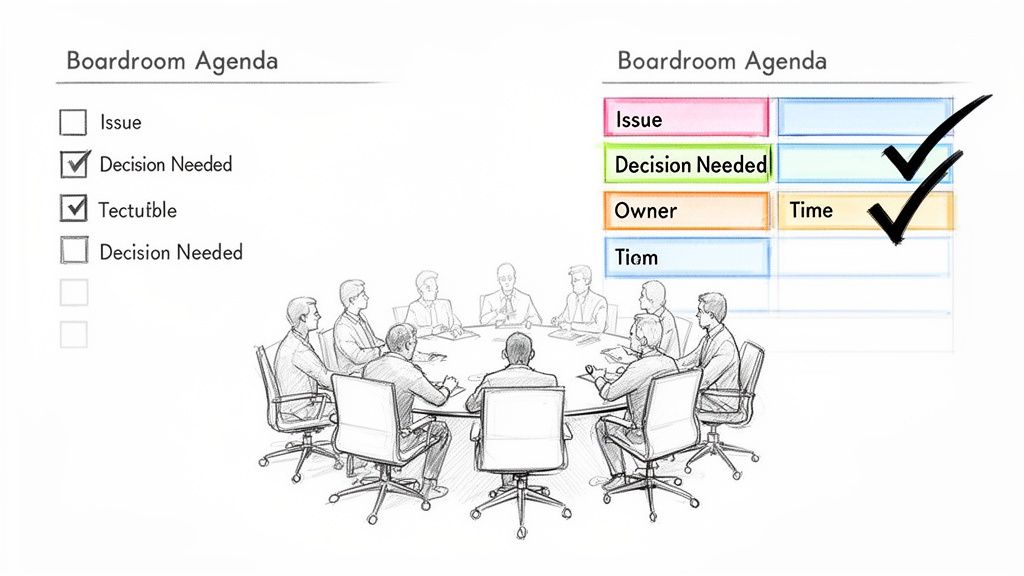
Think of it this way: a basic agenda is a map of topics. A strategic agenda is a complete itinerary for a journey with a clear destination. It doesn't just list stops; it outlines how you'll get there, what decisions are needed along the way, and what success looks like upon arrival. Adopting this mindset is the first step toward more effective governance.
Moving from passive reporting to active decision-making
I once worked with a fast-growing tech startup whose board meetings were famously unproductive. They followed the same tired format: approve minutes, listen to a parade of departmental reports, and then have a vague discussion about "new business."
These meetings would last for hours. Department heads delivered lengthy monologues, leaving the board with almost no time to offer real guidance on critical issues—like expanding into new markets or addressing competitive threats.
The shift happened when the new Board Chair completely scrapped the old template. Instead of an item that just said, "Marketing Update," the new agenda read: "Decision: Approve Q3 Marketing Budget to Support European Launch."
That one small change had a massive impact. It immediately forced the marketing team to arrive prepared with a tight, data-driven proposal. It also sent a clear message to the board: your job is to analyze and decide, not just to listen.
"Your agenda isn’t just a checklist. It’s a promise that the meeting will respect board members’ time, drive decisions, and link every item back to the mission. It sets the tone for how engaged everyone will be."
Using the agenda as a tool for accountability and focus
A well-crafted agenda creates clear expectations and builds a culture of accountability. When you frame items as questions that need answers or decisions that need to be made, you automatically assign ownership. This structure also cuts through the noise, ensuring precious meeting time is spent on what truly moves the organization forward.
Mastering this is essential for a few key reasons:
- It guides the conversation: An action-oriented agenda is your best defense against discussions veering off track.
- It boosts engagement: When directors see that meetings are focused on consequential issues, they feel their time is valued and are more likely to stay engaged.
- It drives progress: By focusing on outcomes, the agenda ensures that talk translates into tangible action.
- It prevents surprises: A simple oversight on an agenda can derail an entire meeting, sometimes forcing a deadlock or requiring a special session to fix the mistake.
To see how this fits into the bigger picture, a deeper dive into strategic planning can show how this proactive approach transforms all sorts of routine tasks. Ultimately, the agenda is your most important tool for running a meeting that actually matters.
The anatomy of an effective board meeting agenda
Every productive board meeting is built on the foundation of a thoughtful agenda. I'm not just talking about a list of topics. A well-crafted agenda is a strategic document that guides the conversation, focuses energy, and forces decisions. If your agenda still starts with "Call to Order" and is filled with "Committee Updates," you're missing a huge opportunity to shift your board from passive listeners to active participants.
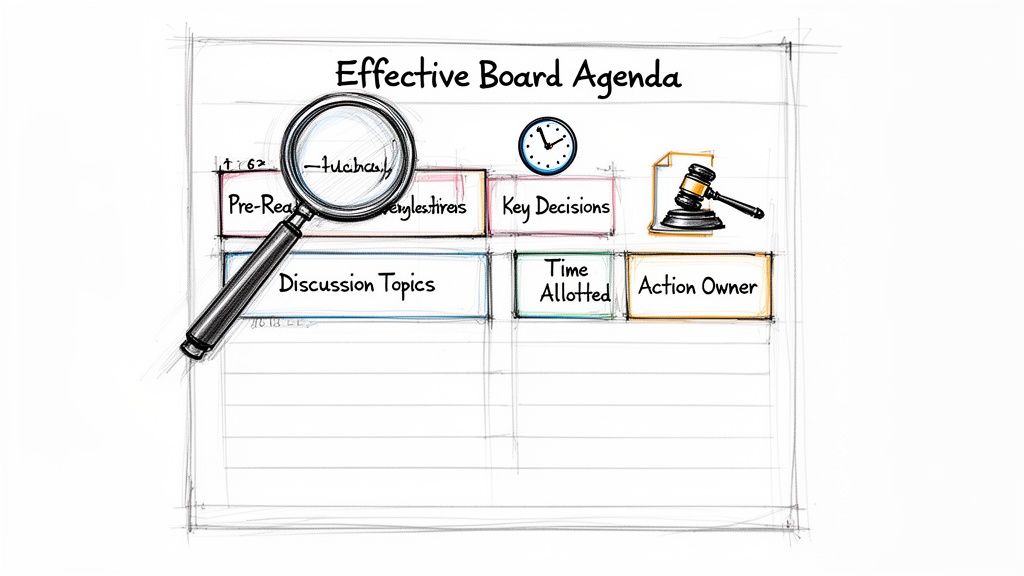
The structure itself sends a clear message. It tells your board members whether they are showing up to hear reports they could have read beforehand or to roll up their sleeves and engage in genuine strategic work. To get this right, you need to master the non-negotiable elements and frame them for real impact.
Getting the foundational pieces right
These might seem like formalities, but the opening and closing items on your agenda are the legal and procedural bookends of your meeting. They create the official container for every decision you make.
- Call to Order: This is the official start. You note the date, time, and location, and most importantly, record who is present to confirm you have a quorum.
- Approval of Previous Minutes: This is a critical governance step where the board formally agrees that the record of the last meeting is accurate. Before moving forward, you have to lock in the decisions of the past.
- Approval of the Current Agenda: This quick but crucial step gives everyone a chance to suggest an urgent change or addition before you dive in.
- Adjournment: Formally ends the meeting and closes the official record, noting the time.
Think of these as essential guardrails. The goal is to handle them efficiently. If you're burning valuable time on these administrative tasks, it’s often a sign of poor preparation and can drain the room's energy before the real discussion even starts.
The heart of the matter: strategy and reporting
This is where the magic happens—or doesn't. The core of your meeting is in the discussion items, and you must separate things that require deep strategic thinking from things that are purely for information. The most common trap I see is boards letting routine reports consume all the time meant for big-picture decisions.
One of the most powerful changes you can make is to introduce a consent agenda.
This is simply a way to bundle routine, non-controversial items (like committee reports or standard financial updates) into a single block. You approve them all with one motion. This technique alone can reclaim a huge chunk of your meeting time for what really matters.
For instance, instead of having three committee chairs read their reports verbatim, those documents are sent in the pre-read packet. The agenda item simply says, "Approve Reports from Finance, Governance, and Fundraising Committees." Any board member who has a question can ask to pull a specific report out for a full discussion. Simple, yet incredibly effective.
A great rule of thumb I've seen work time and again is to allocate roughly 25% of your meeting time to reports and administrative tasks. This frees up the other 75% for strategic discussions, tough problem-solving, and making key decisions—which is the entire reason a board exists.
How to write agenda items that encourage engagement
The words you choose for your agenda items matter more than you think. They set the tone and expectations for your directors. Vague items invite passive listening. Action-oriented items, on the other hand, demand engagement and preparation. Reframing your agenda is a simple tweak that can completely change the dynamic of your meetings.
It's all about shifting from a "report out" culture to a "let's solve this" culture.
Reimagining your agenda items for action
Here’s a practical look at how to rephrase standard, passive agenda items to spark real conversation and drive your board toward making decisions.
This isn't just about semantics; it's about engineering a more productive and engaging meeting from the ground up, starting with the very document that guides it.
How to sequence your agenda to master meeting flow
The way you order your agenda items isn't just a matter of logistics; it's a powerful tool for managing the energy in the room. I’ve seen countless boards make the same critical mistake: they save the heavy, strategic topics for the end of the meeting. By that point, everyone is tired, decision-making quality plummets, and the most important conversations get rushed.
Think of crafting an agenda like directing a play. A well-sequenced meeting anticipates the natural ebbs and flows of group energy, placing the most vital issues front and center when minds are sharpest. This isn’t just about ticking boxes—it's about engineering a truly productive session.
Put your most important items first
There's an old-school idea that you should start with easy administrative tasks to "warm up." In my experience, that's often a terrible idea. Sure, those items are necessary, but they can drain the initial burst of energy and momentum everyone brings to the table.
A much better approach is to tackle your high-stakes decisions and strategic discussions right after the call to order and any quick approvals.
This "upside-down" agenda structure ensures your directors are hitting the topics with the heaviest cognitive load when their engagement is at its peak. It's like a workout: you do the heavy lifting first, not at the end when you're completely spent.
For instance, if your company is facing a new competitive threat, the first major item shouldn't be buried after an hour of routine committee updates. It should be right at the top: "Decision: Approve Counter-Strategy to New Market Entrant." This immediately signals the meeting's priority and gets everyone focused.
By tackling the most critical strategic item within the first 30-45 minutes, you ensure it receives the best collective brainpower the board has to offer. The rest of the meeting can then flow with a sense of accomplishment, not dread for the big topic still looming.
A framework for strategic sequencing
An effective board meeting follows a simple, powerful rhythm: start with the critical, handle the routine, and then look to the future. This gives you a reliable flow that keeps the meeting disciplined and on track.
Here’s a practical framework you can adapt:
- Ground in Data: Start with a quick, high-level review of key financial or performance dashboards. This grounds the entire discussion in reality and sets a data-driven tone from the outset.
- Hit the Core Issue: Jump right into the single most important decision or strategic discussion on the docket. Make sure you allocate a significant, protected block of time for it.
- Handle Routine Business: This is where you can use a consent agenda or breeze through quick committee reports. Think of this as the "maintenance" part of the meeting.
- Look to the Future: End the meeting with forward-looking items. This could be brainstorming new opportunities, reviewing the strategic plan, or holding an executive session for sensitive topics.
This structure respects the incredibly limited time and attention of your board members. The pressure is immense—the average session crams 11 items into just over three and a half hours. That’s a mere 21 minutes per item, which is nowhere near enough for deep strategic thinking, especially when board packs are getting bigger. You can learn more about these challenges in the state of board effectiveness report.
A nonprofit turnaround through agenda reshuffling
I once worked with a nonprofit board that was on the brink of a funding crisis. Their primary, long-standing grant was ending, and panic was starting to creep in. Yet their agendas always saved the "Fundraising Strategy" discussion for the very end, usually after an hour of programmatic updates and operational reviews.
Predictably, by the time they got to the crisis, everyone was drained. The conversation would dissolve into unfocused anxiety, and they’d end the meeting with no clear plan, just a vague promise to "circle back."
The turnaround started when the Board Chair completely reordered the agenda. The new format placed a single, powerful item right at the top: "Decision: Authorize a Three-Pronged Emergency Fundraising Campaign."
That simple change forced immediate, focused action. The board spent the first solid hour dissecting the proposal, debating tactics, and assigning clear responsibilities. They walked out of that meeting not with anxiety, but with an actionable plan and a renewed sense of control. All because they tackled their biggest challenge when they had the energy to actually solve it.
The agenda as a workflow: connecting pre- and post-meeting activities
A great board meeting agenda isn't a static document. It’s the linchpin of a much larger process, connecting the crucial prep work before the meeting with the follow-through that makes it all worthwhile. If you treat the agenda as a one-off checklist for the meeting itself, you’re missing the point and setting yourself up for wasted time.
The pre-meeting scramble is a classic sign of a broken process. To avoid it, you need to get the complete board pack—agenda, previous minutes, financials, and any pre-reading—into your directors' hands well in advance. I've found the sweet spot is at least 3-5 business days before the meeting. Anything less, and you can't realistically expect them to come prepared for a deep, strategic discussion.
To make sure everyone is on the same page, you need to create a robust communication plan. This isn't just about blasting out an email; it’s about confirming receipt, setting clear expectations for preparation, and giving board members a chance to ask clarifying questions before they walk into the room.
Nailing your pre-meeting distribution
A repeatable pre-meeting checklist is your best friend here. It prevents last-minute chaos and ensures your directors can show up focused and ready to contribute.
- Finalize with Leadership: Get the final sign-off on the agenda from the Chair or CEO to ensure it aligns perfectly with the organization's strategic priorities.
- Compile the Board Pack: Pull together every single report, proposal, and financial statement referenced in the agenda. No missing pieces.
- Distribute Securely: Use a board portal or encrypted email to send the materials. Security is non-negotiable.
- Send a Confirmation & Heads-Up: A quick follow-up email confirms everyone received the pack and can be used to highlight one or two key items that require special attention.
This level of discipline shows respect for your board's time. We know that executives are already spending nearly 23 hours a week in meetings, with senior leaders putting in 18 extra days annually compared to their teams. This pressure trickles up to the board, where members now invest an average of 245 hours per year. You have to make every one of those hours count.
From follow-up to action: using modern tools
The moment a meeting ends is where real value is often lost. The energy is high, but without a clear system for capturing decisions and tracking next steps, that momentum evaporates. This is where modern meeting tools can completely change your workflow.
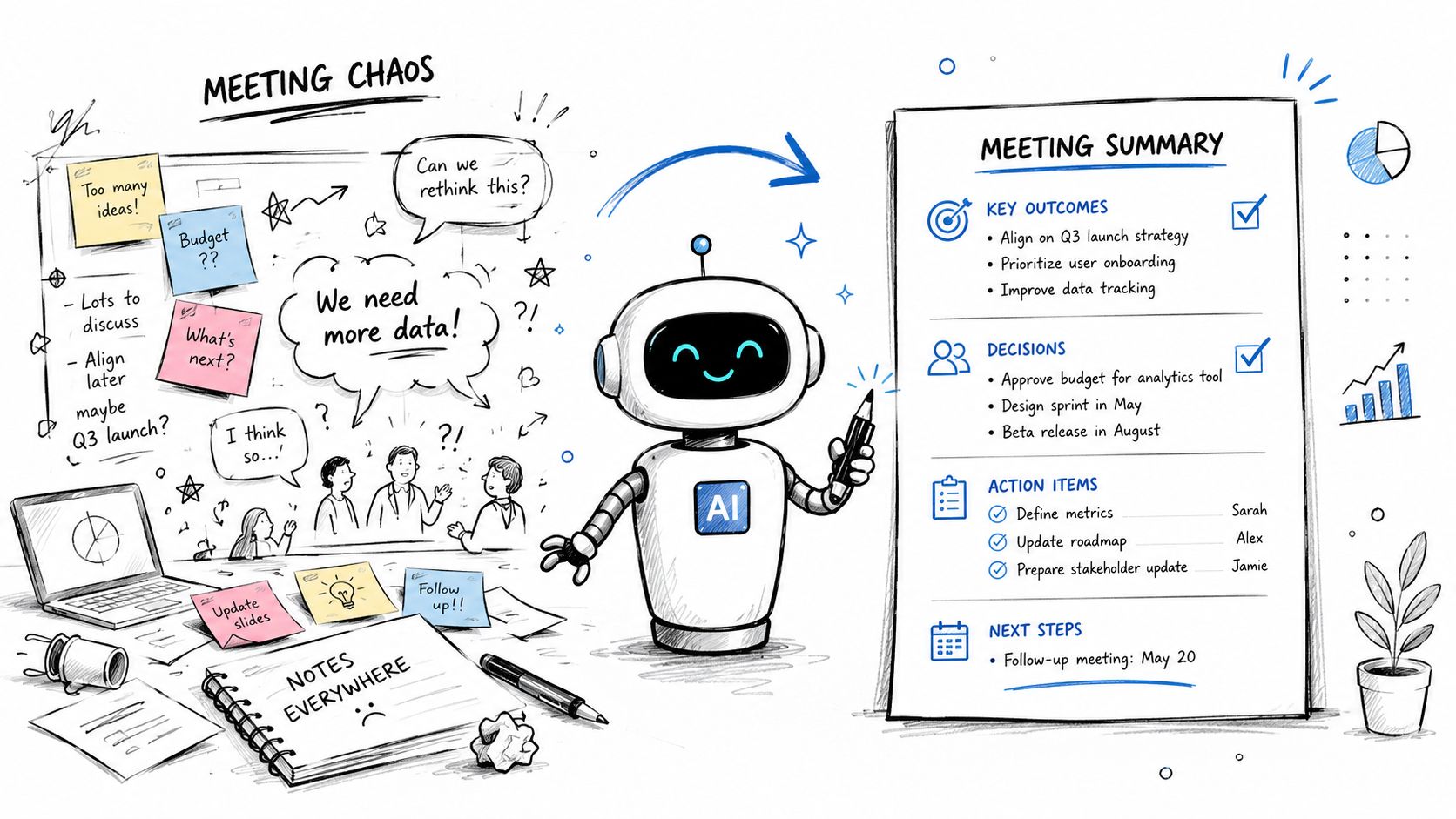
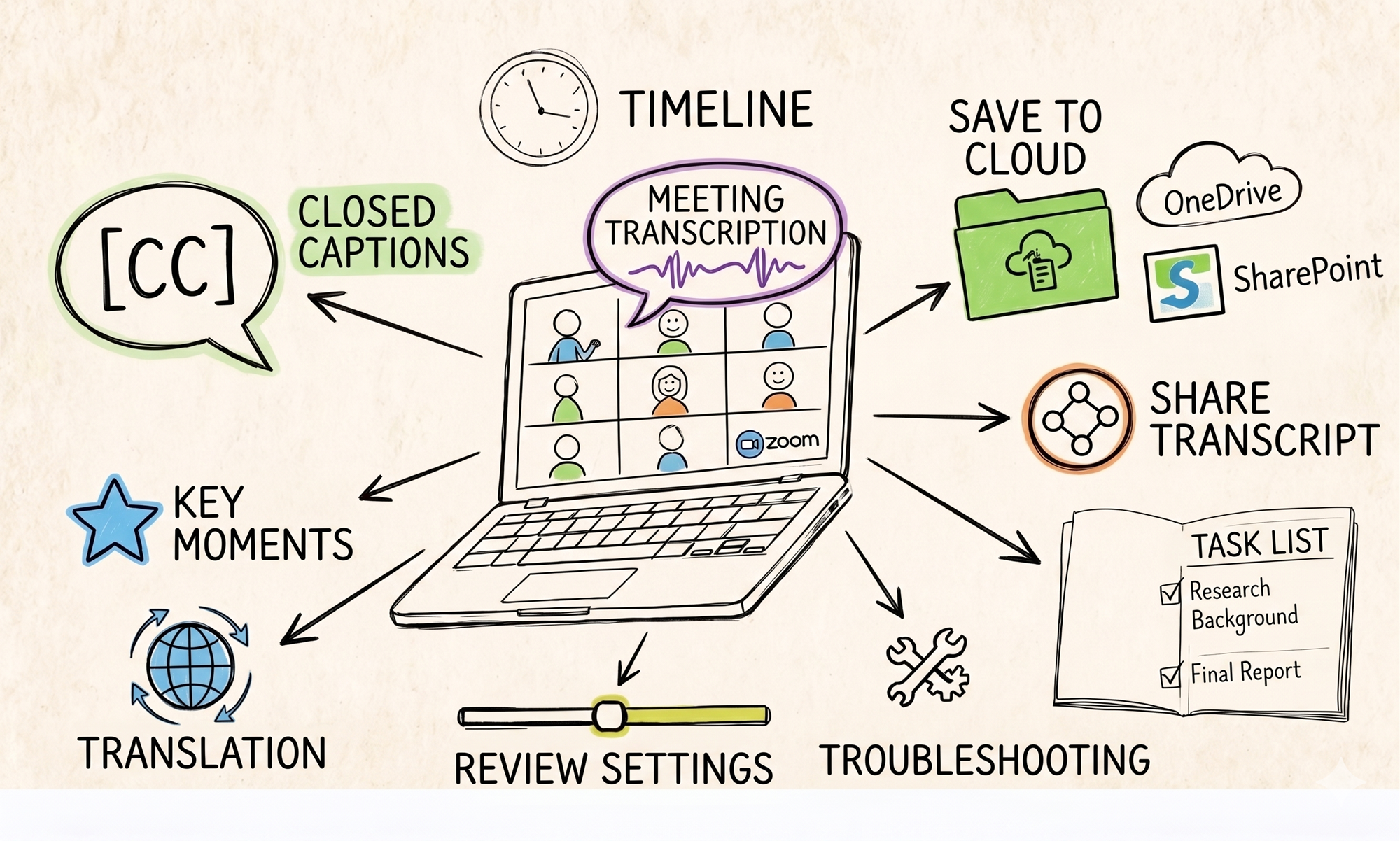
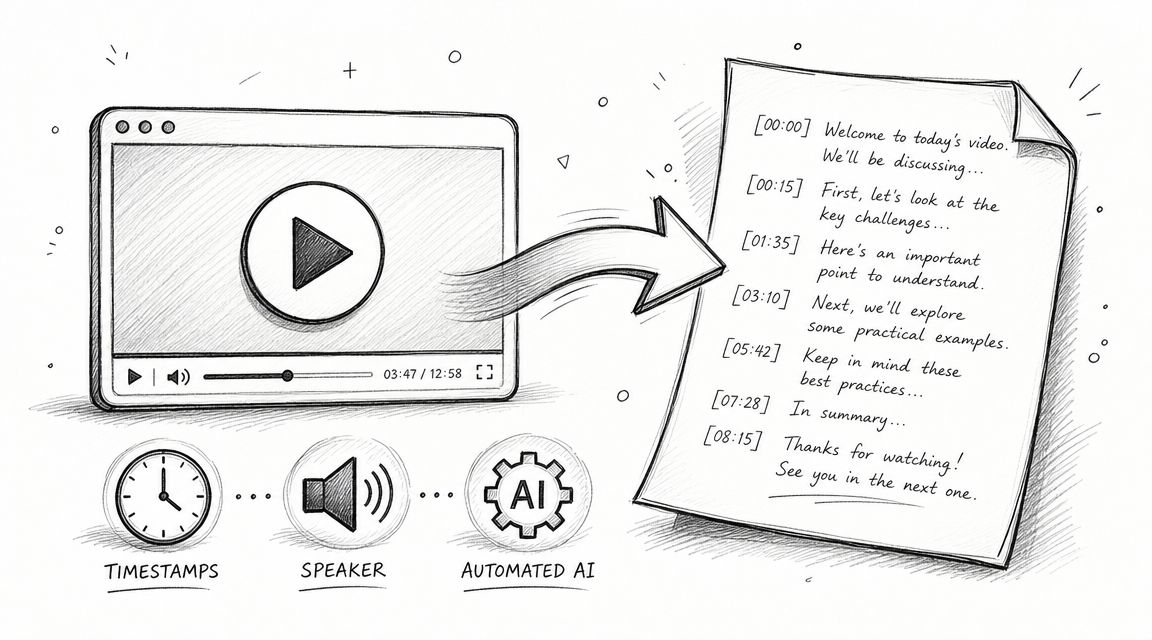
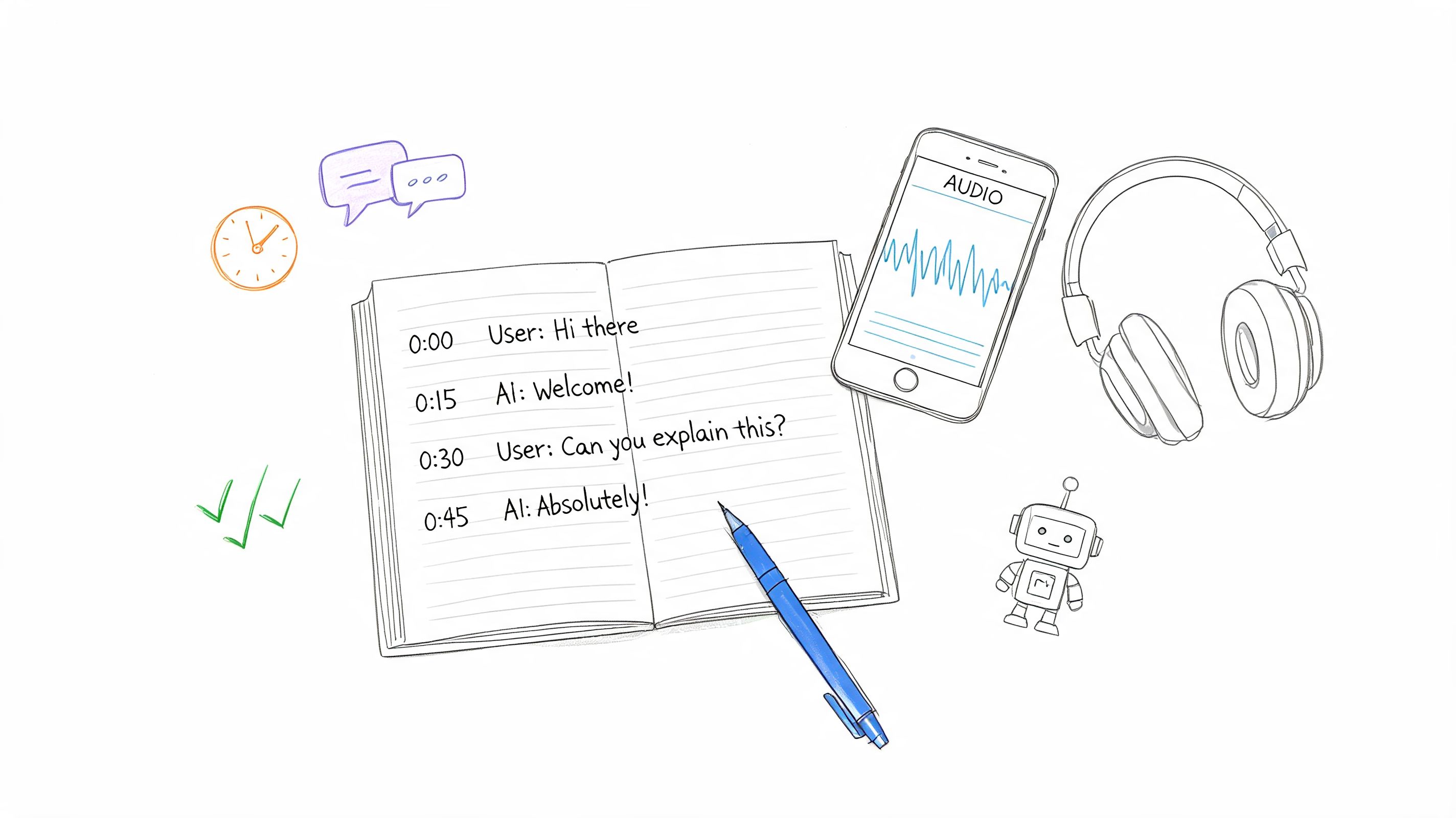
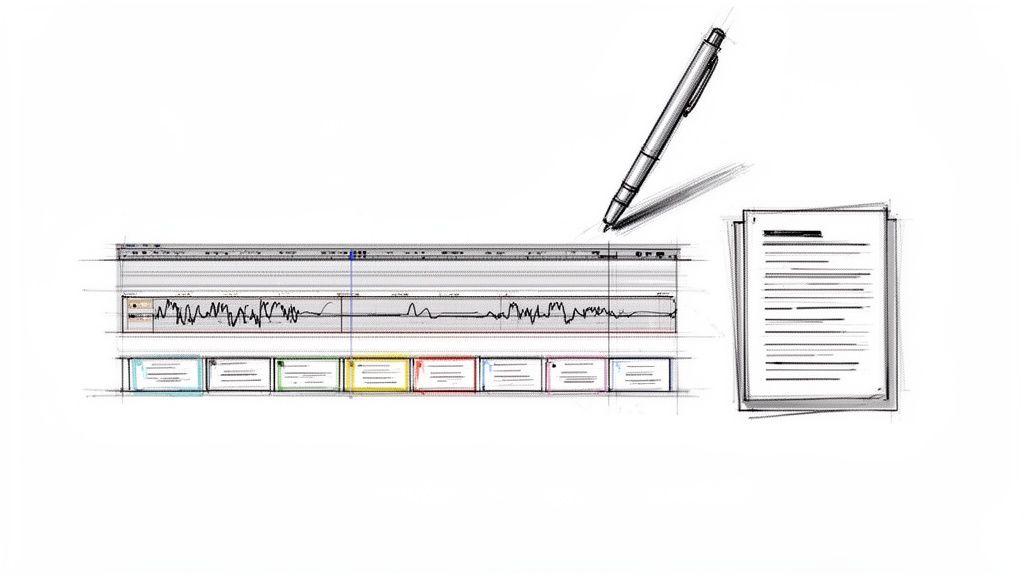
Forget waiting days for someone to type up minutes from messy notes. Now, you can get a full record of the meeting almost instantly. Tools like HypeScribe use AI to transcribe the entire conversation, giving you a searchable, accurate text file right away. This alone is a huge upgrade.
The real power isn't just the transcript itself, but what you can do with it. The post-meeting phase should be about activating decisions, not just documenting them.
This flow shows how a well-designed agenda places the most demanding strategic work right in the middle, sandwiched between more routine administrative items.
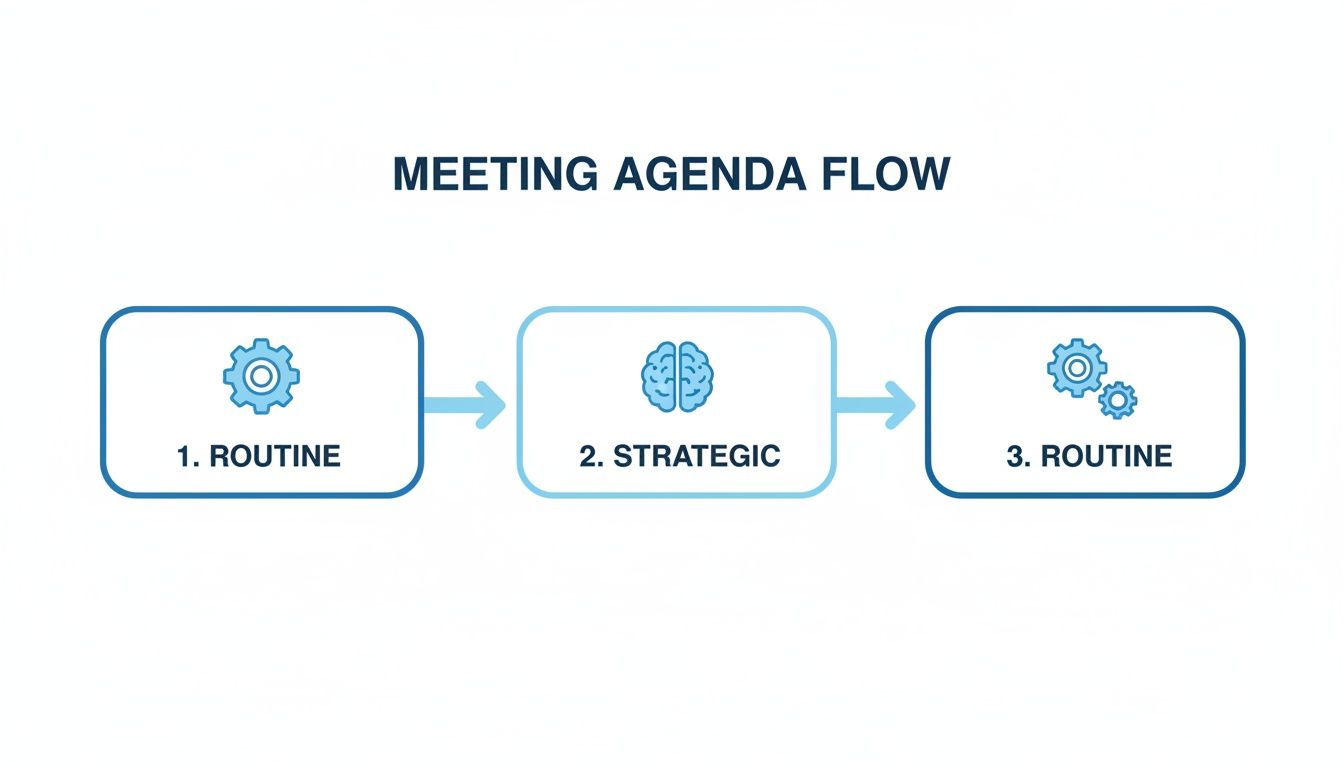
This model ensures the board is hitting those high-stakes decisions with peak mental energy, saving the procedural stuff for when focus is less critical.
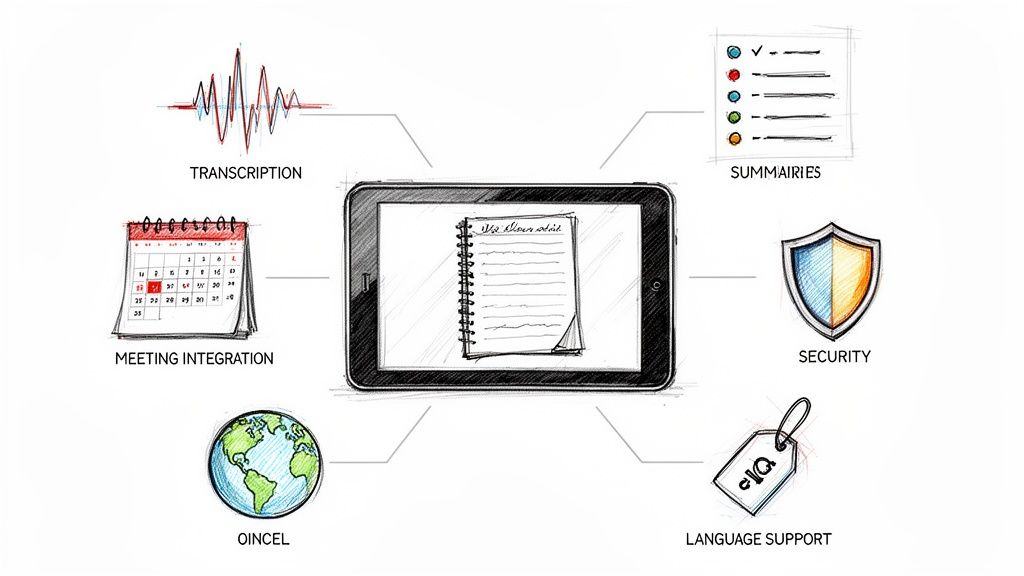
But it gets better. AI-powered platforms can analyze that transcript to automatically pull out smart summaries and, most importantly, identify clear action items. They can even suggest owners and deadlines based on what was said in the conversation.
This shifts your minutes from being a passive, historical document to a living, breathing accountability tool. No more "I thought you were handling that." Nothing gets lost, and every task has a name next to it. If this part of your process needs an overhaul, take a look at our guide for building a solid action item list. This is how you make sure the critical decisions made in the boardroom actually translate into progress.
Agenda templates that fit your organization
A one-size-fits-all agenda is a recipe for a terrible board meeting. What fires up a scrappy startup board will feel completely out of place for a formal non-profit. The agenda isn't just a list of topics; it's a reflection of your organization's culture, its current challenges, and its biggest ambitions.

To get you started, I've outlined three distinct frameworks below. Think of them less as rigid templates and more as strategic starting points. Pick the one that feels right, then tweak it until it perfectly suits your board.
The tech startup agenda: speed and growth
In a fast-moving startup, the board meeting is all about maintaining momentum. Your agenda needs to be lean, packed with data, and laser-focused on the metrics that define survival: growth, product, and runway. Forget long, winding reports. You need quick, actionable insights.
The thinking here is simple: startups live and die by their ability to adapt. The board’s job is to challenge assumptions, remove roadblocks, and offer wisdom on the next big bet.
A battle-tested startup agenda usually looks something like this:
- KPI Dashboard Review (15 min): A rapid-fire look at the vital signs—MRR, CAC, LTV, and churn. The point isn't a deep forensic analysis but to ground the conversation in facts.
- Product Roadmap Decision (30 min): This is the heart of the meeting. Frame it as a clear decision, like "Go/No-Go: Prioritize Feature X over Feature Y for the Q3 launch."
- Competitive Landscape & GTM Strategy (25 min): A forward-looking conversation about market shifts and strategic positioning. How can we outmaneuver the competition?
- Runway & Burn Rate Check (10 min): A quick, non-negotiable financial check-in. The board absolutely must know how much gas is in the tank.
- Action Items & Adjourn (10 min): Confirm who owns what by when. No ambiguity allowed.
This structure is deliberately aggressive. It forces a disciplined, execution-oriented conversation—exactly what a young company needs to thrive.
The non-profit agenda: mission and governance
A non-profit board serves two critical functions: driving the mission forward and ensuring rock-solid governance. The agenda has to reflect this delicate balance, giving equal airtime to programmatic impact, fundraising momentum, and financial stewardship.
Every discussion needs to tie back to the organization's core purpose while maintaining the trust of donors and the community you serve.
A non-profit agenda serves two masters: the mission it's sworn to protect and the stakeholders who make that mission possible. The structure must honor both by blending inspiration with rigorous oversight.
Key elements often include:
- Mission Moment (5 min): Kick things off with a powerful story or testimonial. It reconnects everyone to the "why" behind the work.
- Consent Agenda (5 min): Group routine items like minutes and standard committee reports into a single vote. This is a simple trick to save precious time for the big topics.
- Fundraising & Development Strategy (35 min): This is usually the main event. It’s where you dig into campaign progress, donor engagement, and the long-term financial health of the organization.
- Program Impact Review (20 min): A data-informed look at whether your services are delivering their intended outcomes.
- Governance & Compliance (15 min): Time dedicated to policy updates, board recruitment, or other essential fiduciary duties.
This format ensures all the boxes are ticked without ever losing the emotional and motivational core of the mission. When you're ready to capture the outcomes of these vital conversations, a well-structured summary is key. You can learn more by exploring our guide to creating a detailed meeting synopsis template.
The corporate board agenda: risk and oversight
For an established corporation, the quarterly board meeting is less about the day-to-day and more about oversight, risk management, and long-term strategic direction. The board’s role is to ensure stability, compliance, and sustainable growth.
The agenda is naturally more formal, with a strong emphasis on detailed committee reports and meticulous documentation. The goal is to provide a comprehensive, 360-degree view of the business, leaving no stone unturned.
A typical corporate agenda is built around:
- Audit Committee Report (25 min): A thorough review of financial health, internal controls, and enterprise-level risks.
- Compensation Committee Report (20 min): A focused discussion on executive performance, succession planning, and incentive structures.
This methodical, structured approach builds accountability and ensures comprehensive oversight—the bedrock for maintaining shareholder confidence in a complex business world.
Your board meeting agenda questions, answered
Even with a great template, a few tricky questions always pop up. Crafting the perfect agenda is more art than science, and navigating the nuances can be tough. Having been in countless boardrooms, I've seen what works (and what definitely doesn't). Let's clear up some of the most common sticking points.
Who actually owns the agenda?
While an administrator or corporate secretary might be the one typing it up, the buck stops with the Board Chair, who should be working hand-in-glove with the CEO or Executive Director.
This partnership is everything. The CEO is on the ground and knows the most urgent operational issues, but the Chair’s job is to ensure the agenda serves the board's bigger purpose—governance and long-term strategy. The best Chairs I've seen always meet with their CEO a week or two before the meeting to hammer out the priorities. They also make a point to check in with committee heads to make sure nothing important gets missed.
The Chair isn't just a facilitator; they are the architect of the meeting. They are the final gatekeeper ensuring the agenda is a strategic tool, not just an administrative to-do list.
I once saw an agenda mistake bring a school district board to a complete standstill. An important option for a critical vote was accidentally left off the official agenda. Legally, they couldn't vote on it. The result? A special meeting had to be called, causing frustrating delays over a simple clerical error.
How far in advance should we send everything out?
The gold standard is one full week before the meeting. That gives everyone time to actually read the board pack. If you absolutely can't manage that, a minimum of three to five business days is acceptable, but honestly, more time is always better.
This isn’t just about being polite; it’s about enabling effective governance. Giving your directors enough time means they can:
- Actually read the materials, not just skim the financials.
- Think deeply about the issues and come up with insightful questions.
- Show up ready to contribute, instead of trying to absorb complex info on the fly.
When you force directors to cram, the quality of their input plummets. Sending the materials out early shows you respect their time and their role.
How do we keep the meeting from going off the rails?
The Chair is the conductor of the orchestra, but the agenda is their sheet music. A well-structured agenda is your best defense against tangents and conversations that drag on forever.
Here are three practical techniques I’ve seen work wonders:
- Put times on it. Seriously, just writing a time limit next to each item (e.g., "Q3 Financial Review - 15 min") works. It sets expectations for the pace and gives the Chair the authority to say, "Great point, but we need to move on to stay on track."
- Use a 'Parking Lot'. When someone brings up a brilliant but off-topic idea, don't shut it down. Acknowledge it, thank them, and put it in the "parking lot"—a list of items to circle back to later or add to the next meeting's agenda. This keeps great ideas from getting lost without derailing the current conversation.
- Frame items as questions. As we've touched on, turning an item like "Proposed Budget" into "Should we approve the proposed Q4 budget?" immediately focuses the discussion on an outcome. It’s a simple shift that keeps the conversation moving toward a decision.
What exactly goes in the "board pack" with the agenda?
Think of the board pack as a complete briefing kit. It should have everything a director needs to get up to speed before the meeting, so you don't waste precious time on background explanations.
A solid board pack will always include:
- The final meeting agenda.
- Minutes from the last meeting (for approval).
- Up-to-date financial statements.
- A concise report from the CEO or Executive Director.
- Short, focused reports from the committees.
- Any detailed proposals, research, or background reading for major decisions on the agenda.
Putting together a well-organized board pack is a hallmark of good governance. It signals that you’re prepared, you value the board's time, and you're ready to have a productive, high-impact meeting.
Crafting the perfect board meeting agenda is the first step, but what about capturing the results? With HypeScribe, you can move from discussion to action seamlessly. Our AI-powered platform transcribes your entire meeting, then automatically generates smart summaries and a clear list of action items, so nothing ever gets lost.
Stop taking notes and start making decisions with HypeScribe today.