How to Use Dictation on Mac: Turn It On in 30 Seconds

Here is the whole setup for dictation on Mac, in one line: System Settings > Keyboard, turn on "Dictation", then press the Fn key twice and start talking. That is it — the feature ships with macOS, and it costs nothing.
The rest of this guide covers what to do next: the voice commands for punctuation and formatting, how to switch dictation offline so audio never leaves your Mac, and what to check when accuracy falls apart.
Your Quick Start to Hands-Free Typing on Mac

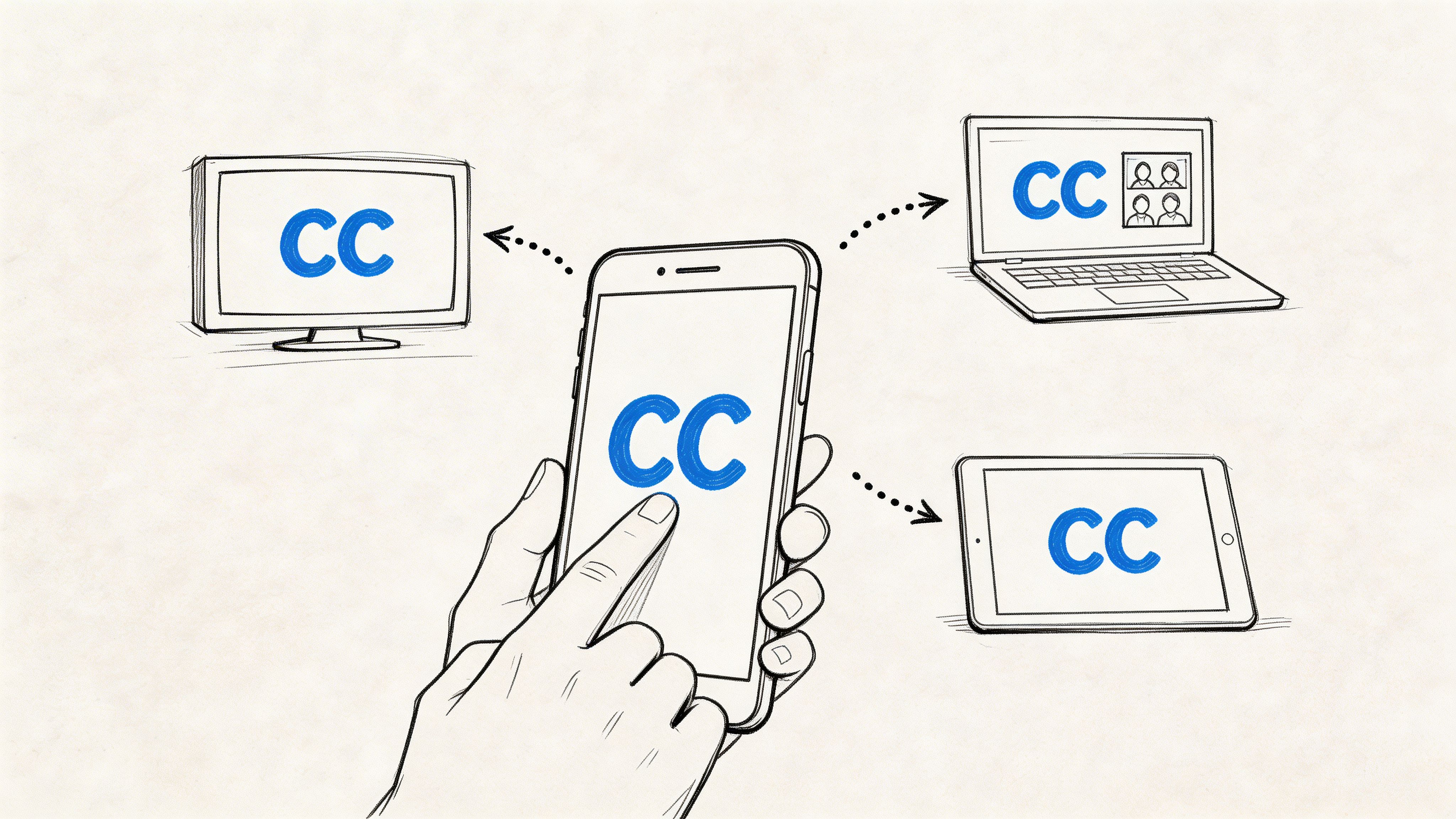
Dictation works in any text field on the Mac — Mail, Notes, Pages, a browser form. Once it is on, the same double-tap of Fn starts it everywhere.
Getting Started in Seconds
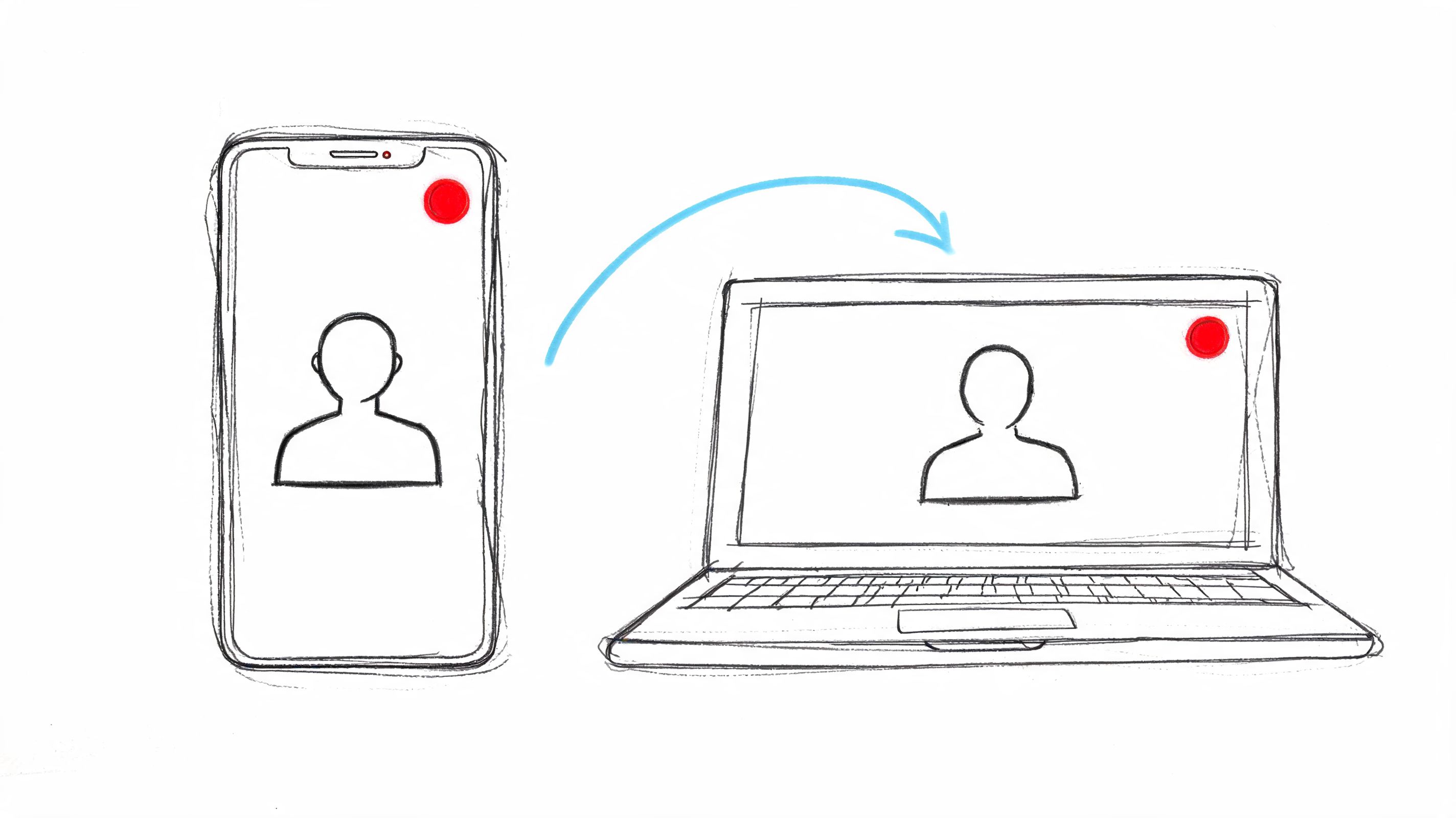
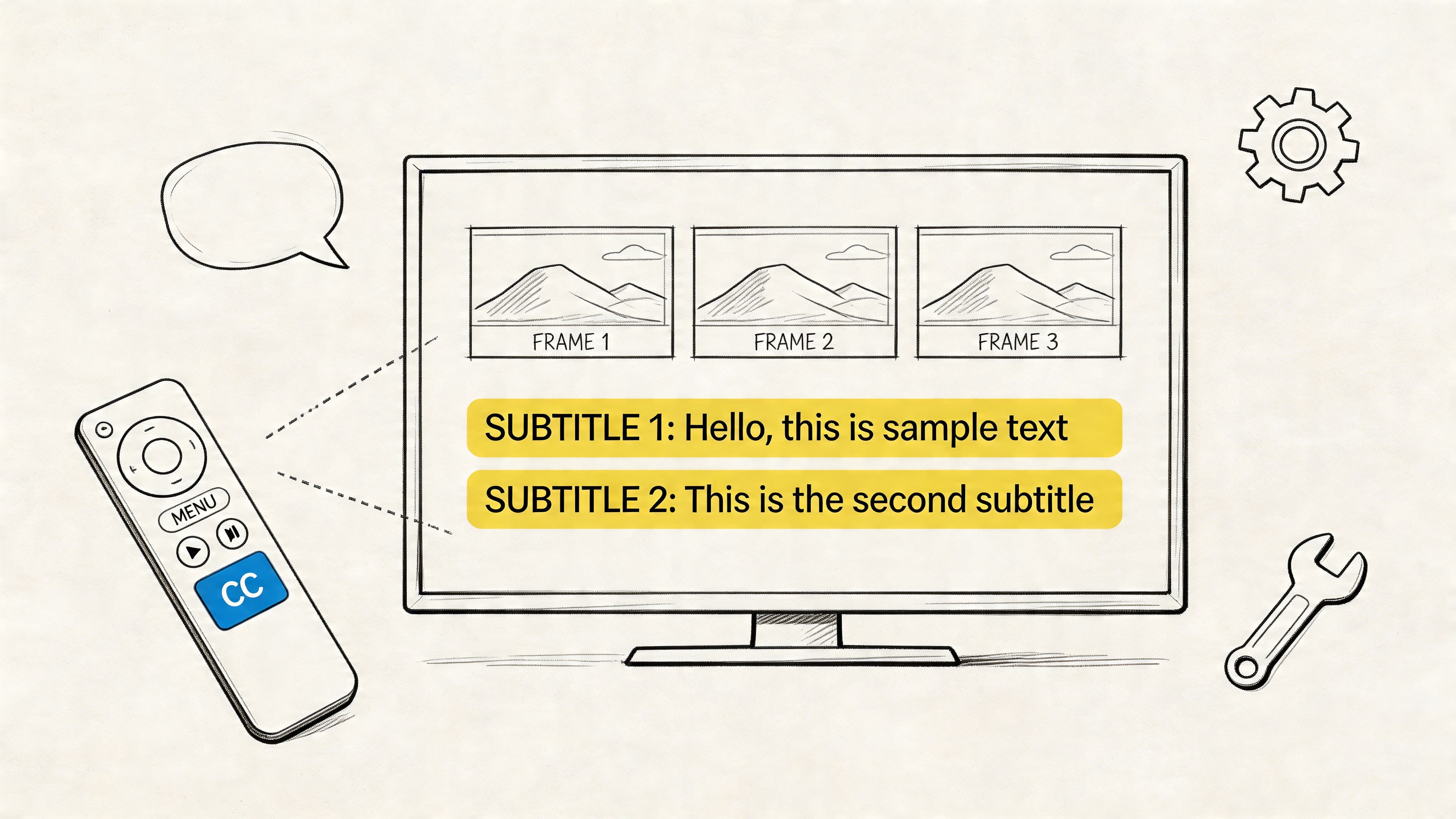
Once you've enabled dictation, the real fun begins. The default shortcut is a quick double-tap of the Fn (Function) key. This summons a small microphone icon on your screen, which is your cue that the Mac is listening.
Talk at a natural pace and the words appear in whatever field is active.
My Personal Tip: Don't stress about speaking perfectly. The system is surprisingly forgiving with natural speech. I often use it to get a stream of consciousness down for a first draft, then I'll circle back to clean it up. From my experience, it’s much faster than trying to type and think at the same time.
The built-in tool covers everyday work, but it is not the only option. If you're curious about what else is available, it’s worth checking out our guide on the best free speech-to-text programs.
Why I Make Mac Dictation Part of My Workflow
Three reasons it earns a place in a daily workflow:
- Speed: most people speak roughly three times faster than they type.
- Hands free: useful for taking notes while reading something on paper or on a second screen.
- Less strain: a break for wrists that spend the day on a keyboard.
Voice commands worth memorising
To really get the most out of dictation, you need to learn a few basic commands for punctuation and formatting. This is what separates casual use from true productivity. You just say the name of the punctuation or action you want.
Here’s a quick reference table with some of the most common commands I use daily to get you started.
Learning these basic commands is the first step. Once they become second nature from personal use, you'll find your dictation workflow becomes incredibly smooth and efficient.
Mastering Advanced Dictation Commands and Languages

Once you’ve got the hang of basic punctuation, you can really start to fly. This is where Mac's Dictation moves beyond simple transcription and becomes a true hands-free productivity tool. We’re talking about formatting entire documents, creating lists, and even dropping in an emoji or two, all with your voice.
This is the stuff that separates the casual user from the power user. Instead of dictating a block of text and then going back to manually format everything, you can build a finished document in one fluid motion. In my experience, this is where you’ll see the biggest time savings.
Formatting on the Fly
You can apply formatting as you speak or by selecting existing text and issuing a voice command. It’s incredibly handy for structuring notes or highlighting key ideas without ever touching your mouse.
For instance, just say "make this bold" right after a phrase, and your Mac does it. This one command alone is a massive efficiency booster, especially when I'm drafting reports or emails where I need to draw attention to specific points.
My Personal Tip: To get started, just memorize three commands: "bold that," "italicize that," and "underline that." Once those become muscle memory, dictating feels far more natural, and you'll find yourself reaching for the keyboard way less often.
For specialised or sensitive content, it may be worth checking the top speech-to-text software can introduce you to platforms with even more advanced features.
Dictating Lists and Emojis
Lists work by voice too, without breaking your train of thought.
- To kick off a numbered list, just say, "start numbered list."
- Speak your first item, then say "new line" for the next. The numbering is all handled for you.
The same goes for bullet points; just say "start bulleted list." This is perfect for jotting down a quick to-do list, outlining slides for a presentation, or capturing action items from a meeting on the fly.
And yes, you can even dictate emojis. Simply say the name of the emoji followed by the word "emoji." For example, saying "winky face emoji" inserts a 😉 directly into your text. It's a fun little touch that makes dictation feel more complete.
Speaking Multiple Languages
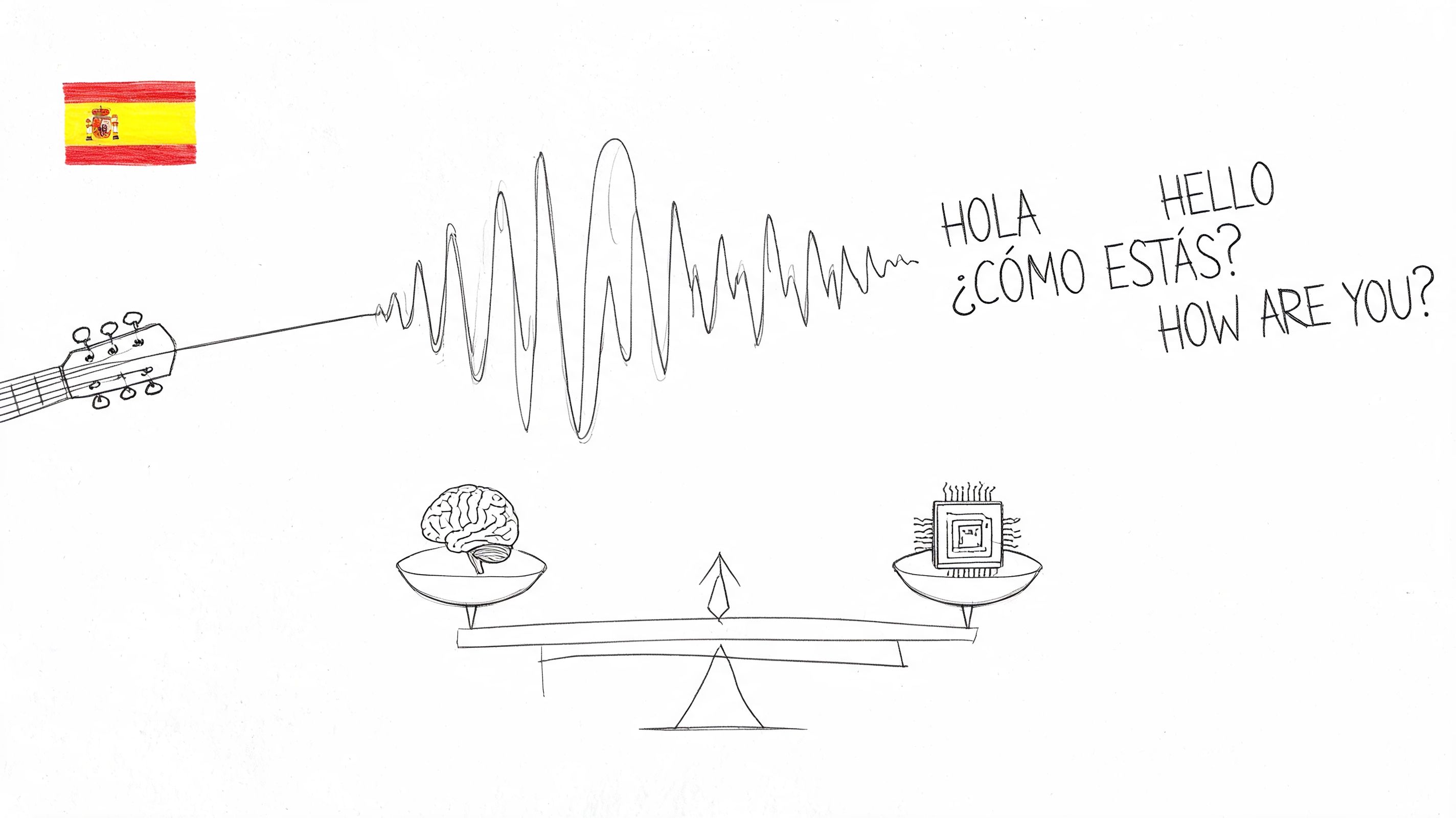
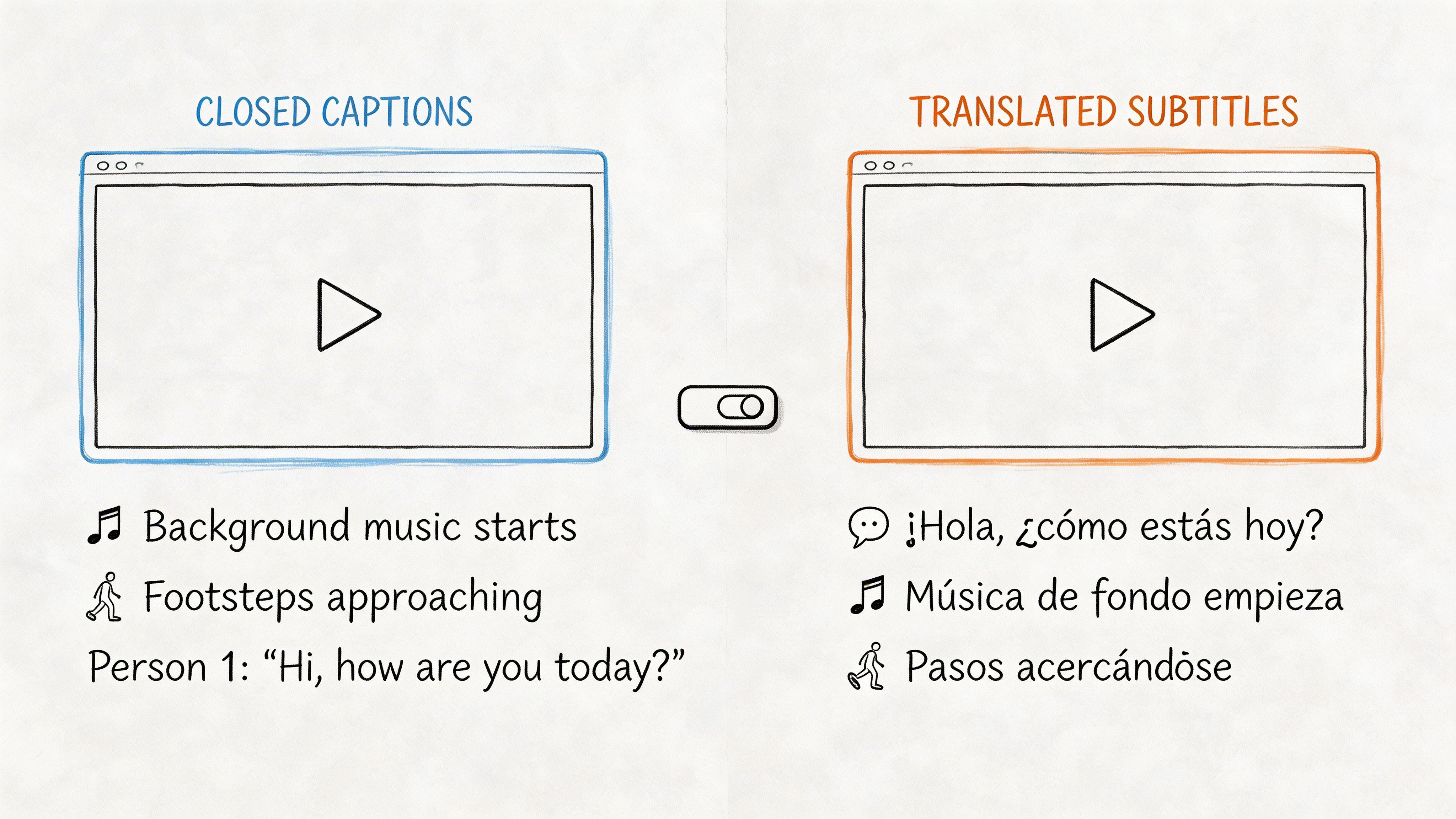
If you're multilingual or work with international teams, you'll be happy to know that Mac's Dictation handles multiple languages effortlessly. You can add new languages by going to System Settings > Keyboard > Dictation. Once a language is added, your Mac can automatically figure out which one you're speaking.
The auto-detection is impressively accurate and smooth. I frequently switch between English and Spanish in my own work, and it keeps up without needing me to change any settings. Useful if you write in two languages during the same session.
Choosing Between Online and Offline Dictation
There is one setting that changes both speed and privacy: whether dictation runs online or on your Mac. Both turn speech into text; what differs is where your voice goes.
By default, your Mac often leans on server-based (online) dictation. This means your voice gets sent over the internet to Apple's powerful servers for processing. The main upside? Those servers have access to enormous language models, which can sometimes give you a slight edge in accuracy, especially with technical or niche terminology.
But that approach has its downsides. If you’re ever worried about privacy or find yourself working with a spotty internet connection, online dictation can quickly become a liability.
The Case for Offline Dictation
Based on my experience, for most people, offline dictation—Apple calls it On-Device Dictation—is the way to go. Once you enable it, every bit of voice processing happens right there on your Mac. Nothing ever leaves your machine to be sent to Apple.
This is a massive win for privacy. It's the only real choice if you're dealing with sensitive information—think confidential client notes, private medical dictations, or privileged legal discussions.
Beyond the obvious privacy benefits, you'll notice offline dictation is just plain faster. Because your Mac isn't waiting to send data to a server and get a response, your words pop up on the screen almost instantly. The whole experience feels more responsive and less clunky.
Key Takeaway: If speed and privacy are important to you, switching to On-Device Dictation is a must. Your data stays on your Mac, and the responsiveness is far better. You don't even need an internet connection for it to work.
How to Enable Offline Mode
Making the switch to offline dictation is a simple tweak I recommend to virtually everyone, as it makes a huge difference in day-to-day use.
Here’s how to check your settings and get it running locally:
- Head over to System Settings.
- Click on Keyboard in the sidebar.
- Find the Dictation area and look for the "i" info button next to your chosen language.
- In the window that pops up, make sure the "On-Device" option is downloaded and selected.
That’s it. Once enabled, your Mac will handle all dictation right on the device, giving you faster performance and the peace of mind that your conversations stay private.
Solving Common Mac Dictation Problems
Dictation fails in three ways: it does not start, it starts but hears nothing, or it hears everything wrong. Each has a short list of causes.
Is It Plugged In? Checking Your Microphone
Before you start digging through system settings, let's check the basics. From my experience, the first and most common culprit is almost always the microphone.
If you hit your keyboard shortcut and the little microphone icon doesn't pop up—or it appears but doesn't budge when you speak—you likely have an input problem.
The first place to look is System Settings > Keyboard > Dictation. Find the "Microphone Source" dropdown menu and make sure the right mic is selected. It's easy for your Mac to default to the internal microphone when you really want it to use your external headset.
If you use a wireless mic or headset, check the Bluetooth connection too — a weak or unstable link degrades accuracy long before you notice the audio itself is bad. Re-pair the device if dictation works fine with the built-in mic but not with the headset.
When Accuracy Takes a Nosedive
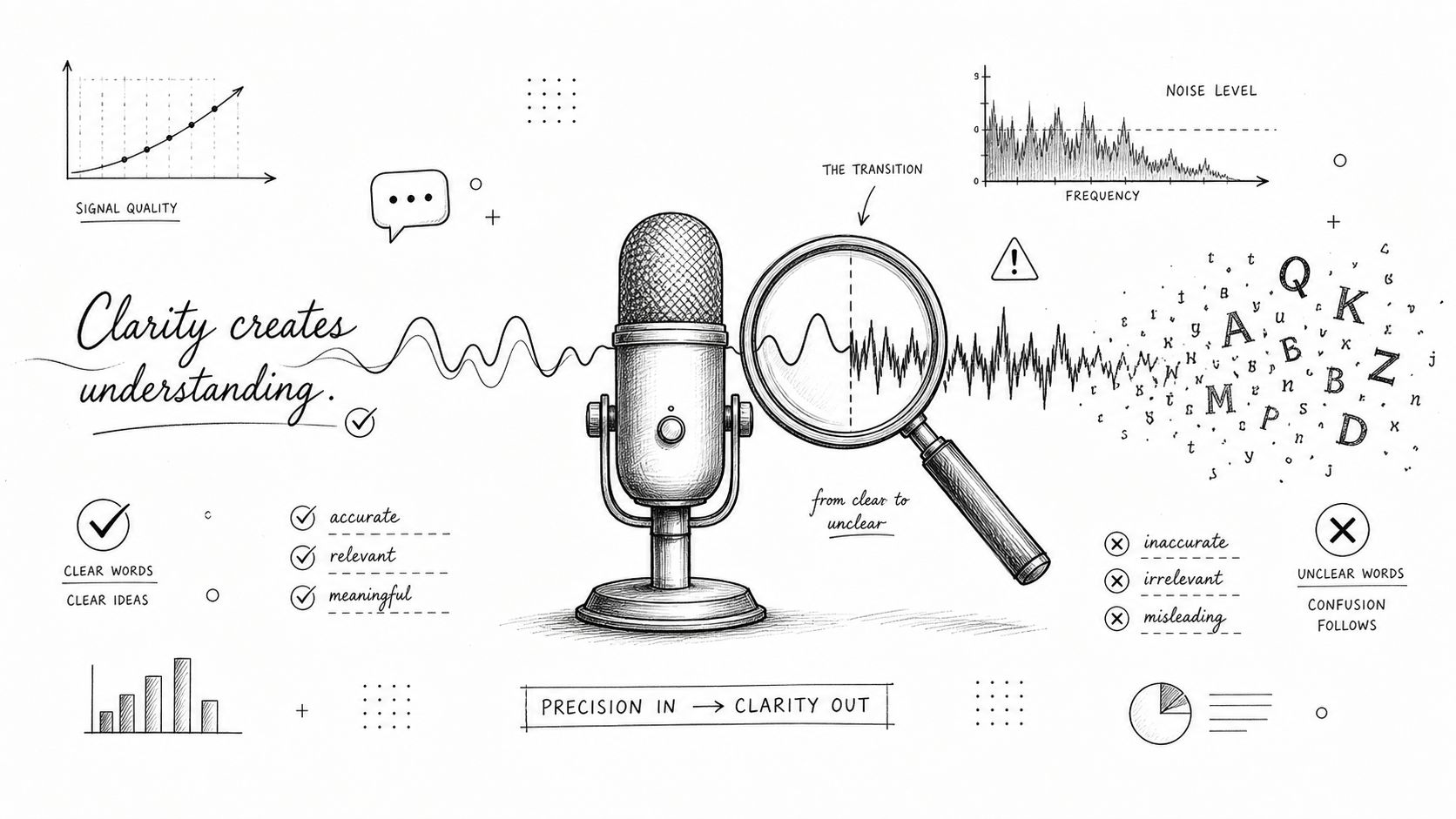
What about when Dictation is listening but getting everything wrong? One day it's flawless, the next it’s a mess. This sudden drop in accuracy usually points to your environment or a temporary software glitch.
Apple's dictation has improved significantly over the years, especially since the offline mode introduced in macOS Ventura slashed latency. Still, it's not perfect. For instance, some studies have shown that recognition issues can occur for users who stutter, and similar problems can pop up for anyone with a poor mic or a noisy room.
If your accuracy has plummeted, run through this quick checklist:
- Cut the Noise: A humming fan, traffic from an open window, or even a quiet conversation in the next room can throw off the dictation engine. Try to find a quieter space.
- Speak Clearly: It sounds obvious, but mumbling or talking too fast is a primary source of errors. I focus on enunciating my words at a steady, natural pace.
- Toggle It Off and On: The classic IT fix works wonders here. Go into System Settings, turn Dictation off, then turn it back on. You'd be surprised how often this simple reset resolves the problem.
My Personal Fix: Whenever my dictation starts acting strange, my first move is to give it a quick reboot. I head into settings, switch Dictation off, count to ten, and switch it back on. This simple cycle often clears up whatever temporary software conflict was causing the trouble.
If these quick fixes don't do the trick, it might be time for a slightly deeper reset. This usually means clearing out corrupted preference files that could be causing the persistent glitches.
What to Do With Recordings Dictation Cannot Handle
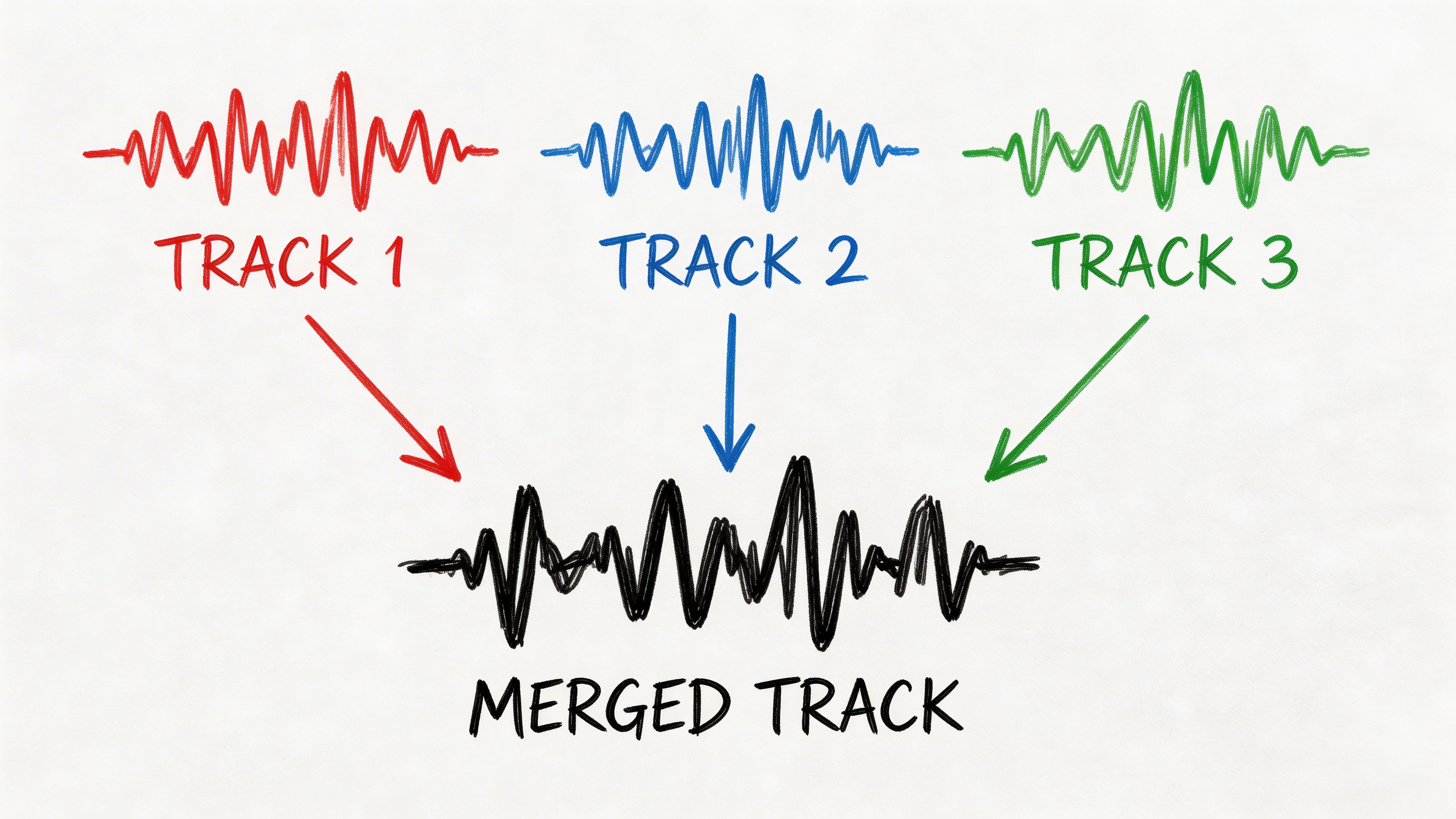
Mac Dictation listens in bursts of 30–40 seconds. That rules out the thing people most want transcribed: a meeting, a lecture, an interview — anything already recorded.
For those, the workflow is the other way round: record first, transcribe afterwards.
Two Tools, Two Different Jobs
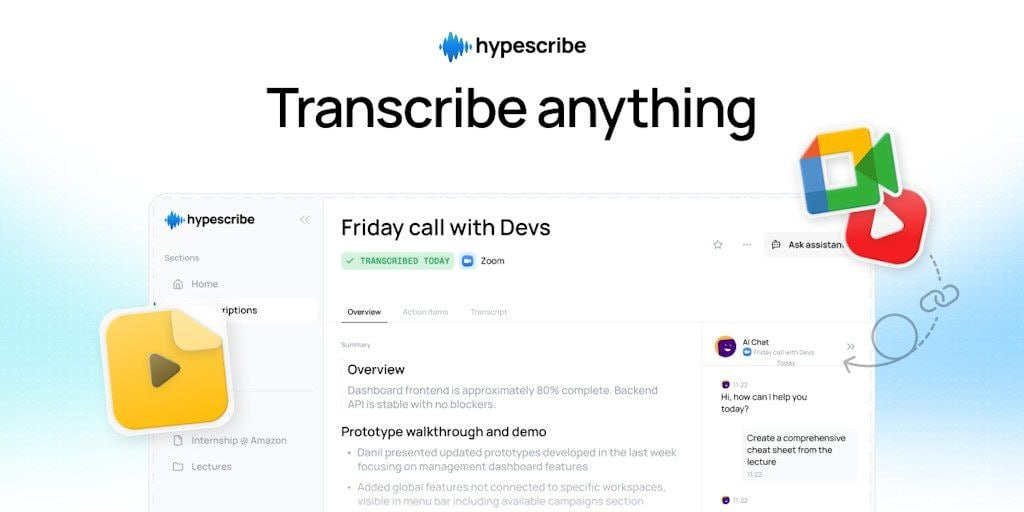
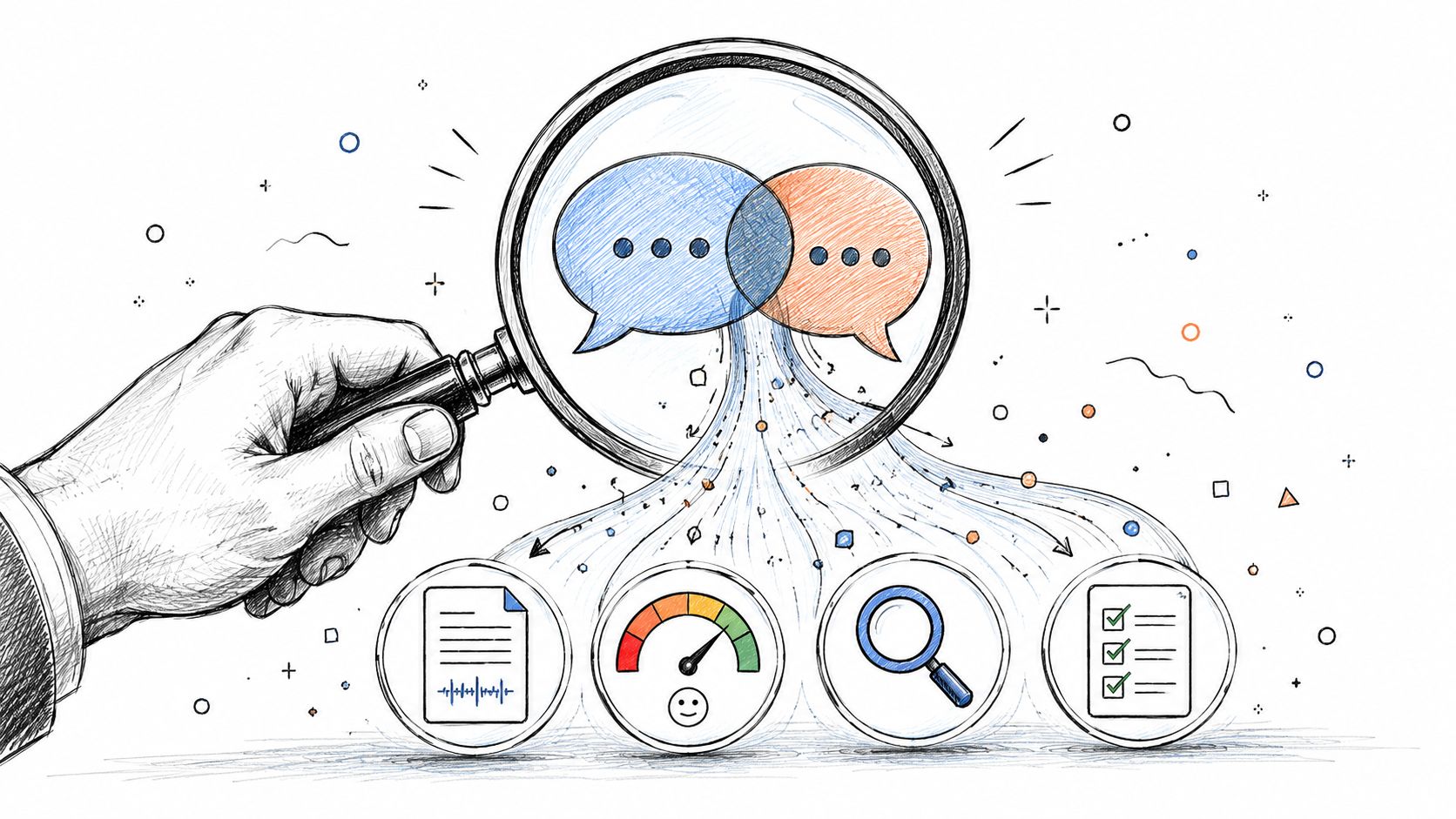
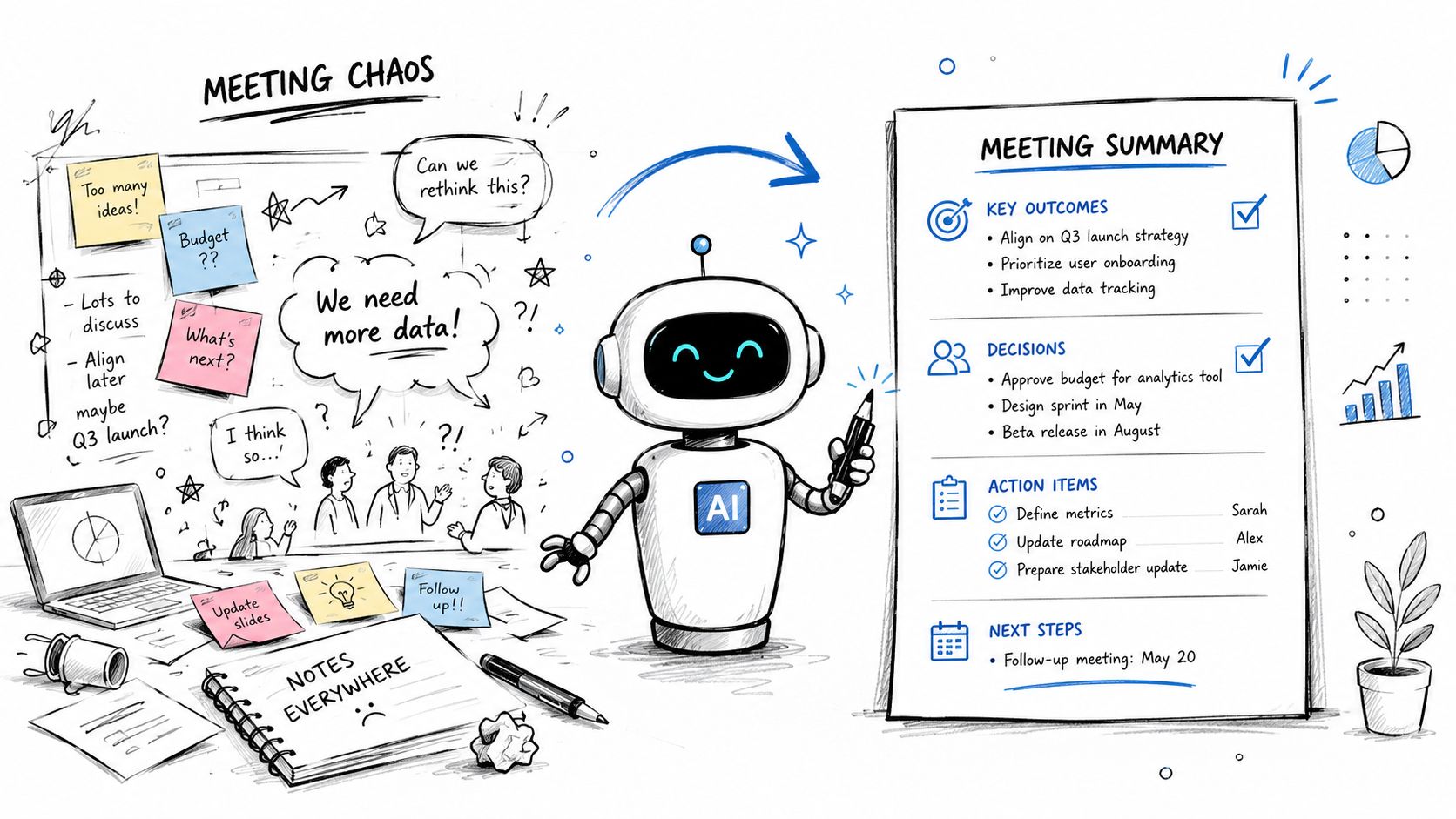
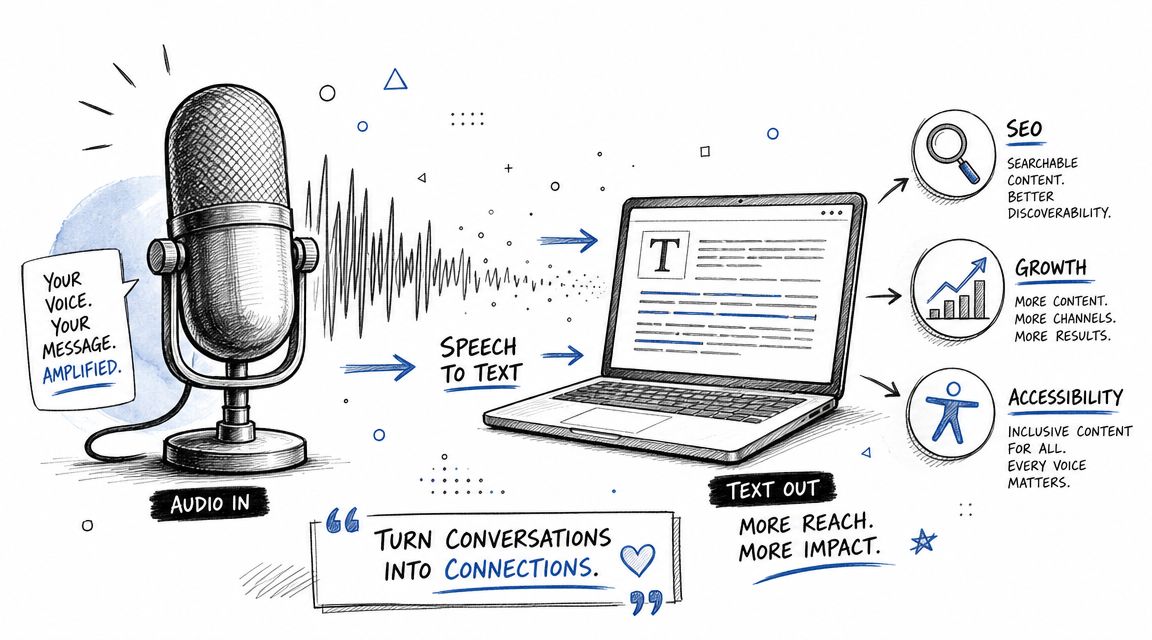
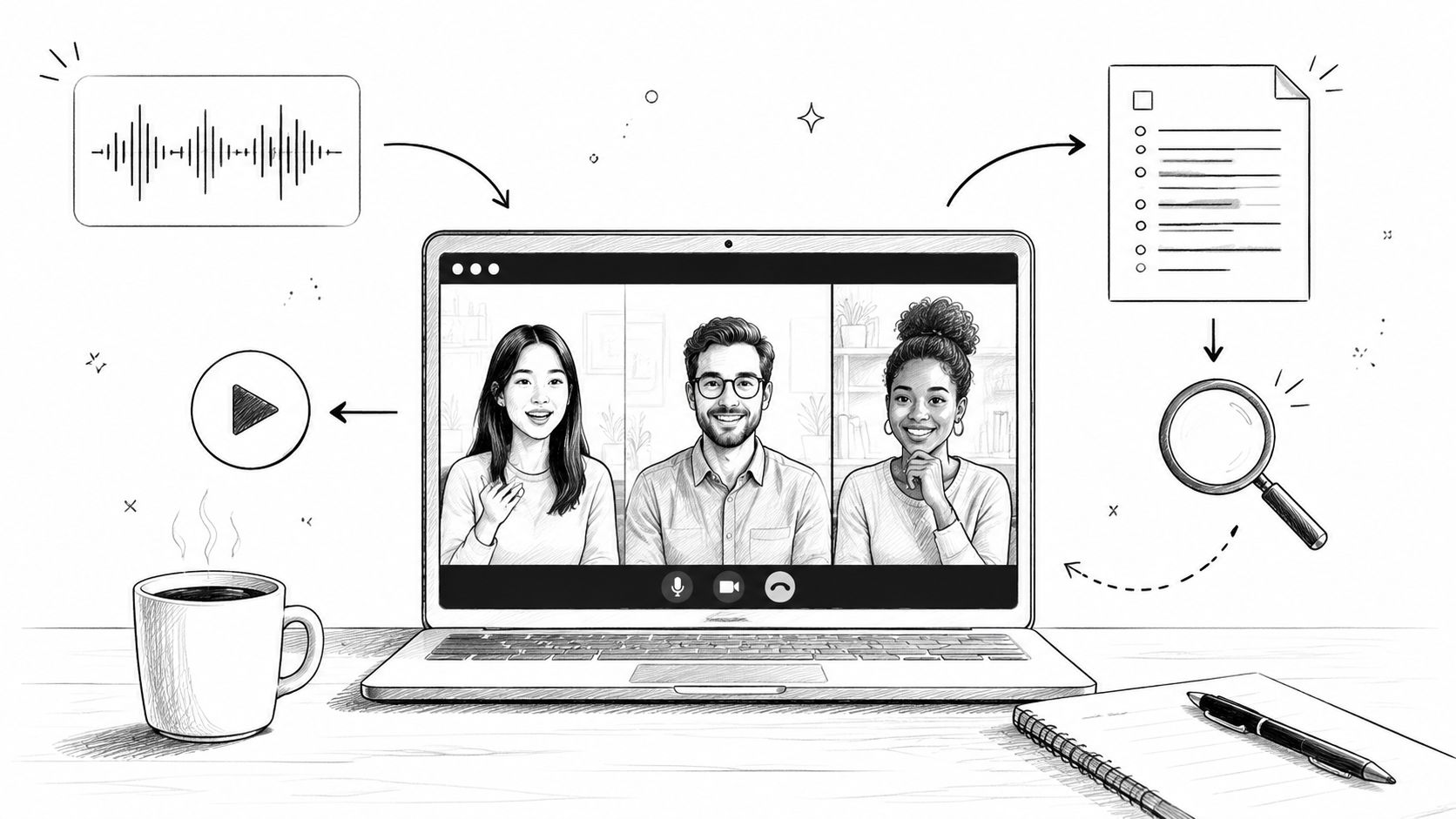
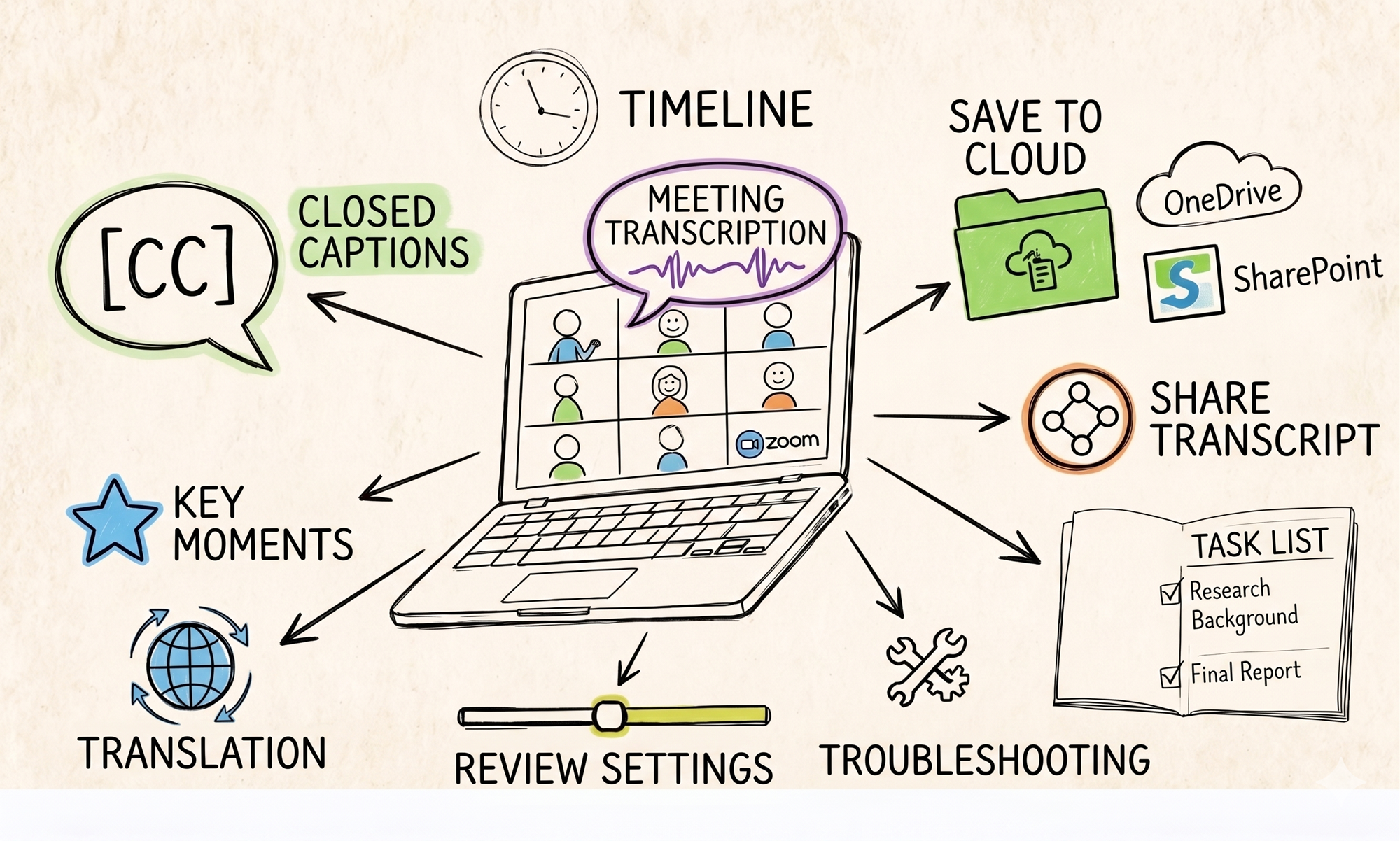
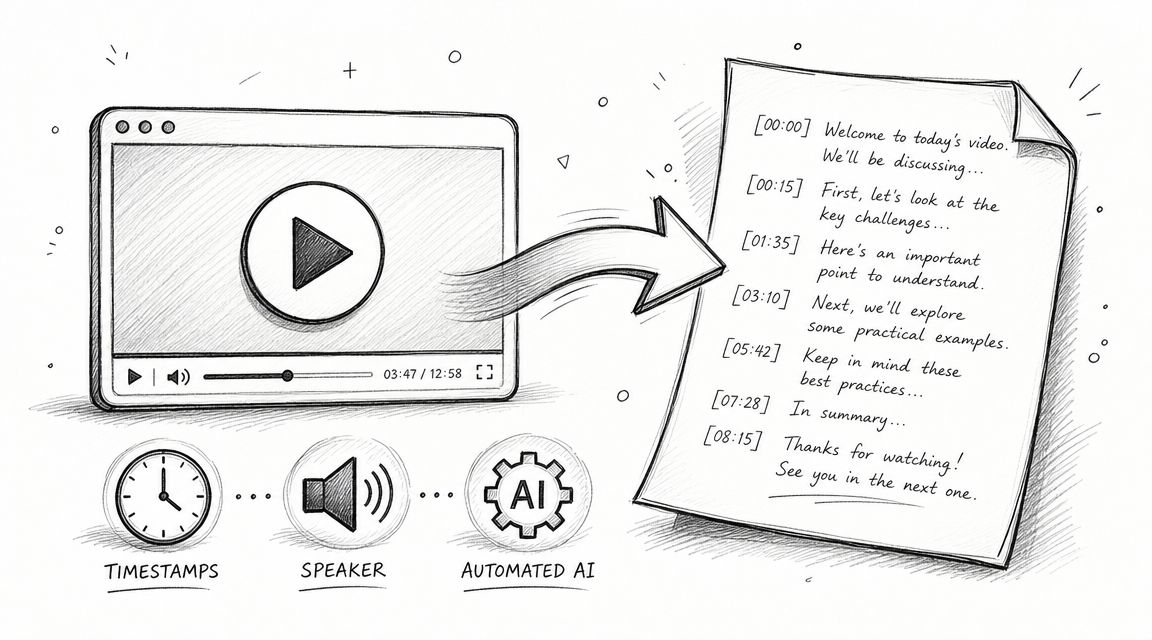
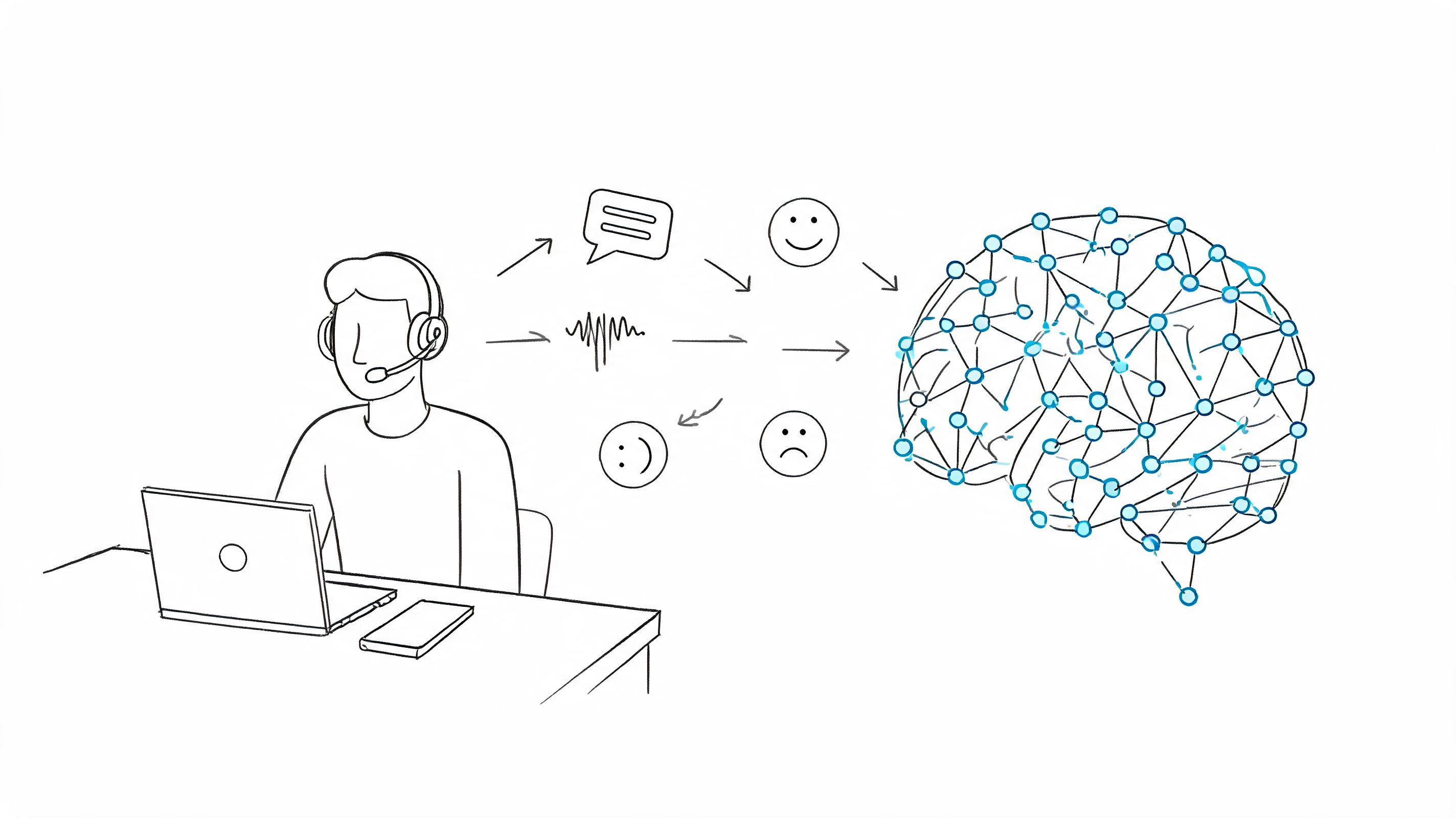
Here the two tools do different jobs. Dictation turns your own speech into text as you speak. HypeScribe takes an existing recording — the call itself, not your notes about it — and returns the transcript with a summary and the action items separated out.
Which means the practical workflow is simpler than dictating a recap: record the call, upload the file, read the summary. Nothing is retyped, and nothing depends on how well you remembered the meeting five minutes after it ended.
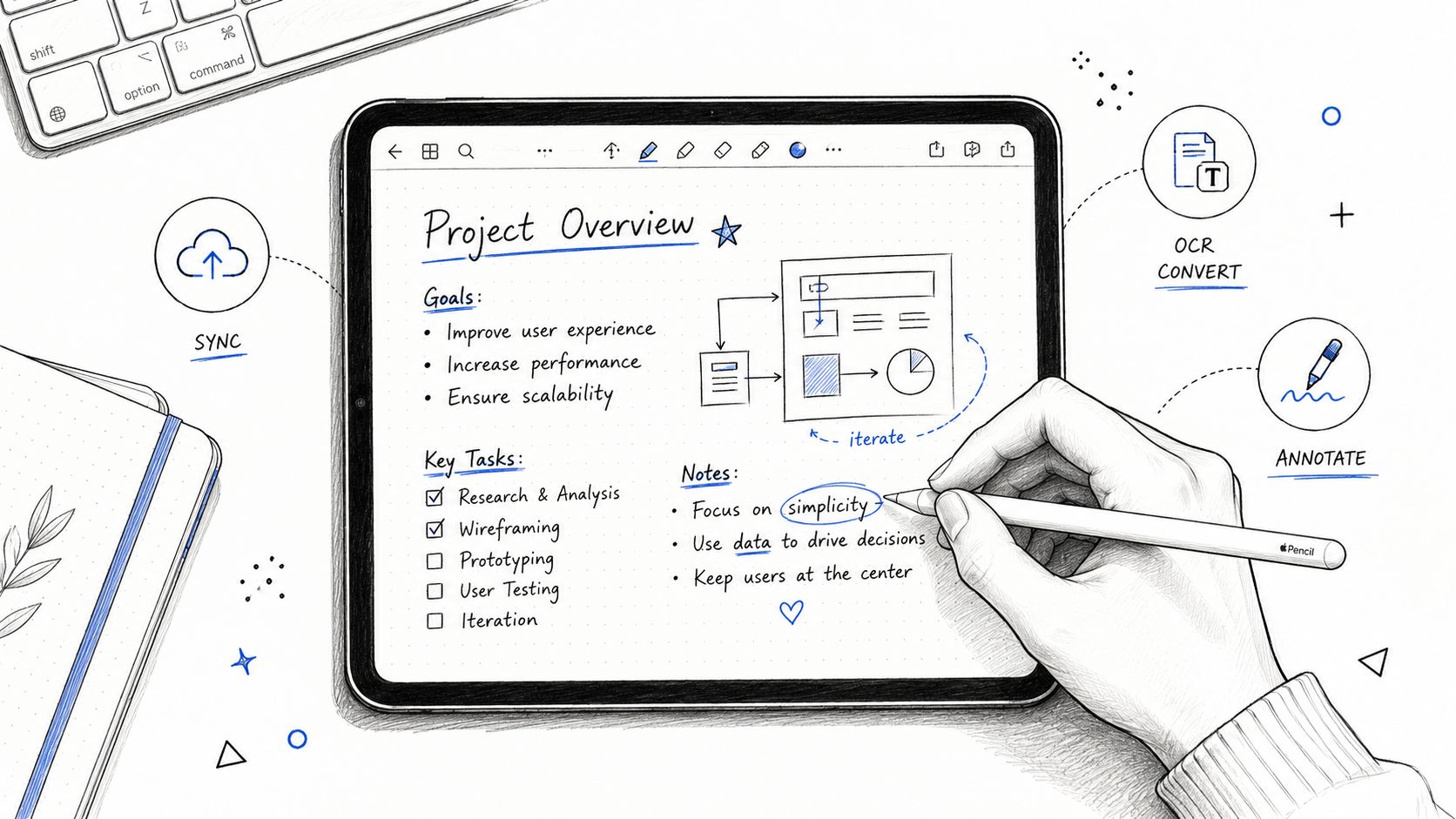
Dictation still earns its place for the thoughts that exist only in your head — the walk-and-talk idea, the quick note between meetings. The two are complementary, not competing.
This approach is a lifesaver for anyone who needs to translate conversations into concrete actions, like project managers, consultants, or any kind of team lead.
A Practical Workflow Example
Say you have just finished a 30-minute project kickoff and need the notes out today.
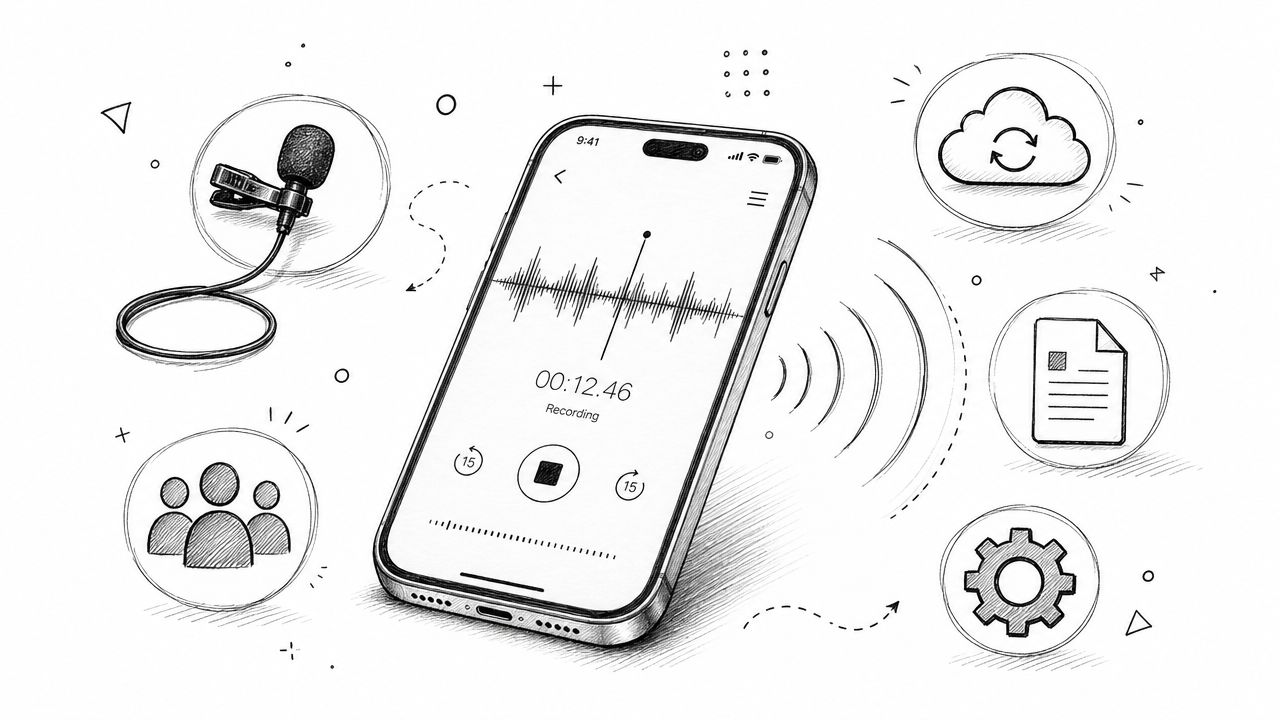
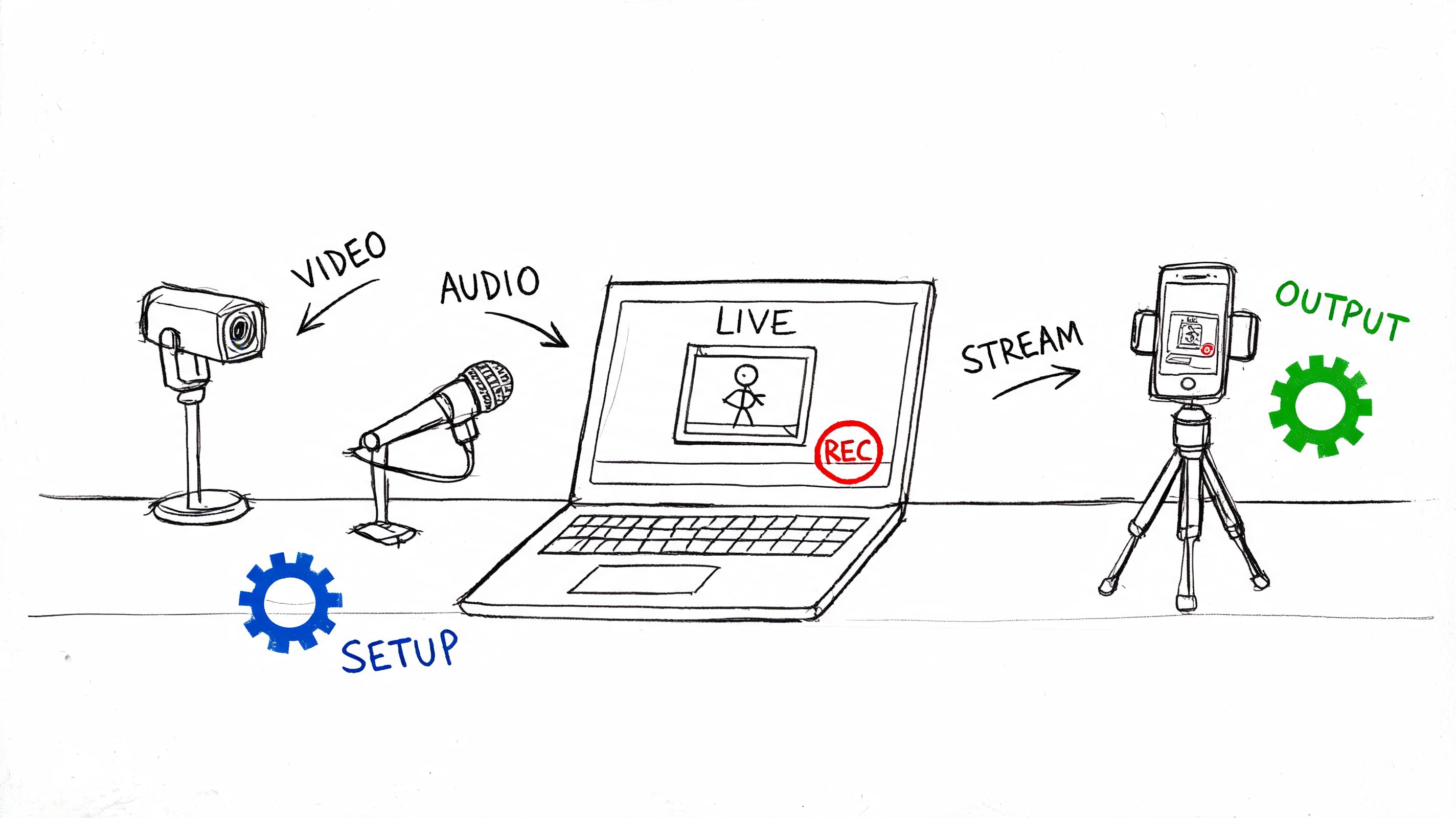
First, record the meeting — Zoom, Meet and Teams all record natively, and for an in-person session the Voice Memos app on your Mac or phone is enough.
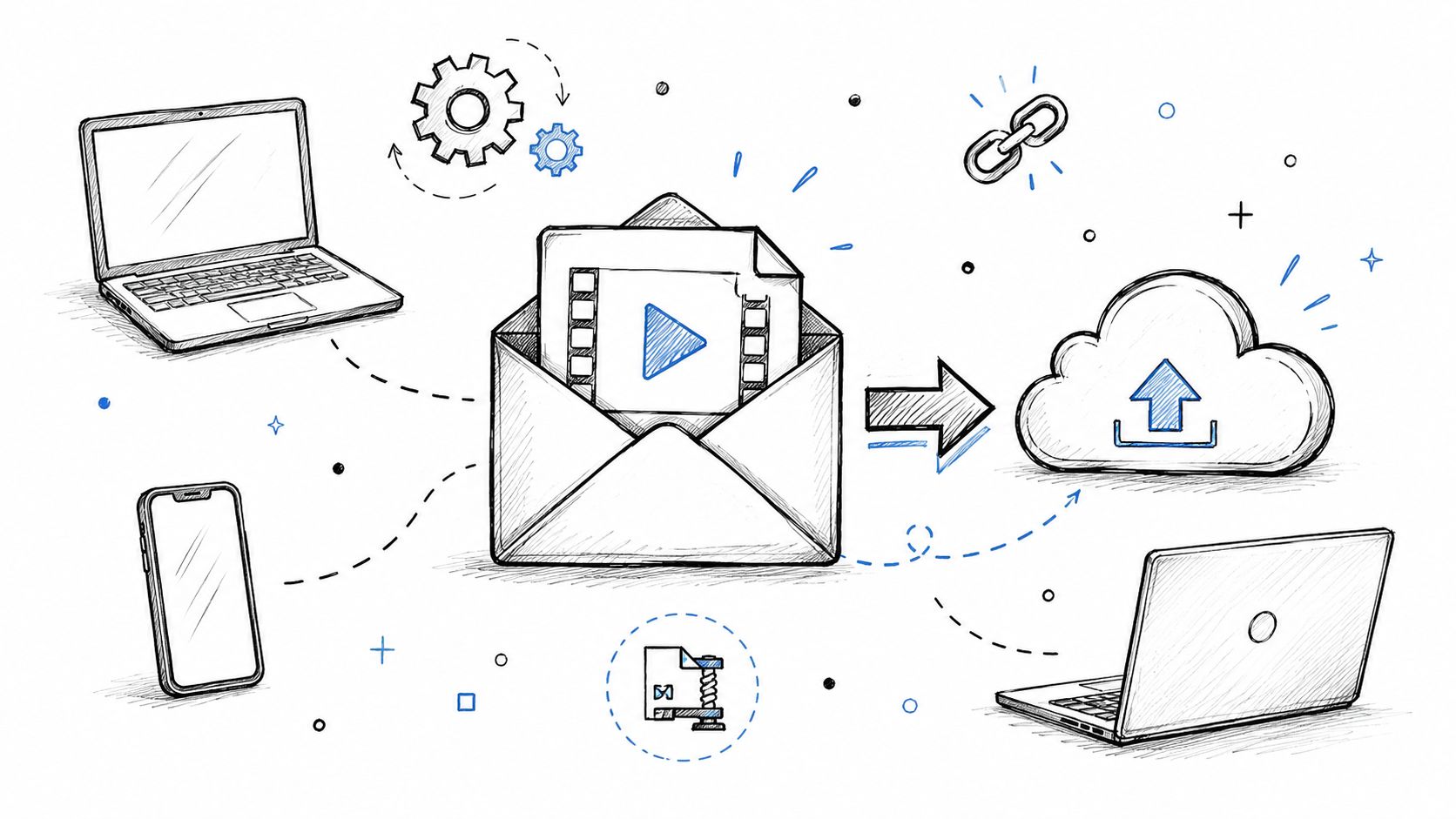
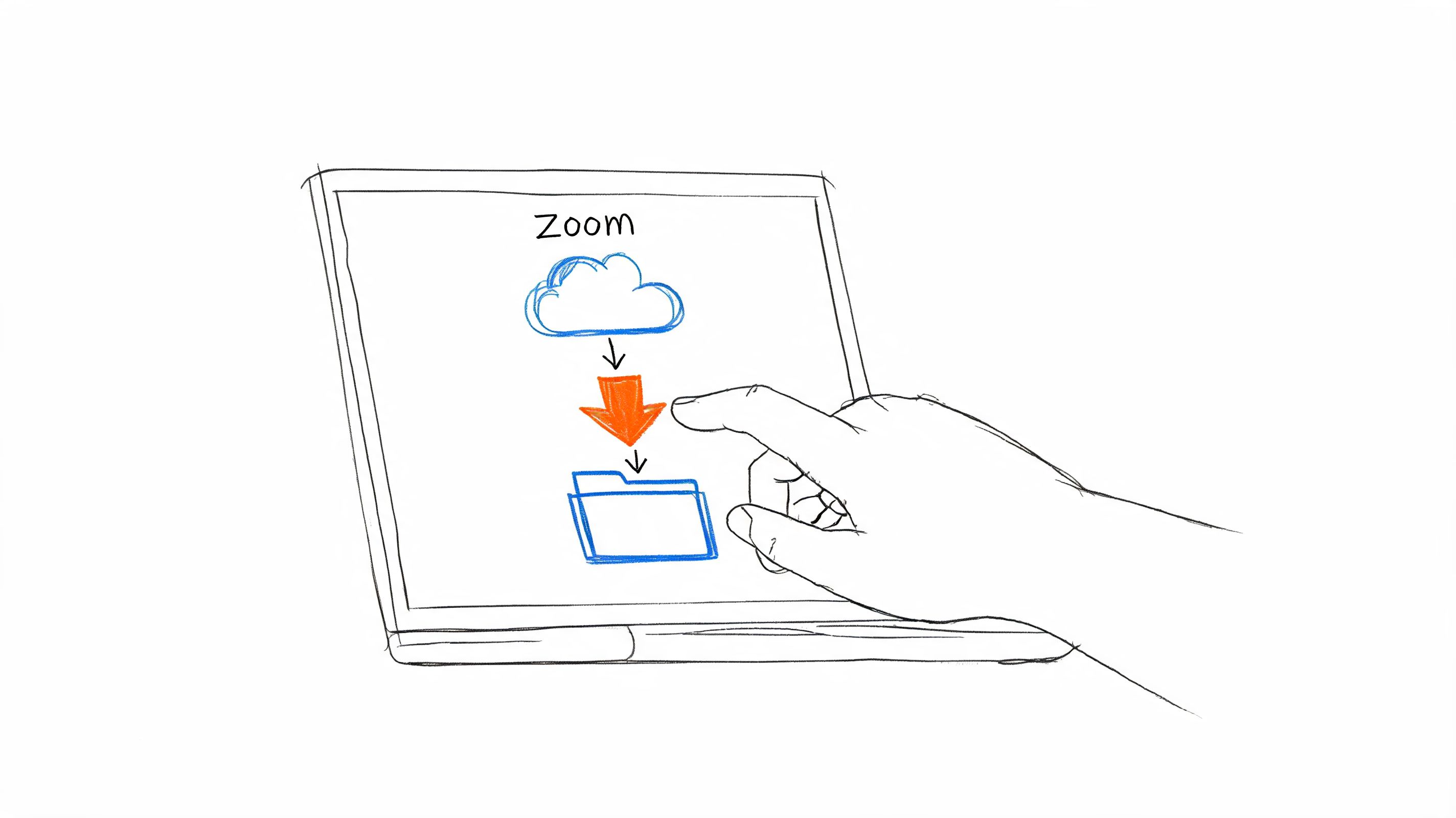
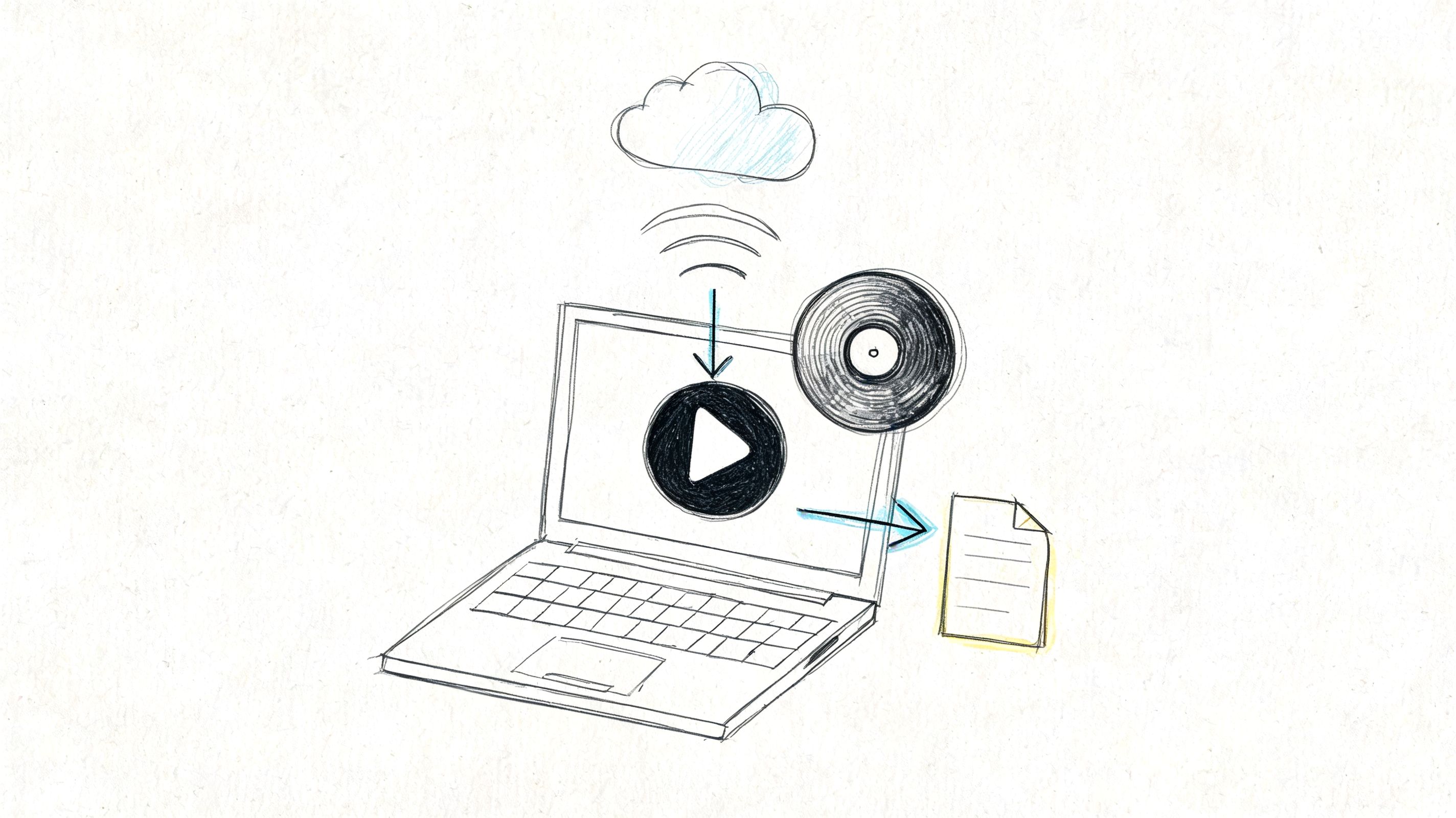
Next, upload the recording to HypeScribe — the audio or video file itself, or a link to it if the meeting was recorded to the cloud.
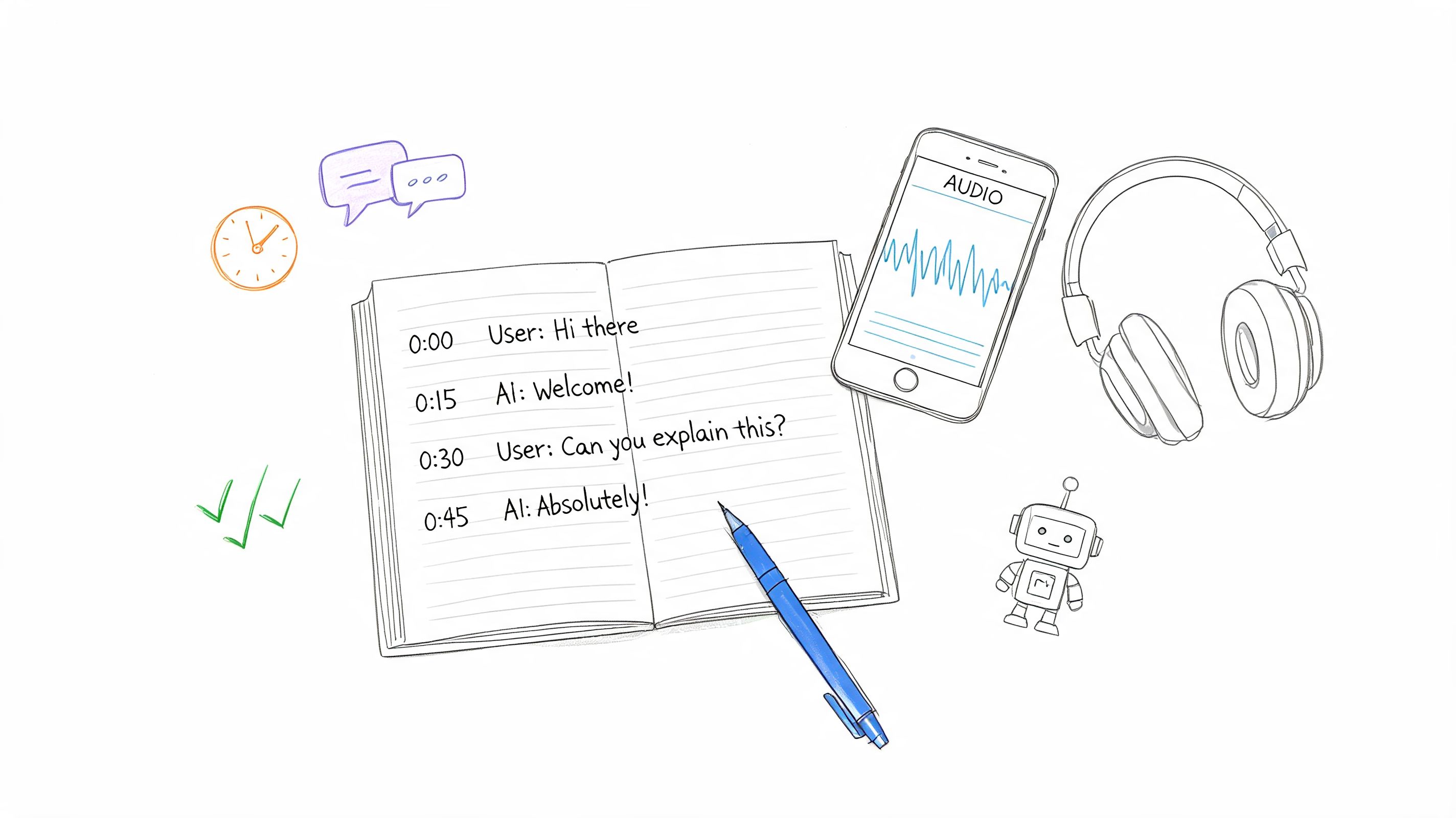
Finally, read the output. A 30-minute recording processes in well under a minute, and what comes back is structured rather than raw:
- Summary: A brief overview of the Project Alpha kickoff meeting's main objectives.
- John: Complete design mockups by Friday.
- Sarah: Draft the project scope document.
- Team: Confirm budget with finance by end of day.
- Key deadline: a prototype is due to the client in two weeks.
The entire process, from speaking your summary to having a shareable document, takes less than a minute. For those who want to take their writing even further, an AI writing assistant can help polish the final output, ensuring it’s perfectly crafted for any audience.
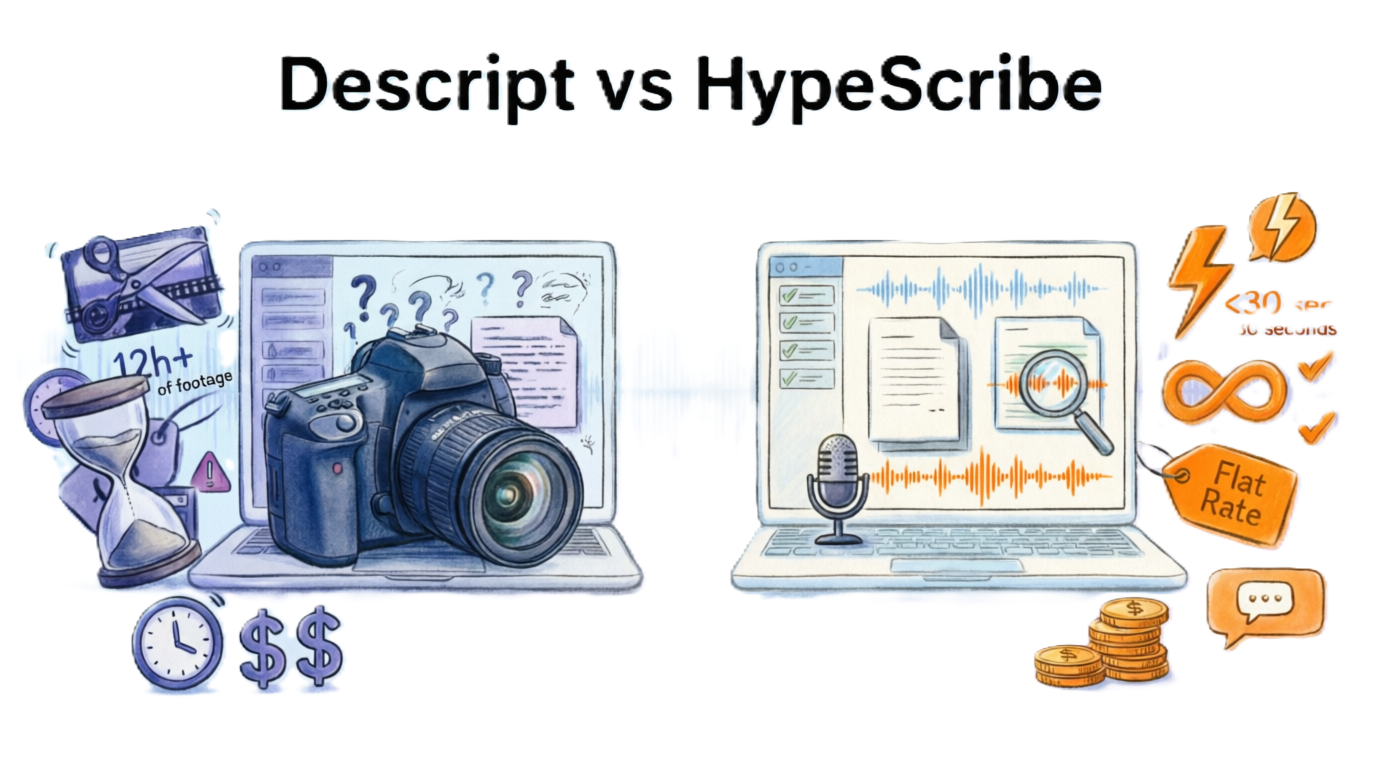
Mac Dictation vs HypeScribe Transcription
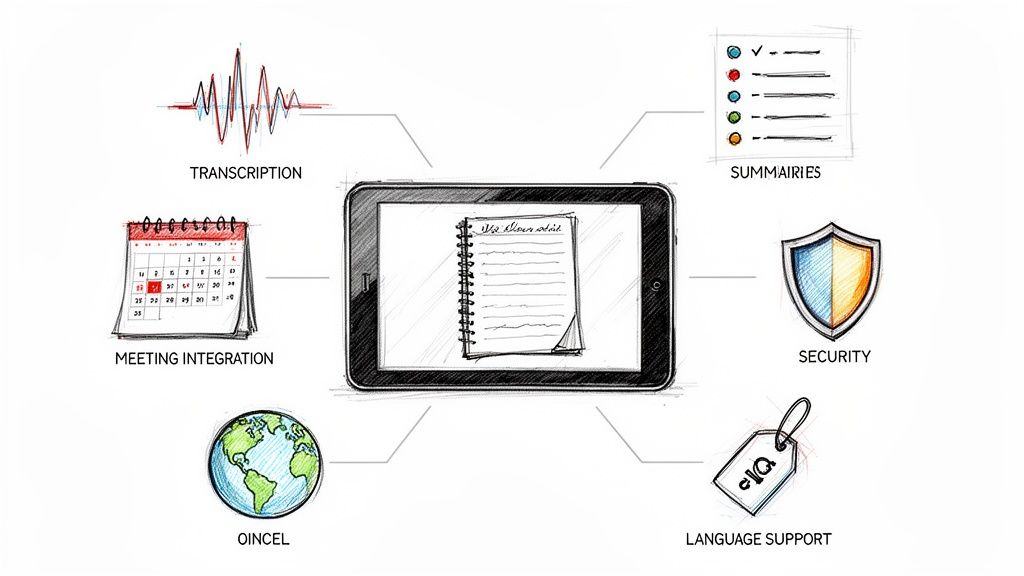
Mac Dictation captures thoughts on the fly, but it's not a full-fledged transcription service. Understanding the difference is key to building the right workflow.
As you can see, they serve different purposes. I use Mac Dictation to capture my own quick thoughts, then use HypeScribe to process recordings of entire meetings with multiple people. They work together perfectly.
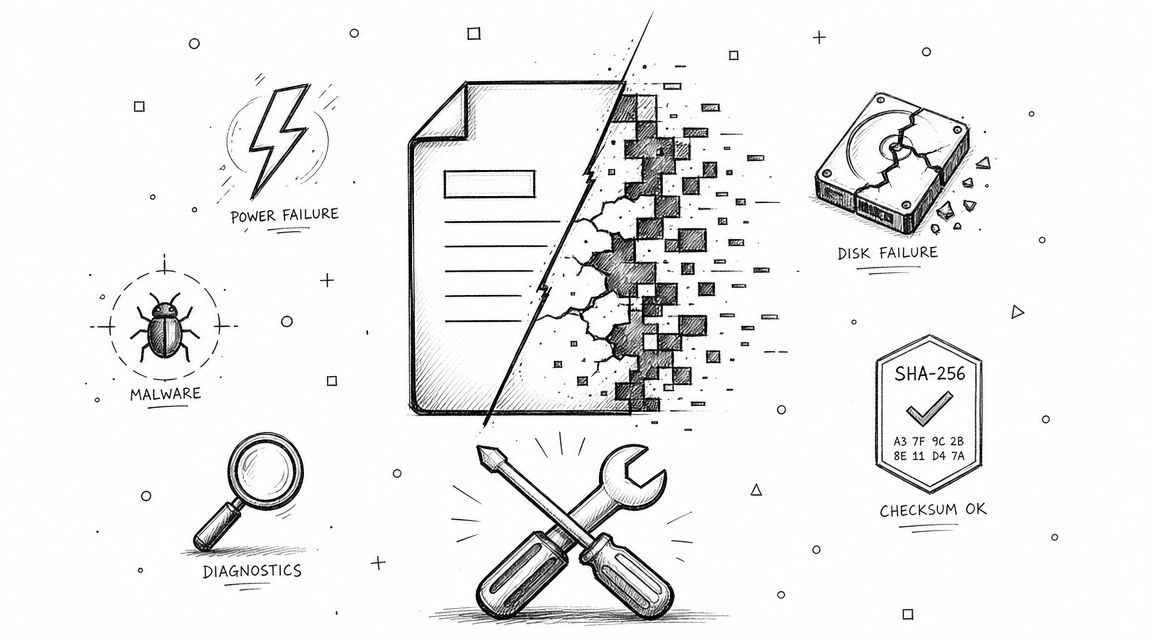
Sometimes, dictation itself can hit a snag. This quick flowchart covers the three most common culprits.

Most of the time, dictation issues come down to one of three things: your microphone, your environment, or your settings. Working through them in that order usually solves the problem.
Your Top Questions About Mac Dictation, Answered
Even after getting the hang of the basics, a few questions always pop up when people start using Dictation on a Mac. Here are the ones that come up most.
Can I Use Mac Dictation Without an Internet Connection?
Yes, and you absolutely should! Apple provides an On-Device Dictation feature that processes your voice right on your Mac, so nothing gets sent over the internet. This makes it faster, more reliable, and a whole lot better for privacy.
To get it going, head to System Settings > Keyboard > Dictation. From there, just pick your language and make sure you've downloaded the on-device file for it. Worth doing before any flight, and mandatory if you handle confidential client material.
How Do I Use Dictation with a Bluetooth Headset?
Using a good Bluetooth headset or any external microphone is one of the single best things you can do to improve Dictation’s accuracy. It zeroes in on your voice and filters out the background chatter that trips up the built-in mic.
Setting it up is simple. Once your headset is paired with your Mac, go back to the Dictation settings (System Settings > Keyboard > Dictation). Look for the "Microphone Source" dropdown menu, click it, and choose your headset. From that point on, your Mac will use it as the primary input for all your dictating.
My Personal Experience: I never use Dictation without my Bluetooth headset anymore. The accuracy jump compared to the MacBook's mic is just staggering, especially with ambient noise like an AC unit or street traffic. It’s a small change that makes a huge difference.
Why Is Mac Dictation So Inaccurate for Me?
Dealing with jumbled text is incredibly frustrating, but the problem usually boils down to a few key things.
First, check your surroundings. Dictation really struggles with background noise, so even a quiet fan or a distant conversation can cause errors.
Next, revisit your settings and confirm the Microphone Source is set to your best mic, not the default one. Finally, pay attention to how you speak—try to enunciate clearly at a steady, natural pace. Mumbling or speaking too quickly is a guaranteed recipe for gibberish. And if you’re not using the on-device feature, a weak Wi-Fi signal could also be the culprit.
Keep in mind that if you’re dictating highly technical terms or industry-specific jargon, the standard Dictation tool might hit its limit. For that kind of specialized vocabulary, a dedicated transcription service will almost always give you cleaner results.
Is There a Time Limit for Dictation on Mac?
Yes, there is. Mac's built-in Dictation feature listens in bursts of about 30 to 40 seconds. When you pause or hit that time cap, it stops listening and turns what you said into text.
This makes it perfect for dictating a quick email, a few sentences, or a short paragraph. It isn't, however, built for continuous, long-form dictation like you'd need for transcribing a full meeting or an hour-long interview.
For anything longer — a meeting, a lecture, an interview — record it and hand the file to HypeScribe: hours of audio become a transcript with a summary and action items, one token per file regardless of length. Try it free, 3 files a month, no card required.