What Is Information Overload and How to Reclaim Your Focus

We’ve all been there. That feeling of paralysis when you’re staring at a mountain of information with no idea where to start. It’s like trying to drink from a firehose—sure, there’s plenty of water, but you can’t actually quench your thirst.
This is information overload. It’s the point where valuable data stops being helpful and just becomes noise, making it nearly impossible to focus, make a decision, or even think straight.
What is Information Overload, Really?
Ever opened your inbox to find hundreds of unread emails and just shut your laptop? Or had 20 browser tabs open for a single project, only to feel more stuck than when you started? That experience of being so overwhelmed you do nothing at all is the heart of information overload.
This isn't just about being "busy." It's a genuine cognitive shutdown. Your brain has a finite capacity for processing new information. When the sheer volume of emails, Slack pings, news alerts, and meeting notes exceeds that limit, your ability to think critically doesn't just slow down—it starts to break down.
This is closely tied to the concept of cognitive overload, which is the specific strain on your working memory when it's forced to juggle too much at once. Think of it this way: information overload is the external storm, and cognitive overload is the flooding it causes inside your brain.
The True Cost of Too Much Information
This constant flood of data isn't a small problem; it has real, measurable consequences for our work and well-being. The numbers are staggering. In 2023, people created an estimated 328.77 million terabytes of data every single day.
It’s no wonder that 76% of workers say this daily deluge directly causes them stress. This isn't just a nuisance—it’s a major contributor to burnout.
To help you spot the problem, here are the key symptoms I've experienced and seen in others.
Information Overload at a Glance
Recognizing these patterns in your own life is the first step. When you're drowning in data, you might feel like you know more, but you almost always understand less.
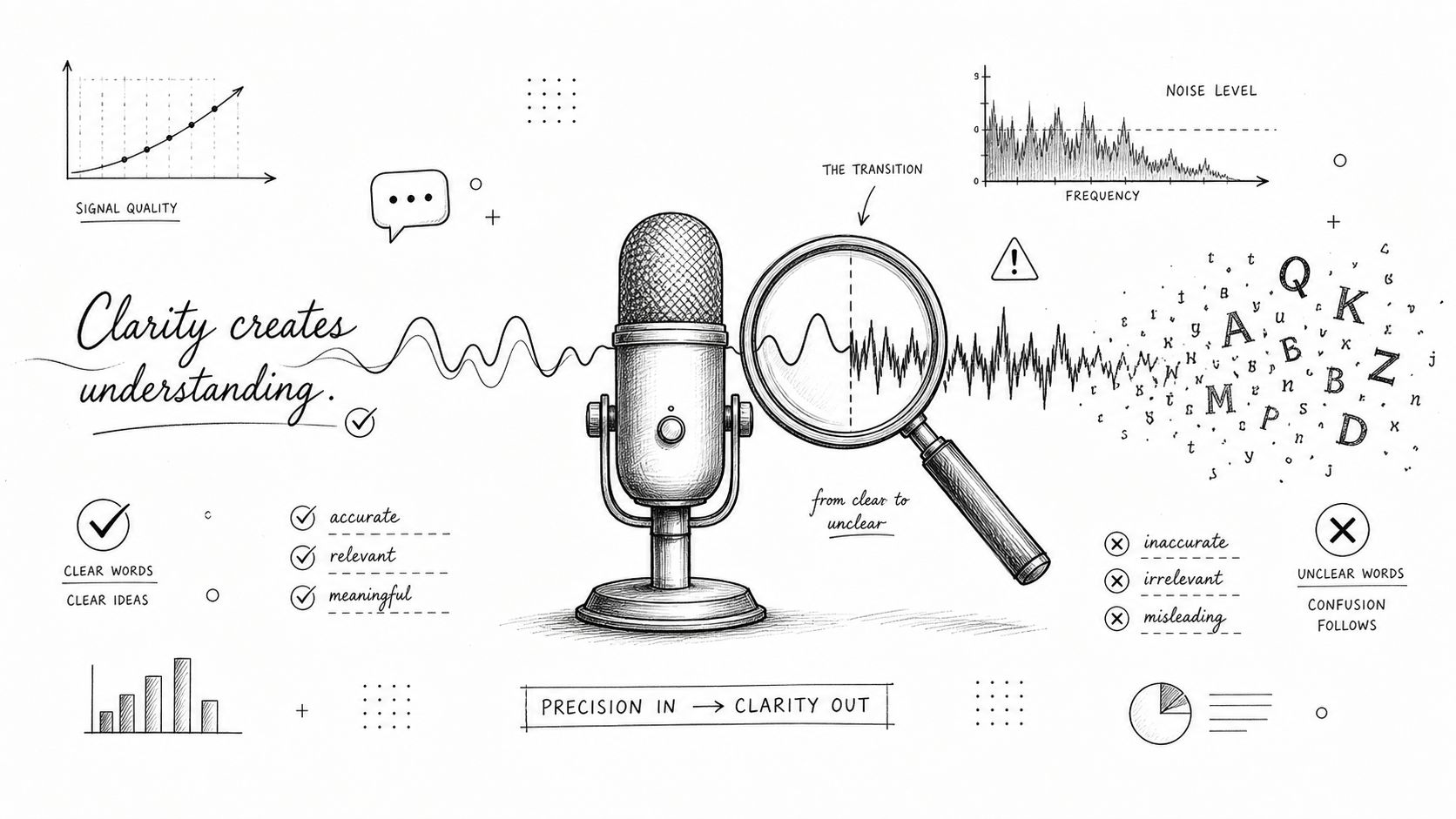
Information overload is the enemy of clarity. It transforms potentially useful data into a barrier, preventing you from accessing the very insights you need to move forward.
The real danger is that you spend all your time sifting through information instead of acting on it. Spotting these signs is the first move toward reclaiming your focus from all the digital noise.
What's Really Causing Our Digital Drowning?
Knowing what information overload feels like is one thing, but to actually fix it, we have to get to the root of the problem. It’s not just "the internet" that’s to blame. The real culprit is a perfect storm of relentless technology, demanding work cultures, and the very real limits of the human brain.
It really boils down to a simple, but massive, imbalance. The sheer volume and speed of information flying at us has skyrocketed, but our brain’s ability to process it all hasn't changed in thousands of years. This mismatch is why so many of us feel like we're constantly struggling to keep our heads above water.
This diagram shows how that digital firehose directly leads to stress and anxiety, ultimately tanking our ability to make good decisions.
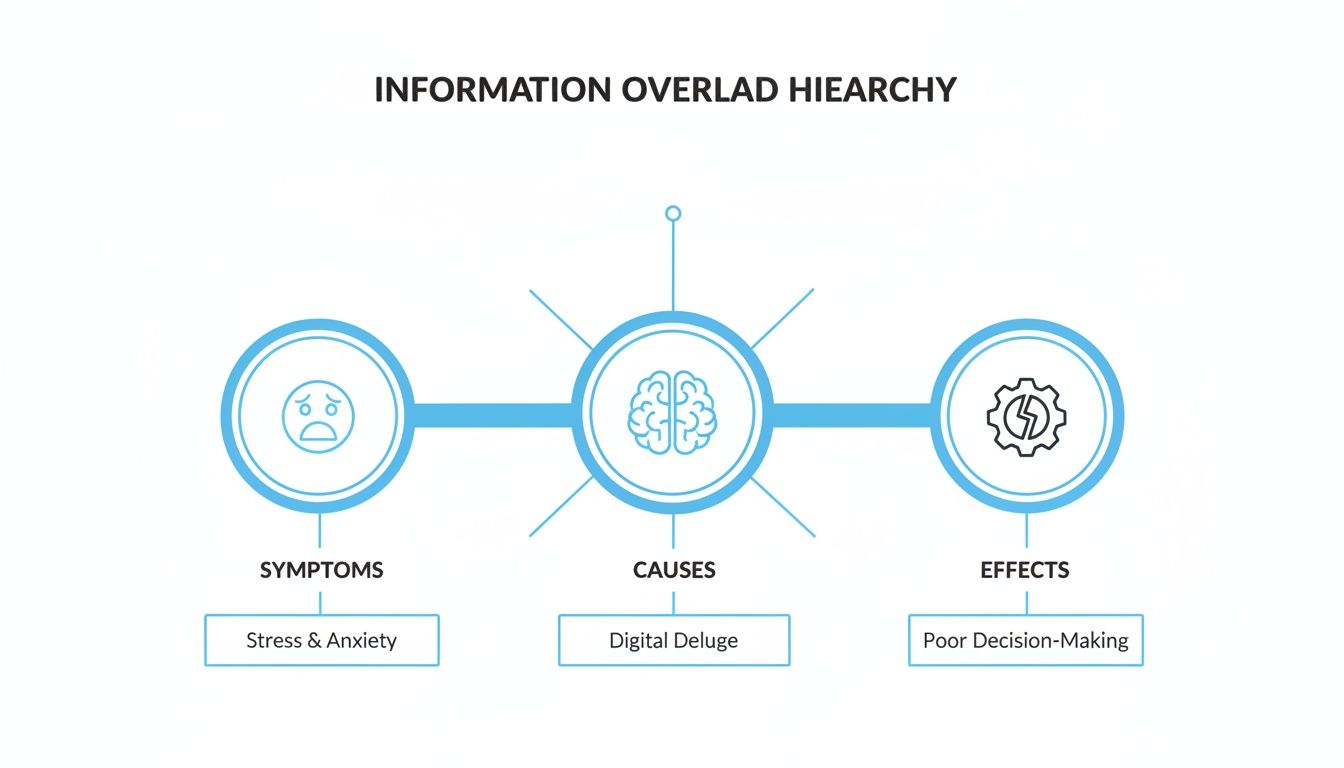
As you can see, the unrelenting flood of data doesn't just feel bad—it actively breaks down our focus and productivity.
The Tool Overload Problem
The modern workplace is a jungle of apps. We have email for official business, Slack or Microsoft Teams for quick chats, a project manager for tasks, and a CRM for customer info. Each one is its own river of information, and all of them demand our attention at once.
It’s no wonder we feel scattered. The average person switches between different apps nearly 1,200 times a day. This constant context-switching adds up. Over a week, professionals can lose almost four hours just getting their bearings again after each interruption.
The "Always-On" Work Culture
Technology has completely erased the old boundaries between our work and personal lives, creating an unspoken rule that we should be available 24/7. That notification ping doesn't care if it's 9 PM or Sunday afternoon. This "always-on" expectation is a massive source of anxiety, making it nearly impossible to ever truly log off and recharge.
When we feel the need to respond to everything instantly, we lose the ability to sink into deep, meaningful work. We spend our days in a purely reactive mode, hopping from one "urgent" request to the next without making real progress on what matters.
When every piece of information is treated as urgent, nothing is. The result is a workforce that is constantly busy but rarely productive, spending more time managing notifications than solving real problems.
Let's look at how this plays out for a real person.
Example: The Marketer Drowning in Data
Picture Sarah, a digital marketer running a big campaign. To get a clear picture of performance, she has to pull reports from five different places: Google Analytics, Facebook Ads, her email platform, a social media tool, and the company's internal sales dashboard.
Each system has its own interface and its own way of presenting data. To build a single, useful report, Sarah has to:
- Export a handful of spreadsheets and manually stitch them together.
- Figure out why the numbers from one platform don't quite match the numbers from another.
- Flip back and forth between what feels like a dozen browser tabs.
- Field a constant stream of Slack messages from her boss asking for "quick updates."
By the time she’s finally wrangled all the information, Sarah is mentally fried. That’s information overload in the real world. The fragmented tools and constant interruptions turned a strategic task into a frustrating, time-consuming chore.
The Hidden Toll on Your Brain and Business
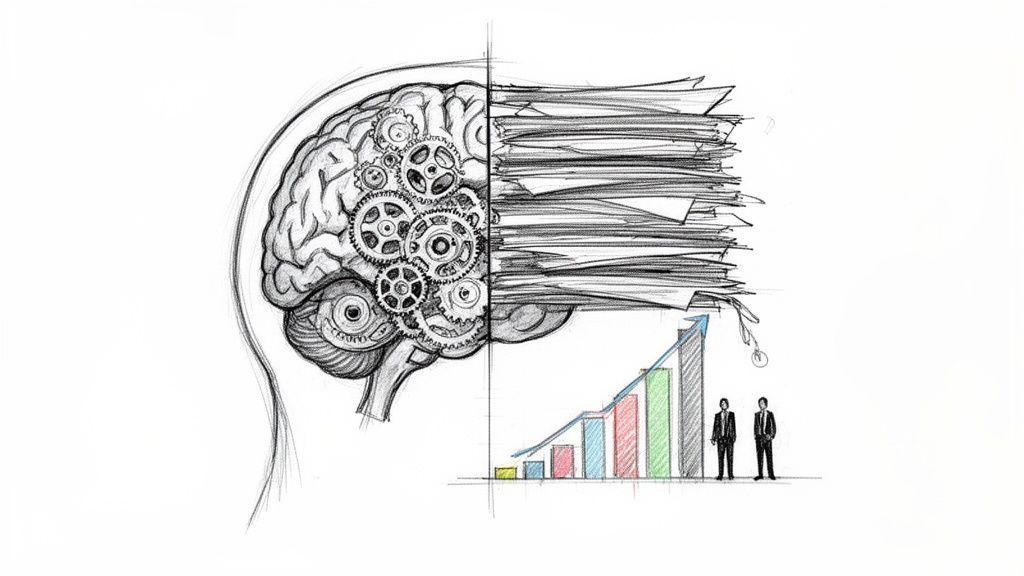
We tend to think of information overload as a personal headache, but it’s far more than that. It’s a silent killer of productivity, draining our mental batteries and quietly eating away at the company's bottom line. The damage starts in our own minds and quickly scales up, creating real, measurable problems for the entire organization.
When our brains are hit with a constant firehose of data, they don't just get tired—they start to break down. This mental fatigue directly impacts our ability to think critically, make good decisions, and perform at our best.
How Overload Cripples Cognitive Performance
Being constantly flooded with information puts your brain's core functions under immense stress. This isn't just a feeling; it's a tangible decline in your quality of work and mental clarity.
- It Causes Decision Paralysis: Faced with too many reports, conflicting opinions, and endless data points, our brains just freeze. Instead of making a confident choice, we get stuck analyzing everything to death, leading to missed deadlines and lost opportunities.
- It Destroys Analytical Thinking: Real strategic thought needs focus. But when you’re hopping between Slack messages, urgent emails, and meeting notifications, your brain never gets the quiet time it needs to connect the dots and solve tough problems.
- It Dramatically Increases Error Rates: A tired brain is a sloppy brain. When you're cognitively swamped, your attention to detail nosedives. This leads to simple, preventable mistakes that end up costing a ton of time and resources to fix.
The great irony here is that having access to more information often leads to worse decisions. The signal gets lost in the noise, and we end up operating on anxiety instead of clear, reasoned thinking.
This breakdown at the individual level is just the start. When your whole team is running on empty, the problem compounds, creating systemic issues that can grind a company’s growth to a halt.
The Staggering Business Cost of Overload
The financial fallout from information overload is massive. We're not talking about a few wasted minutes; we’re talking about a colossal drain of time, money, and potential that hits businesses of all sizes.
The numbers are pretty shocking. Knowledge workers waste a staggering 2.5 hours every single day—nearly a third of their workday—just searching for the information they need. It’s no wonder that 60% of leaders are worried their teams can't innovate. When people are this overloaded, they become 3.5 times less likely to innovate because they're too busy just trying to stay afloat. For a major economy like the U.S., this adds up to an estimated loss of $1 trillion every year.
This daily struggle creates a ripple effect across the entire organization:
- Plummeting Team Morale: When people feel constantly behind and unable to focus, they get stressed, disengaged, and burnt out. This creates a toxic cycle that leads to higher turnover.
- Stifled Innovation: You can't have breakthrough ideas when your brain is in reactive mode. Innovation demands the mental space for deep, creative thinking—a luxury no one has when they're buried under an avalanche of information.
- Broken Workflows: When information is scattered everywhere, it creates friction that slows everything down. Strong knowledge management best practices are the only way to turn that chaos into a shared, useful resource for everyone.
Getting a handle on information overload isn't just a nice-to-have; it's a fundamental business priority. If you ignore it, you’re not just risking a few missed deadlines—you're risking your company's ability to adapt, innovate, and compete.
Stories from the Information Front Lines
The theory of information overload is one thing, but what does it actually feel like day-to-day? Let's move from abstract concepts to real-world struggles. These stories show what happens when the information meant to help us ends up holding us back.
The Remote Manager Lost in a Maze of Meetings
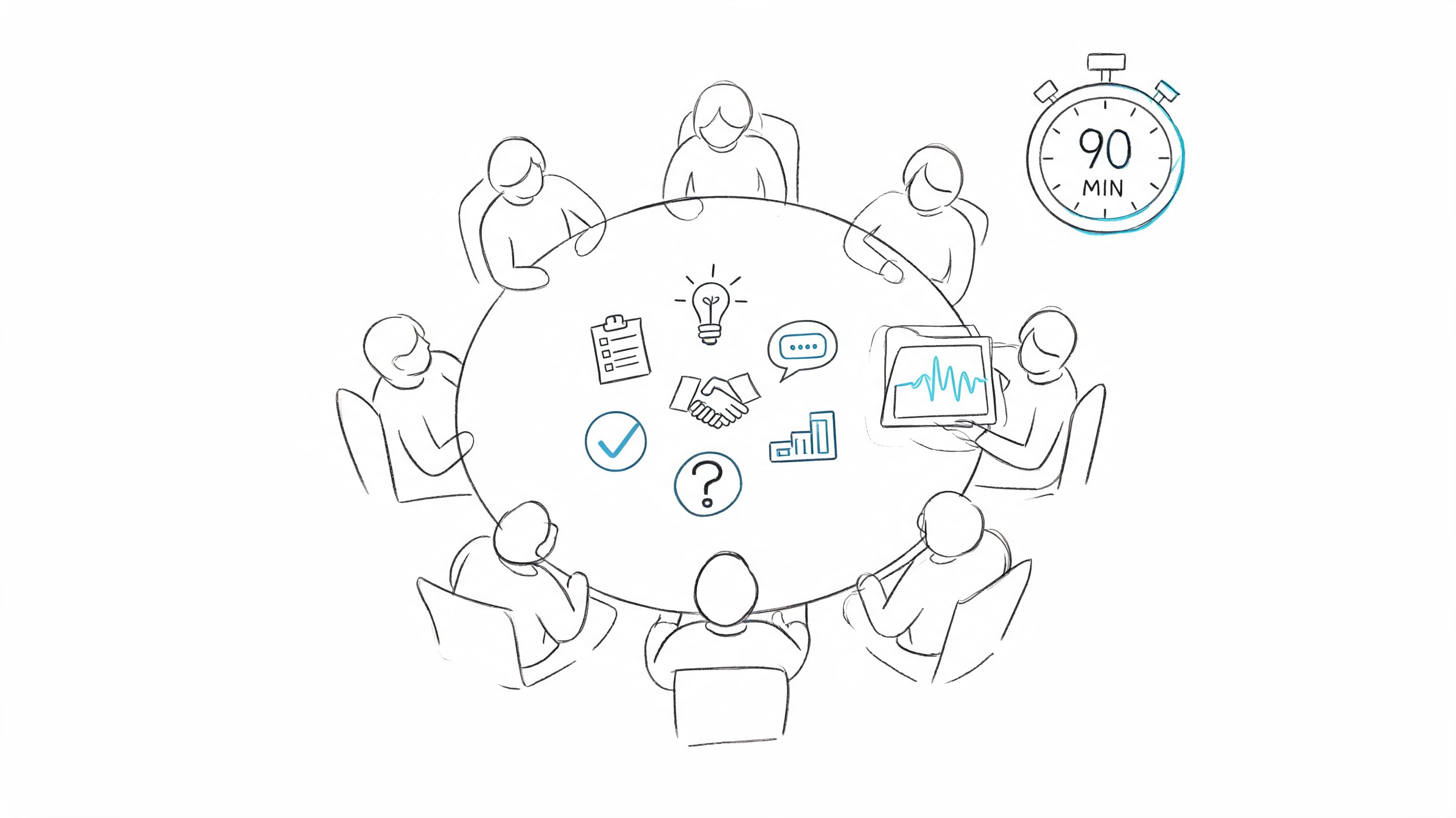
Meet Alex. He's a manager for a fully remote team, and his calendar looks like a game of Tetris played on the highest difficulty—it's just a wall of back-to-back video calls. His real problem isn’t the meetings themselves; it’s the mountain of information they create.
Every week, he loses hours re-watching recordings, desperately trying to find a single decision someone vaguely remembers making. The facts are technically there, but they're buried deep inside hours of unstructured conversation. As a result, important tasks get missed, and he feels less like a leader and more like a full-time digital detective.
"Every meeting creates a new recording, transcript, and chat log I have to keep track of. It feels like I'm just building a bigger haystack to find the needle in. My productivity is tanking, and my stress is through the roof."
The Graduate Student Drowning in Research
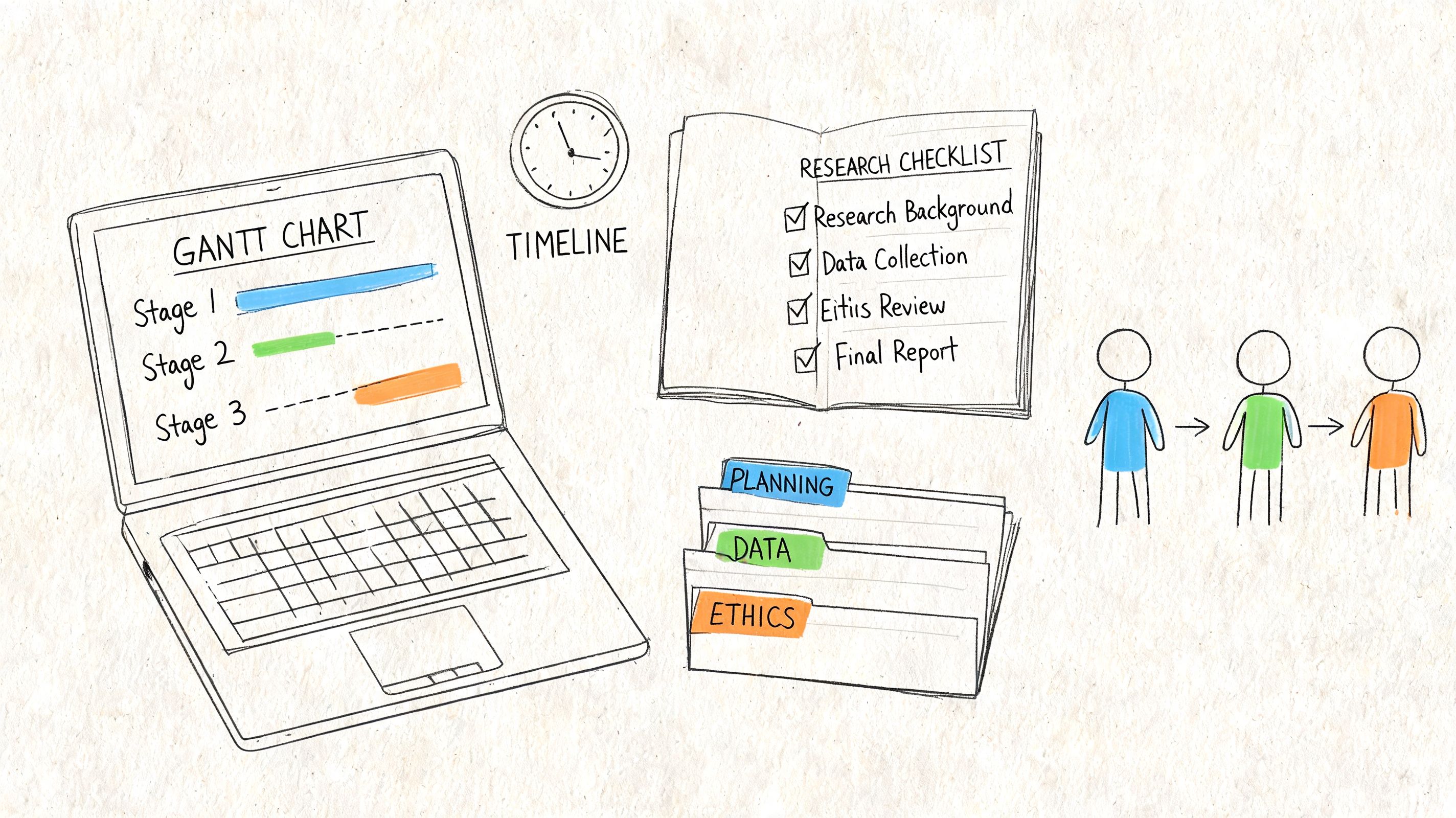
Now, let's look at Maya, a graduate student working on her thesis. She has access to endless academic journals, research papers, and datasets. At first, this felt like an incredible advantage. Now, it feels like a curse.
Her desktop is a mess of folders filled with conflicting studies, and her browser has dozens of tabs open, each offering a different perspective. Instead of weaving all this information into a cohesive argument, she’s completely paralyzed. The sheer volume makes it impossible to see the forest for the trees, and a serious case of writer's block has set in. With her deadline looming, the mountain of research she’s so carefully gathered has become a wall she can't seem to climb.
The Creator Buried Under Interview Transcripts
Finally, there’s Ben, a podcaster who interviews industry experts. Each conversation is a goldmine of brilliant insights, but turning that raw audio into a polished episode is a total nightmare. For every one-hour interview, he’s left with a 10,000-word transcript to comb through.
He has to pinpoint the best quotes, spot the overarching themes, and write up useful show notes for his audience. The work is slow and mentally exhausting. He now spends more time digging through walls of text than he does on the creative work he actually enjoys. What started as a passion is turning into a source of burnout, all because he can't get to the value buried inside his own content.
These stories show what is information overload on a deeply human level.
How to Build Your Digital Life Raft
The stories from the front lines are all too familiar, but the battle against information overload isn't a lost cause. It's time to fight back. Instead of passively drowning in data, you can build a digital life raft—a set of deliberate strategies and tools to help you navigate the flood, filter out the noise, and turn information back into a powerful asset.
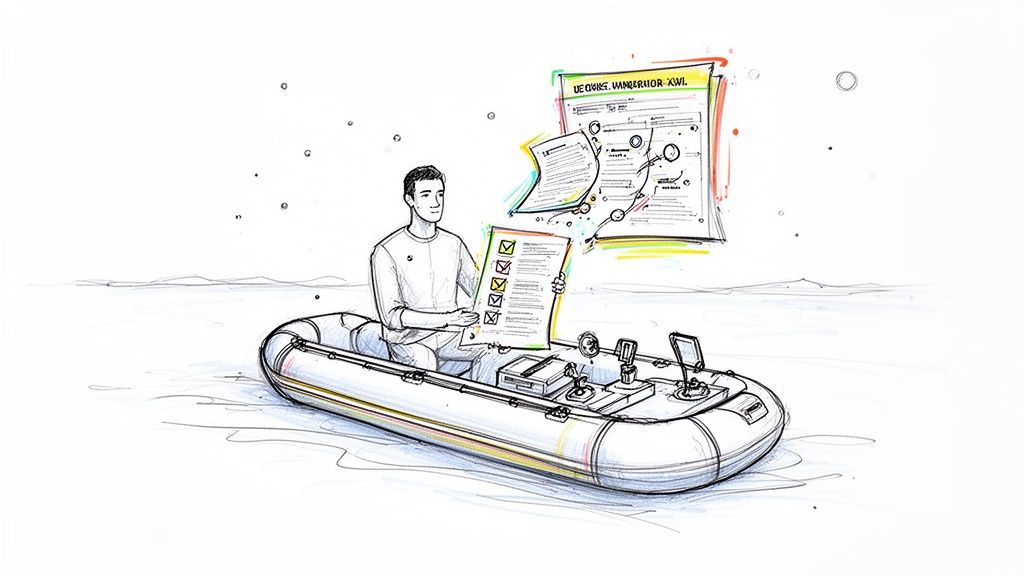
Building this raft means getting intentional about how you consume, process, and act on information, both on your own and as part of a team.
Adopt an Individual Defense System
Your first line of defense is always personal. It involves shifting your habits and mindset to guard your most valuable resource: your attention. This isn't about finding a magic bullet, but about putting a few core practices into play consistently.
Start by practicing digital minimalism. Take a hard look at your apps and notifications. If a tool isn’t adding real value or is constantly pulling you away from what matters, mute it or get rid of it. This simple act of curating your digital space immediately cuts down on the inputs competing for your focus.
Next, get serious about time blocking. Instead of letting your day be run by your inbox, schedule specific blocks of time for specific tasks. Try setting aside 30 minutes in the morning and another 30 in the afternoon just for email. Outside of those windows, keep your email client closed.
The most powerful shift is moving from a reactive to a proactive mindset. Instead of responding to every notification as it arrives, you decide when and where information gets your attention.
Finally, make room for deep work. This means carving out extended, uninterrupted periods to concentrate on your most demanding tasks. Put your phone on silent, close unnecessary browser tabs, and let your team know you're in a focus block. It’s during these sessions that you'll make real progress and produce your best work.
Establish Clear Team-Level Protocols
Individual efforts are a great start, but they can be easily undone by a chaotic team environment. To truly get a handle on information overload, everyone needs to be on the same page. This comes down to establishing clear, agreed-upon rules for communication.
A huge source of this overload is the constant stream of emails, so figuring out how to manage email overload is essential for any team's sanity.
Here are a few effective strategies to implement with your team:
- Define Channel Purpose: Assign a clear job to each communication channel. For instance, Slack is for quick, informal questions, email is for official external messages, and your project management tool is for all task-related updates. This simple step stops critical information from getting lost in the wrong place.
- Standardize Meeting Agendas and Outcomes: Stop holding meetings that waste everyone's time. Every invitation should include a clear agenda with what you hope to achieve. Always end meetings by confirming action items, who owns them, and when they're due. This creates clarity and cuts down on all those follow-up emails.
- Promote Asynchronous Communication: Not every question needs an immediate answer. Encourage a culture where it's okay not to respond right away. This gives people the space they need for focused work without feeling the pressure to be "always on." A well-organized digital filing system also dramatically cuts down the time spent just looking for things. For more on this, check out our guide on how to organize digital files.
Use AI as Your Intelligent Filter
This is where technology can flip from being the source of the problem to a core part of the solution. Modern AI tools are now designed to act as intelligent filters, sorting through massive amounts of information to deliver just the critical insights you actually need.
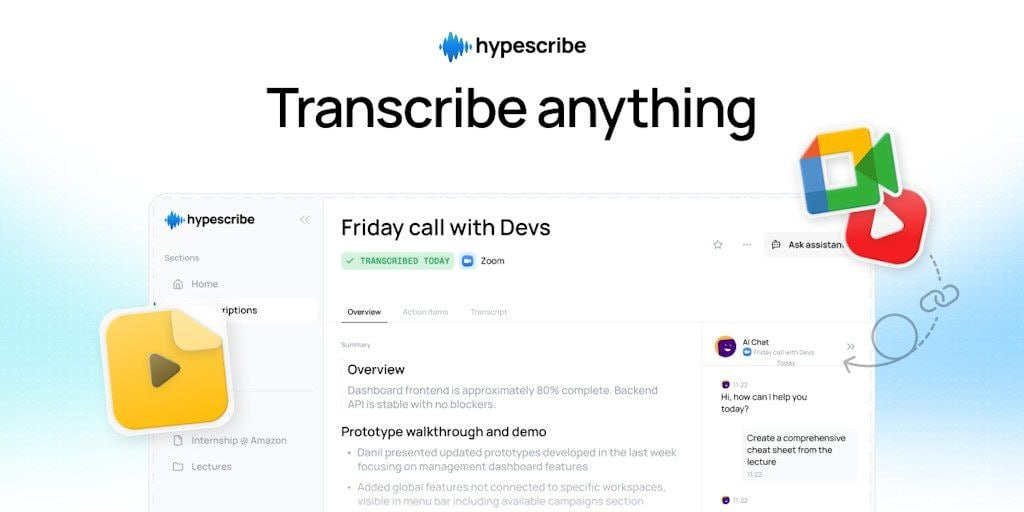
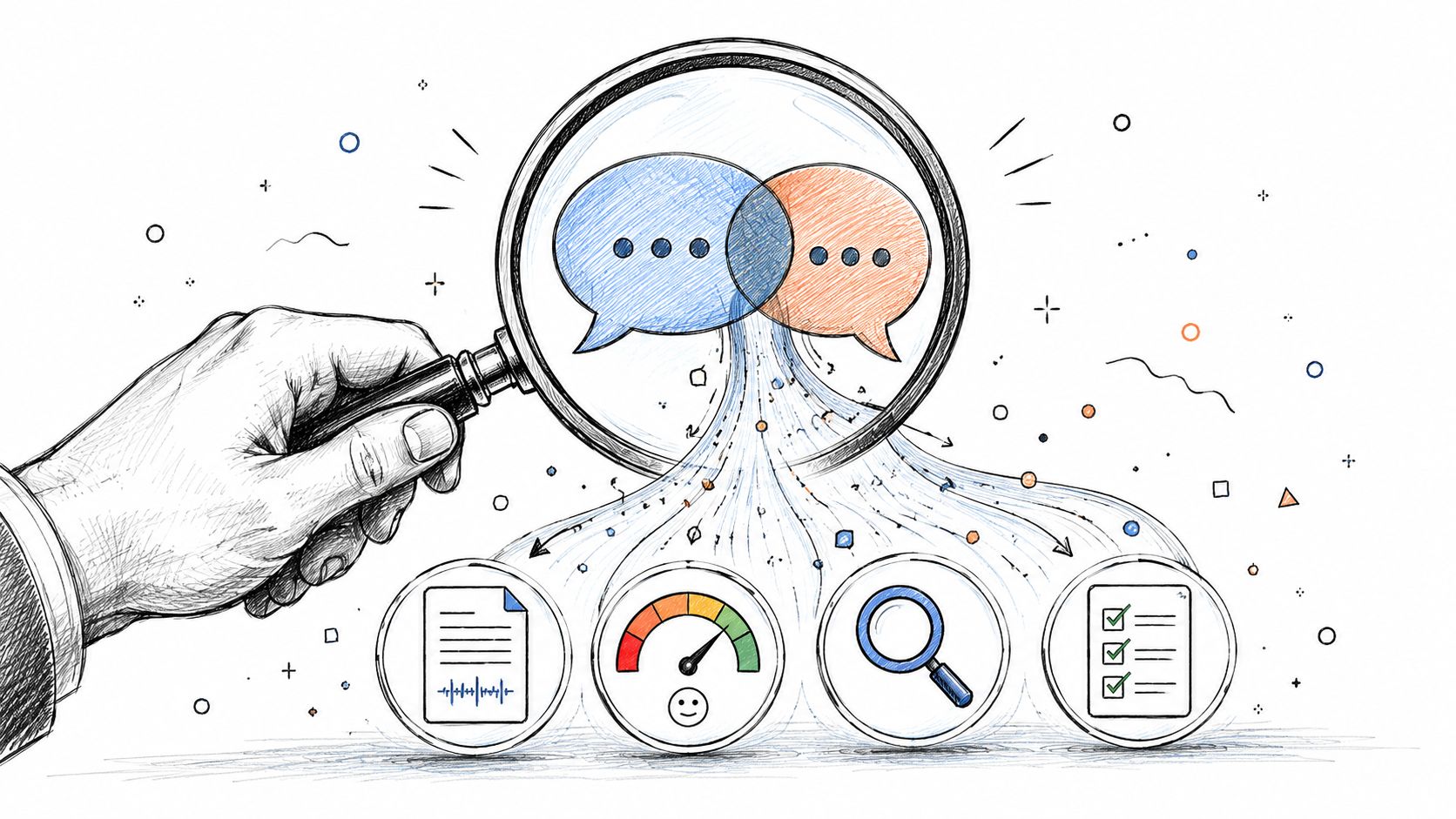
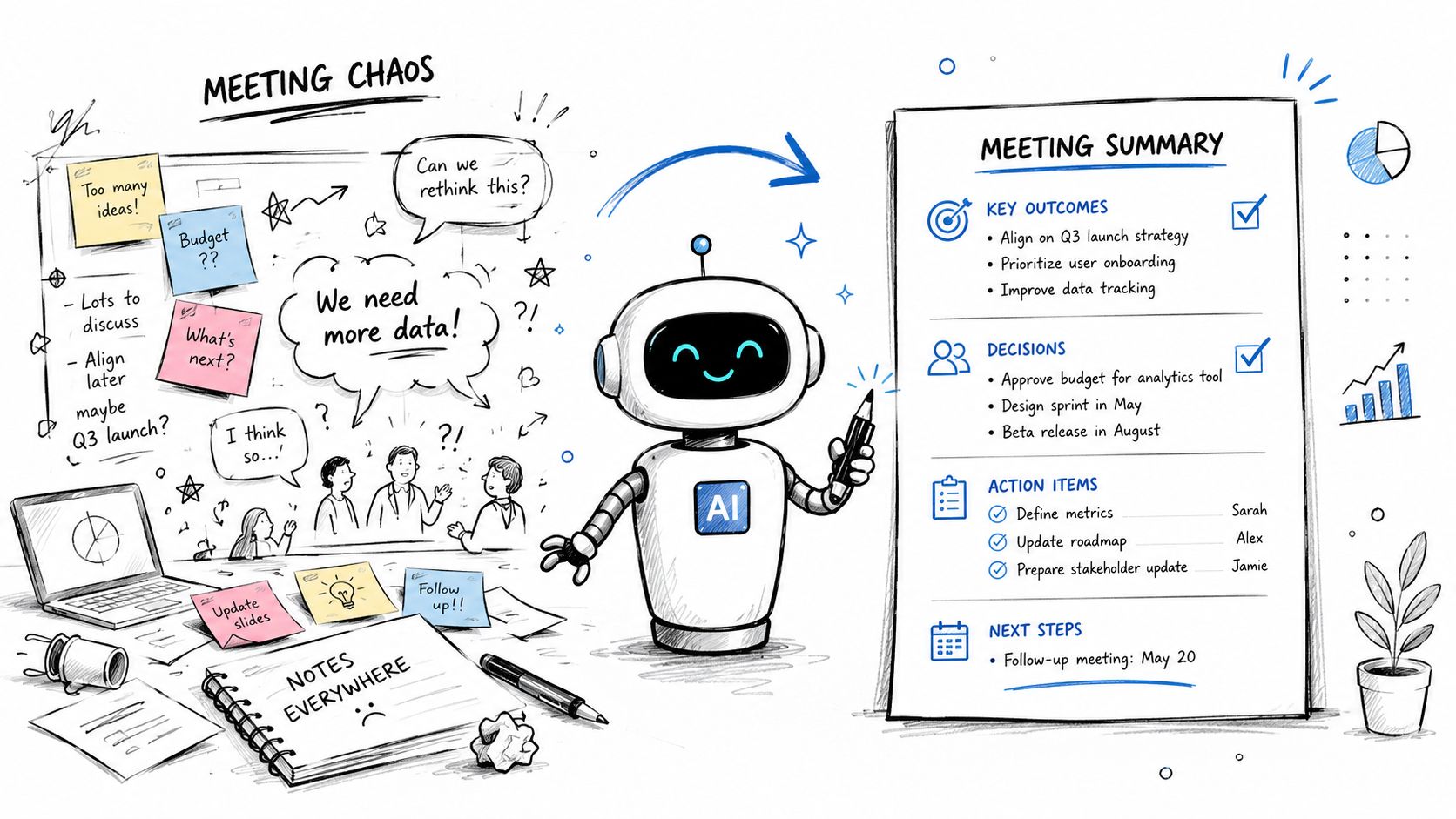
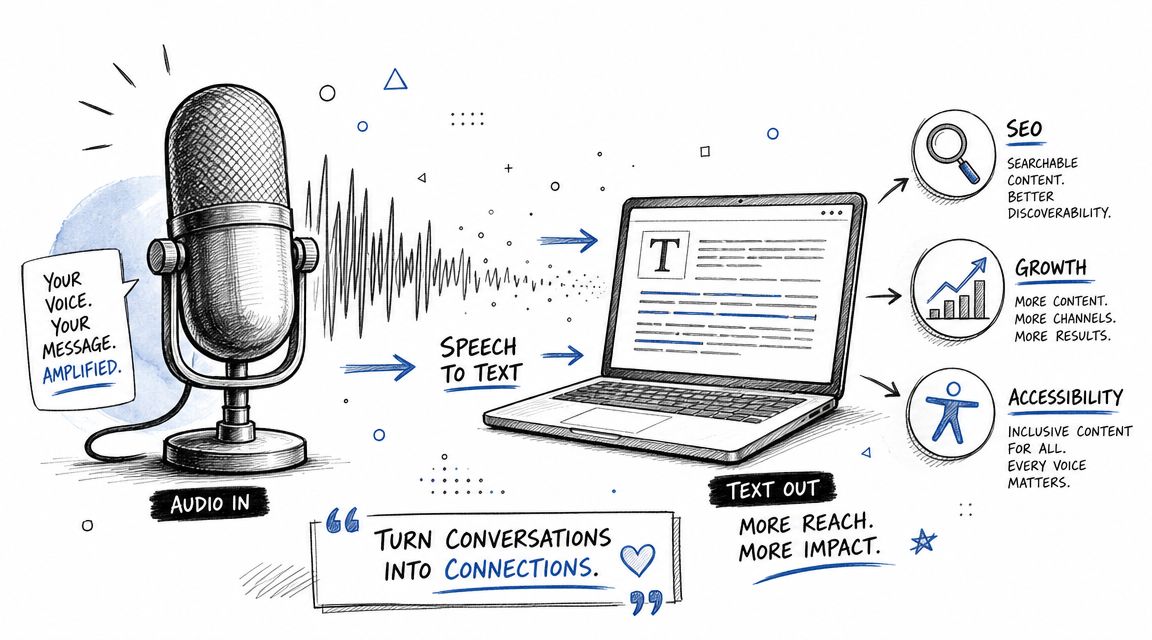
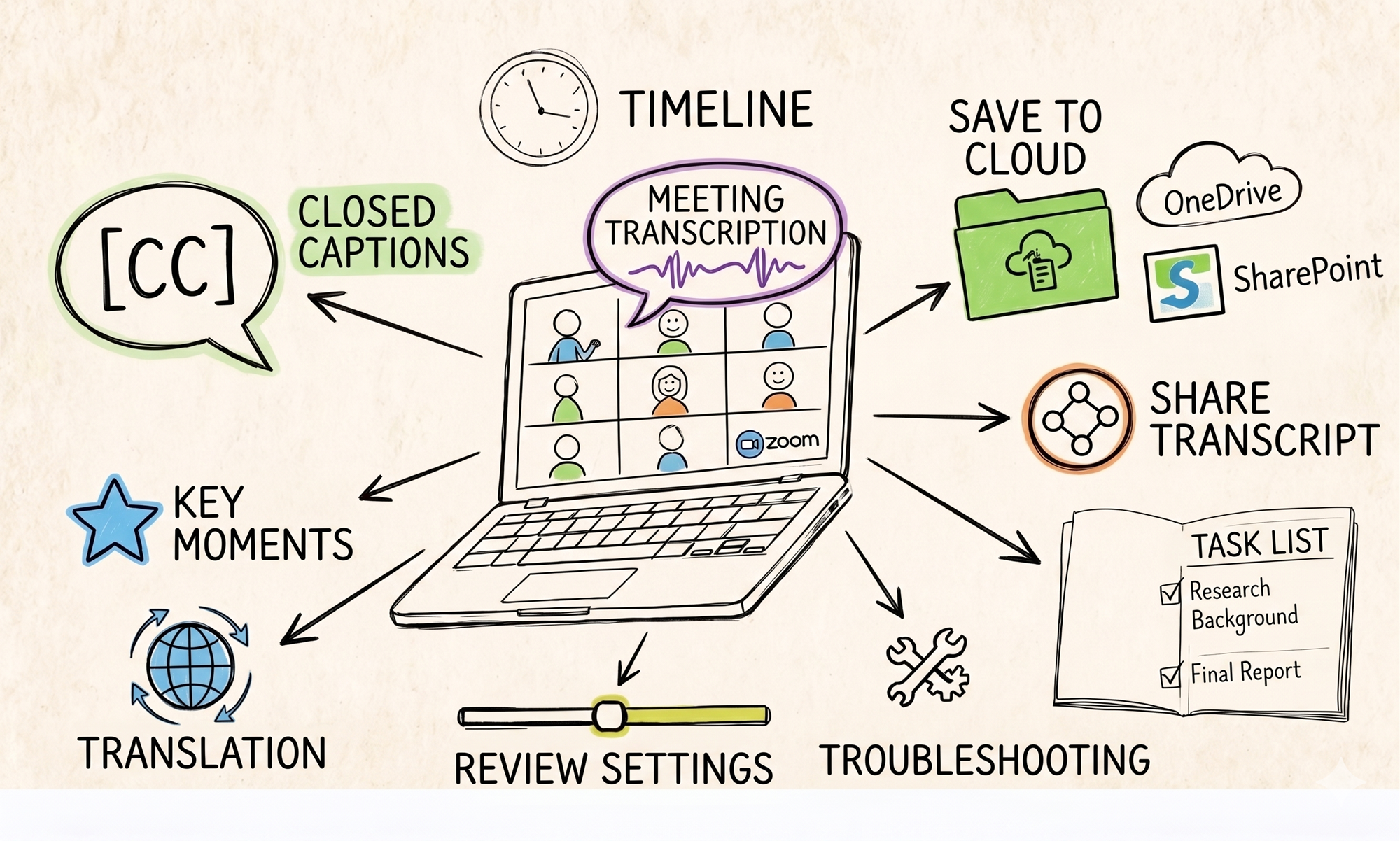
For anyone who feels buried by the information generated from meetings, AI tools like HypeScribe are a complete game-changer. Instead of manually re-watching recordings or picking through dense transcripts, you can turn hours of conversation into a concise, actionable summary in seconds.
Here’s my personal workflow for a project kickoff meeting:
- A one-hour project kickoff meeting is recorded.
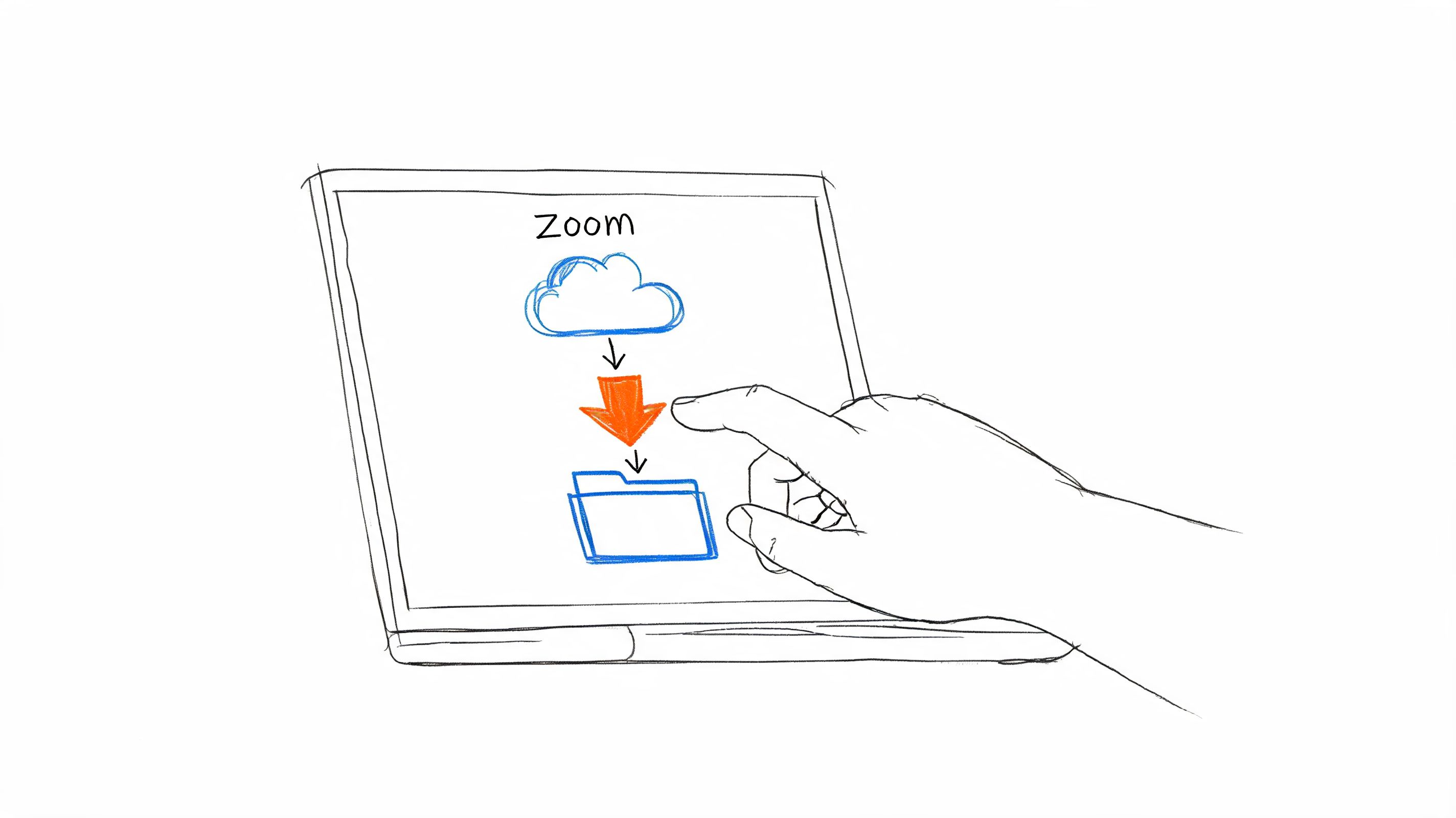
- I upload that recording to HypeScribe.
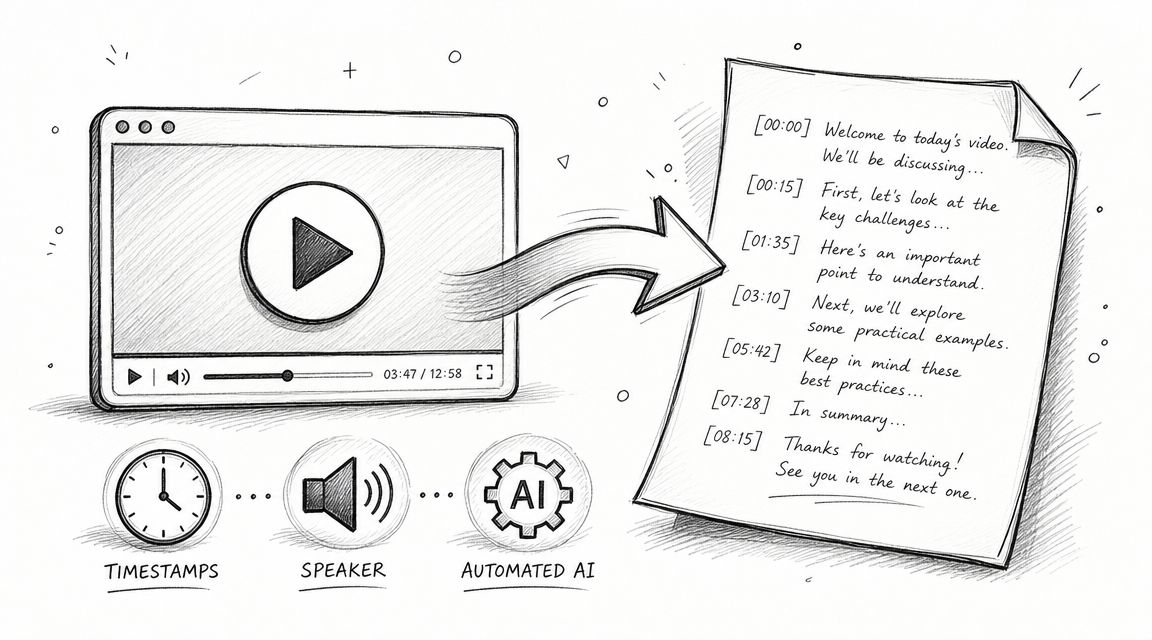
- In less than 30 seconds, I get back a highly accurate transcript, a smart summary of key discussion points, and a clean, bulleted list of all action items with assigned owners.
The difference this makes is staggering. A task that once took hours of manual work is now done in minutes. The table below shows just how much time and effort can be saved when you swap out old, manual processes for an AI-powered one.
Manual vs AI-Powered Meeting Workflow
What was once a two-hour chore of reviewing and typing up notes becomes a quick two-minute review. By letting AI handle the heavy lifting of filtering and organizing, you free up your mental energy to focus on what really matters: strategy, creativity, and getting things done.
Your Questions About Information Overload, Answered
It's one thing to understand what information overload is, but it's another to know what to do about it. I get it. Putting concepts into action can be tough, so let's clear up some of the most common questions people ask. These answers will help you spot the difference between overload and just a busy day, and see how the right tech can be a solution, not just another part of the problem.
Is Information Overload the Same as Burnout?
They're related, but they're definitely not the same. It's best to think of information overload as a major cause and burnout as the potential, devastating effect.
Imagine information overload as the daily storm of endless emails, back-to-back meetings, and a constant barrage of notifications. Burnout is the deep-seated emotional, mental, and physical exhaustion that sets in after you’ve been weathering that storm for far too long without a break. One is the trigger; the other is the long-term consequence of not pulling that trigger.
How Do I Know if It’s Overload or Just a Busy Day?
The real difference comes down to how you feel when the day is done. A genuinely busy day can leave you tired, sure, but it often comes with a satisfying sense of accomplishment. You moved the needle on important work.
Information overload is completely different. It feels chaotic, frantic, and deeply unproductive. You're left feeling anxious and scattered, completely drained but with almost nothing to show for all that frantic effort.
A busy day means you're moving forward, even when it's tough. Information overload feels like you're just spinning your wheels, working hard but getting nowhere.
Watch out for these tell-tale signs that point toward overload:
- Decision paralysis: You're staring at so much data that you can't even decide where to begin.
- Constant context-switching: Your focus is splintered as you jump between dozens of different tasks, apps, and conversations.
- Feeling like you retain nothing: You sit through a meeting or read a dozen emails, but an hour later, you can't recall the key details.
Can Technology Really Solve a Problem It Helped Create?
It sounds like a contradiction, doesn't it? But yes, it absolutely can. While the explosion of generic apps, doom-scrolling feeds, and always-on notifications is a huge source of the problem, a new class of smart technology is being built specifically to cut through that noise.
Instead of just creating more stuff to process, modern AI tools act as intelligent filters. For instance, AI transcription and summarization tools don't add to your information burden. They take the existing flood of data—all those meeting recordings and calls—and process it for you, handing you just the crucial insights, decisions, and action items. It’s about using smarter technology to counteract the negative side effects of older tech.
What Is the First Action I Should Take?
The single most effective first step is to run a simple "information diet" audit on yourself. You don't need any fancy tools, just a little bit of mindfulness for a single workday.
For one day, just keep a running list of every source of information you interact with:
- Emails
- Slack or Teams messages
- Meetings you attend
- News articles and social media
- Reports and documents you review
At the end of the day, look at your list. Label each item as "essential," "nice to have," or "noise." This simple exercise is incredibly revealing. It gives you a personalized map showing exactly where your attention is going and shines a spotlight on the low-hanging fruit—the notifications you can mute, the newsletters you can unsubscribe from, and the "check-ins" you can decline to start winning back your focus. Improving your habits with different types of note-taking methods can also build on this new foundation of awareness.
Ready to stop drowning in meeting notes and start acting on clear insights? HypeScribe uses advanced AI to transform hours of audio and video into accurate transcripts, concise summaries, and actionable tasks in seconds. Try it for free and turn your information overload into a competitive advantage. Find out more at https://www.hypescribe.com.