Your Complete Guide to the Video Recording Release Form

A video recording release form is a straightforward legal document that's essential for anyone creating video content. It’s a formal agreement where someone gives you their explicit permission to record them and to use that footage. Think of it as a signed "yes" that lets you share your content without worrying about future legal headaches over privacy or how you've used their image.
From my experience producing video content, I can't stress this enough: getting this form signed before you record is one of the most important steps in the entire process. It’s the difference between a smooth project and a potential legal nightmare.
Why a Release Form Is Your Best Legal Shield
Let's walk through a real-world scenario. You’ve just filmed the perfect customer testimonial. The story is powerful, the production quality is top-notch, and it’s pure marketing gold. You post the video, and it immediately gets great engagement. Then, a few weeks later, an email lands in your inbox: a takedown notice from that same customer. They've had a change of heart and no longer want their face associated with your brand.
Without a signed release form, you have no choice but to comply. This is precisely why a video recording release form is so critical. It’s a formal contract that defines how you can use someone's image, voice, and likeness, protecting you against claims of privacy invasion or misuse of their identity. At its heart, a video recording release form is a specialized type of release of liability form tailored specifically for content creators.
This document isn't just for Hollywood producers. It's a non-negotiable tool for anyone creating video content that features identifiable people, including:
- Marketing Agencies filming testimonials, commercials, or social media content.
- HR Professionals recording employee training modules or internal company-wide announcements.
- Content Creators producing YouTube videos, online courses, or documentaries.
- Journalists conducting and publishing video interviews.
The Growing Importance of Video Consent
The need for these forms has exploded with the rise of video-first platforms. As short-form video becomes a dominant way we consume content, getting a release is no longer optional—it's an essential safeguard for anyone publishing content.
Cognitive Market Research valued the global short-form video market at USD 1628.2 million in 2024, with projections showing it will nearly double in the coming years. With short-form clips expected to account for 80% of all mobile data traffic in North America by 2026, the potential for legal issues grows exponentially if you're not securing proper consent.
To understand how vital these forms are, it helps to see the risks and protections side-by-side.
How a Video Release Form Protects You
SituationRisk Without a Release FormProtection Provided by the FormCommercial UseSubject can demand takedown or compensation for using their likeness in ads.Grants you explicit rights to use the footage for marketing and promotional purposes.Editing & RemixingParticipant could claim you misrepresented them by altering the original footage.Allows you to edit, cut, and combine footage as needed for the final product.Future UseYou're limited to the original, implied use. Re-using footage years later is risky.Secures rights for future use, so you can repurpose valuable content without seeking new permission.Public DistributionA person could claim invasion of privacy if the video is shared widely.Confirms their consent to have their image and voice distributed on public platforms.
Ultimately, this simple document gives you the legal and creative freedom you need to operate professionally.
More Than Just a Piece of Paper
A video consent form is about more than just covering your legal bases; it’s a sign of professionalism. It shows the people you're filming that you respect their rights and value their contribution. Getting that signature upfront sets clear expectations for everyone involved and prevents frustrating misunderstandings later.
By securing a signature, you're not just getting permission—you're building a foundation of trust. It clarifies that both parties understand and agree to how the footage will be used, from social media clips to full-length documentaries.
In short, this form grants you the legal right to edit, share, and promote your video content without looking over your shoulder for future legal challenges. It's a small administrative step that delivers huge peace of mind, freeing you up to do what you do best: create and share great content.
When Do I Absolutely Need to Get a Signature?
So you understand what a video release form is, but when do you actually need one? This is where the rubber meets the road, and getting it right protects you from major headaches down the line.
Here’s my rule of thumb: if you can clearly identify a person in your video, you need their signature on a release form. It's that simple. This applies whether they're the main subject of an interview or just an employee walking in the background of a town hall meeting. As soon as someone is recognizable, they have a right to control how their image is used.
Commercial and Promotional Content
This is the big one. If your video is designed to promote a brand, sell a product, or make money in any way, getting a signed release isn't just a good idea—it's non-negotiable. The legal risk skyrockets the moment commerce is involved.
Here are a few scenarios where a release is absolutely mandatory:
- Customer Testimonials: That glowing review is marketing gold, but without a signed release, the customer could demand you take the video down months later, wrecking a successful campaign.
- Marketing Videos: Filming real people for your social media ads, website banners, or TV commercials? You need their explicit consent. Otherwise, you're opening yourself up to claims that you misappropriated their likeness for financial gain.
- Product Demos: If an employee or a customer is on camera showing off your product, you need to document their permission, especially if that demo will be featured on your public website or YouTube channel.
Internal vs. External Use
The intended audience for your video makes a huge difference. While it’s tempting to be more casual with internal videos, my experience shows the safest bet is to get a release every single time. For any content that will be seen by the public, it’s a must.
For example, you might record an employee training session just for your team. Seems low-risk, right? But what happens six months from now when your marketing team wants to use a great clip from that session for a recruitment video? The employee could argue they only agreed to have the video shown internally, landing you in a legal gray area.
Getting a signature for every recording—internal or external—creates a bulletproof record of consent. It future-proofs your content, giving you the freedom to repurpose valuable footage without looking over your shoulder.
While video releases are crucial for on-camera appearances, it's also smart to understand the laws around audio-only recordings. The rules can vary significantly, especially with phone calls. If you're curious about that side of things, you can learn more about whether it is legal to record a phone call in our detailed guide.
Ultimately, a video release is your legal safeguard anytime a person’s face and identity are part of your content.
What Are the Key Clauses Every Video Release Form Needs?
A video release form can look a little intimidating, but its real power comes from just a few key sections. Once you know what they are and why they matter, you can use almost any template with confidence. Think of these clauses as the essential building blocks for your legal peace of mind.
At the end of the day, a release form is a type of contract. If you want to get a better handle on the fundamentals of legal agreements, checking out a guide on how to write a business contract is a great way to understand what makes these documents hold up.
1. The Grant of Rights
This is the heart of your video recording release form. It’s where the person on camera gives you explicit permission to use the footage. A vague "Grant of Rights" is a recipe for disaster; being specific is your best defense.
Your form should clearly spell out that you have the right to:
- Use and Distribute: Get specific about where the video might show up, such as your website, social media channels (e.g., YouTube, TikTok, Instagram), or paid advertising.
- Edit and Alter: This clause is crucial. It gives you permission to cut, re-sequence, or make other changes. Without it, a participant could legally object to how they were portrayed in the final edit.
- Use in Perpetuity: This legal term means your right to use the footage never expires. If that feels too permanent, you can specify a fixed term, like five years.
2. Consideration: The Fair Exchange
For a contract to be valid, it needs consideration—a legal term meaning something of value was exchanged. This doesn't always have to be cash. While payment is the most obvious form, it can also be something non-monetary, like professional exposure or a copy of the final video.
The consideration clause proves the agreement wasn't one-sided. It’s the formal acknowledgment that the participant received something in return for signing away the rights to their image, which is what makes the contract legally binding.
A common mistake is assuming you don't need a release for unpaid participants. The consideration clause solidifies the deal—paid or not—by documenting that a fair exchange took place. This simple step can prevent future claims that the person got nothing for their time.
3. Waiver of Claims and Other Key Terms
Think of the waiver of claims clause as your legal shield. In this section, the participant agrees not to sue you for things like defamation, invasion of privacy, or copyright infringement related to how you use the footage (as long as it’s within the scope of the agreement). It's essentially a promise that they won't come back with legal action down the road.
Other vital details include defining the scope—like which media outlets you can use and for how long—plus the territories where the content can be shown. If you plan on sharing the footage with partners, some industry guidelines even stress including third-party transfer clauses, which is a must-have for collaborative projects.
How to Make Your Release Form Workflow Effortless
Let's be honest: wrestling with paper release forms is a headache. The endless cycle of printing, mailing, waiting for a signature, and scanning the returned document is slow and a waste of valuable time. I've been there—trying to decipher a smudged signature or hunting for a form that got lost in the shuffle.
There’s a much better way. Moving your video release process digital isn't just a minor upgrade; it's a fundamental shift that saves time and secures your content properly. Instead of chasing a physical signature, you send a secure link. The participant can review and sign from their phone or computer in minutes, no matter where they are. This one change can dramatically speed up your pre-production schedule.
The Power of E-Signatures and Digital Forms
Electronic signature platforms have completely changed the game. They offer a secure, verifiable, and legally binding way to get consent, cutting out all the friction of paper-based methods.
Here’s why I swear by digital releases:
- Speed and Simplicity: Participants can sign and return a form in minutes, not days. This is a lifesaver when coordinating with remote guests or working across different time zones.
- Fewer Mistakes: Digital forms can have required fields, which means you’ll never get an incomplete document back. You’re guaranteed to collect essential details like full names and dates, every time.
- Centralized and Searchable: Signed releases are automatically filed in one secure, digital location. Forget digging through filing cabinets; you can find any form with a quick search.
- A Professional Touch: Sending a clean, easy-to-use digital form shows you’re organized and respect your participant's time. It immediately sets a professional tone.
Using digital signatures isn’t just about convenience; it's about creating a verifiable audit trail. Platforms like DocuSign or PandaDoc log exactly when a document was opened, viewed, and signed, giving you an extra layer of legal proof if you ever need it.
Building a Seamless, Automated Process
The real magic happens when you stop sending release forms manually. You can build this step right into the workflows you already use. For example, why not set up your scheduling software to automatically include the digital release form link in every meeting confirmation email? It's a "set it and forget it" solution that ensures this crucial step is never missed.
For teams that regularly record and transcribe meetings, making this step automatic is key to staying compliant. To see how this fits into a bigger content plan, check out our guide on how to record and transcribe meetings effectively.
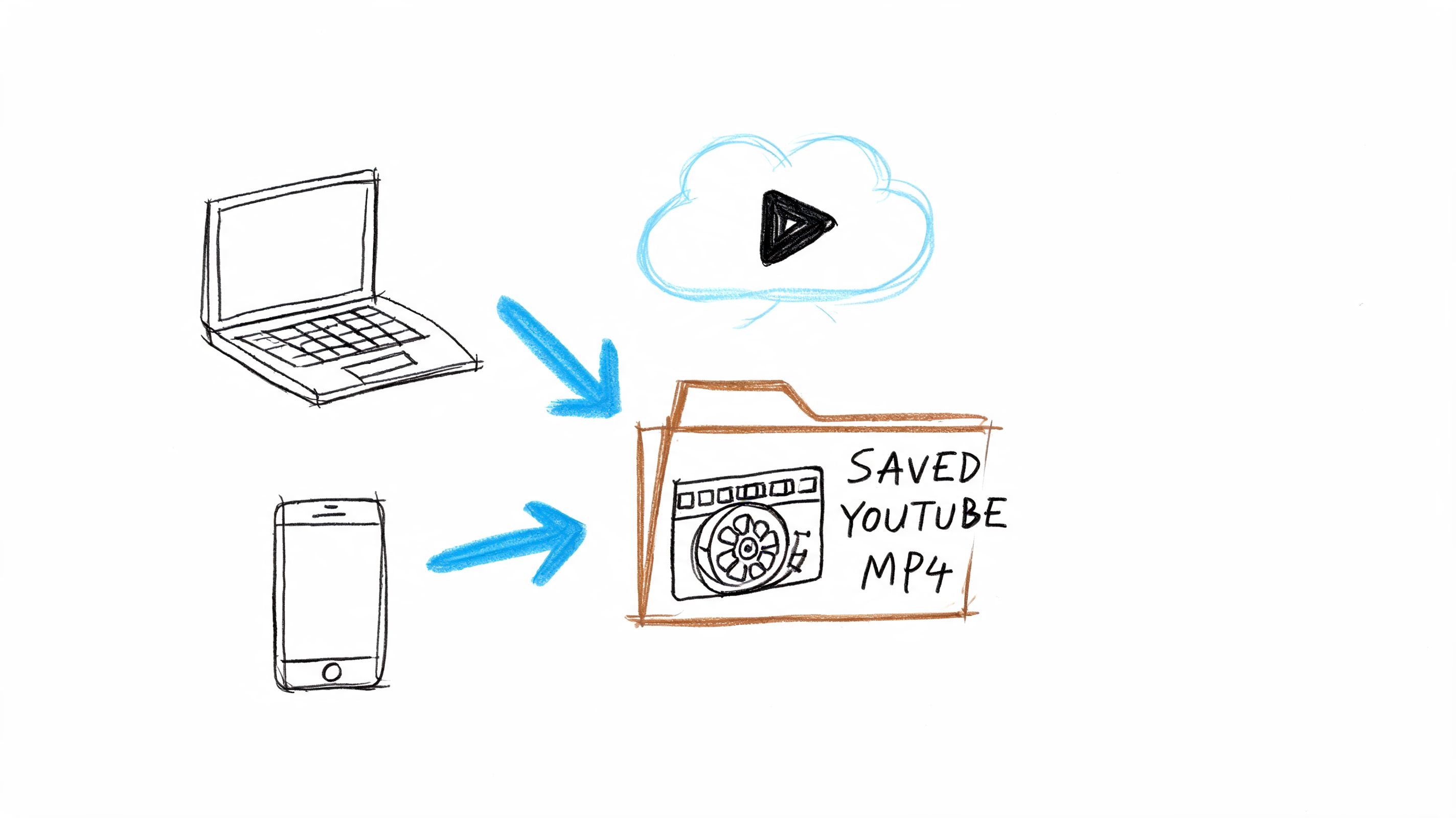
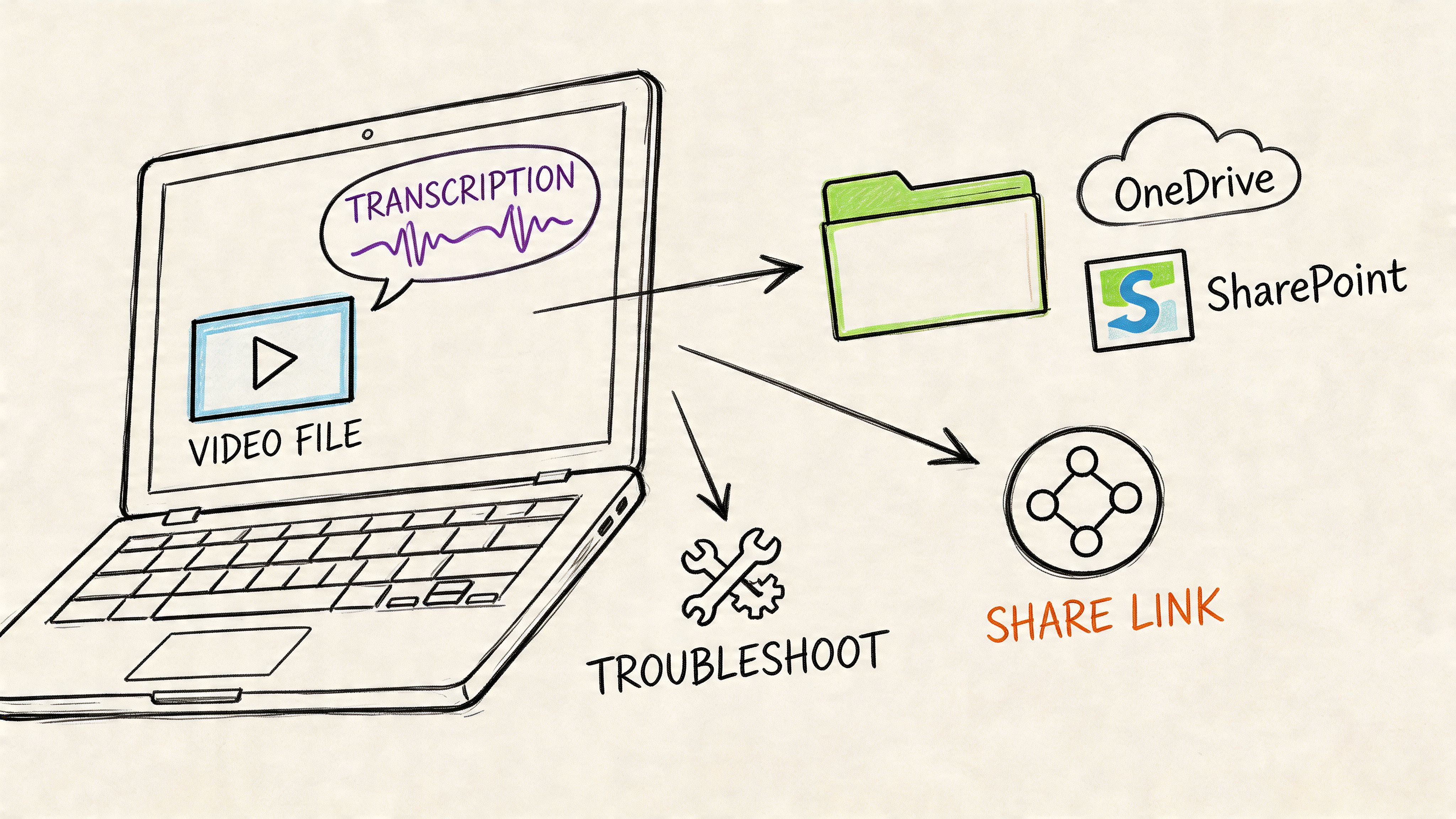
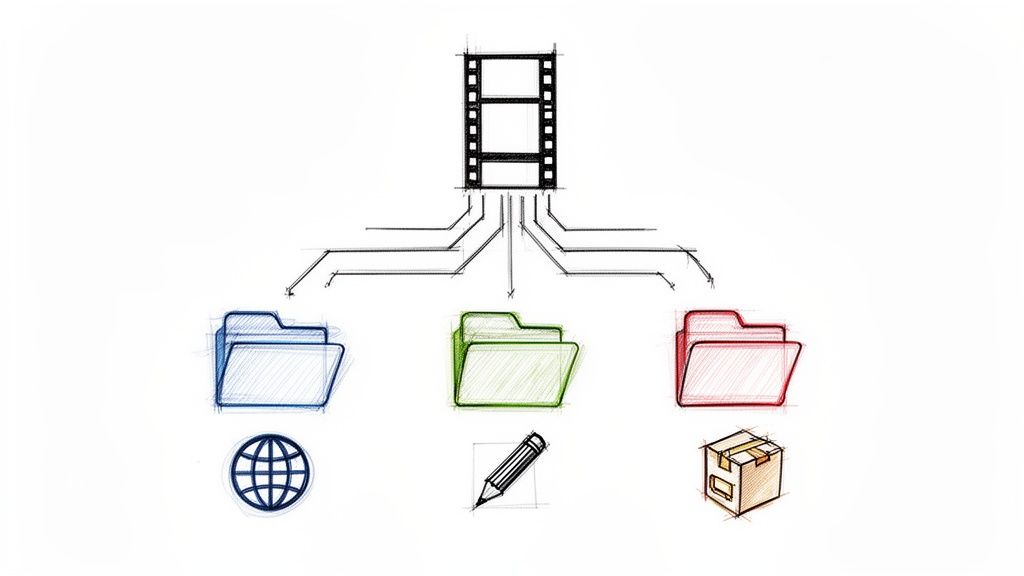
Once the form is signed, the final piece of the puzzle is smart, secure storage. I link each signed video recording release form directly to its video file using a simple, consistent naming convention (e.g., ProjectX_Interview_JaneSmith_Video and ProjectX_Interview_JaneSmith_Release) and by keeping them together in the same cloud folder. This creates a perfectly organized system where your legal permissions and media assets live side-by-side.
How to Integrate Release Management with Your Tools
A signed release form is useless if it’s just floating in a random folder, disconnected from the video it belongs to. Trying to manually track paper forms or email attachments is a recipe for disaster, especially at scale. A smart, integrated workflow is the only way to make sure your legal permissions are always tied directly to your video files.
This is non-negotiable for anyone using transcription platforms like HypeScribe. When you're handling sensitive video and audio from interviews or meetings, you need an airtight system. The goal is to manage consent from the very beginning, giving you total confidence when you turn those conversations into transcripts and summaries.
Building Your Compliant Content Workflow
Think of it this way: getting a video recording release form signed should be the first step in your process, not a frantic afterthought.
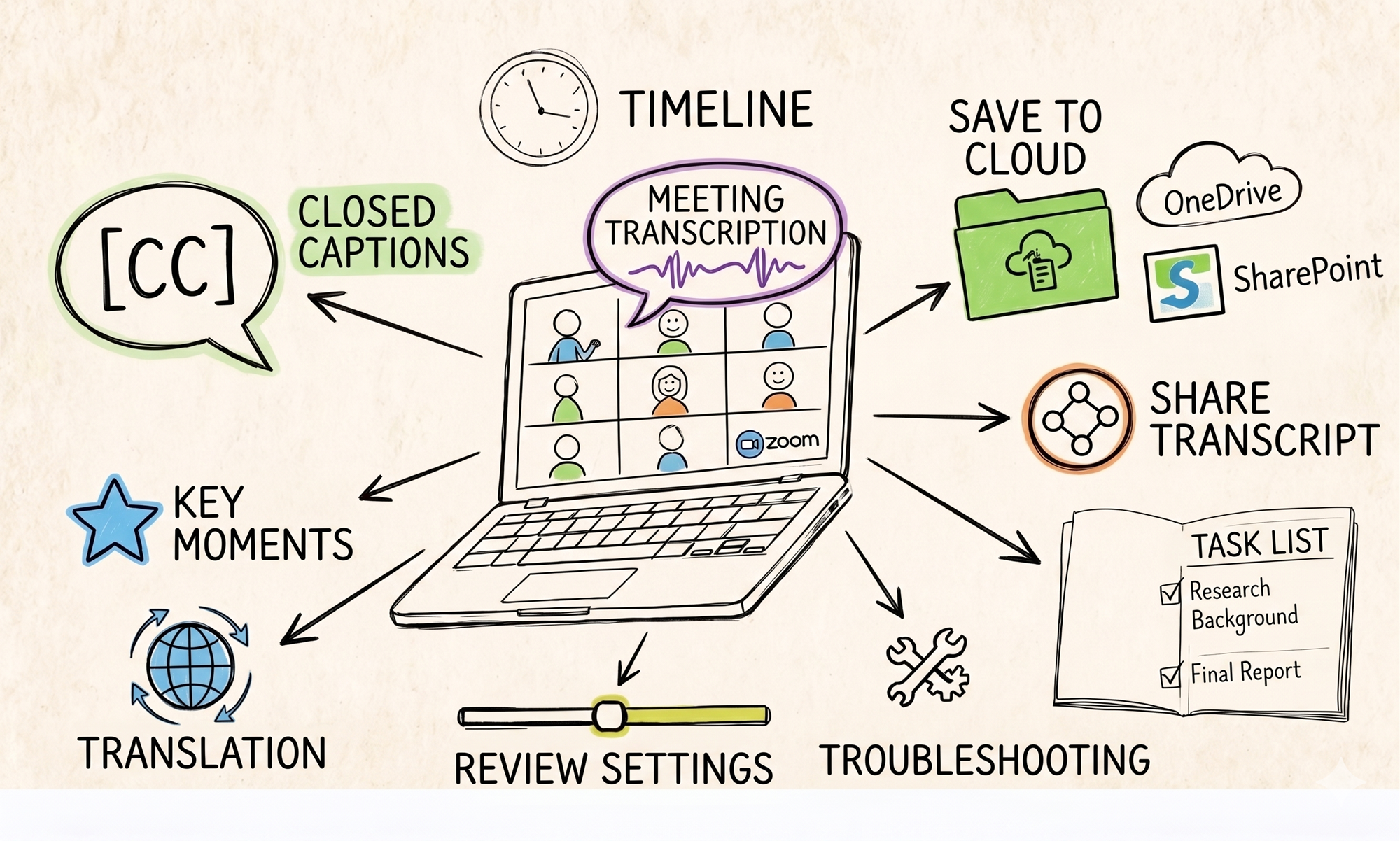
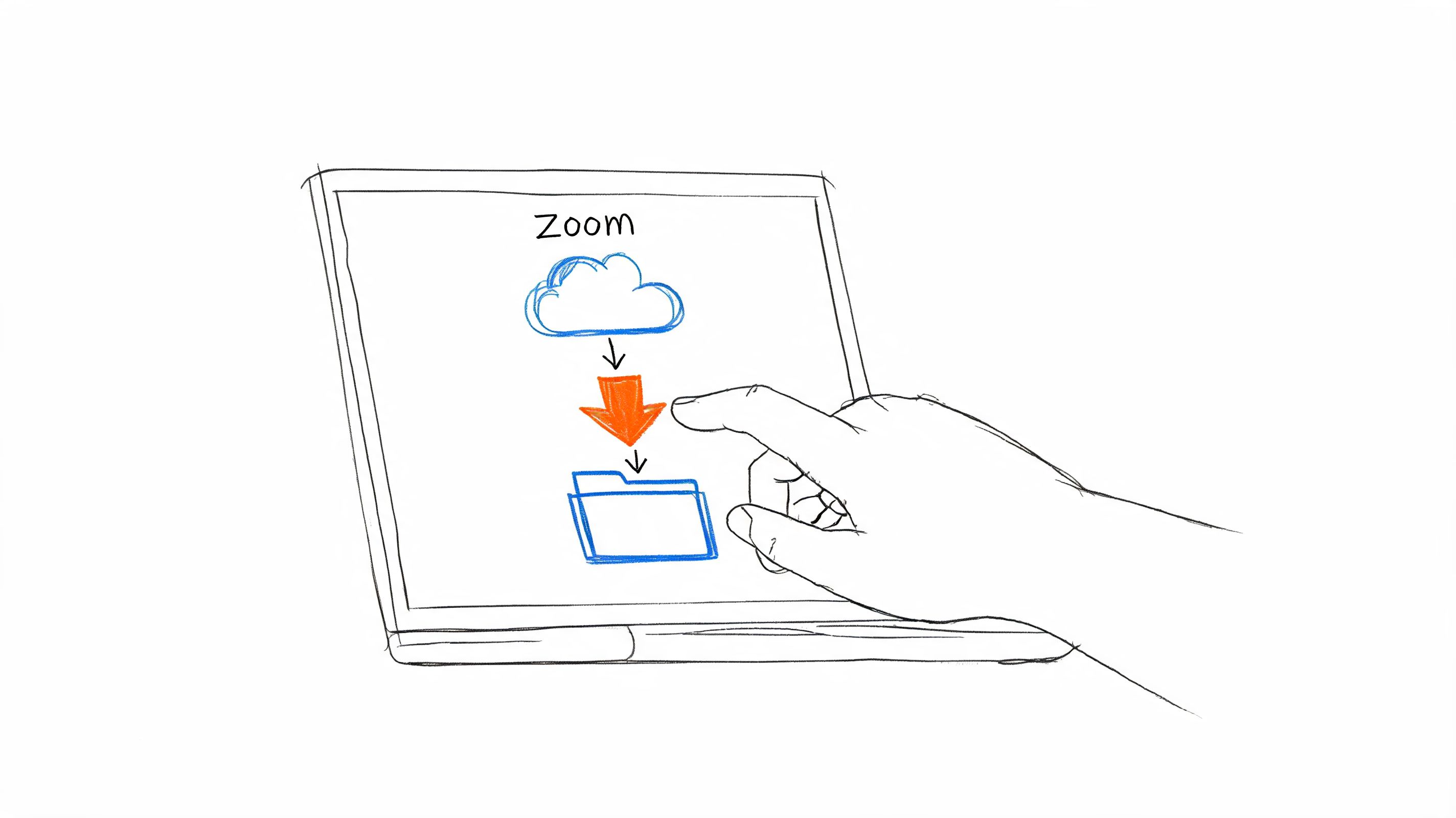
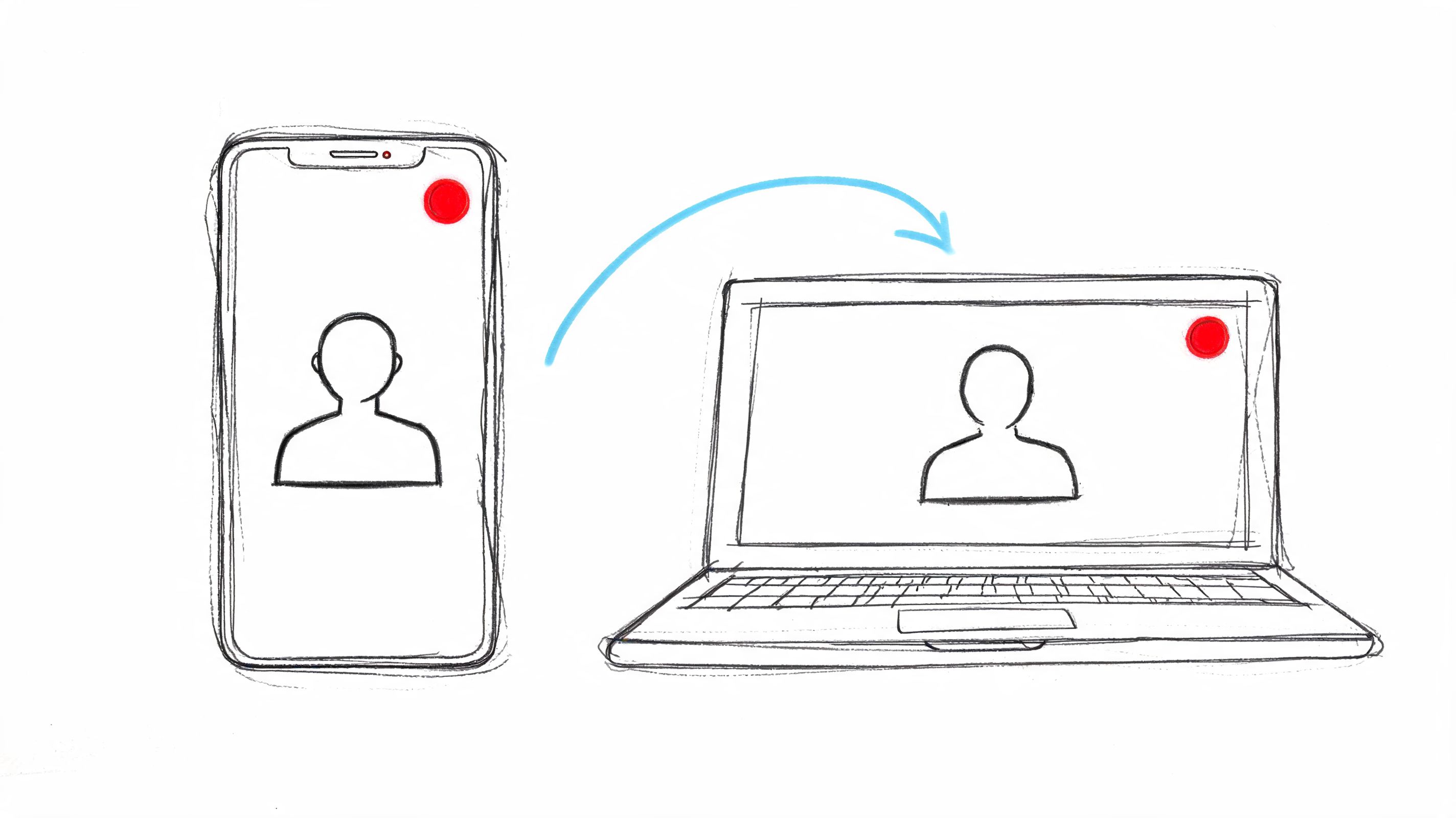
Let's say you're about to record a crucial client testimonial over Zoom. Before you even hit record, your workflow should kick in. You’d send a digital release form that the client can sign in seconds.
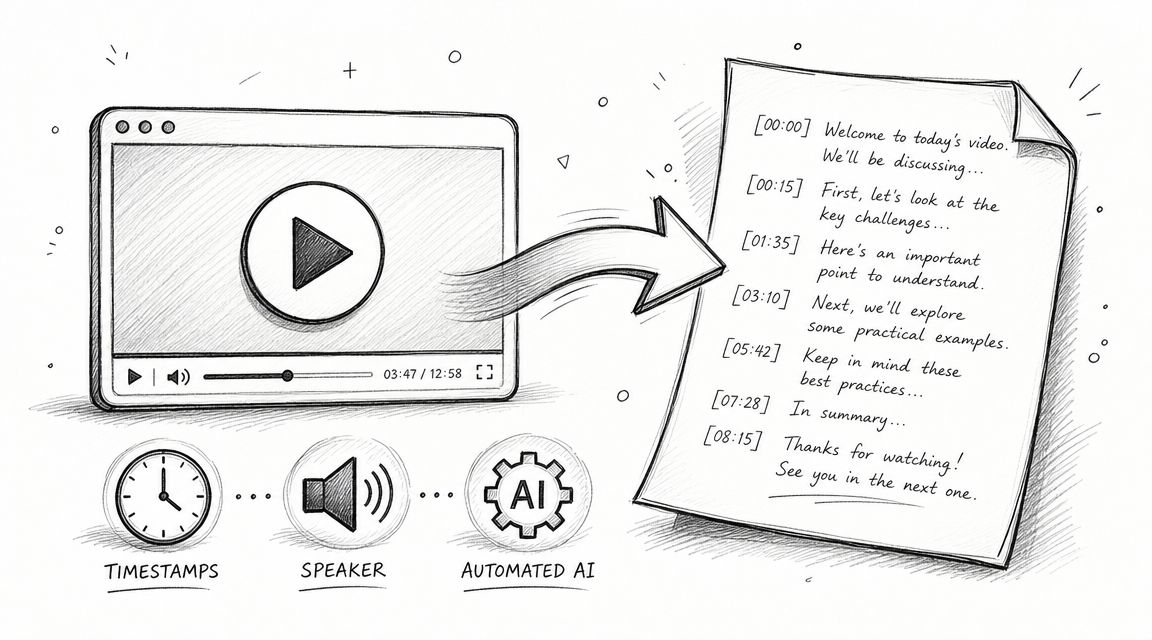
Once you have that signed form, you can record the meeting with peace of mind. Afterward, you upload the video directly to your transcription tool, and your signed release is automatically linked to that specific recording.
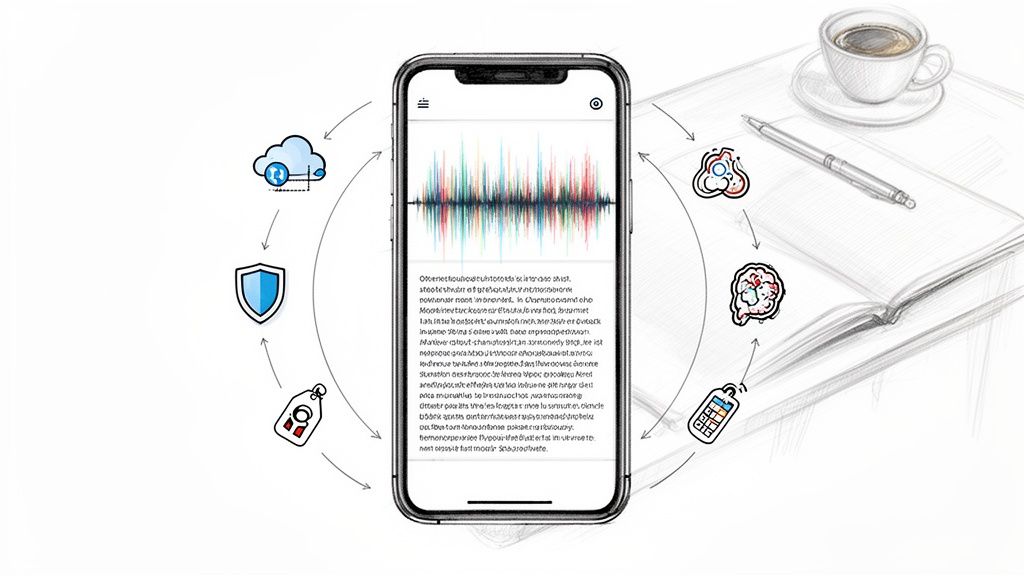
The diagram below shows just how simple this modern digital process can be.
It really is a straightforward cycle: send the form, get it signed, and securely store it with the content.
By connecting release management with the tools you’re already using, you create a powerful system of record. For instance, you can capture incredible meeting notes with AI transcription for Zoom and have the signed release form stored right alongside the transcript and original video file.
This integrated approach transforms a series of disconnected tasks into a single, legally sound process. You now have the recording, the signed consent form, and the actionable transcript all in one place, protected by security features like encryption.
This creates a complete, compliant archive of your content. You no longer have to second-guess whether you can use a clip for marketing or share insights with your team. The proof of permission is right there, attached to the content itself.
Common Questions About Video Release Forms
Even when you know the rules, the real world always throws a few curveballs. Based on my experience, these are the most common questions that pop up once you start recording.
Do I need a release form if no one is getting paid?
Yes, absolutely. It’s easy to think releases are all about money, but their real job is to secure the legal right to use someone's image and voice.
Every contract needs an exchange of value, what lawyers call "consideration." But that value doesn't have to be cash. It can be something as simple as the opportunity for exposure, a professional headshot, or just a copy of the final video.
Without a signed release, that unpaid volunteer could change their mind months later and demand you pull the video. Always get a signature, paid or not. It's the professional and safe way to operate.
What happens if I use footage without a release form?
Honestly, you’re rolling the dice with your project and your reputation. Using someone's image without their signed permission exposes you to serious legal and financial risk. They could sue you for invasion of privacy or what's legally called "misappropriation of likeness."
The fallout can be damaging:
- Takedown Orders: You could be legally forced to scrub the video from every platform. All that time and money you invested? Gone.
- Financial Penalties: A court could order you to pay the person damages for using their image without permission.
- Brand Damage: Nothing torpedoes trust like a public legal battle. The hit to your reputation could be the most expensive consequence.
If you’re a creator on YouTube, videos without proper releases can get demonetized or removed in a heartbeat. In a corporate setting, it’s a compliance nightmare.
Simply put, the risk is never worth it. The potential cost of one lawsuit is astronomically higher than the minute or two it takes to get a signature before you hit record.
Can I use a simple email as a release form?
An email where someone says "sure, you can use the video" is better than nothing, but it's a flimsy shield in a real dispute. A proper video recording release form is drafted with specific legal language that an informal email just can't replicate.
An email typically lacks critical components like:
- A clear "Grant of Rights" explaining how and where you can use the footage.
- A "Waiver of Claims" to prevent them from suing you later.
- Key terms defining duration (in perpetuity?) and territory (worldwide?).
Because it's missing these critical legal elements, an email might not hold up in court. The best approach is to use a dedicated tool for digital signatures or a well-structured PDF. This creates a solid, legally-binding record of informed consent, which offers far more protection than a casual email ever could.
Do I need a new release for every single video?
This depends on how your original release was written. If you know you'll be working with someone repeatedly—like a brand ambassador or an employee who’s always in training videos—you can use a "blanket" release.
A blanket release gives you permission to use their likeness across multiple projects, sometimes for a set period or even indefinitely ("in perpetuity"). This is a huge time-saver, as you won't have to chase down a new signature for every single recording session.
However, if your release was for a specific, named project (e.g., "the Q3 2024 customer testimonial video"), then you absolutely need a new one for anything else. When in doubt, just get a fresh signature. It's safer, more professional, and ensures everyone is on the same page.
Ready to move from conversations to action items without the legal guesswork? HypeScribe provides lightning-fast, highly accurate transcriptions and AI-powered summaries for all your video and audio content. Integrate your secure consent workflow with a tool designed for speed and precision. Start turning your recordings into valuable assets with HypeScribe today.