A Guide to Finding the Perfect Meeting Note Taker for Your Team
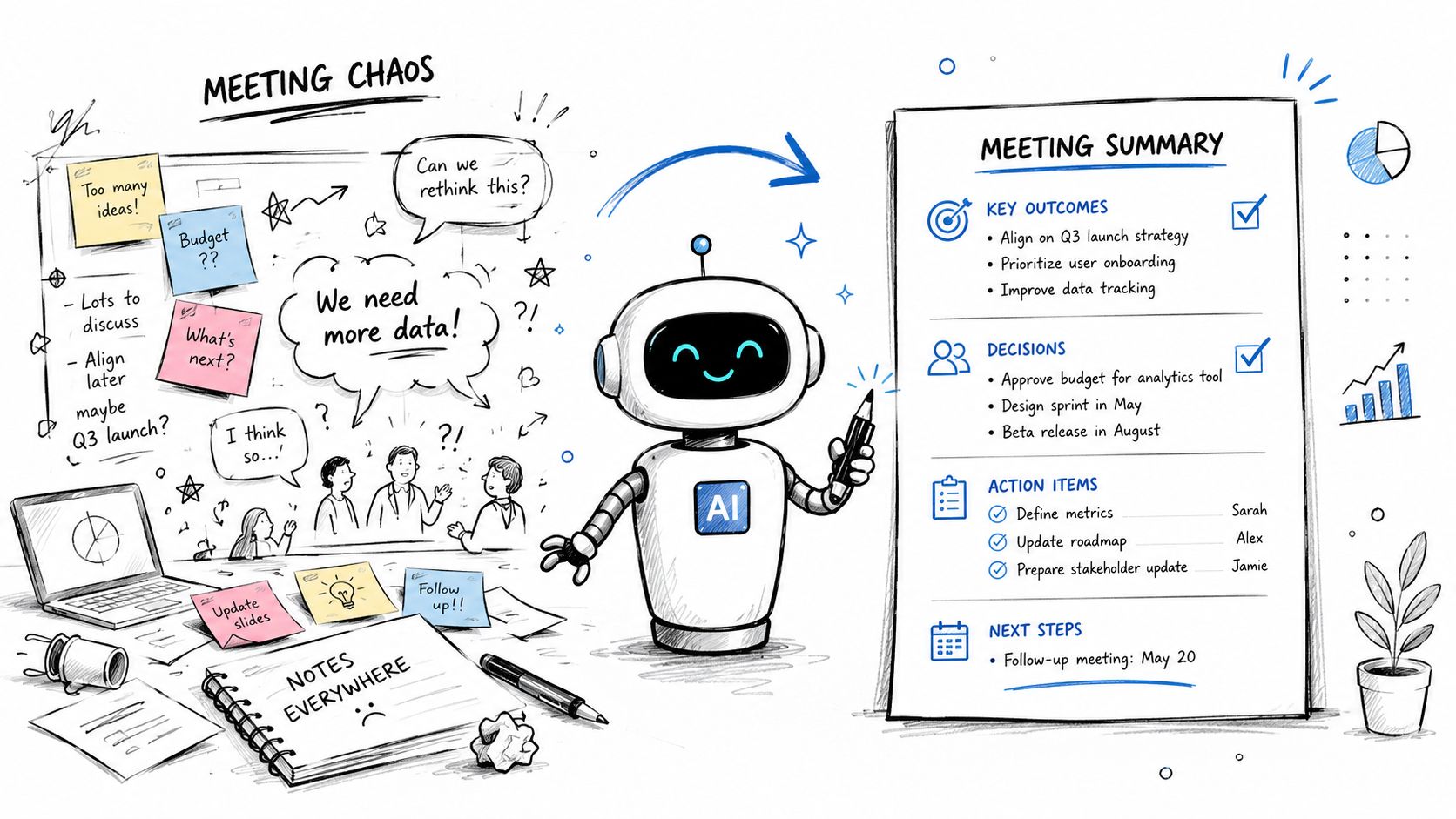
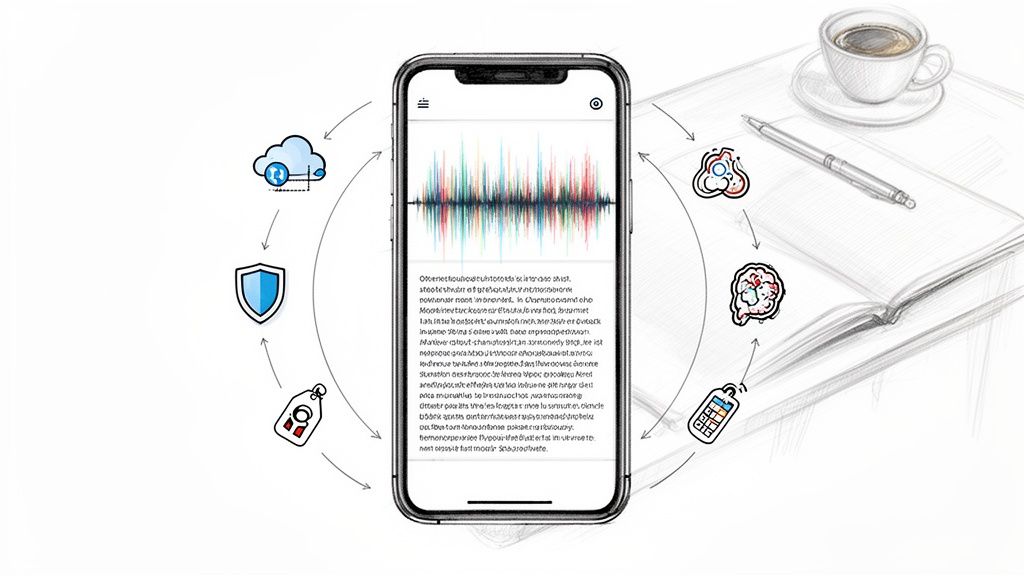
At its core, a meeting note taker is the person or tool responsible for capturing the most important parts of a meeting—key decisions, standout ideas, and who agreed to do what. Whether you assign this role to a person or use a smart AI, their job is to turn spoken words into a clear, actionable record so nothing gets lost.
What Does a Modern Meeting Note Taker Actually Do?
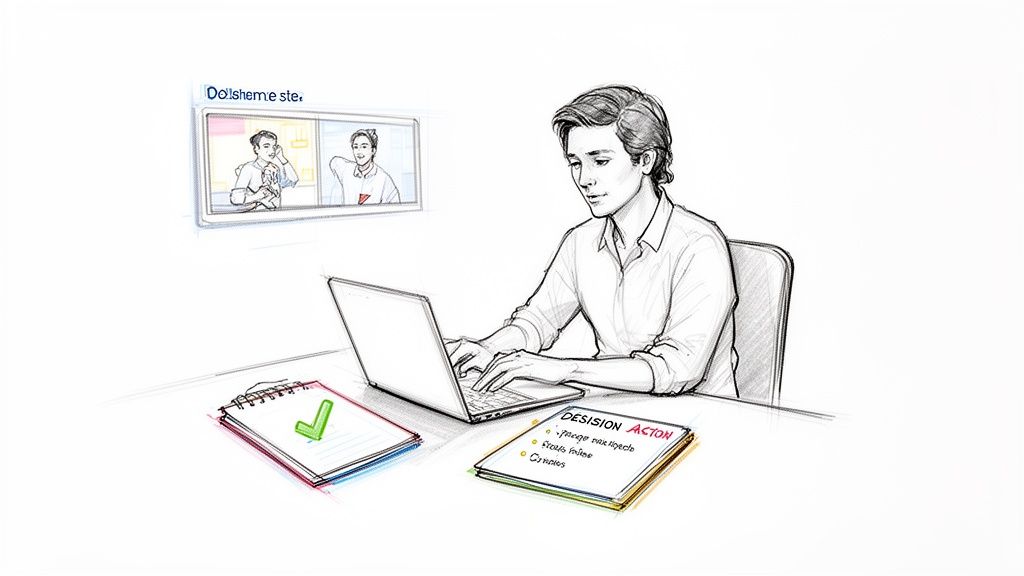
Think about the last meeting you were in where a brilliant idea popped up, but no one wrote it down. What happened to it? From my experience, those ideas usually vanish. That's the problem a dedicated meeting note taker solves. This isn't just about typing fast; it's about being the guardian of the meeting's purpose and ensuring the conversation leads to action.
We’ve all been in meetings that feel like a black hole for time and energy. Good ideas get thrown around, but the follow-through is weak because nobody captured them. A designated note taker creates a reliable summary that the whole team can refer to later, which is crucial for accountability.
Why is This Role the Guardian of Meeting Value?
I like to think of a great note taker as a journalist for the meeting. Their goal isn't just to transcribe every word but to listen, filter out the noise, and pull out the headlines. They make sense of scattered thoughts and frame the discussion in a way that’s easy to understand.
This role directly solves some of the most common meeting frustrations:
- Vague Outcomes: Puts an end to meetings that wrap up with everyone wondering, "So, what did we decide?"
- Forgotten Tasks: Ensures every action item is captured, assigned to a specific person, and given a deadline.
- Misaligned Teams: Creates a shared document that everyone can reference, which cuts down on confusion and arguments down the road.
A skilled note taker is actively listening for key phrases, moments of consensus, and firm commitments. In doing so, they turn a free-flowing conversation into a structured plan. Based on my experience with remote teams, this has become absolutely essential, as clear written communication is the glue that holds everything together.
The real job of a meeting note taker is to drive accountability. By documenting who agreed to what, they create a clear path forward and make it easy to see who is responsible for each next step.
How Has the Role Changed?
The job of a meeting note taker has evolved significantly. It's no longer just someone hunched over a laptop. With incredible advances in technology, AI-powered tools can now handle a huge chunk of the note-taking work with impressive speed and accuracy.
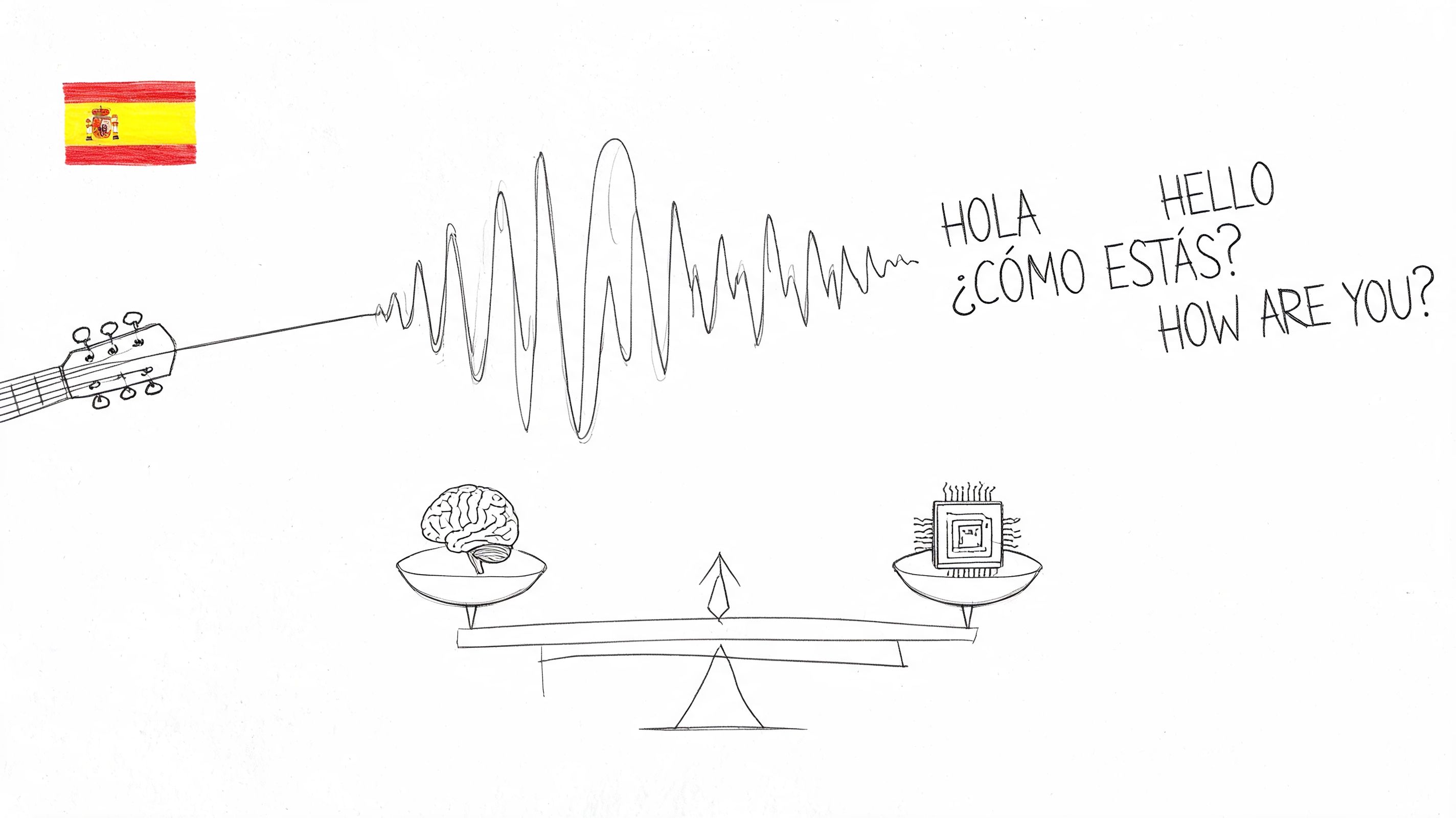
This evolution gives teams a new way to think about the process. A human is great at picking up on nuance, tone, and the unspoken context of a conversation. An AI, on the other hand, can deliver a perfect transcript and an instant summary. The best approach today often blends both—letting AI do the heavy lifting while a person provides the final layer of context and review.
If you're curious about the tools out there, you can explore our guide on finding the perfect meeting note taking app to fit your team's workflow.
What Are the Real Responsibilities of an Effective Note Taker?
Think of a great meeting note taker less like a court stenographer and more like a journalist covering a critical event. Their job isn’t just to passively type out everything that’s said. It's to actively listen, filter out the noise, and capture the handful of things that truly matter for moving a project forward.
This role is about creating clarity and direction, not just a transcript. The best note takers break their work down into three key stages.
Before the Meeting: Doing the Prep Work
Great notes almost never happen by just showing up and opening a blank document. In my experience, that's a recipe for a disorganized mess. The real work starts before the meeting even begins.
- Review the Agenda: The agenda is your roadmap. You need to know the topics, goals, and key questions to anticipate where the most important conversations will happen.
- Know the Players: Who’s in the room (or on the call)? Knowing the participants helps you correctly attribute comments, questions, and especially action items.
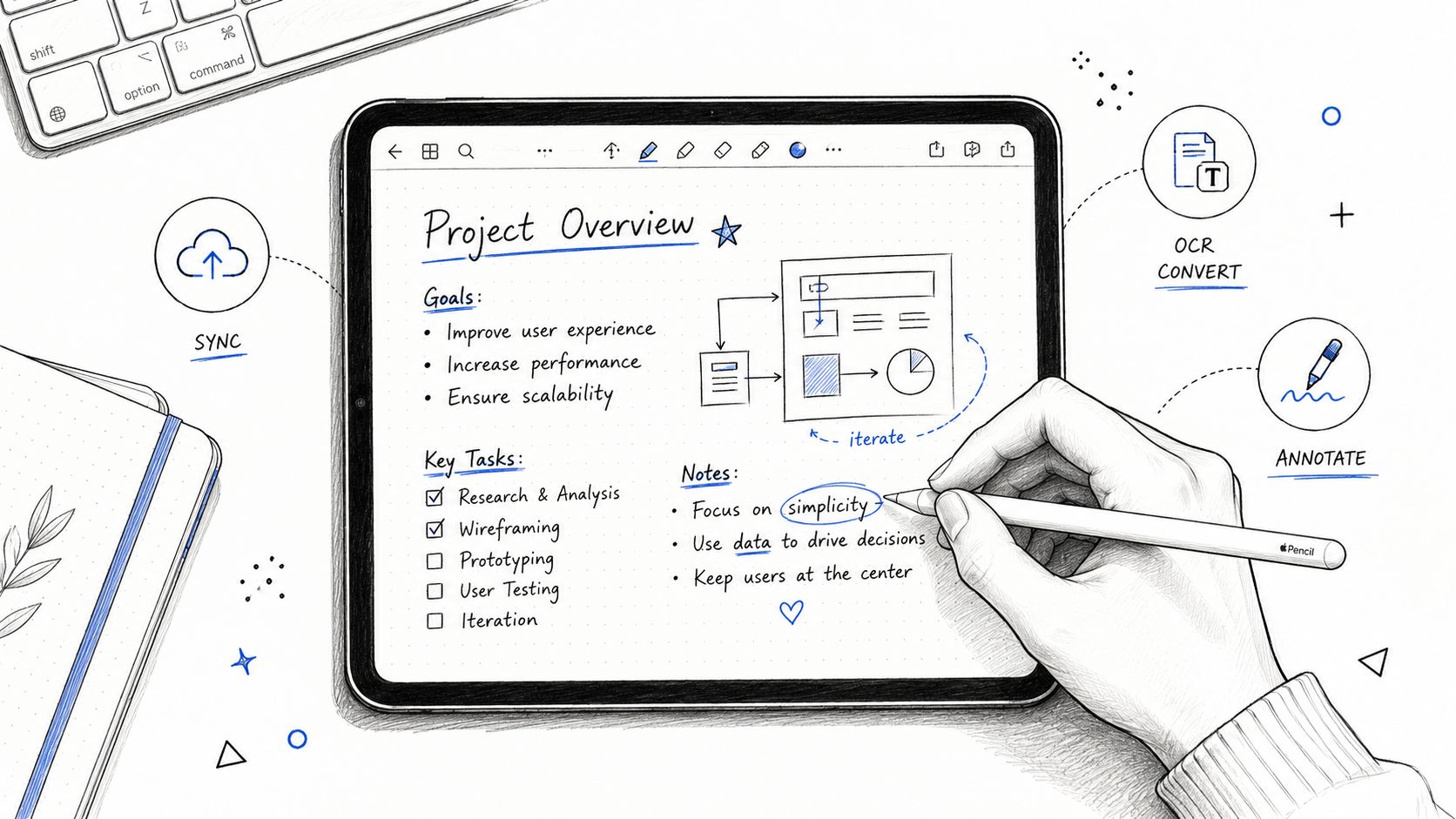
- Set Up Your Template: Walking in with a pre-built structure is a game-changer. Having sections for attendees, agenda items, decisions, and action items saves a ton of time and keeps you organized under pressure.
Getting this prep work done sets the stage for capturing information that's actually useful.
During the Meeting: Practicing Active Listening
This is where the magic happens. It’s not about transcribing every single word—it’s about intelligent, active listening. A skilled note taker is constantly separating the signal from the noise.
Their main goal is to distill the conversation into its essential parts. They're listening for commitments, decisions, and roadblocks, not just documenting the dialogue.
While the discussion is flowing, their focus is on grabbing these key pieces of information:
- Key Decisions: What did the team actually agree on? Write it down clearly and concisely, leaving no room for ambiguity.
- Action Items: Who is doing what, and by when? A simple, consistent format like [Owner] – [Task] – [Deadline] is perfect for this.
- Big Ideas and Open Questions: What important suggestions or unanswered questions came up? Capturing these ensures they don’t get lost and can be revisited later.
After the Meeting: Adding the Final Polish
The work isn't over just because the Zoom call ended. In fact, this last step is arguably the most important. The final responsibility is to take those raw, messy notes and turn them into a clean, shareable summary. This means cleaning up typos, clarifying points, and organizing everything logically so it makes sense.
This summary becomes the official record. And thanks to modern tools, this part of the job is getting much faster. The market for AI note-taking tools is expected to grow by USD 821 million by 2029, a trend fueled by the demand for smarter documentation in remote and hybrid teams. In my own work, I've found these tools can cut post-meeting review time by up to 70%. You can discover more about these AI market trends to see how this space is evolving.
As you explore which tools might fit your team, a good Notion vs Evernote comparison can highlight the different approaches modern platforms take. Ultimately, the goal is always the same: create a document that anyone—even someone who missed the meeting—can read and understand completely.
Human vs. AI Note Taker: Which Is Right for Your Meeting?
Deciding between a human and an AI for taking meeting notes isn't a simple case of one being better than the other. The real question to ask is, "What’s right for this specific meeting?" The answer really depends on what you need to capture.
Are you in a high-stakes negotiation where every subtle shift in tone matters? Or are you in a technical project update where a flawless record of details is the only thing that counts?
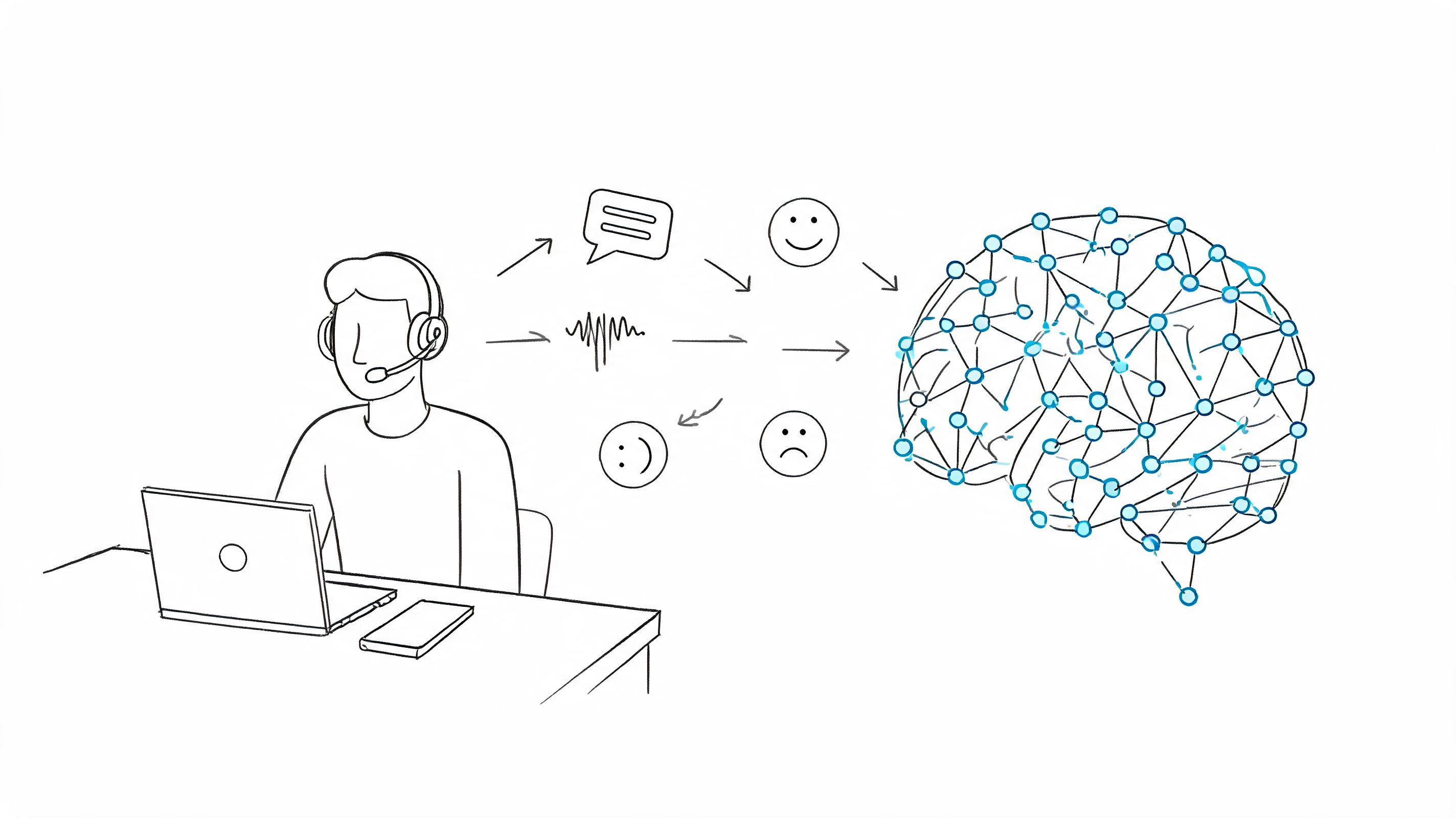
A human note taker is a pro at picking up on nuance. They can read the room, catch sarcasm, and interpret body language—all the subtle cues that an algorithm is still learning to understand. This emotional intelligence is priceless in meetings where unspoken context is just as important as the words themselves, like a creative brainstorm or a sensitive HR discussion.
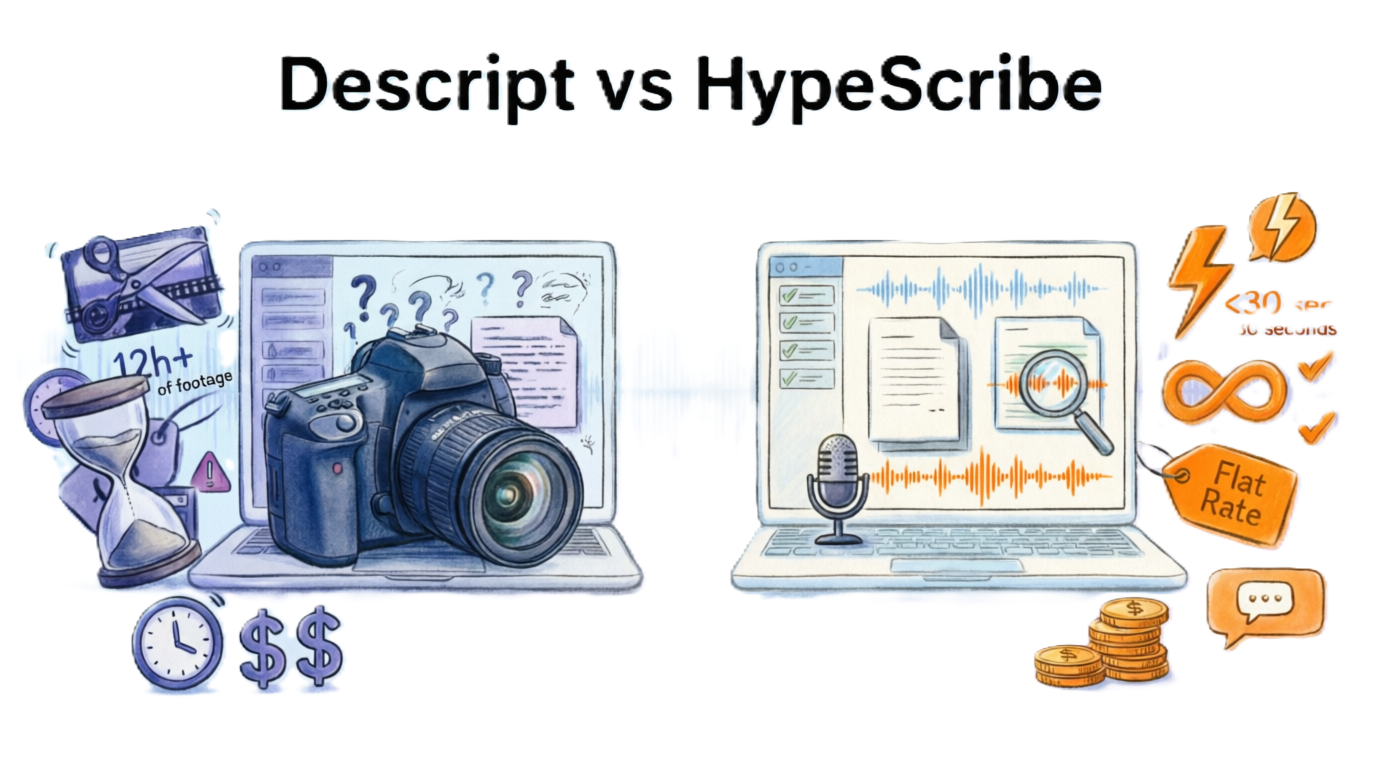
On the other hand, an AI note taker like HypeScribe brings incredible speed, accuracy, and endurance to the table. It can transcribe back-to-back calls without getting tired, generate summaries in seconds, and make sure not a single detail gets lost. This makes it the perfect sidekick for routine check-ins, technical deep dives, and client status calls where the goal is all about factual recall and tracking action items.
Comparing Key Strengths
The choice often comes down to a trade-off: do you need qualitative understanding or quantitative efficiency? A human provides the "why" behind what was said, while an AI delivers the "what" with perfect memory.
This decision tree can help you visualize how the core jobs of a note taker—preparing, listening, and synthesizing—should guide your choice.
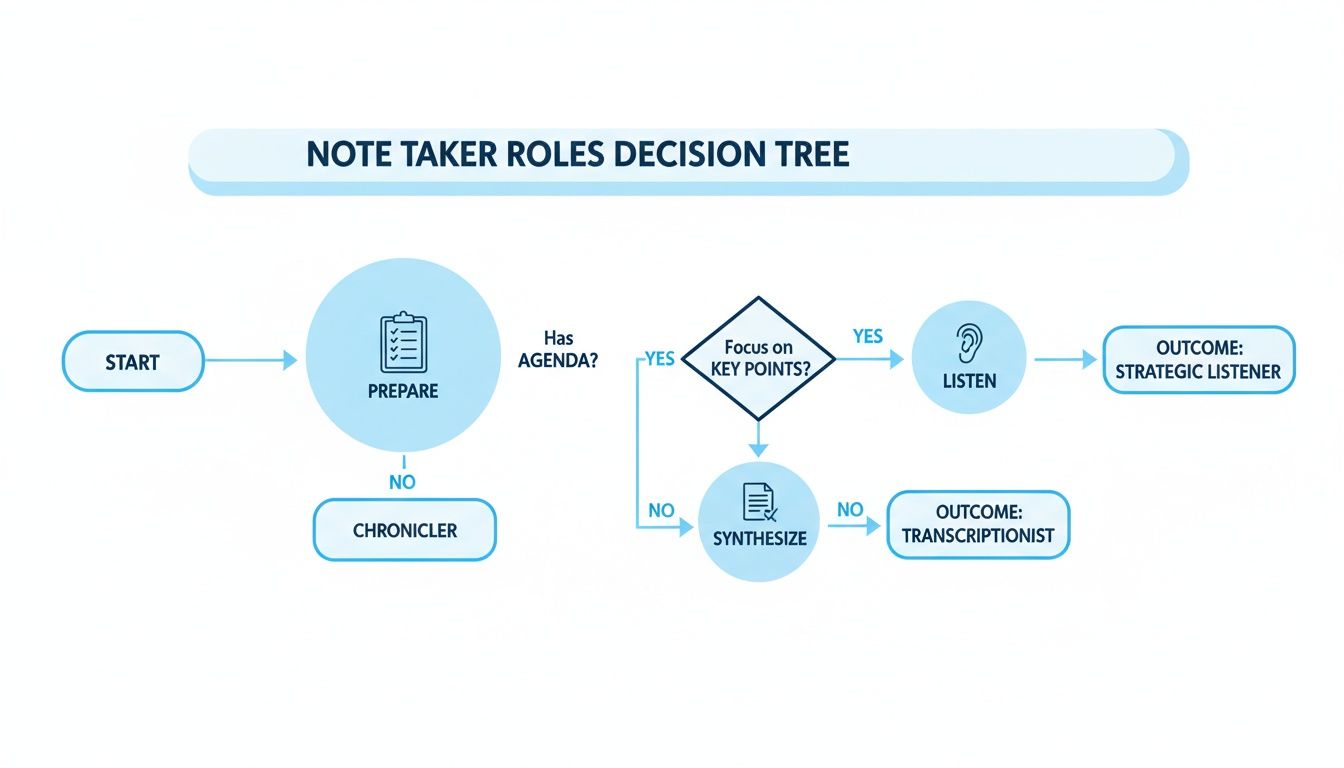
As you can see, good notes always start with solid prep and active listening. It’s at the final stage, synthesis, where the path splits and your choice between a human and an AI really makes a difference.
The best solution is often not a choice between one or the other, but a partnership. Let AI handle the heavy lifting of transcription, freeing up human participants to focus on strategic thinking, problem-solving, and building relationships.
A Head-to-Head Comparison
To make the decision even clearer, let's put human and AI note takers side-by-side. This table breaks down their capabilities across several key areas to help you match the right solution to your next meeting.
Human vs. AI Note Taker Feature Comparison
| Feature | Human Note Taker | AI Note Taker (e.g., HypeScribe) |
|---|---|---|
| Accuracy | Prone to human error and summarization bias; may miss details. | Near-perfect transcription of spoken words, capturing everything. |
| Speed | Notes are often summarized live and require cleanup afterward. | Instantaneous summaries, key takeaways, and action items. |
| Cost | Requires salary or hourly pay, which can be expensive. | Highly affordable with scalable pricing plans for any team size. |
| Nuance | Excellent at understanding context, emotion, and non-verbal cues. | Primarily focused on text; cannot interpret body language or tone. |
| Scalability | Limited to one meeting at a time; can experience burnout. | Can join multiple, simultaneous meetings without performance loss. |
| Objectivity | Can be influenced by personal opinions or relationships. | Completely objective, recording only what was said. |
In the end, many teams find that a hybrid approach gives them the best of both worlds. Using an AI tool like HypeScribe creates a perfect record so no action item is ever forgotten. This frees up the people in the room to engage fully, knowing the details are being captured for them.
This combination delivers both flawless documentation and, more importantly, a higher-quality strategic discussion.
What Are the Best Templates and Methods for Flawless Note Taking?
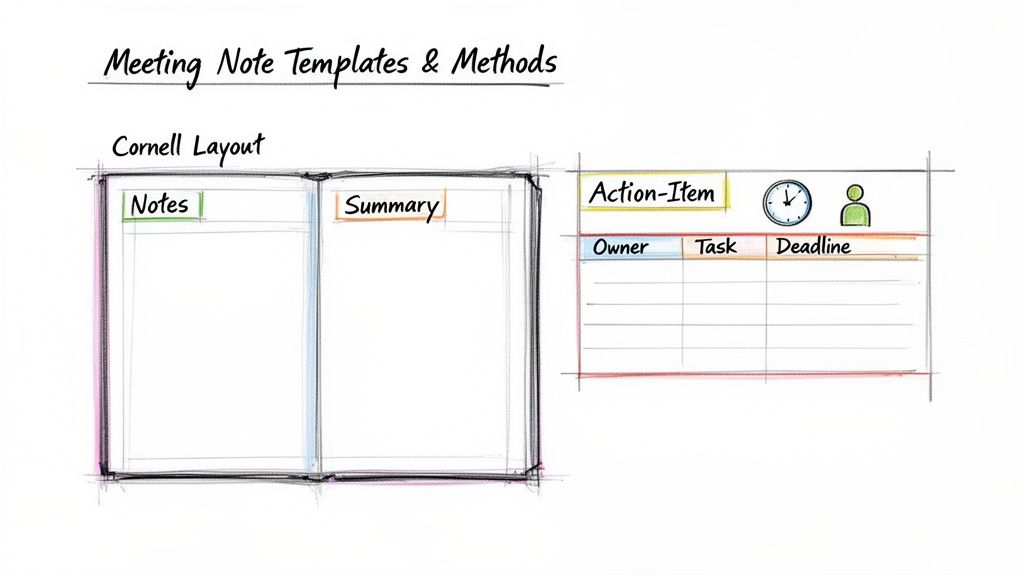
Staring at a blank page before every meeting is a surefire way to end up with a jumbled mess of notes. The real pros don't wing it. They lean on proven templates and methods to bring order to the chaos, making sure every key detail is captured clearly and consistently.
Using a framework isn't about being rigid; it’s about being smart. It helps you stop worrying about how to write and start focusing on what to write, ensuring the final output is actually useful for everyone on the team.
The Action Item Focused Method
If your meetings are all about driving projects forward, this is the method for you. It cuts right to the chase, putting tasks and accountability front and center. It's simple, direct, and perfect for making sure nothing slips through the cracks.
The entire system is built around assigning clear ownership for every single task that comes up.
- Owner: Who’s on the hook for this? Pin it to one person to avoid the "I thought someone else was doing it" problem.
- Task: What, exactly, needs to be done? Be specific and use crystal-clear language.
- Deadline: When is it due? A concrete date adds a healthy sense of urgency and helps everyone plan.
You can even just copy and paste a simple template like this into your notes:
Action Items
- [John S.] – Finalize the Q3 marketing budget report. [Due: Friday, EOD]
- [Sarah L.] – Send the updated client proposal for review. [Due: Wednesday, 10 AM]
- [Team] – Brainstorm ideas for the new product launch campaign. [Due: Next Monday]
The Cornell Method for Deeper Understanding
For more complex discussions—think strategy sessions or deep-dive problem-solving—the Cornell Method is a game-changer. Originally developed for academic lectures, it’s brilliant for meetings where you need to grasp context and big ideas, not just a list of to-dos.
It works by splitting your page into three functional sections, forcing you to actively process information rather than just passively transcribe it.
- Main Notes Area (Right Column): During the meeting, this is your primary space. Just get the ideas, discussion points, and key comments down as they happen. Don't aim for perfection, just capture the flow.
- Cues/Questions Column (Left Column): Right after the meeting, go back through your notes. Pull out the main concepts, keywords, or questions that jump out and list them here. This is a crucial step for synthesis.
- Summary Section (Bottom): Finally, boil the entire meeting down to a one- or two-sentence summary at the bottom. This becomes your elevator pitch for "what was this meeting about?"
This kind of structured approach is why the global note-taking app market hit around USD 7.91 billion recently and is on track to more than triple by 2032. Distributed teams desperately need better ways to share context and stay on the same page. If you're curious, you can explore the different types of note-taking methods teams are using to stay aligned. For a closer look at market growth, check out the latest market trend analyses.
How an AI Meeting Assistant Can Change Your Whole Workflow
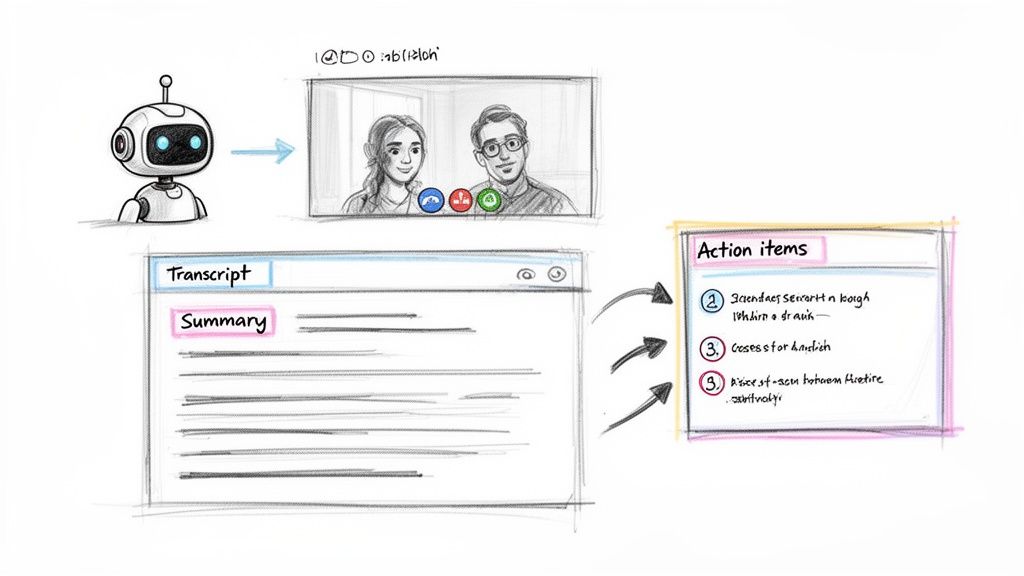
We've all been there: juggling back-to-back calls, frantically trying to type notes while also trying to sound intelligent. You either participate fully or take great notes. It's almost impossible to do both. This is where an AI meeting assistant like HypeScribe comes in, acting as an extra set of hands (and ears) on your team.
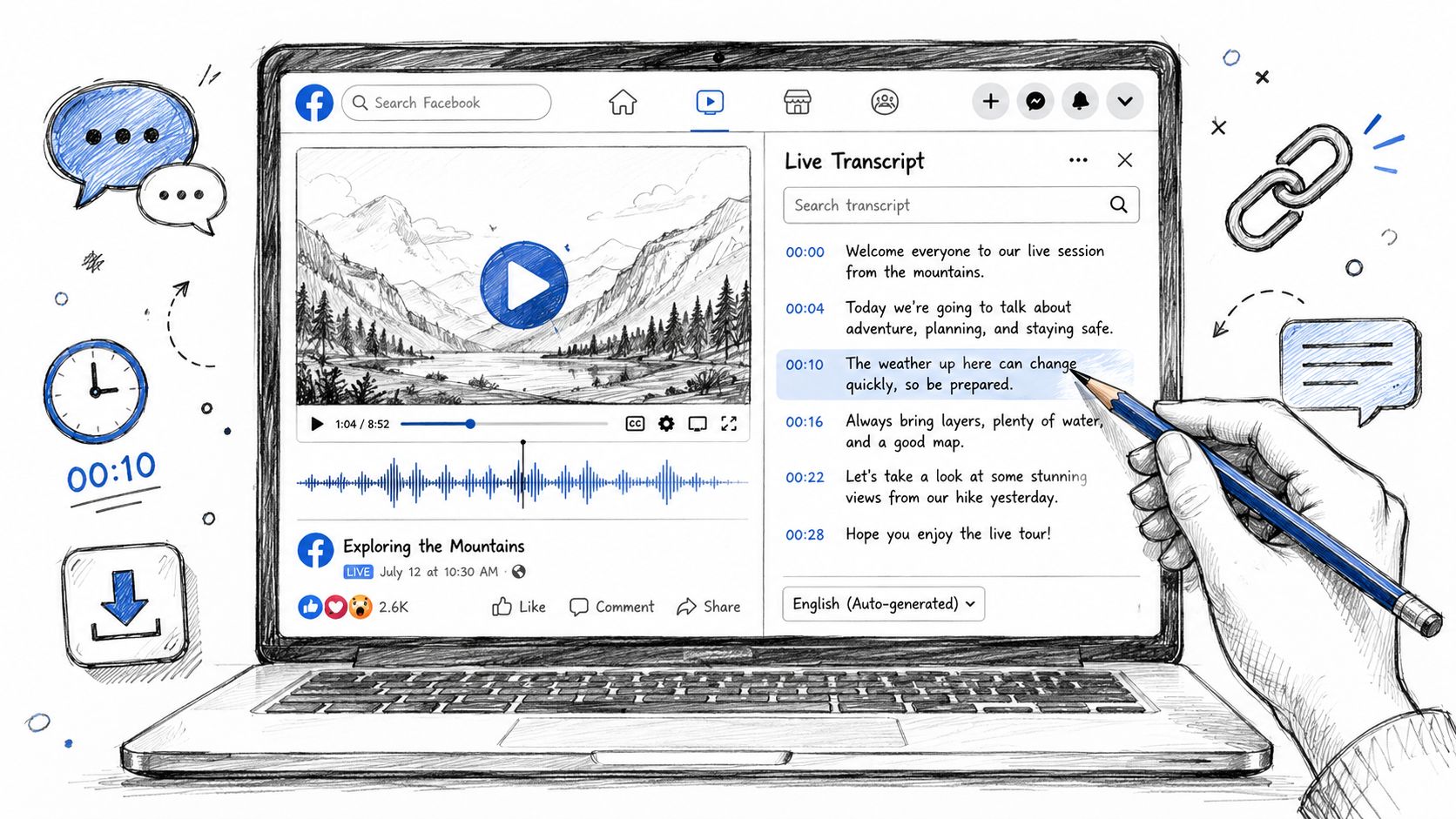
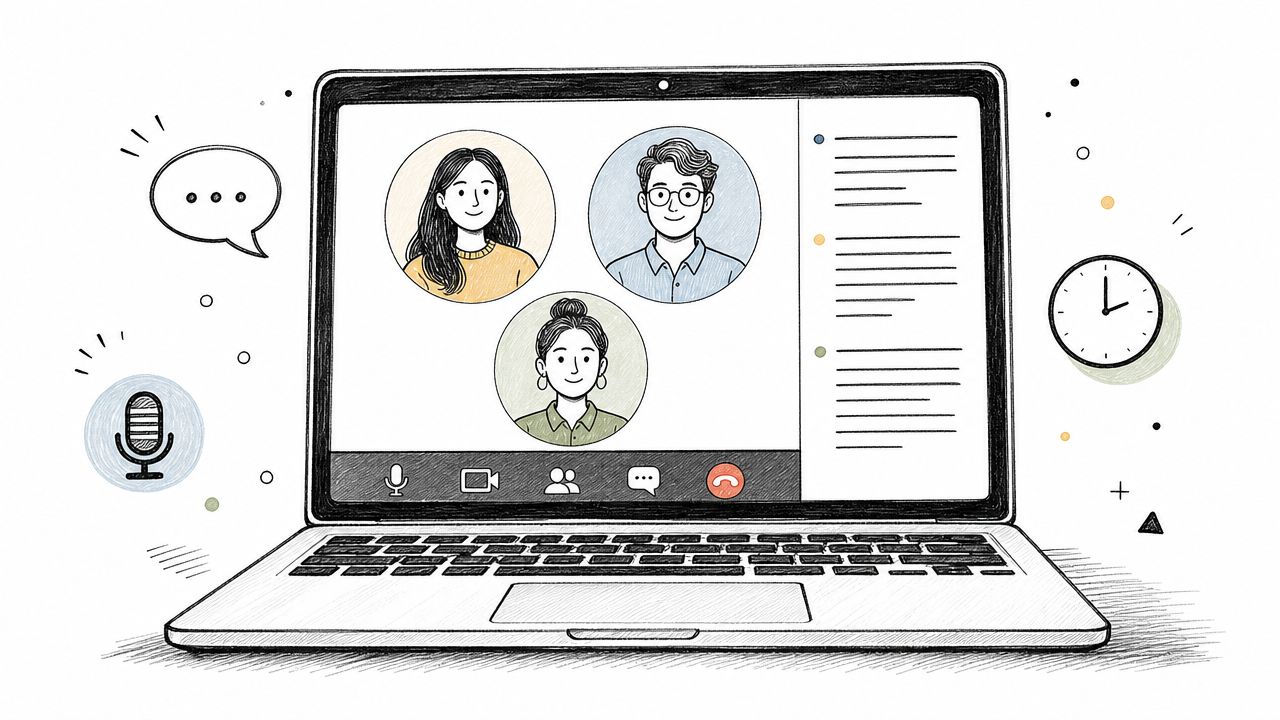
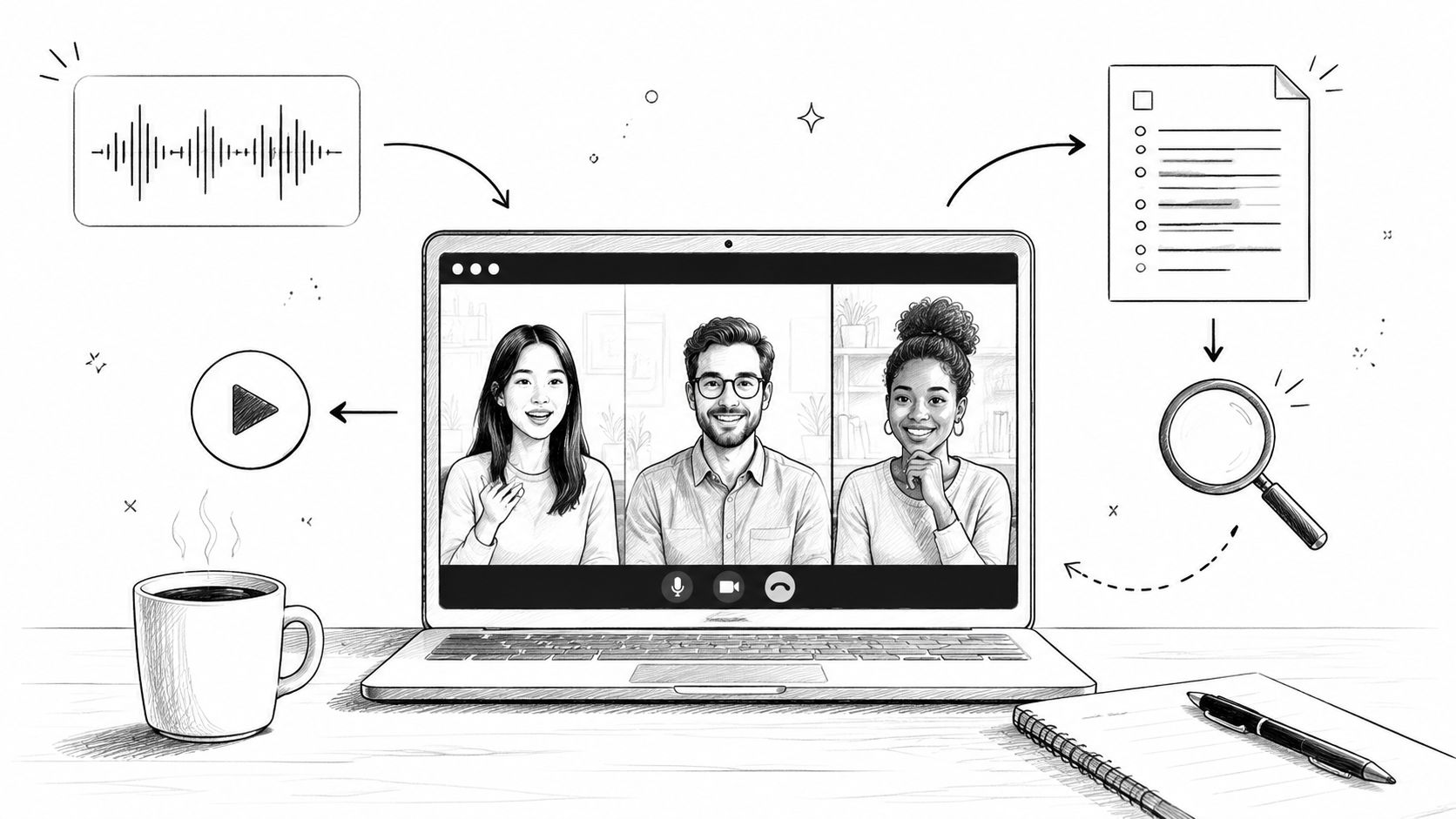
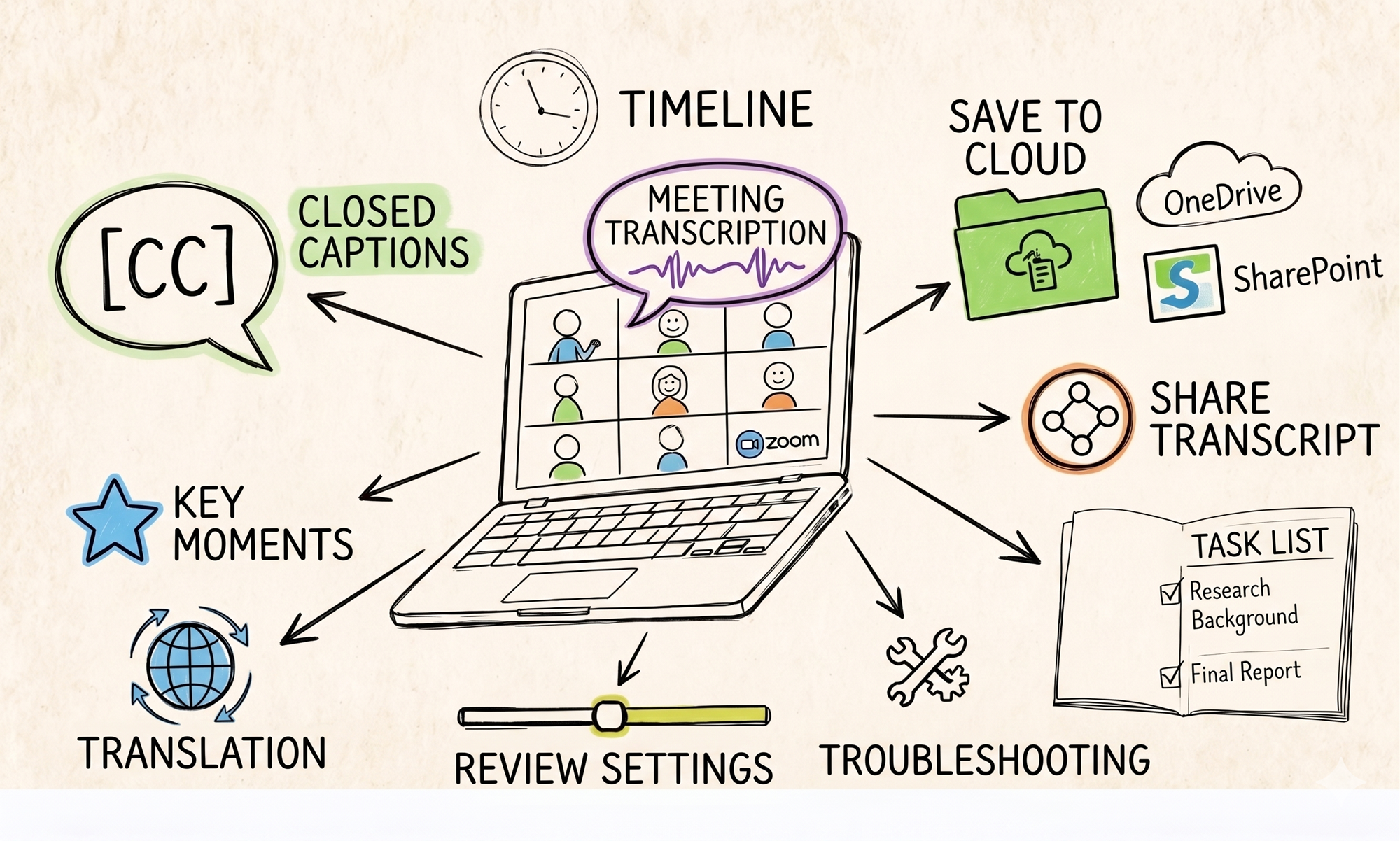
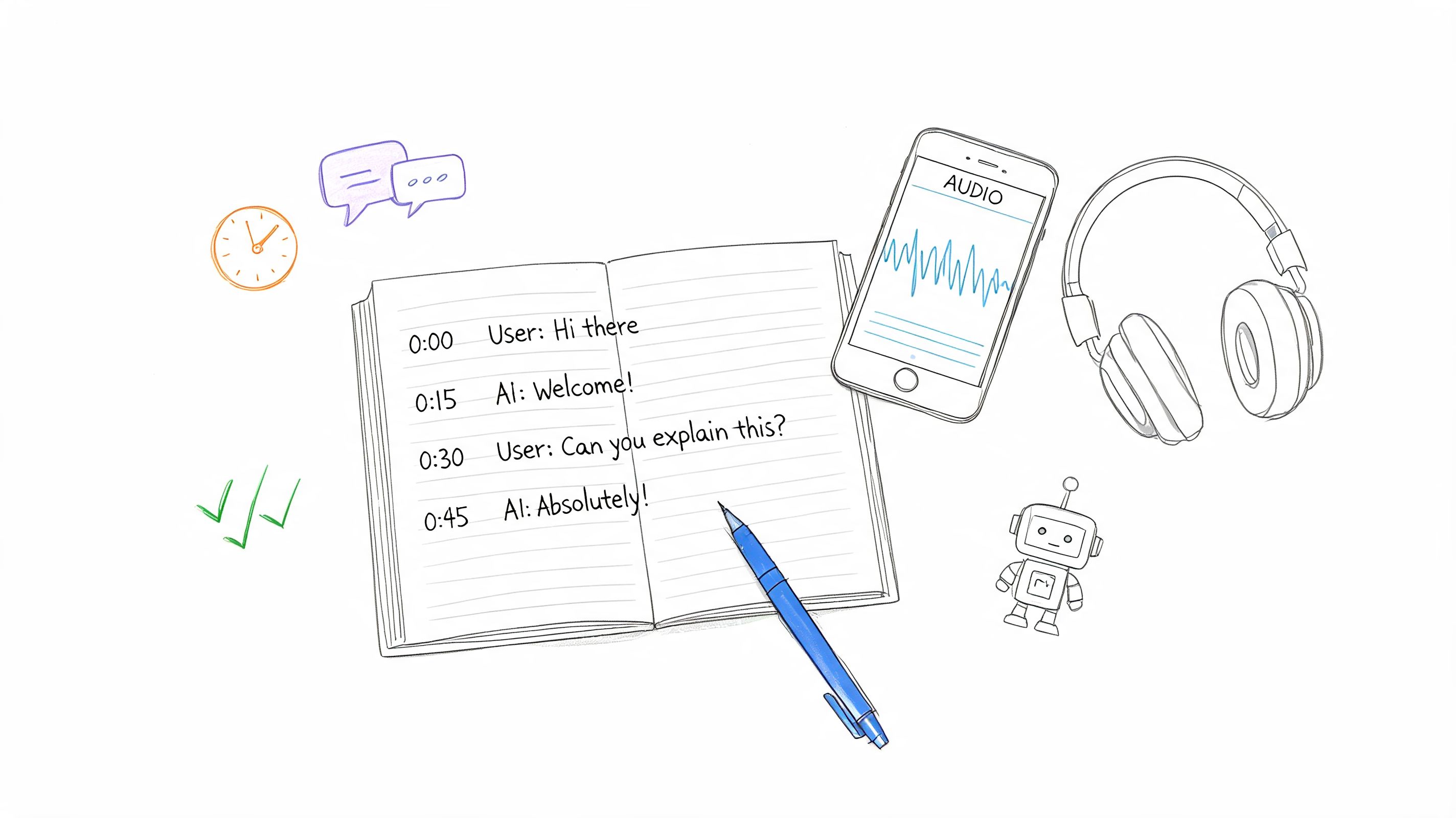
It simply joins your Zoom, Google Meet, or Teams call just like any other participant. As everyone talks, the bot quietly generates a live transcript in the background. If you miss something or join a few minutes late, you can catch up instantly without interrupting the flow.
But the real magic happens the moment the meeting ends. Instead of you spending the next half hour deciphering your scribbles, the AI sends you a perfectly structured email containing everything that matters.
From Messy Conversation to Clear Actions
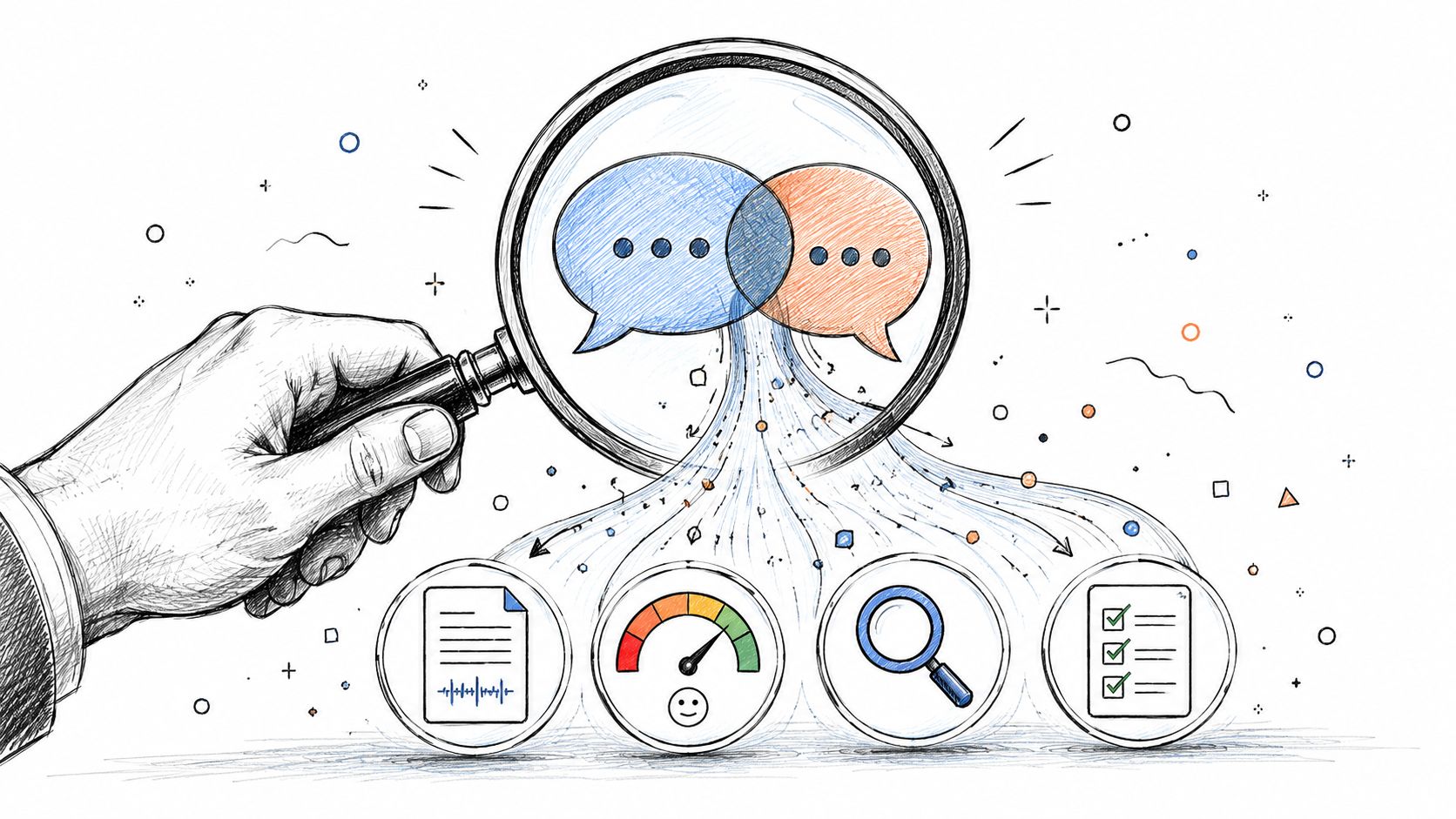
What you get isn't just a wall of text. A smart meeting note taker understands the conversation and repackages it into something you can actually use. This whole process is a perfect example of workflow automation—taking repetitive, manual work off your plate so you can focus on what's important.
For a busy project manager, that post-meeting email means you instantly have:
- A short summary that gets right to the point.
- A bulleted list of the key takeaways and decisions made.
- A neat table of action items with names assigned to each task.
Think about that. All the post-meeting admin work that used to eat up your afternoon is just… gone. No more re-listening to recordings or trying to remember who agreed to what. The AI handles the grunt work, freeing you up to think about strategy and execution.
This is why the technology is exploding. The global note-taking app market was valued at USD 1.44 billion in 2026 and is on track to hit USD 8.89 billion by 2035. It's a clear sign that professionals everywhere are looking for smarter ways to capture and use information.
More Than Just Meeting Notes
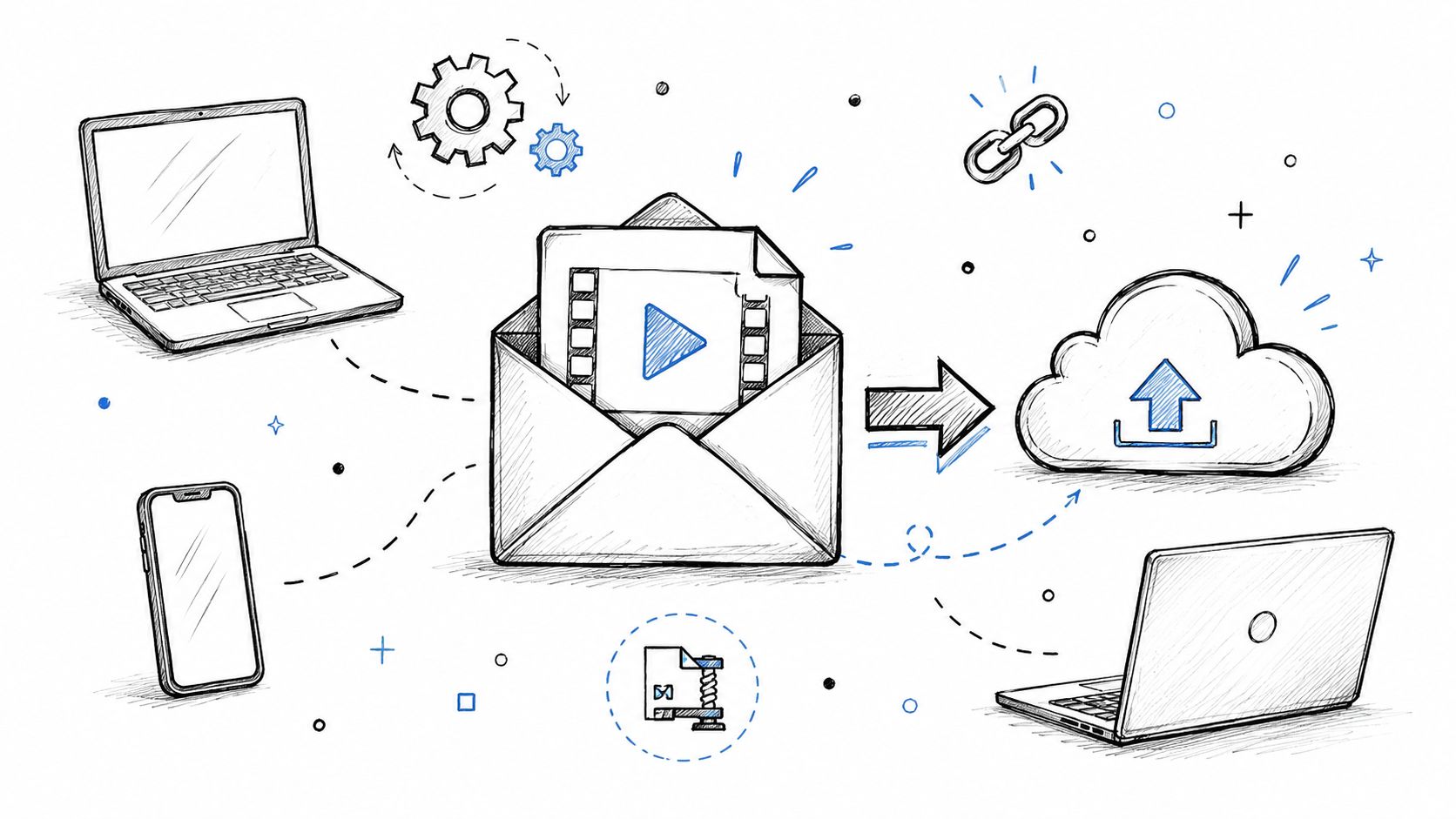
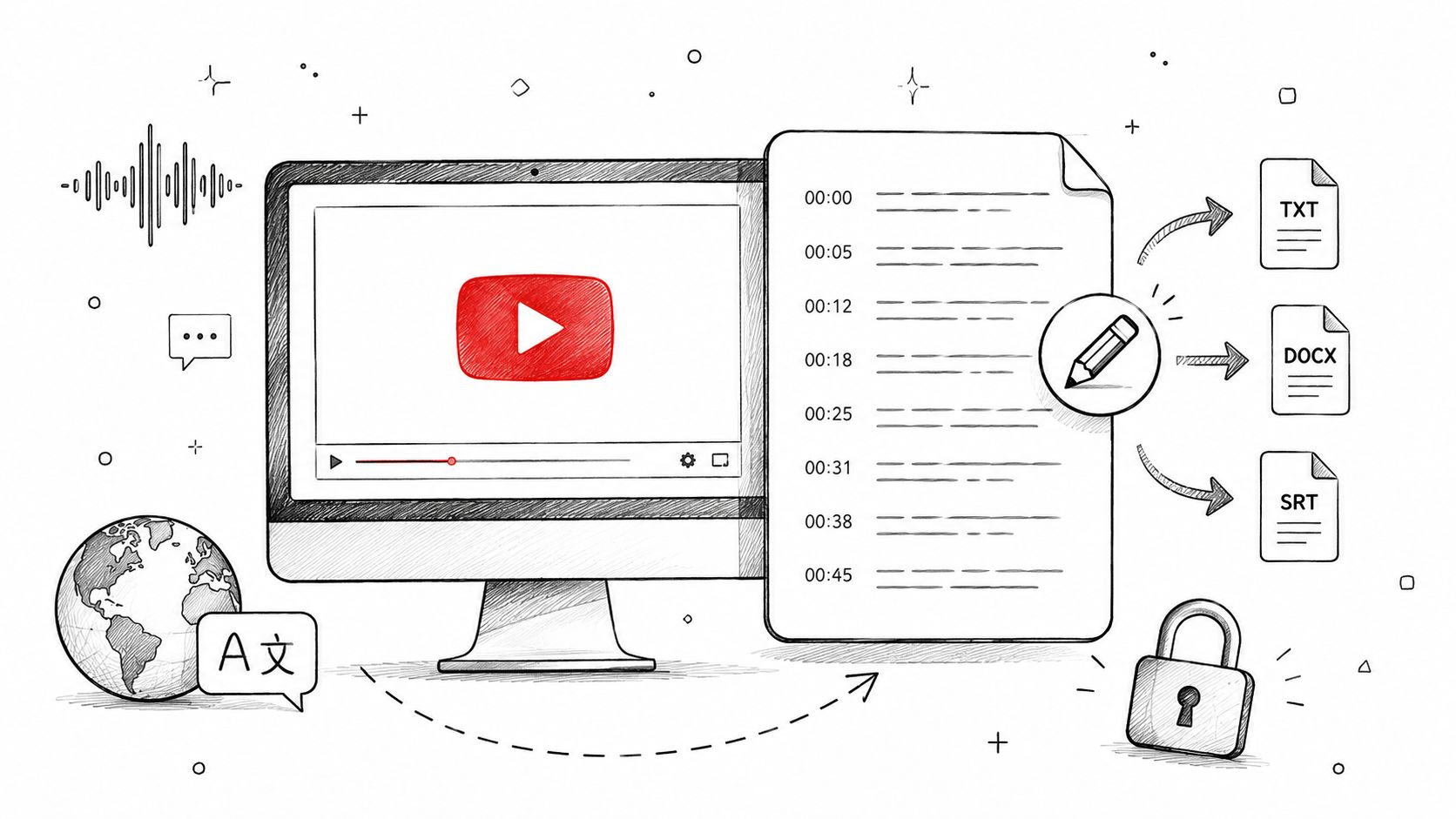
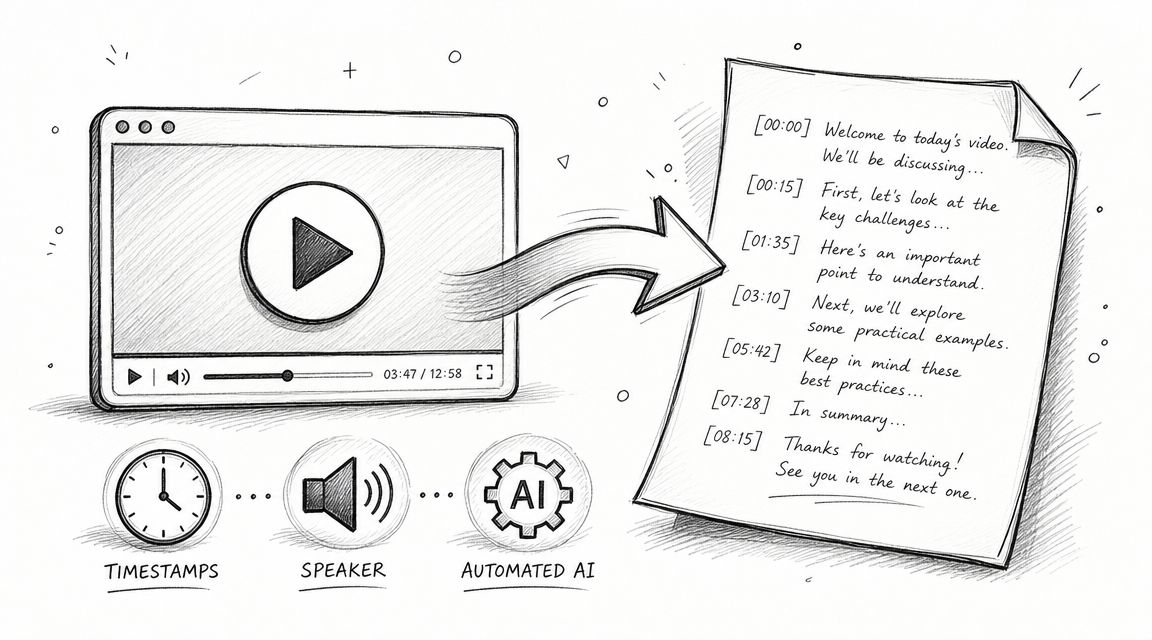
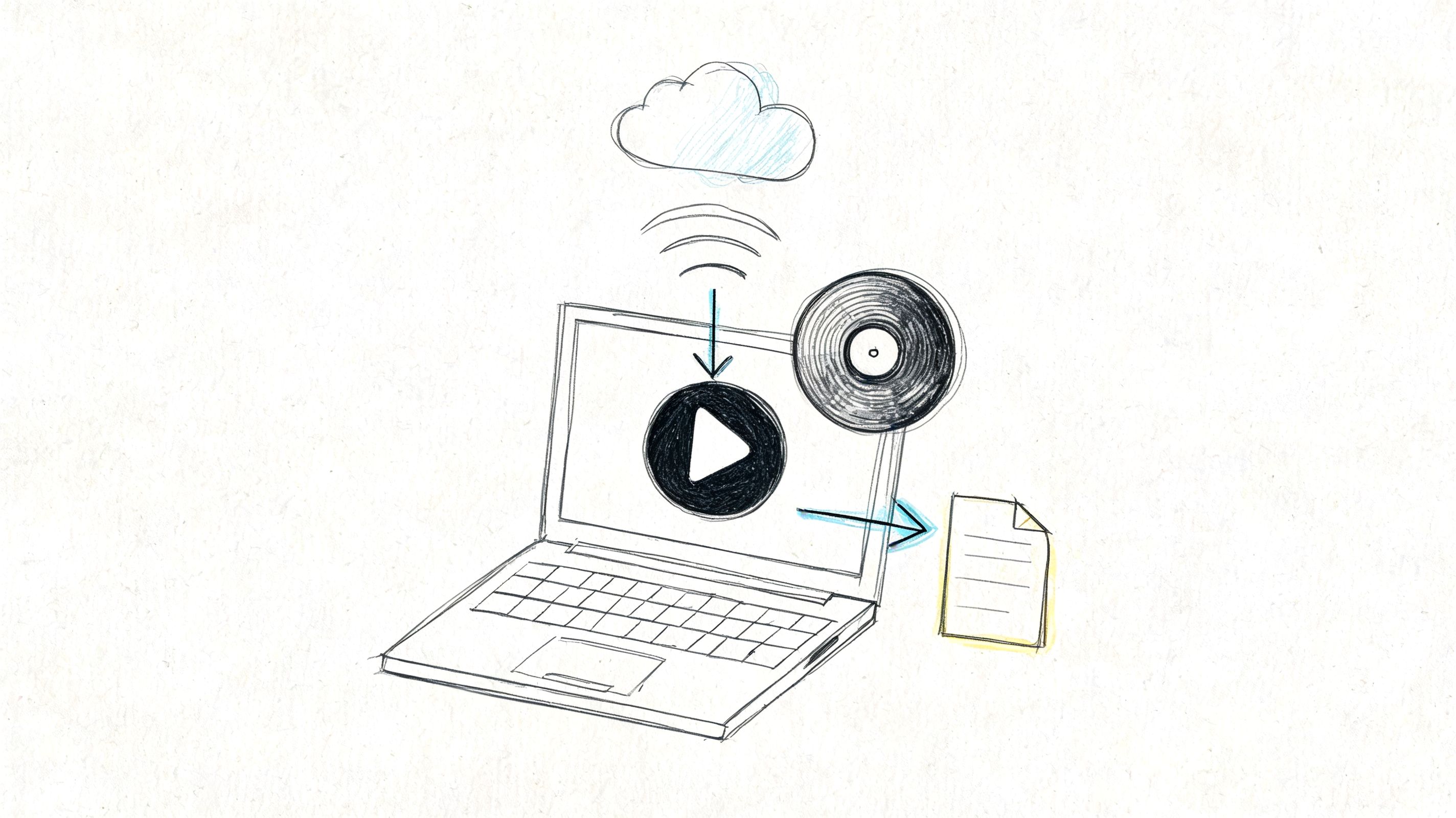
The benefits don't stop with your standard team sync. The best tools are now opening up completely new ways of working. HypeScribe, for instance, lets you drop in a YouTube link and will turn a long interview into a searchable transcript and summary. For researchers or content creators, that’s a game-changer.
There's also the integrated chatbot. Imagine you need to recall a specific detail from a call last week. Instead of digging through old notes, you can just ask the bot, "What was the final decision on the Q3 budget?" It scans the correct transcript and gives you the answer right away.
It's easy to see how this helps. A researcher can process dozens of interviews in a fraction of the time. A project manager can have tasks delegated to the team before the video call window is even closed. This is what a great AI meeting note taker does—it doesn't just record what was said; it makes that information immediately useful.
Frequently Asked Questions
As teams start thinking more seriously about their meeting documentation, the same questions always seem to pop up. Whether you’re trying to improve the role for a person or considering an AI tool, you've got questions. Let's get you some answers.
What Skills Make a Good Human Meeting Note Taker?
A truly great note taker is so much more than a fast typist. It's really a unique combination of skills. First off, they're incredible listeners—they have a knack for tuning out the noise and zeroing in on what’s actually important, like a final decision or a task someone just agreed to.
They also have to be organized on the fly. As the conversation zips from one topic to another, a good note taker is mentally categorizing information, not just blindly transcribing. They're building a structured record in real-time.
Think of them as the team's strategist in the room. They transform a messy, free-flowing conversation into a clear, actionable plan that everyone can actually use. That’s the real magic here.
A little background knowledge on the topic being discussed goes a long way, helping them grasp jargon and context. And most importantly, they need to be impartial. Their job isn't to add their own spin but to capture what happened, pure and simple.
Can an AI Note Taker Completely Replace a Human?
For many day-to-day meetings, an AI is more than capable—it’s often better. An AI like HypeScribe will capture every single word with perfect accuracy. It generates summaries and pulls out action items in seconds, which is a lifesaver for things like status updates, training sessions, or technical debriefs where facts are king.
But a human's intuition is still unmatched in certain scenarios. Think about high-stakes negotiations or a sensitive HR conversation. A person can read the room, pick up on unspoken cues, and understand the dynamics at play. The AI tells you what was said; a human can often tell you what was meant.
The most effective setup is often a team effort:
- Let the AI do the heavy lifting—the transcription, the initial summary, the raw data.
- This frees up the people in the meeting to focus on the conversation, think strategically, and contribute where they add the most value.
How Do I Get an AI Note Taker into My Meetings?
Getting an AI assistant into your calls is surprisingly straightforward. For your live meetings on platforms like Zoom, Google Meet, or Microsoft Teams, you simply invite the AI bot just like you would any other person.
The bot will pop into the call, usually announce itself so everyone knows it’s there, and then get to work transcribing quietly in the background. Once the meeting's over, it processes everything and sends you the finished notes, summary, and action items. You can also upload pre-recorded audio or video files or even just paste a link from a site like YouTube.
The golden rule here is transparency. Always, always let everyone know that the meeting is being recorded and transcribed. It’s a simple step that builds trust and maintains privacy.
What Is the Best Way to Share Meeting Notes?
Whatever you do, don't just send a wall of text. The best notes are clear, scannable, and tell people exactly what they need to do next.
A great approach is to structure your notes for a quick read. Start with a short, one-paragraph summary right at the top that covers the key outcomes. Below that, use bullet points to list the major decisions that were made.
Finally, and this is the most critical part, create a clean list of action items. Each task needs to be unmistakably assigned:
- Owner: Who is doing this?
- Task: What, specifically, do they need to do?
- Deadline: When is it due?
Tools like HypeScribe are built to do this automatically, giving you perfectly formatted notes in a Google Doc or PDF that you can share with a single click.
Ready to see how an AI meeting note taker can free up your team to focus on what really matters? HypeScribe provides instant, accurate transcripts, summaries, and action items for all your meetings. Start your free trial today at HypeScribe.com and turn your conversations into action.