Independence Day Movie President Speech: Transcript &

A lot of people remember the applause line. Fewer remember the silence just before it, when a tired president climbs up, faces a group that may not survive the day, and tries to turn fear into purpose.
That pause is why the Independence Day movie president speech still matters. It isn't just a famous clip. It's a carefully built piece of film rhetoric, and the transcript is the key that lets us study how it works.
The Moment Before the Battle
By the time President Thomas J. Whitmore speaks, the film has already stripped away any illusion of normal life. Cities are damaged, military power looks fragile, and the surviving pilots are preparing for a fight that feels almost impossible. The scene doesn't play like a victory lap. It plays like a last gathering before a final gamble.
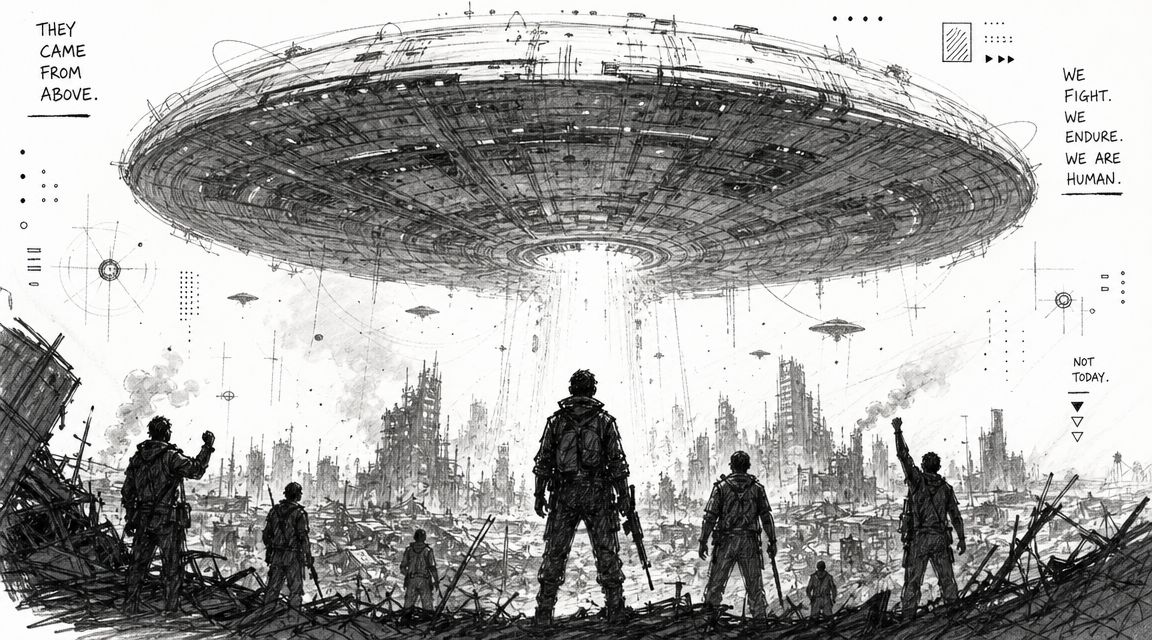
That context matters because the speech isn't abstract patriotism. It's spoken to people who need a reason to get into their planes anyway. The emotional challenge is immediate. Whitmore has to address fear, grief, and uncertainty in a matter of moments.
Why this scene lands so hard
Most movie speeches become memorable because they summarize a theme. This one does more than that. It changes the emotional temperature of the scene. Before the speech, the characters are standing on the edge of defeat. After it, they move as if the battle has meaning beyond survival.
A classroom discussion usually gets stuck on the famous ending line. Students often ask why this scene feels bigger than a standard pep talk. The answer is that the speech attaches a private fear, dying, to a public identity, a shared human future. That shift lets the audience feel that the fight belongs to everyone, not just the military characters on screen.
The speech works because it gives people a story to step into, not just an order to obey.
The result is one of cinema's clearest examples of a rallying address built for maximum emotional pressure. The stakes are visible in the faces of the pilots, and the speech has to carry all of that weight.
Scene Context and Character Delivery
The speaker is President Thomas J. Whitmore, played by Bill Pullman. Within the story, he's not delivering remarks from a polished White House podium. He's speaking at the base where the surviving forces are gathering for the counterattack, and that physical setup shapes the whole scene. He stands close to the people who will fight, which makes the speech feel less ceremonial and more urgent.
Whitmore's delivery also matters. Pullman doesn't begin with chest-thumping certainty. He starts with a controlled, worn seriousness that suggests the character understands the cost of what's coming. That restraint helps the later rise in volume and intensity feel earned.
How Pullman builds momentum
The performance moves in stages:
- Measured opening: He begins by naming the stakes in plain language.
- Collective framing: He shifts from individual fear to shared purpose.
- Escalation: The rhythm tightens, and the phrasing becomes more chant-like.
- Release: The final line lands as a communal declaration, not a personal flourish.
That arc is one reason students of media and rhetoric still return to the scene. Pullman uses pauses carefully. He lets key phrases breathe, then drives harder as the speech gathers force. If you only read a rough paraphrase, you miss that pacing. A precise transcript helps, but so does reading it with the pauses in mind.
Why the speech sits where it does
The scene is not filler before an action sequence. It is the emotional hinge of the film. Production history tied to the movie notes that Dean Devlin wrote the speech at the last minute and that it became the emotional core right before the climactic battle, with the line “Today, we celebrate our Independence Day!” functioning as the exact point where title and dialogue lock together in a single dramatic beat, as described by No Film School's account of the speech's production history.
That detail helps explain why the speech feels unusually concentrated. It has a specific screenwriting job. It must convert a disaster narrative into a unity narrative in one burst of language.
Teaching lens: When a speech appears just before a final confrontation, ask what emotional problem it solves for the story. In this case, it turns despair into collective action.
Full Transcript of President Whitmore's Speech
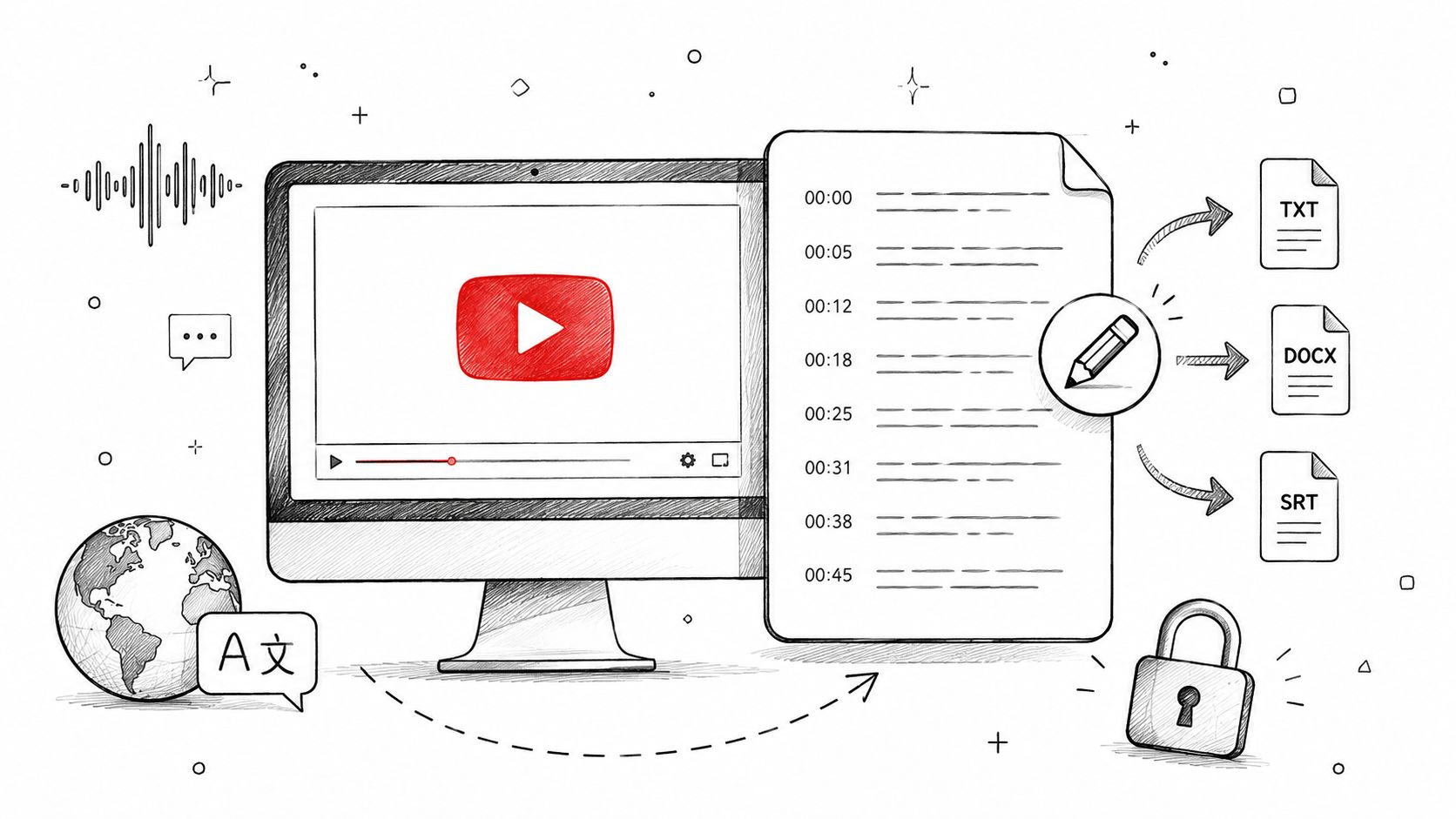
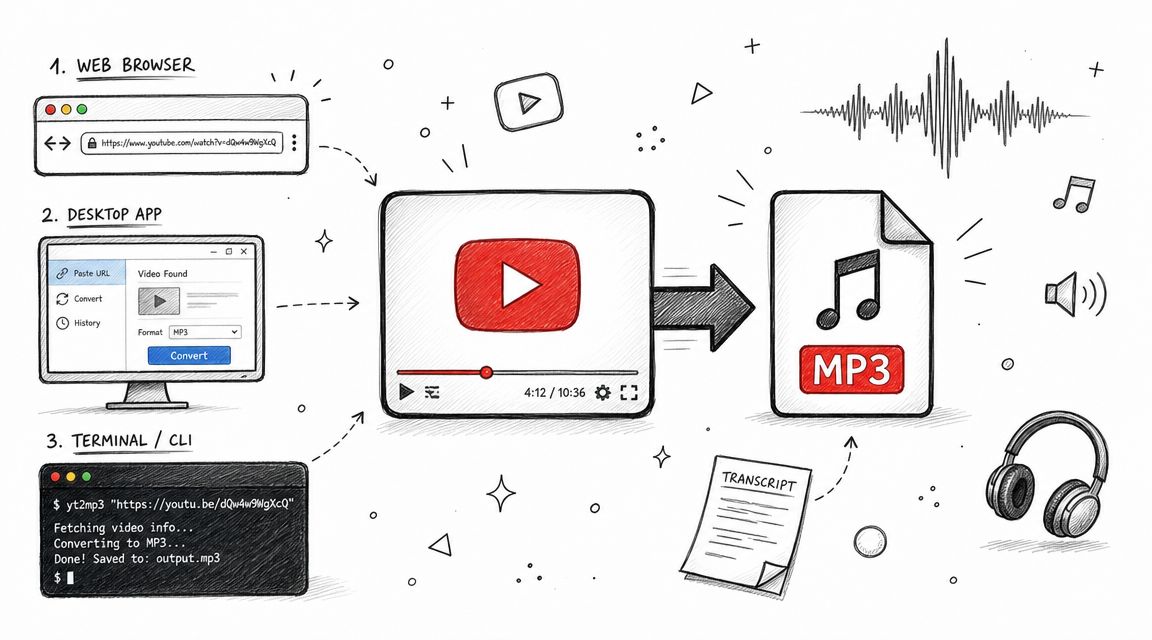
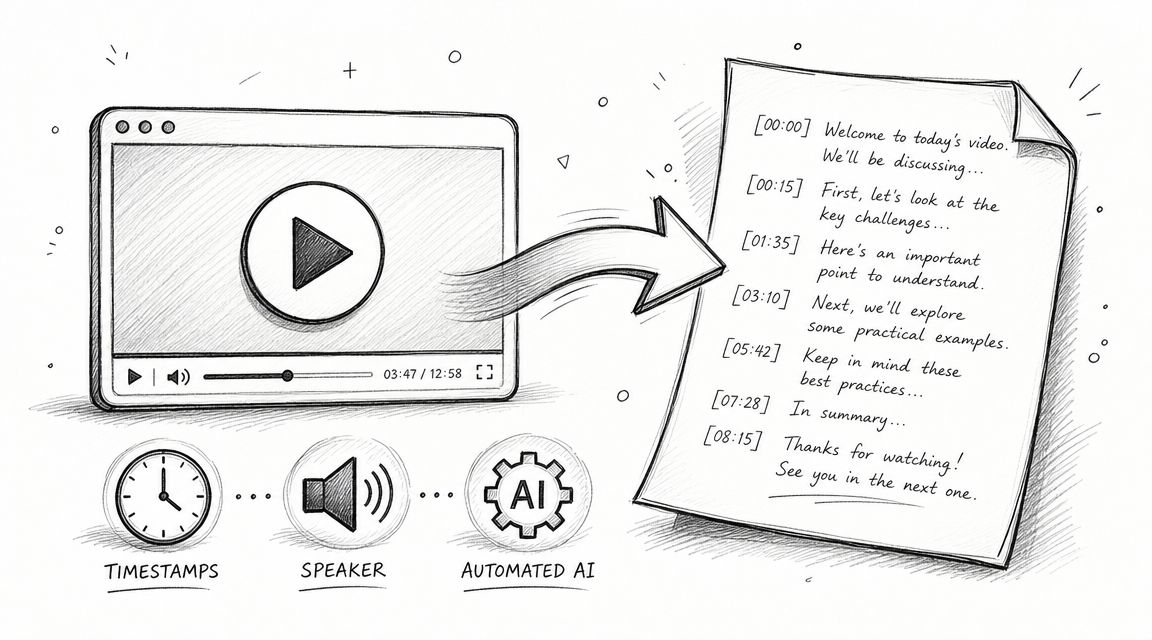
If you're studying the Independence Day movie president speech, start with an accurate transcript. Small errors change meaning. A dropped phrase can weaken the rhythm, and a misheard line can distort the speech's structure. If you're pulling spoken text from a clip, a guide to getting a transcript of a YouTube video helps you start with text you can analyze.
Below is the widely circulated transcript version of President Whitmore's speech, formatted for readability and cadence:
Good morning.
In less than an hour, aircraft from here will join others from around the world.
And you will be launching the largest aerial battle in the history of mankind.
Mankind. That word should have new meaning for all of us today.
We can't be consumed by our petty differences anymore.
We will be united in our common interests.
Perhaps it's fate that today is the Fourth of July, and you will once again be fighting for our freedom, not from tyranny, oppression, or persecution, but from annihilation.
We're fighting for our right to live. To exist.
And should we win the day, the Fourth of July will no longer be known as an American holiday, but as the day when the world declared in one voice:
"We will not go quietly into the night.
We will not vanish without a fight.
We're going to live on.
We're going to survive."
Today, we celebrate our Independence Day!
What to notice in the transcript
Read on the page, the speech becomes easier to break apart. You can see the progression from time marker, “in less than an hour,” to scale, “around the world,” to identity, “mankind,” to purpose, “our right to live.” That sequence is part of the design.
A transcript also reveals repetition patterns that are harder to isolate when you're only listening. “We will,” “we're,” and “the Fourth of July” aren't accidental repetitions. They create rhythm, memory, and unity.
Why transcript accuracy matters
For educators, analysts, and video essayists, the transcript is not secondary material. It's the primary document for close reading.
- Quotation work: You can cite exact phrasing instead of relying on memory.
- Speech analysis: Repetition, sentence length, and escalation become visible.
- Clip preparation: Subtitle timing and quote extraction depend on precise wording.
One common mistake is quoting only the final line and treating the rest as setup. On paper, you can see that the ending works because the earlier lines build a collective frame first. Without that buildup, the famous finish would sound much thinner.
Quick Reference Notable Quotes
Some readers need the whole speech. Others need one line fast for a class handout, presentation slide, or discussion post. The table below isolates the lines that carry the speech's main ideas.
Key Quotes from President Whitmore's Speech
| Quote | Context / Significance |
|---|---|
| “We can't be consumed by our petty differences anymore.” | The speech rejects internal division and prepares the shift toward a common human identity. |
| “We will be united in our common interests.” | A plain statement of solidarity. This is the line that turns the audience from separate groups into a single collective. |
| “We're fighting for our right to live. To exist.” | The core survival claim. It strips the conflict down to its most basic moral stakes. |
| “The Fourth of July will no longer be known as an American holiday” | The speech expands a national symbol into a global one, which is central to the scene's larger meaning. |
| “We will not go quietly into the night.” | The most quoted act of defiance in the speech. Its simplicity makes it memorable and reusable. |
| “We will not vanish without a fight.” | A companion line that intensifies resistance through repetition and rhythm. |
| “We're going to live on. We're going to survive.” | Short, direct lines that replace fear with collective determination. |
| “Today, we celebrate our Independence Day!” | The climactic title line. It fuses the film's name with the speech's final emotional release. |
Why these lines travel so well
These quotes circulate because each one performs a different function. Some unify. Some defy. Some name the stakes. The final line brands the whole speech in a form people can remember instantly.
That mix is rare. Many movie speeches offer one great sentence. This one offers a chain of quotable lines that support each other.
A Rhetorical Analysis of the Speech
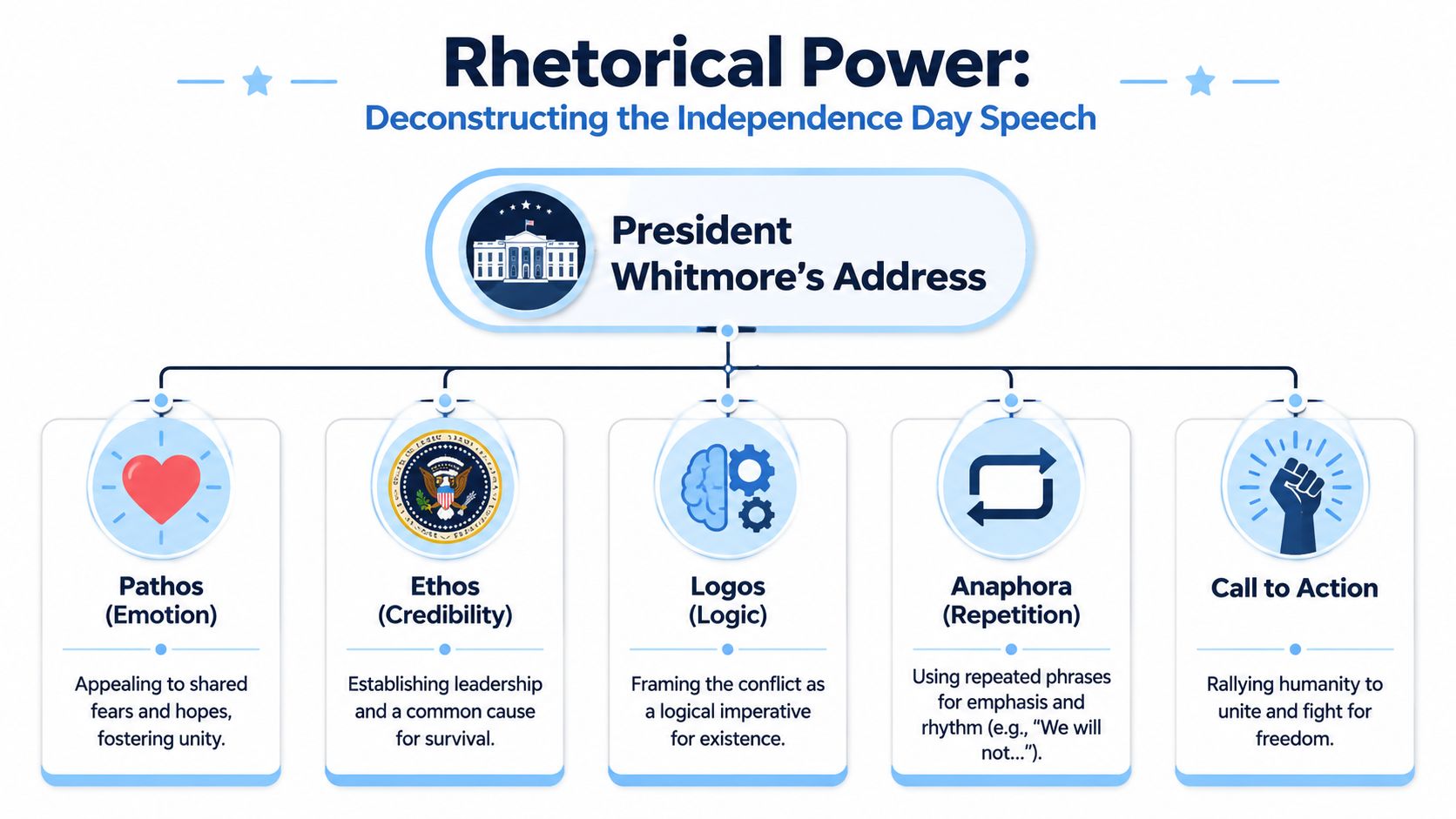
The fastest way to understand this speech is to stop treating it as only “inspiring” and start treating it as a constructed argument. It persuades through emotional appeal, moral authority, and simple survival logic. It also borrows from an older tradition of battle speeches that compress fear into purpose.
Pathos, ethos, and logos on the page
Pathos is the most obvious layer. The speech names annihilation, survival, and the right to exist. Those aren't technical policy terms. They're existential terms. The audience in the film, and the audience watching the film, responds because the language connects survival to emotion without becoming overly complicated.
Ethos comes from who's speaking. Whitmore is the president, so he carries institutional authority. But the scene doesn't rely on office alone. His physical presence among the pilots and his plainspoken delivery make him sound like someone sharing the risk, not hiding behind rank.
Logos appears in a stripped-down form. The logic is simple: if humanity doesn't act together, humanity disappears. This is not a speech about nuanced policy. It is a speech about unavoidable necessity.
The role of repetition and collective language
One of the most teachable features is anaphora, the repeated opening structure in lines like “We will not...” and “We're going to...”. Repetition gives the speech a pulse. It also invites audiences to anticipate the next line, which is one reason the ending feels participatory even when you're watching alone.
For students doing close reading, resources on how to analyze qualitative data can be surprisingly useful here. A speech transcript is qualitative material. You can code it for themes like unity, threat, nationalism, and collective identity.
Close-reading rule: If a phrase repeats, ask what job the repetition is doing. In this speech, repetition turns fear into rhythm and rhythm into conviction.
Why the Fourth of July matters so much
The speech's most powerful symbolic move is its redefinition of the holiday. Rather than leaving the Fourth of July as a national American celebration, Whitmore reframes it as a possible day of global survival. That reframing is one reason the speech feels larger than its setting.
The scene has also been widely noted as structurally inspired by Shakespeare's Henry V “St. Crispin's Day” speech, an address to an outnumbered army before the Battle of Agincourt, which places Whitmore's speech inside a long tradition of rallying language under impossible odds, as noted in Mental Floss on facts about Independence Day.
That comparison helps students who wonder why the speech sounds so formal and dignified compared with other blockbuster dialogue. It isn't trying to sound casual. It is trying to sound historical.
The Lasting Cultural Impact and Legacy
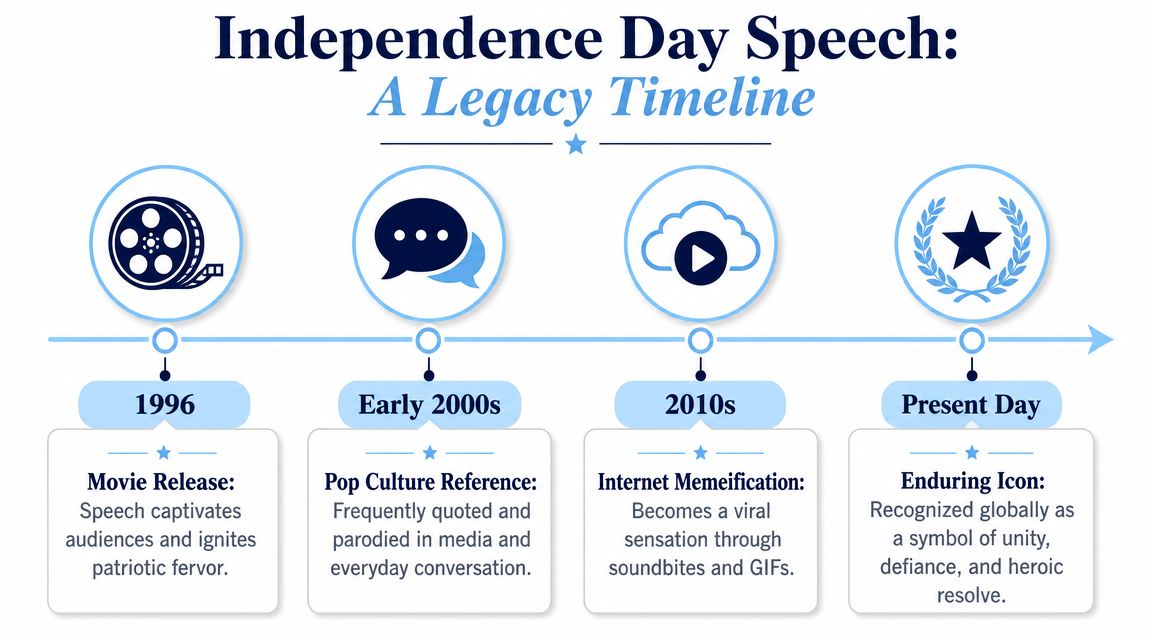
A speech from a 1996 film can disappear once the release cycle ends. This one didn't. It stayed alive because people kept circulating it as text, as video, and as a reusable cultural reference. It survives not only as a scene in a movie, but as a speech people recognize apart from the plot.
Why it outlived its original moment
The speech appears in a film released in 1996, and it remains widely preserved in transcript form and circulated online. One of its most cited openings is “We are fighting for our right to live. To exist,” and it builds toward the line that the Fourth of July will no longer be known as an American holiday but as the day the world declared independence from annihilation, as preserved in the widely shared clip of Whitmore's speech on YouTube.
That combination matters. The speech is short enough to clip, dramatic enough to quote, and clear enough to understand out of context. Those traits make it unusually portable in digital culture.
How people use it now
Its afterlife isn't limited to nostalgic rewatching. People return to it for different reasons:
- Classroom analysis: Teachers use it to show rhetoric, genre, and political imagery in popular film.
- Social remixing: Short excerpts work well in edits, parody, and meme formats because the lines are instantly recognizable.
- Speechwriting comparison: Writers compare it with historical and fictional rally speeches to study structure.
- Transcript-based reading: Researchers and fans use the text itself to pull quotes, annotate themes, and discuss delivery.
The legacy of the speech isn't just that people remember it. It's that they can still do things with it.
From national holiday to global myth
The speech's lasting force also comes from its scale. It takes a holiday rooted in American history and transforms it, inside the film, into a myth of planetary unity. That shift gave the movie a frame larger than national celebration. It turned the date into a symbol of shared resistance.
This is why the Independence Day movie president speech still feels relevant in media studies. It shows how cinema can convert one calendar date, one title line, and one performance into a durable public memory.
How to Use and Cite the Speech Correctly
If you're quoting this speech in a paper, slide deck, podcast script, or social caption, accuracy comes first. Misquoting a famous line doesn't just look sloppy. It changes the meaning and weakens your credibility.
The modern use of famous speeches has shifted toward searchable transcripts and short-form clips, which makes accurate transcription important for quote extraction, subtitles, and reuse across platforms. The Independence Day speech is a strong example of a text artifact that becomes more useful when it's transcribed precisely, as discussed in Rev's transcript page for the speech.
A practical citation approach
For most educational uses, include these basics:
- Film title: Independence Day
- Release year: 1996
- Speaker: President Thomas J. Whitmore
- Actor: Bill Pullman
- Medium: Film speech or film transcript, depending on what you're citing
If your style guide requires it, cite the film itself rather than a random quote site. If you're citing the wording as it appears in a transcript, compare that transcript against the spoken scene before using it in formal work.
Best practices for modern reuse
Different uses require different levels of precision.
| Use case | What matters most |
|---|---|
| Academic paper | Exact wording, film attribution, and context |
| Video essay | Accurate captions and clean excerpt boundaries |
| Social clip | Short, recognizable lines with reliable subtitles |
| Classroom handout | Readable formatting and faithful line breaks |
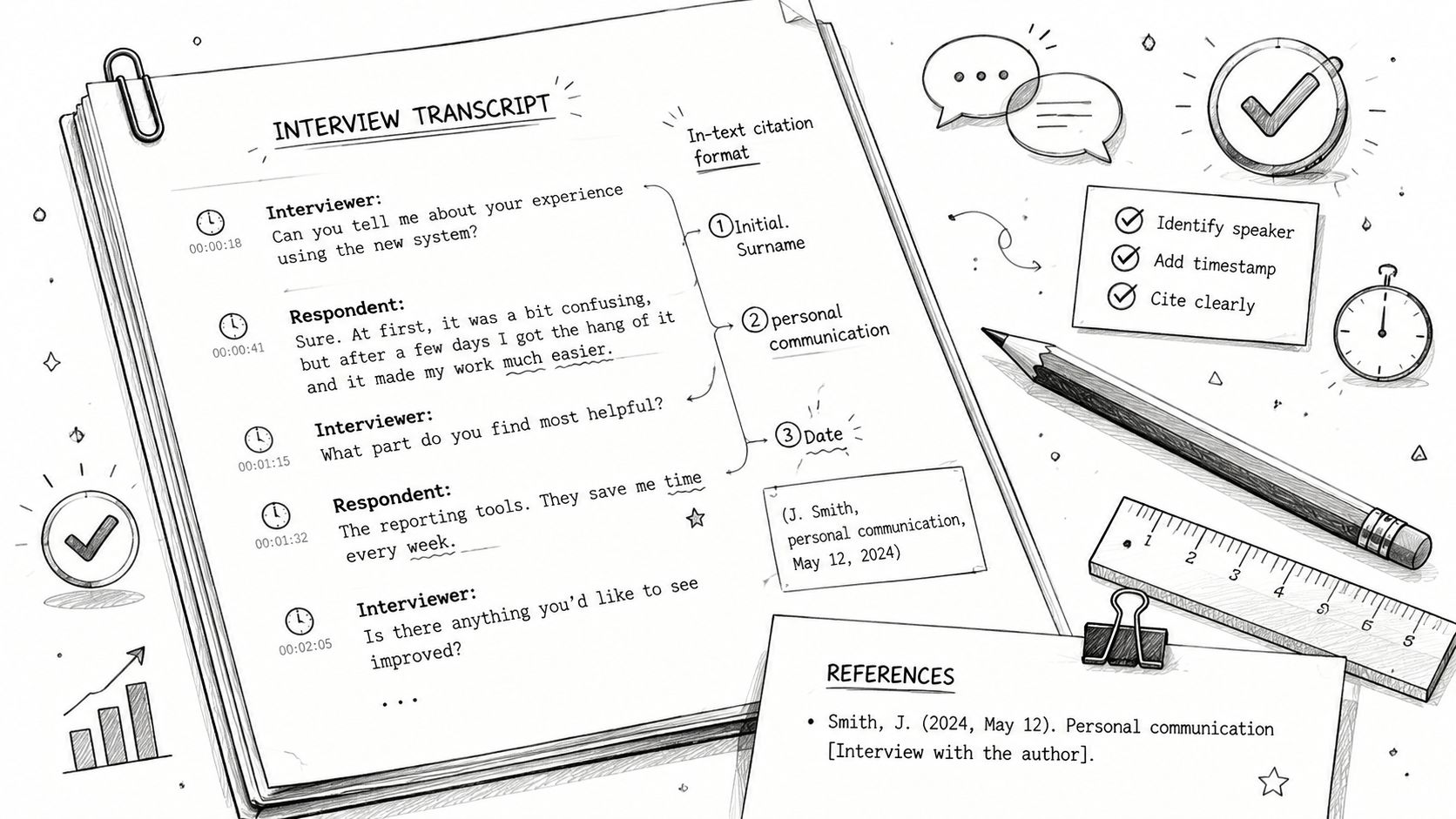
If you're building your own transcript workflow, a guide on how to write a transcript is useful for learning formatting conventions and consistency.
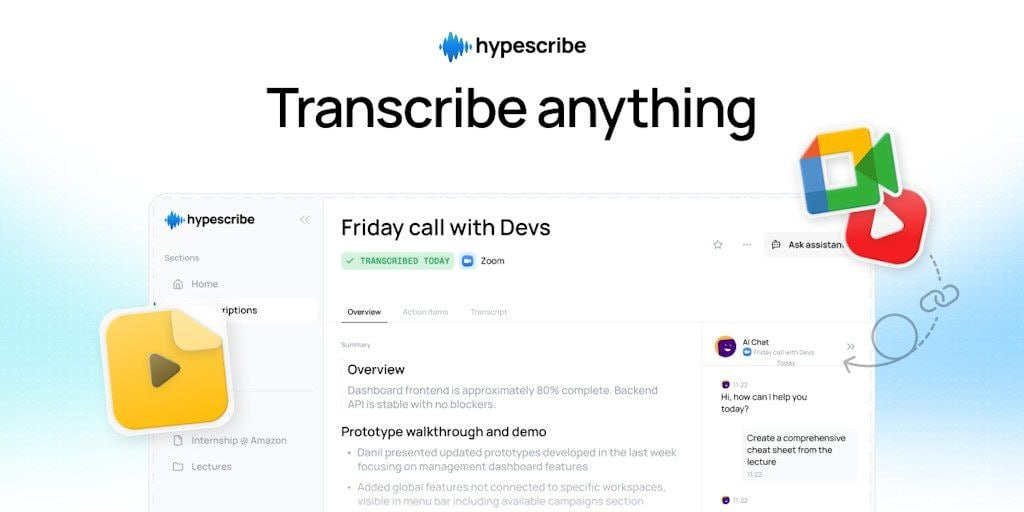
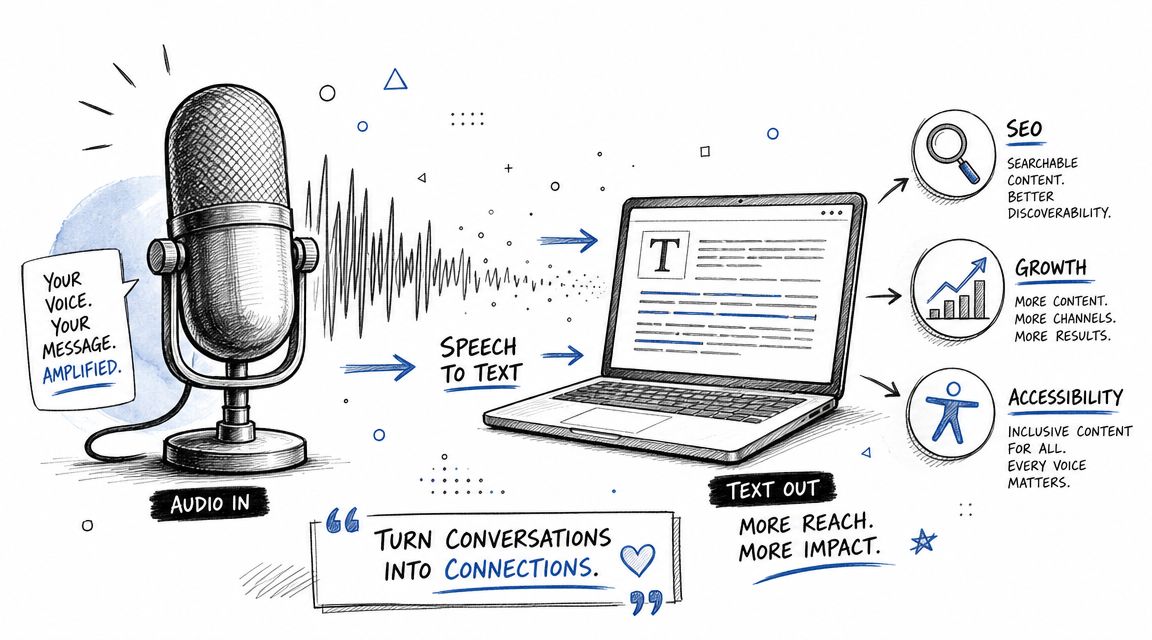
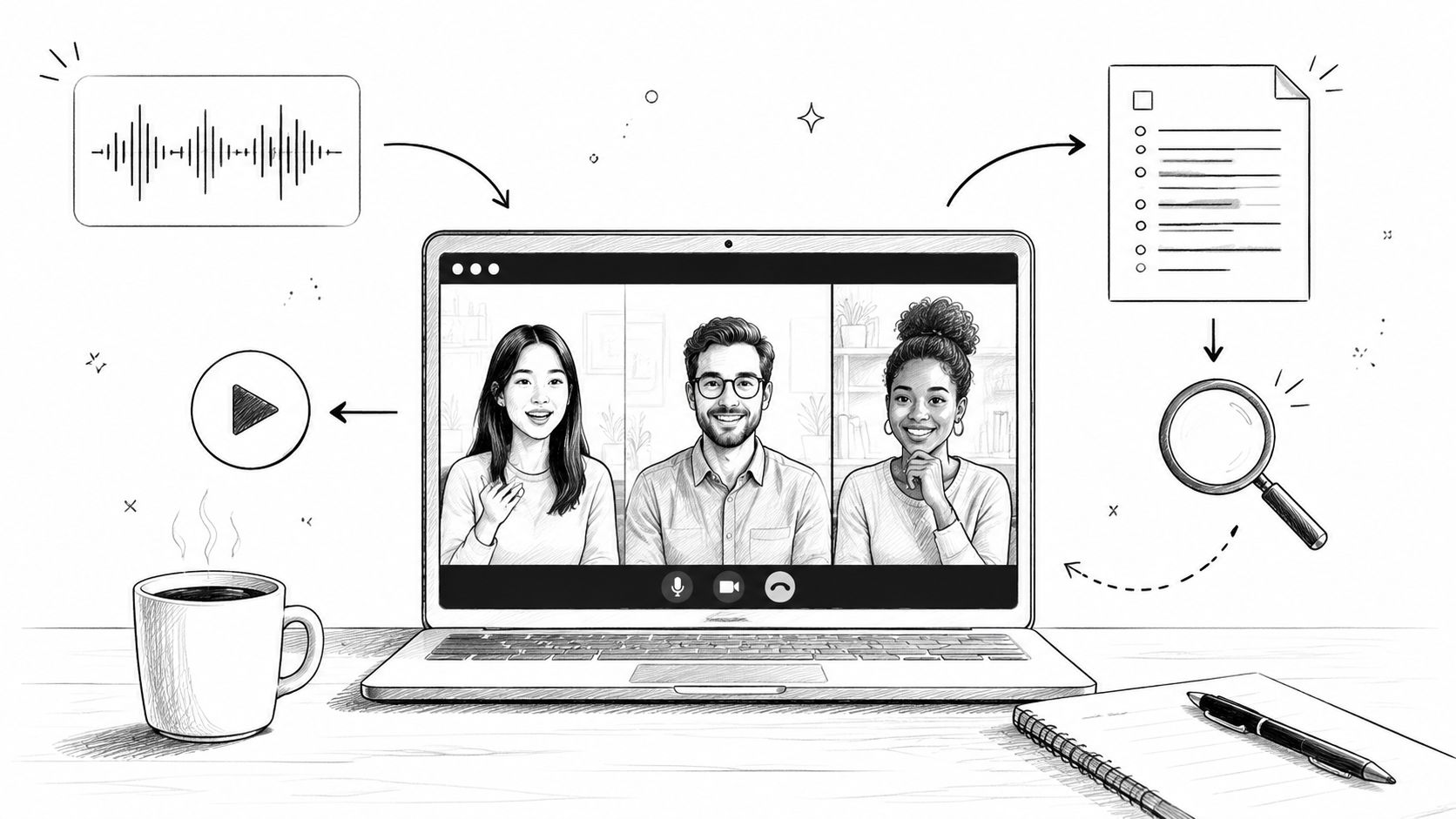
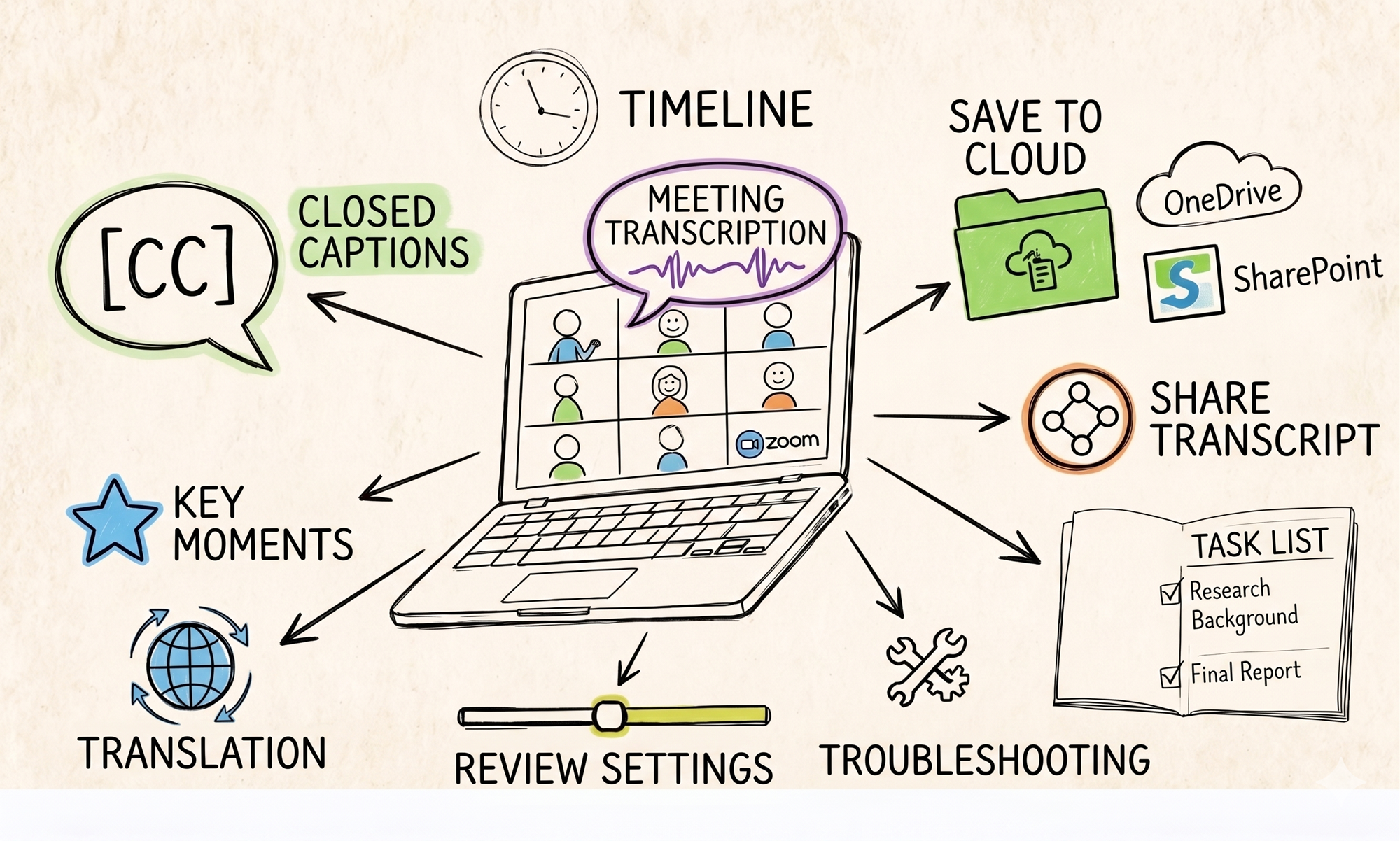
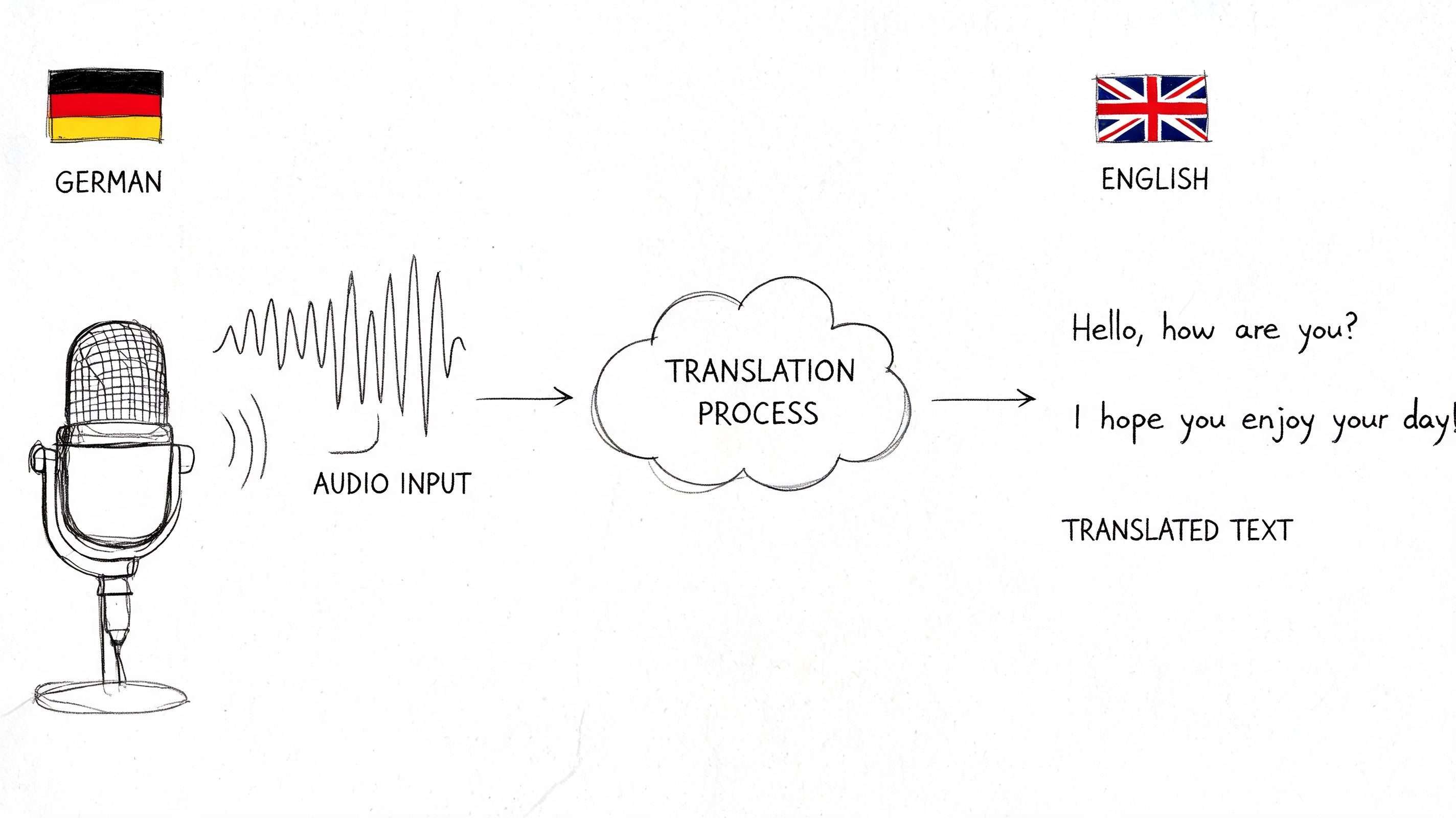
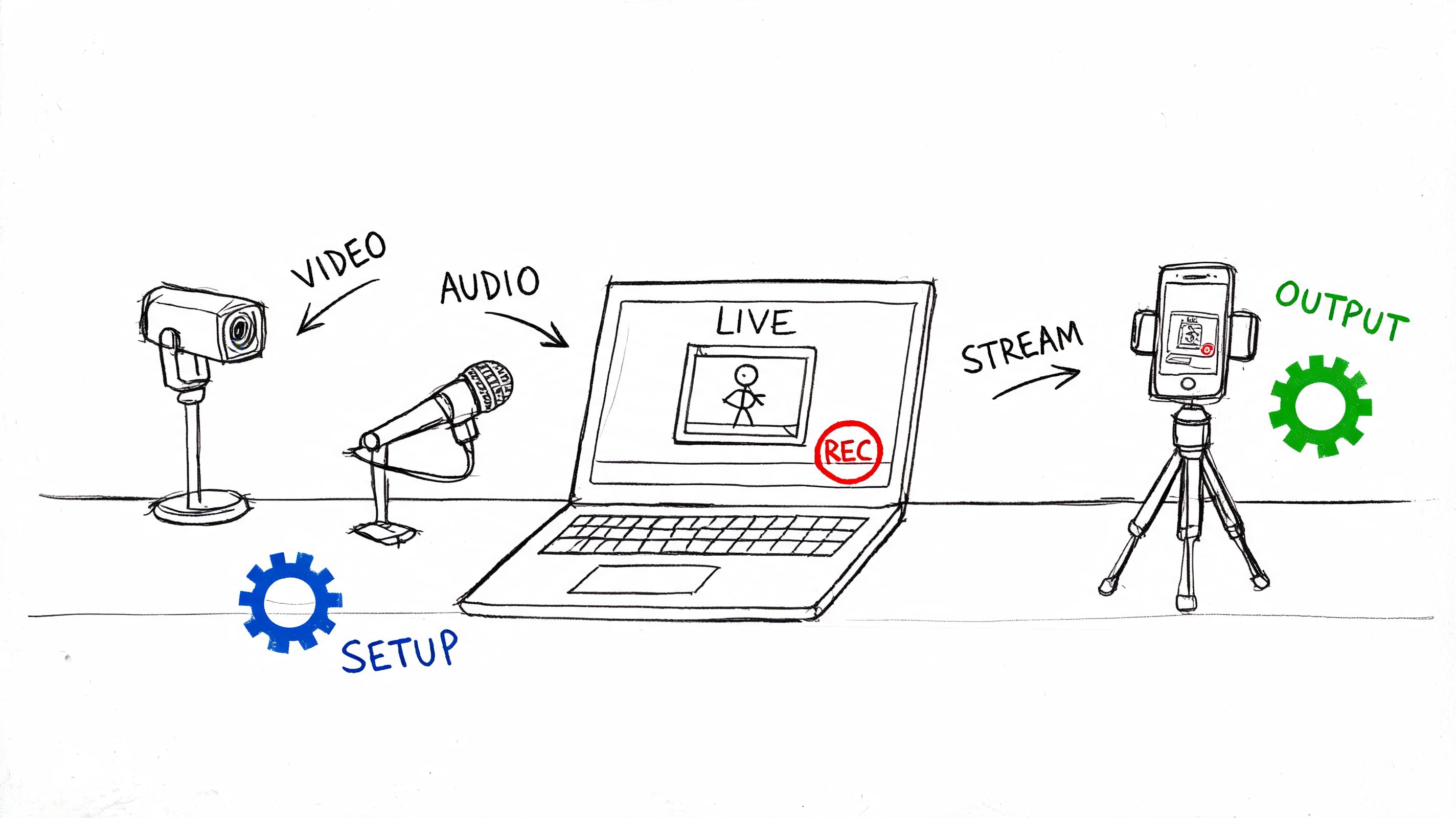
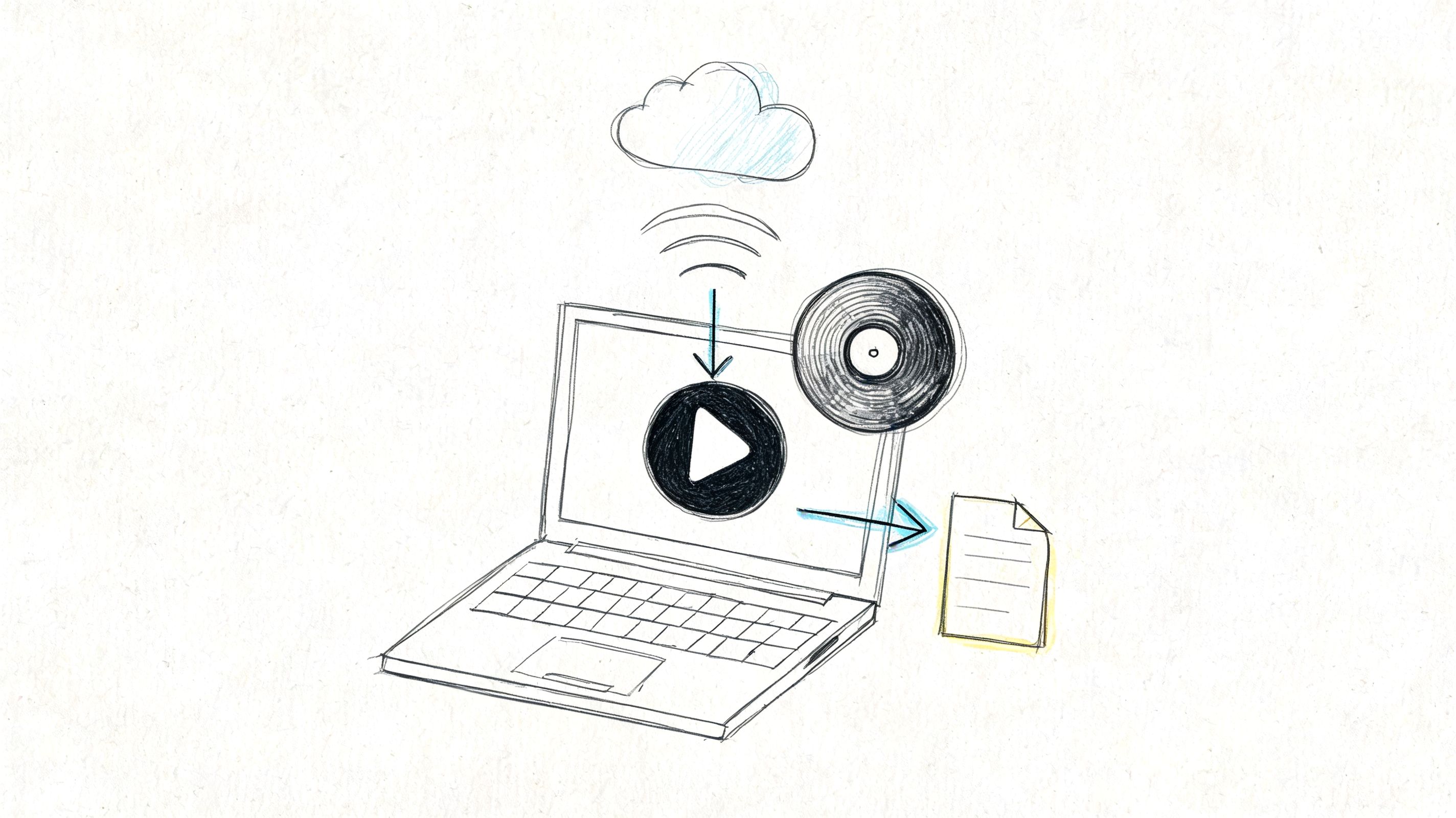
For tool-based work, HypeScribe is one option for turning spoken audio or video into searchable text from uploaded files or video links. That's useful when you want transcript text you can annotate, trim into clips, or compare across versions.
The key point is simple. Treat the transcript as the foundation, not the afterthought. Once the words are accurate, analysis, citation, subtitles, and remix work all get easier.
Frequently Asked Questions
Who wrote the president's speech in Independence Day
Production history connected to the film says Dean Devlin wrote the speech at the last minute. That background helps explain why people often describe it as concentrated and purpose-built rather than incidental dialogue.
Was any part of the speech improvised by Bill Pullman
I wouldn't present it as improvisation without a direct verified source. The safer conclusion is that Pullman's performance, especially his pacing and vocal escalation, is a major reason the written speech became so memorable on screen.
Why does the speech sound more formal than other blockbuster dialogue
Because it's built like a rallying address, not casual conversation. Its structure, repeated phrases, and grand tone place it closer to ceremonial and wartime speech traditions than to ordinary movie banter.
Why do people still search for the transcript today
Because people don't only watch famous speeches anymore. They study them, quote them, clip them, subtitle them, and reuse them in teaching and media projects. A searchable transcript makes all of that easier.
What's the single most important line to cite accurately
For most readers, it's the ending: “Today, we celebrate our Independence Day!” But the surrounding lines matter too, especially if you're analyzing how the speech builds toward that close instead of dropping it in as a standalone slogan.
If you work with spoken content regularly, HypeScribe can help you turn video or audio into searchable text for quoting, subtitle prep, close reading, and organized research. It's especially useful when you need a transcript you can review, edit, and reuse instead of replaying the same clip over and over.