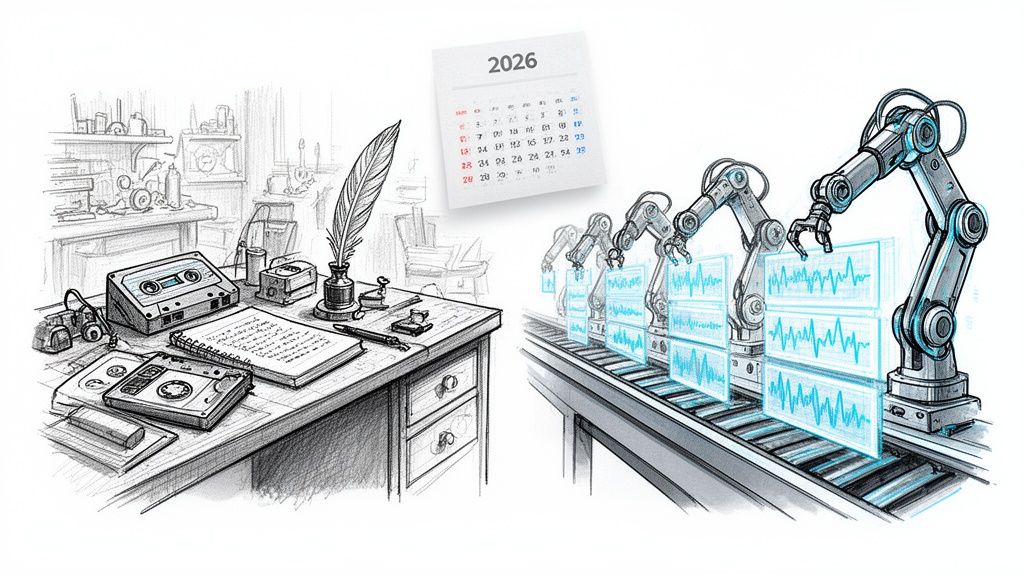
Compliance Recording: A Guide to Getting It Right in 2026

A lot of teams meet compliance recording for the first time in an uncomfortable way. A new client signs. Procurement sends over security and regulatory requirements. Then someone notices the contract language says certain communications must be recorded, retained, and produced on request.
At that point, the built-in record button in Zoom, Teams, or another meeting app suddenly looks a lot less reassuring.
That reaction is normal. Most businesses start by thinking recording is a feature. In regulated environments, it isn't just a feature. It's a controlled records process. The difference matters when legal asks for a specific call, when an auditor wants proof of retention, or when a regulator wants to know who accessed a file and whether it was altered.
Many projects often go wrong here. Teams buy a platform that can capture audio or video, but they don't design the policies, storage controls, access rules, consent handling, and retrieval workflow around it. Then they discover too late that they can record conversations, but they can't defend the record.
Your Introduction to Compliance Recording
A typical problem starts after the contract is signed. A customer in financial services, healthcare, or another regulated field asks for proof that calls, meetings, or messages tied to their account are being recorded and retained under policy. The business already has recording turned on in Teams, Zoom, or its contact center, so the first reaction is usually confidence.
That confidence fades once critical questions arrive.
Who decides which conversations must be captured. How do recordings get stored. Can staff delete them. Is retention automatic. Can the business produce the right file with timestamps, access history, and proof it was not altered?
Those questions expose the gap between basic recording and compliance recording. A meeting app can create a media file. A compliance recording system has to apply rules, preserve chain of custody, control access, and support retrieval under audit, dispute, or regulatory review.
That gap catches a lot of companies off guard because the technology looks close enough on the surface. The record button works. Files exist. Transcripts may even be searchable. None of that, by itself, proves that regulated communications were captured consistently or preserved in a way your legal, risk, and compliance teams can defend.
Practical rule: If a recording may need to be produced in an audit, complaint, investigation, or legal matter, treat it as evidence from the start.
The first job is scoping, not shopping. Identify which communication types fall under policy, which platforms carry them, who owns those systems, and what retention, access, consent, and export requirements apply. That work is less exciting than testing vendors, but it prevents the common failure mode of buying a recording tool that captures content while leaving governance gaps untouched.
Compliance recording is manageable once you frame it correctly. It is not a convenience feature with a retention setting attached. It is an operational control that has to work across policy, systems, storage, and response procedures.
What Compliance Recording Really Means
Most confusion starts with the word “recording.” People hear it and think of a media file. Compliance teams hear it and think of a record with controls.
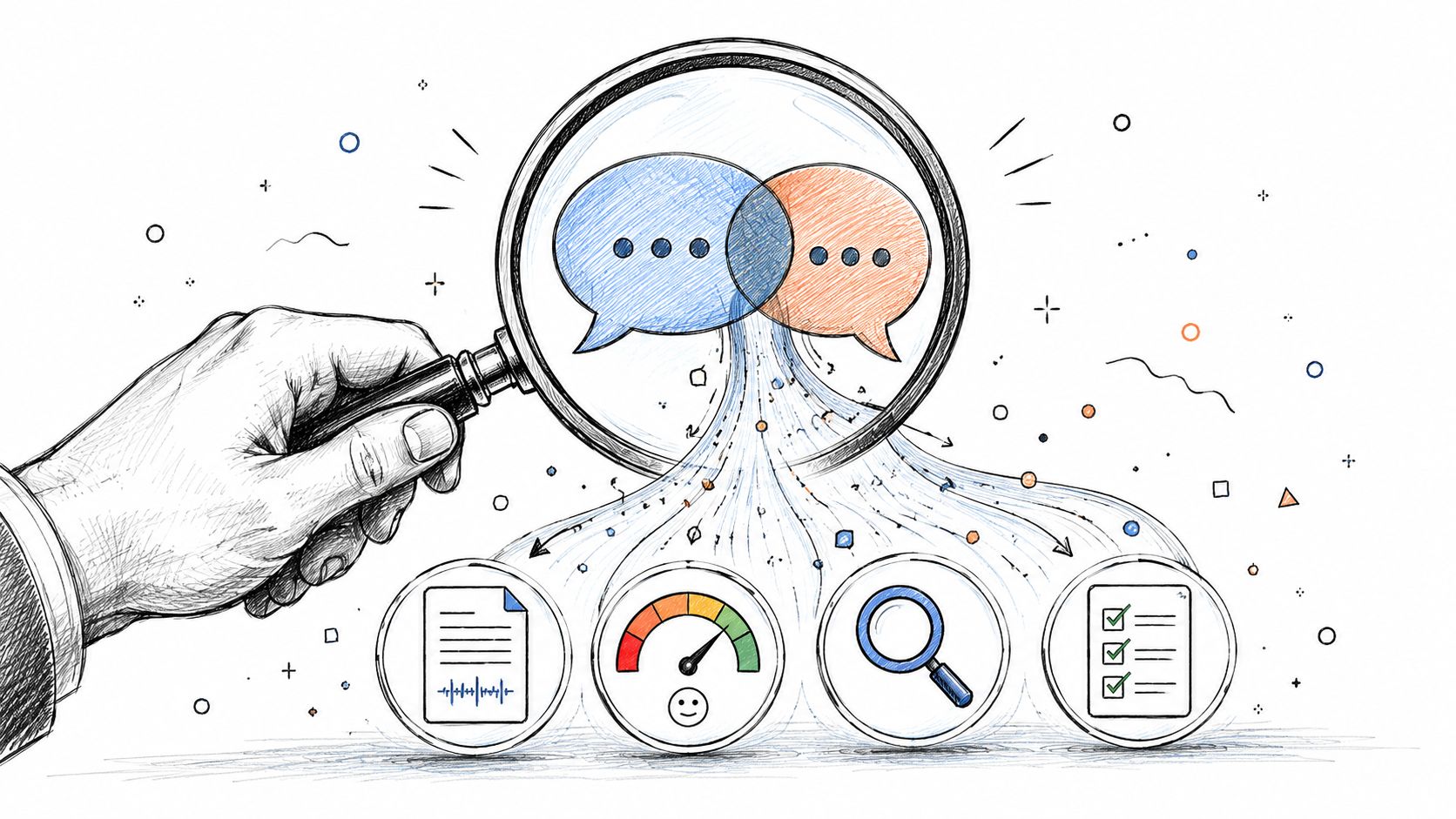
The best mental model is this. Standard recording is a tape recorder. Compliance recording is a digital evidence locker. One captures content. The other captures content and preserves its integrity, context, and retrievability.
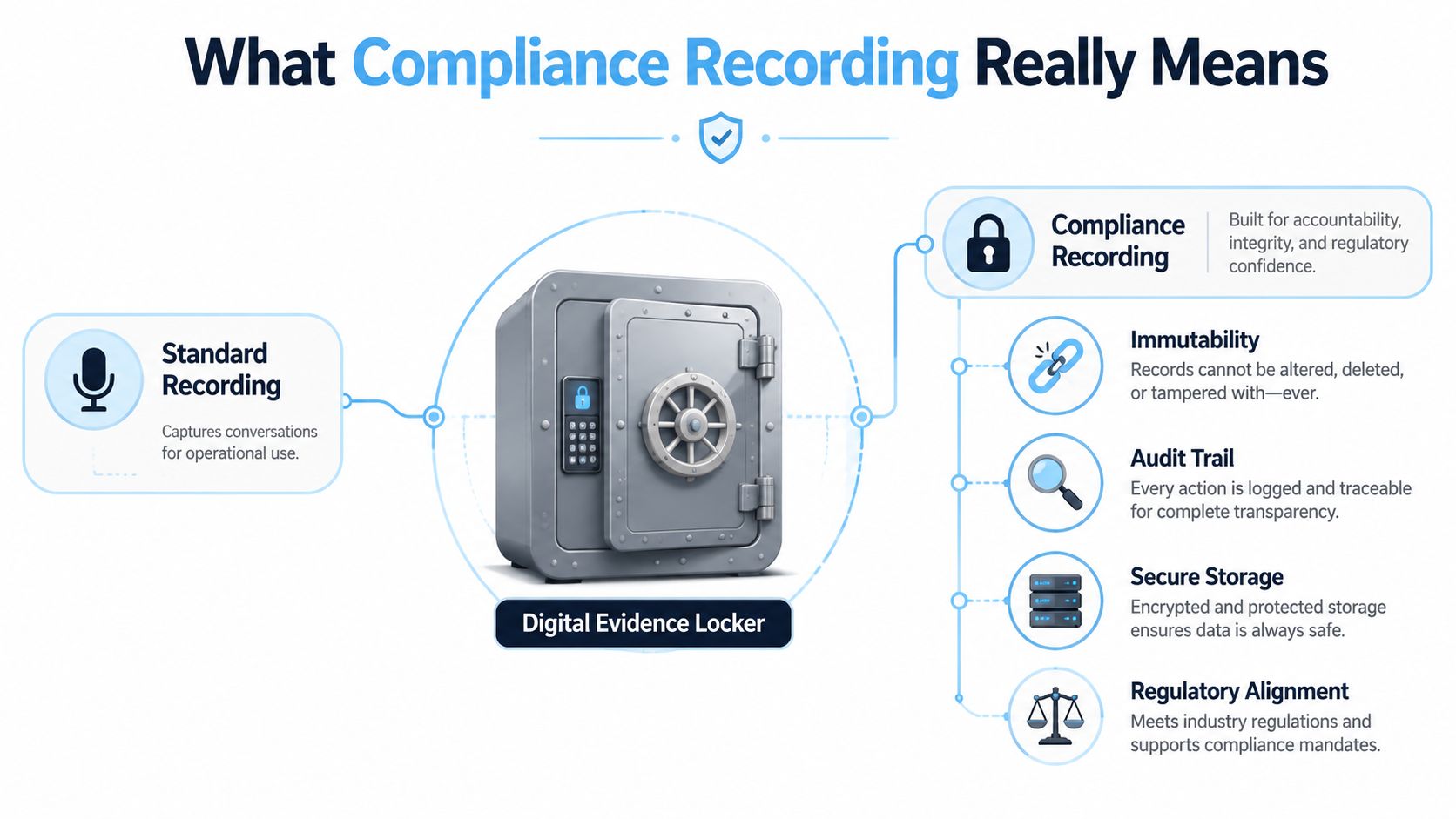
Standard recording versus governed recording
A normal meeting recording usually answers basic operational needs. Someone wants notes, a replay, or a transcript. That's useful, but it doesn't automatically satisfy regulated requirements.
Compliance recording adds a control layer around the media itself:
- Automatic capture by policy so users don't decide ad hoc whether a regulated interaction gets recorded
- Secure storage so recordings aren't scattered across personal drives or unmanaged folders
- Time-stamped records so events can be reconstructed reliably
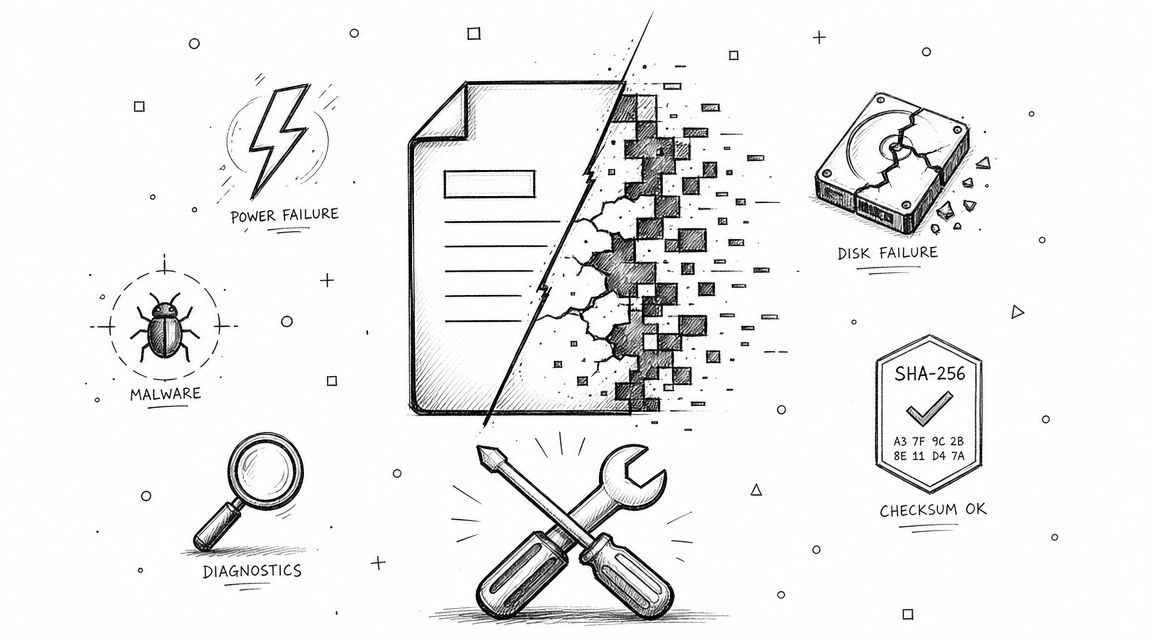
- Tamper-resistant preservation so a file can't be changed undetected later
- Retrieval controls so authorized teams can produce the right record when asked
Microsoft describes compliance recording as recording and storing communications in a way that follows local, national, and global regulatory requirements, using administrator-defined policies that automatically record calls and meetings for required retention and processing (Microsoft Teams compliance recording guidance).
The scope is bigger than phone calls
This area has changed. A key shift was moving from simple call capture to policy-based archiving across channels. In regulated industries, recordings are commonly expected to be securely stored, time-stamped, retrievable, and preserved in tamper-proof formats, often for up to five years when communications lead to a financial transaction under regimes such as GDPR, PCI-DSS, and HIPAA, as described in Microsoft's overview.
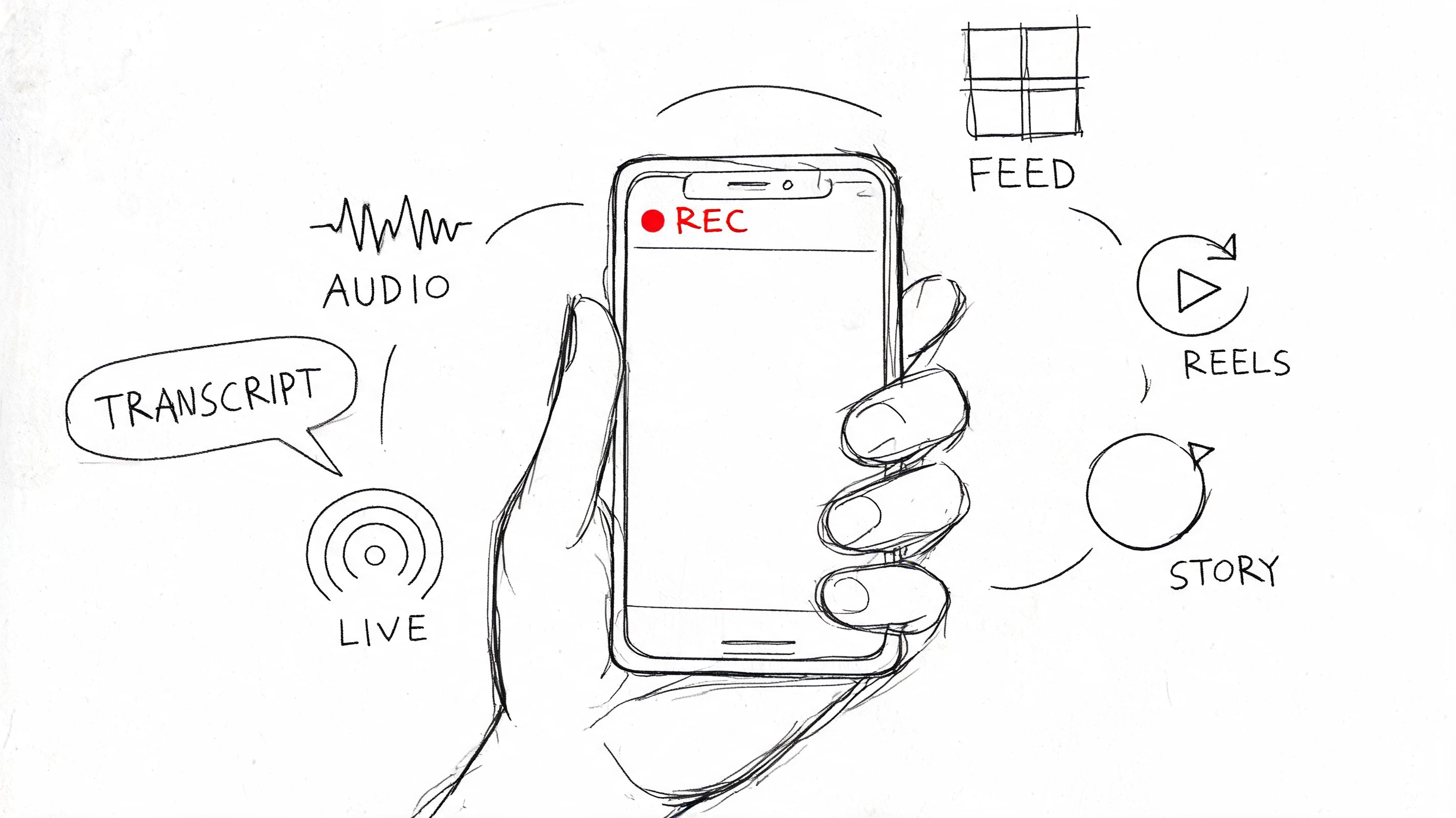
That change matters because work no longer happens in one channel. A sales commitment may happen in voice, clarified in chat, demonstrated over screen share, and confirmed in a meeting recap. If your system only grabs one of those, you may have a partial record.
A recording platform that captures only the obvious moment often misses the communication that actually created the risk.
What counts as success
A useful test is whether your team can answer five operational questions without guessing:
| Question | What a mature setup should answer |
|---|---|
| Was the communication captured? | The policy should show whether recording was automatic and for whom. |
| Is the file trustworthy? | Storage and preservation controls should protect evidentiary integrity. |
| Can the right team find it? | Search and retrieval should work without heroic manual effort. |
| Can the wrong team access it? | Access should be limited and logged. |
| Is retention defensible? | The retention period should match legal and operational requirements. |
If any of those answers is shaky, you probably have recording. You may not yet have compliance recording.
Why Compliance Recording Is a Business Imperative
A common failure pattern looks like this. A manager needs the record of a client call after a complaint lands, opens the meeting app, and finds that someone clicked Record, but the transcript is incomplete, the chat is gone, the file can be edited, and nobody can say whether retention was applied correctly. At that point, the organization learns the hard way that basic recording and compliance recording are different systems with different purposes.

The business case starts with risk exposure, but it does not end there. If your team gives regulated advice, confirms pricing, handles payment details, discusses health information, or makes contractual commitments over voice, video, chat, or screen share, those communications sit inside your control environment whether you planned for that or not.
Analysts and regulators have spent the past few years pushing the same point from different angles. The cost of non-compliance is not limited to penalties. It shows up as investigations, delayed responses, legal review, remediation work, customer churn, and staff time diverted into reconstruction. The expensive part is often the scramble after something goes wrong.
I have seen this create more operational drag than many teams expect. Once a dispute starts, people stop trusting summaries and start asking for evidence. Legal wants the original record. Compliance wants the audit trail. Operations wants a timeline. If the only thing available is a standard meeting recording with weak controls, the business spends days doing work that a policy-driven recording system should have handled in minutes.
Where the return shows up
A well-run compliance recording program improves more than audit readiness.
- Disputes close faster. Teams can review the actual interaction instead of piecing together screenshots, notes, and conflicting recollections.
- Supervision improves. Managers can assess whether staff followed approved language, disclosure requirements, and escalation rules.
- Incidents stay contained. Searchable, policy-linked records reduce the number of people, inboxes, and systems pulled into an investigation.
- Sales and account teams have cleaner handoffs. The record of what was promised is easier to verify.
- Customer trust holds up better. Buyers in regulated sectors notice when a supplier can produce evidence quickly and handle conversation recording consent requirements in a disciplined way.
Here's a useful overview of how organizations think about the problem in practice:
Why ordinary recording falls short
Meeting platforms are built to help people collaborate. Compliance recording systems are built to enforce policy, preserve evidence, control access, and support retrieval under pressure. Those are different design goals.
That distinction matters in day-to-day operations. A basic record button may capture audio and video. It usually does not answer the questions an auditor, regulator, or internal investigator will ask next. Was capture automatic for covered users? Was the file preserved in a tamper-resistant archive? Were participants notified appropriately? Can the organization prove who accessed it and whether retention was applied as required?
Good controls usually reduce friction over time. The messy setup is the one where employees decide manually what to save, recordings end up in different repositories, and retention gets discussed only after a complaint, subpoena, or audit request.
The cheapest point to set capture, storage, access, and retention rules is before the first high-risk conversation happens.
A mature setup does not remove risk. It makes risk easier to see, contain, and defend. That is why compliance recording belongs in business operations, not just in a compliance checklist.
Navigating the Regulatory Maze
Most organizations don't need every employee to become a regulatory specialist. They do need a recording strategy that reflects the logic behind the rules. Across finance, healthcare, and privacy law, the recurring questions are consistent. Was the communication supposed to be recorded? Were participants informed appropriately? Was the record protected? Can the organization retrieve or dispose of it according to the applicable obligation?
What regulations usually change in practice
MiFID II, HIPAA, and GDPR are different regimes, but they shape similar implementation decisions.
MiFID II tends to push firms toward broad capture of communications related to regulated financial activity, strong archiving discipline, and the ability to retrieve records on demand. HIPAA changes the sensitivity model. A call or meeting involving protected health information may need tighter access controls, stronger internal process discipline, and careful handling of downstream transcripts and exports. GDPR forces teams to think harder about lawful basis, minimization, data subject rights, and where recorded data is stored.
The practical result is that your design decisions can't be generic. A retention period that works for one business unit may be wrong for another. A transcript that's helpful for operations may create privacy obligations if shared too widely. A consent banner that satisfies one region may be inadequate in another.
Questions worth asking before you deploy
Use regulation to drive requirements, not panic. Ask questions like these early:
- Which conversations fall in scope for recording based on the activity, not just the department name?
- What notice or consent model applies for inbound, outbound, internal, and international interactions?
- Where will data be stored and does data residency affect that choice?
- Who can access recordings and transcripts without creating unnecessary exposure?
- What happens when retention and deletion obligations conflict with an investigation or legal request?
For teams sorting out consent issues, this guide on whether it is legal to record a conversation without consent is a useful operational starting point. It helps frame the underlying problem, which is not just whether recording is possible, but whether your notice and approval workflow is legally and operationally sound.
The trap to avoid
The biggest mistake is trying to memorize rules by acronym and then buying software around those acronyms. That approach produces gaps. A better approach is to map obligations into control categories.
| Obligation area | What it means for recording |
|---|---|
| Notice and consent | Users and participants need a consistent disclosure process. |
| Storage and residency | The system has to place and keep records where policy allows. |
| Retention and deletion | Rules must define when records stay, expire, or pause under hold. |
| Access and supervision | Permissions should reflect least privilege and review obligations. |
| Production and auditability | The business must be able to find and export defensible records. |
Once you work this way, the regulations become less mysterious. They turn into design constraints. That's easier to operationalize and much easier to audit.
The Technical and Operational Must-Haves
A compliant recording environment fails in two ways. It either misses communications that should have been captured, or it captures them and mishandles them afterward. The second failure is more common than many teams expect.
Imagicle's guidance on Teams voice call recording highlights the core stack clearly: secure storage, retention policies, role-based access control, access and export logging, and encrypted transport and storage, with evidentiary integrity preserved from capture through retrieval (Imagicle Teams recording rollout checklist).
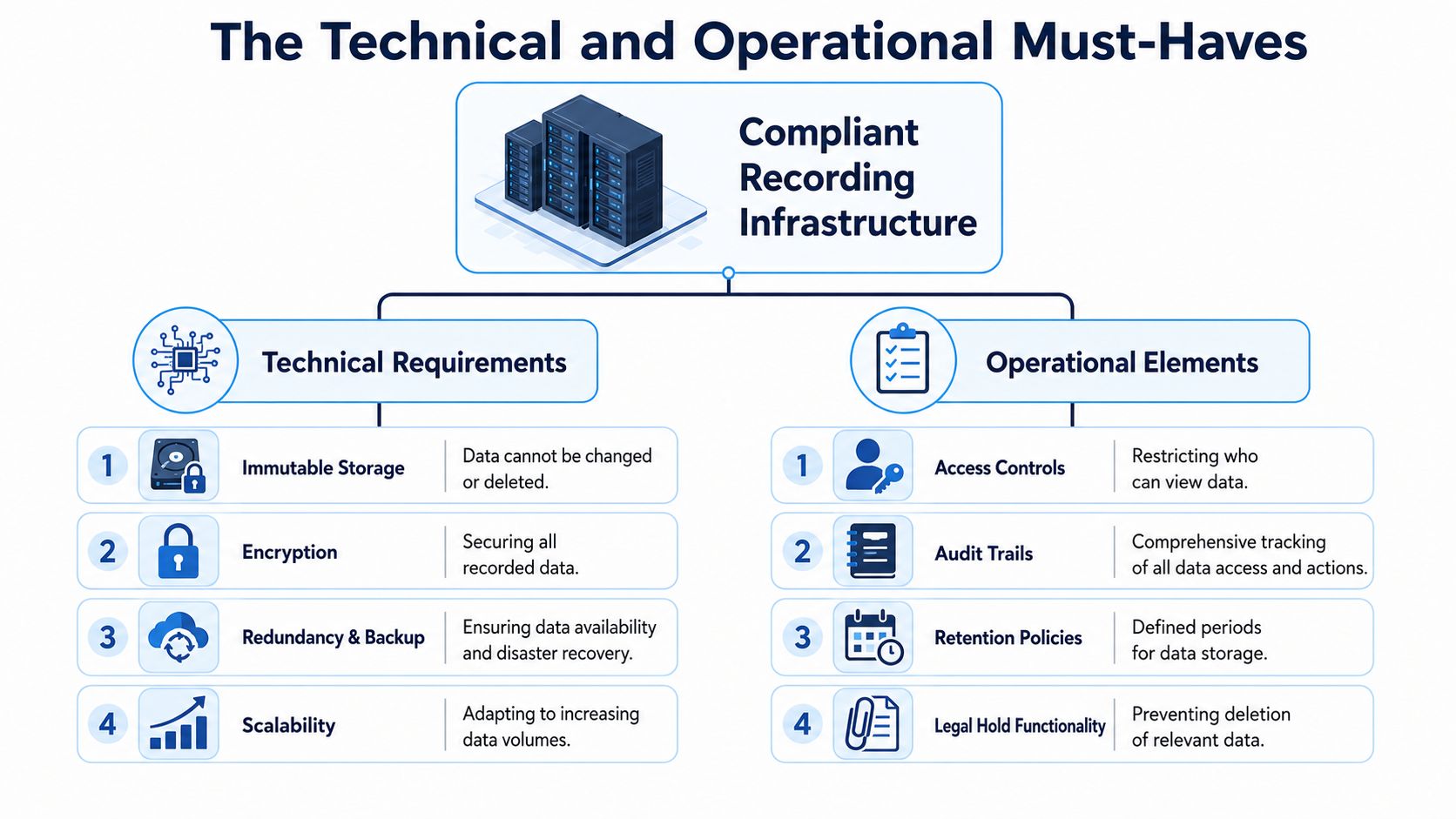
Technical controls that actually matter
Not every feature on a vendor checklist is equally important. Start with the controls that affect defensibility.
- Immutable or tamper-resistant preservation: If someone can replace or alter a file unnoticed, the record becomes harder to trust.
- Encryption in transit and at rest: Recorded content often contains sensitive data. Protection has to apply while it moves and while it sits in storage.
- Granular access control: Supervisors, compliance staff, HR, and legal rarely need the same permissions.
- Access and export logging: You need a trail showing who viewed, downloaded, or shared a record.
- Reliable retrieval: Search should work by metadata, participant, date, and where possible by content-linked context.
Teams dealing with camera or facility recordings often face similar retention and storage design questions. Securitec Security on CCTV storage is a useful cross-domain example of how storage planning, retention discipline, and access control need to work together, even though the media type is different.
Operations make or break the system
Technology alone won't save a weak process. Most failures happen because policies are vague or ownership is split across too many teams.
A workable operating model usually includes:
- A retention owner who translates legal obligations into actual system rules
- An access model that defines who can review, export, approve, and administer
- A request workflow for regulator inquiries, internal investigations, and legal hold
- Employee training so users understand what is automatically recorded and what isn't
Treat recordings as governed records, not as convenient files.
A lot of teams also need to decide how meeting artifacts fit together. If you're comparing what native platforms provide versus what your governance model requires, this overview of Microsoft Teams recordings helps clarify where standard meeting capture ends and record management concerns begin.
A simple design test
Ask your vendor or internal team to walk one sample recording through its full lifecycle.
| Lifecycle stage | What you should verify |
|---|---|
| Capture | Was recording triggered automatically under the right policy? |
| Storage | Where did the file land and under what protection controls? |
| Access | Who can open it, and how is that action logged? |
| Export | Who can move it out, and is that event recorded? |
| Retention | What rule governs expiry, hold, or disposal? |
If nobody can answer that end to end, the architecture isn't mature yet.
Your Implementation Plan and Common Pitfalls
A common failure pattern looks like this. A business unit turns on the record button in Teams or Zoom, assumes the requirement is covered, and only discovers the gap during an audit, an investigation, or a regulator request. At that point, the problem is not capture alone. It is whether the organization can prove what was recorded, what was not, who had access, and whether the record was kept under the right rule.
That is why implementation should start with operating decisions, then system design, then vendor configuration. Basic meeting recording creates files. Compliance recording creates governed records with policy, controls, retrieval, and evidence handling around them.
A rollout sequence that holds up under scrutiny
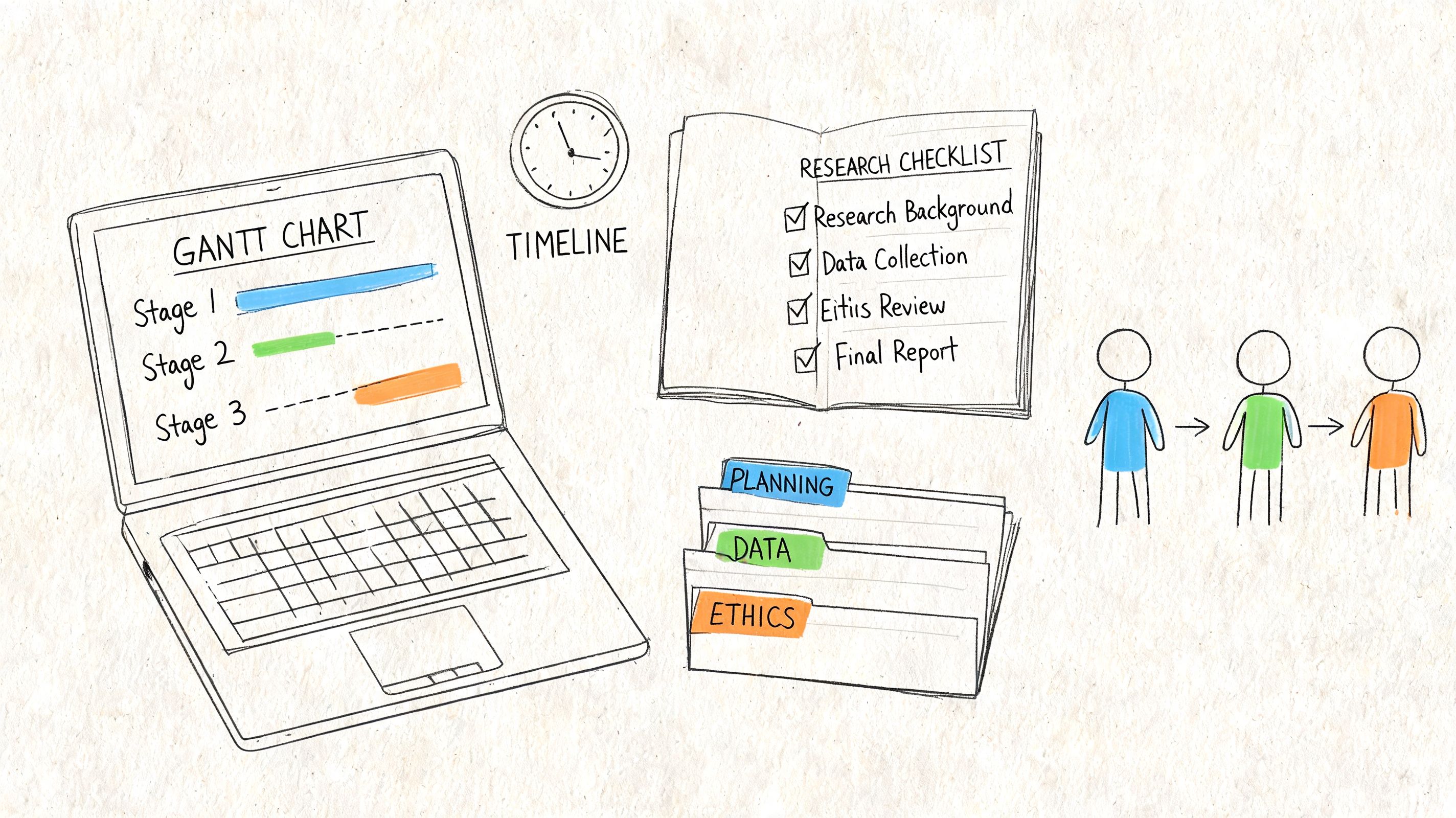
Begin with a use-case map, not a platform demo. Identify the communications that create regulatory exposure, then tie each one to a business process, a user group, and a channel. Front-office advice calls, trade-related conversations, complaints handling, claims intake, regulated support interactions, and internal escalations often need different treatment.
Next, define what "complete capture" means for each case. In some environments, audio is enough. In others, the evidentiary record also includes video, chat, screen sharing, shared content, and metadata such as timestamps, participants, and policy triggers. This is where many teams overestimate what native recording covers.
Then test the target platform against actual controls:
- Automatic policy-based capture. Recording starts because the rule applies, not because a user remembered.
- Preservation you can defend. The record must remain intact and traceable.
- Retention by obligation. Different record classes need different retention periods, holds, and disposal rules.
- Logged access and export. Reviews, downloads, and handoffs need an audit trail.
- Regional handling controls. Storage location, notice requirements, and privacy constraints must match where you operate.
Procurement teams often ask whether the platform can record. The better question is whether the platform can support your control model without custom workarounds that staff will bypass in six months.
The biggest implementation mistake
The most expensive mistake is treating built-in meeting recording as if it were compliance recording.
Native recording features are useful for collaboration, playback, and note-taking. They are often not designed to meet policy-driven capture requirements, preserve a full evidentiary record across channels, or enforce retention and access controls in a way that stands up to regulatory review. That boundary matters. A company can have recordings and still fail compliance because the wrong conversations were missed, the artifacts were incomplete, or the chain of custody was weak.
Independent guidance on Teams compliance recording makes this distinction clearly in its explanation of why built-in Teams recording falls short for compliance.
Where transcripts and summaries actually help
Searchability has real operational value. Investigators need to find specific statements quickly. Supervisors need to review interactions at scale. QA teams need patterns, not just raw files.
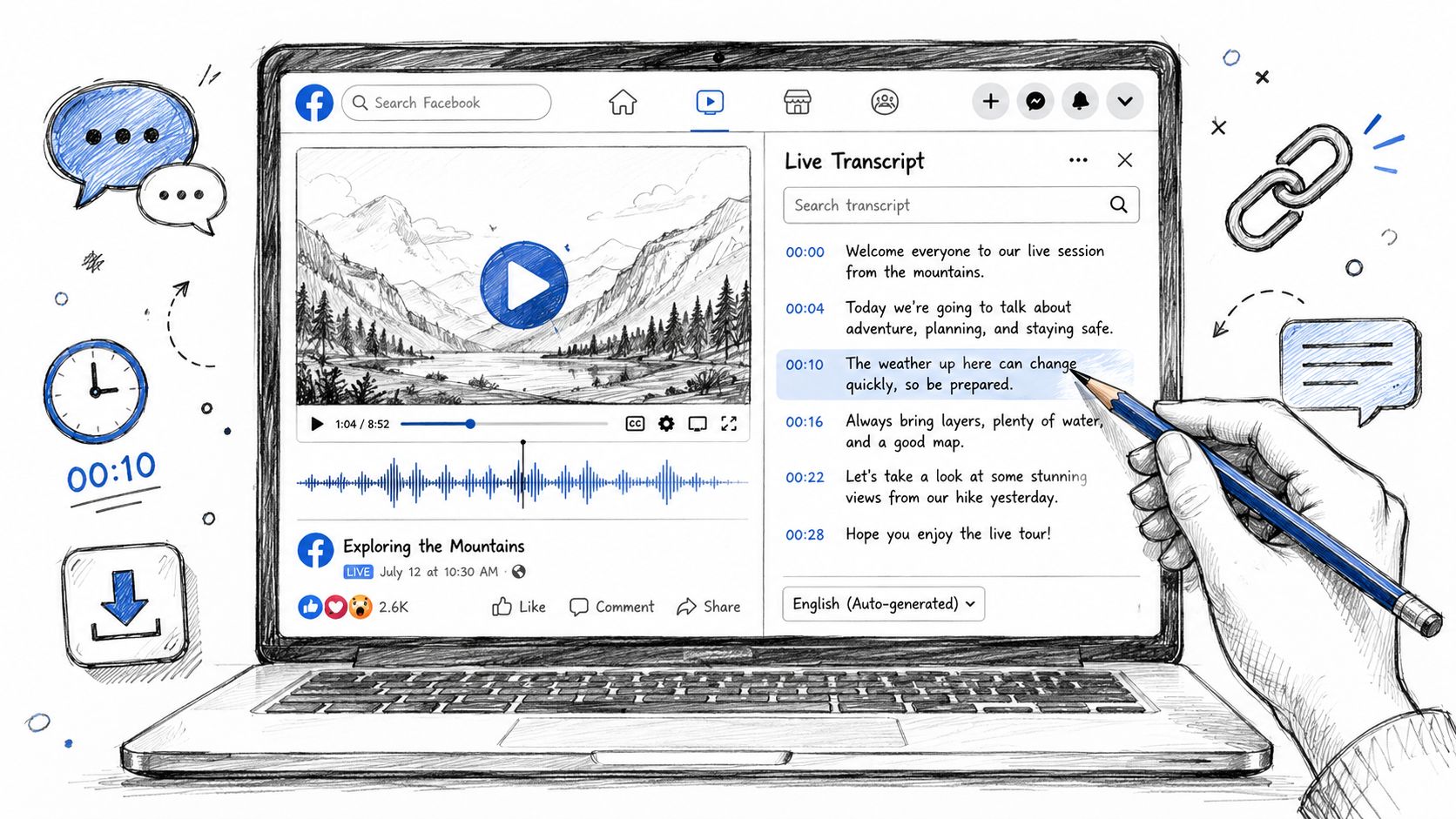
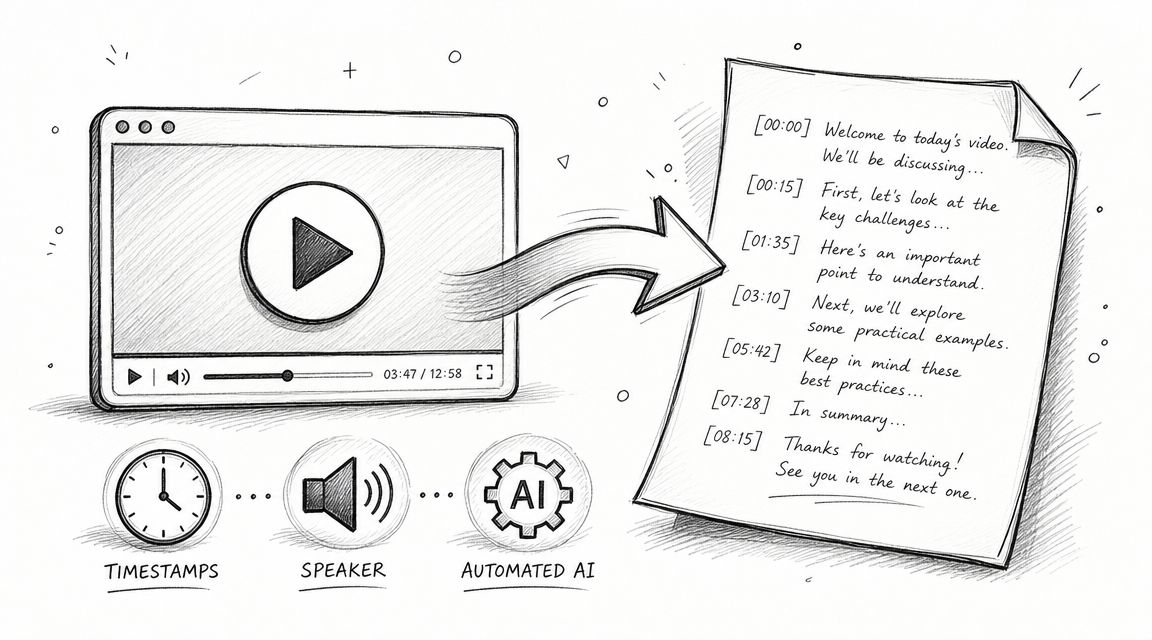
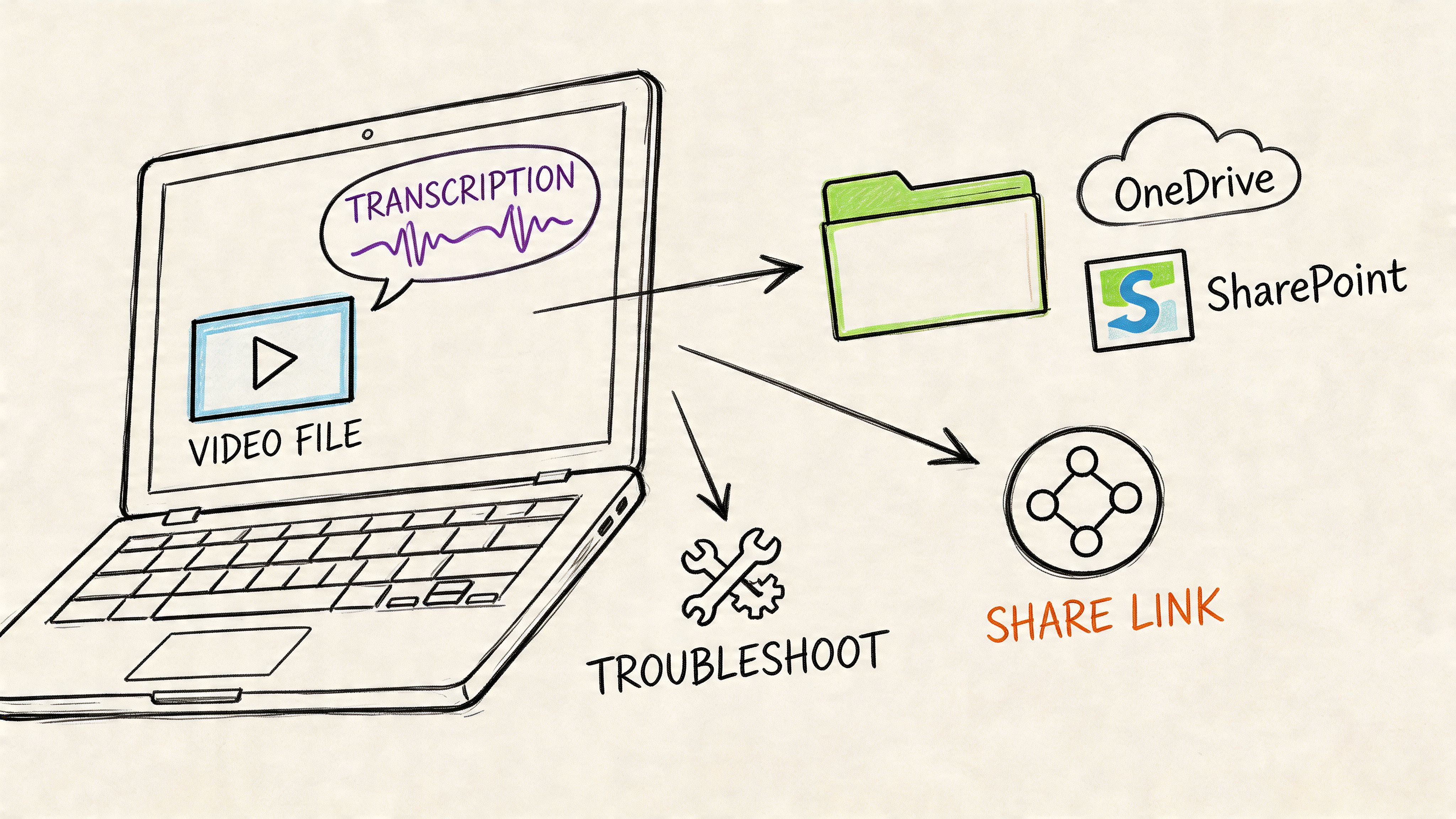
HypeScribe can turn recordings into searchable transcripts, summaries, and action items, which helps review and documentation workflows. In a compliance program, those outputs should sit under the same governance model as the source recording. Teams need to decide where they are stored, who can view them, whether they inherit the same retention rule, and how they link back to the original record.
There is also a practical trade-off here. Transcripts speed up review, but they can create a false sense of completeness if staff start relying on summaries instead of the original source. Use them to find and organize evidence, not to replace it.
If recordings also support coaching or supervision, this call center quality assurance guide is useful for separating operational review from the tighter controls required for regulated recordkeeping.
Don't ask whether a platform can record. Ask whether your organization can defend the record it creates.
Common pitfalls to catch before go-live
- Scoping by department instead of business activity. Regulated conversations often happen outside the obvious teams.
- Relying on manual start and stop behavior. Users forget, make exceptions, or choose convenience.
- Capturing only one channel. Audio without chat, screen content, or metadata can leave a record incomplete.
- Leaving retention at the platform default. Vendor settings rarely match your legal schedule.
- Skipping retrieval tests. A recording that exists but cannot be found quickly is still a control failure.
- Treating transcripts as the official record. The source recording remains the primary evidence.
A lean implementation checklist still helps, but only if it is tied to real testing:
- Define in-scope communications. Base scope on regulated activity, not meeting labels.
- Set recording triggers and exception rules. Remove guesswork from the user.
- Assign permission tiers. Separate admin, supervisor, legal, and investigator access.
- Apply retention and hold rules before rollout. Do not leave disposal behavior unresolved.
- Run audit-style retrieval exercises. Test urgent requests, partial searches, and export logging.
The teams that succeed usually do fewer things at once. They choose a narrow scope, prove the controls work end to end, then expand. That approach catches the gap between ordinary meeting recording and actual compliance recording before the regulator does.
Frequently Asked Questions About Compliance Recording
Do internal-only meetings need to be recorded for compliance
Sometimes yes, sometimes no. The deciding factor is usually the nature of the communication, not whether the meeting was internal. If internal discussions shape regulated advice, transaction handling, supervision, or incident response, they may fall inside your control framework. Don't use “internal” as a shortcut for “out of scope.”
How should we handle consent notifications for international calls
Use a consistent disclosure process at the start of the interaction and make sure your policy reflects the strictest jurisdiction you operate in where appropriate. In practice, teams usually need a combination of system prompts, user training, and documented procedures for exceptions. The risky approach is assuming one country's standard applies everywhere.
Can AI summaries and action items be part of the compliance record
They can be part of the broader record set, but they shouldn't replace the original source recording. Summaries are interpretive artifacts. The source audio, video, chat, or meeting capture remains the primary record. If you keep AI-generated outputs, link them to the original item, control access to them, and make their status clear so nobody treats a summary as the authoritative source.
What is the difference between legal hold and standard retention
Standard retention defines how long a category of recording should normally be kept and when it should be disposed of. Legal hold pauses that normal lifecycle because a matter, investigation, or dispute requires preservation. If your team can't suspend deletion cleanly for selected records, your retention program is incomplete.
Is native meeting-app recording ever enough
For ordinary collaboration, often yes. For regulated environments, often no. The missing pieces are usually policy-driven capture, broad channel coverage, immutable preservation, and detailed auditability. The answer depends on your obligations, not on whether the record button exists.
Who should own compliance recording internally
It should never sit with one function alone. Compliance or legal usually defines obligations. IT and security implement technical controls. Operations and business leaders define real workflows. The best setups have a clear system owner, but they don't let that owner work in isolation.
If your team needs searchable transcripts, meeting summaries, and structured follow-up from recorded conversations, HypeScribe is one option to evaluate alongside your recording and governance stack. It's useful for turning spoken content into organized text, but its full potential comes when you connect that output to a clear compliance process for consent, access, retention, and retrieval.