Your Skip Level Meeting Questionnaire: 8 Best Templates

You book a skip-level because you want signal. Then the meeting opens with a broad question, the employee gives the safe version, and you leave with notes that are too vague to use.
That failure usually starts with the questionnaire.
A skip level meeting questionnaire gives the conversation a job. It helps leaders test what employees are experiencing, keeps the discussion away from status reporting, and gives you a format you can repeat across teams without turning every meeting into a script. Pyn recommends keeping skip-level questions short and focused, with 3 to 5 questions total. That lines up with what works in practice. Once the list gets too long, people start performing instead of answering.
Scope matters just as much as question quality. Guidance from Lattice on skip-level meetings makes the same point many HR leaders learn the hard way: a shorter meeting should stay close to the employee's day-to-day experience, while a longer session can cover growth, leadership communication, and culture. The trade-off is simple. Breadth gives you context. Focus gives you candor.
That is why this article goes beyond a generic list of prompts. The eight frameworks below are built for different jobs: measuring engagement, testing psychological safety, spotting manager blind spots, checking culture signals, and getting sharper 360-style input. They also help you choose the right format for the moment instead of forcing one questionnaire into every skip level.
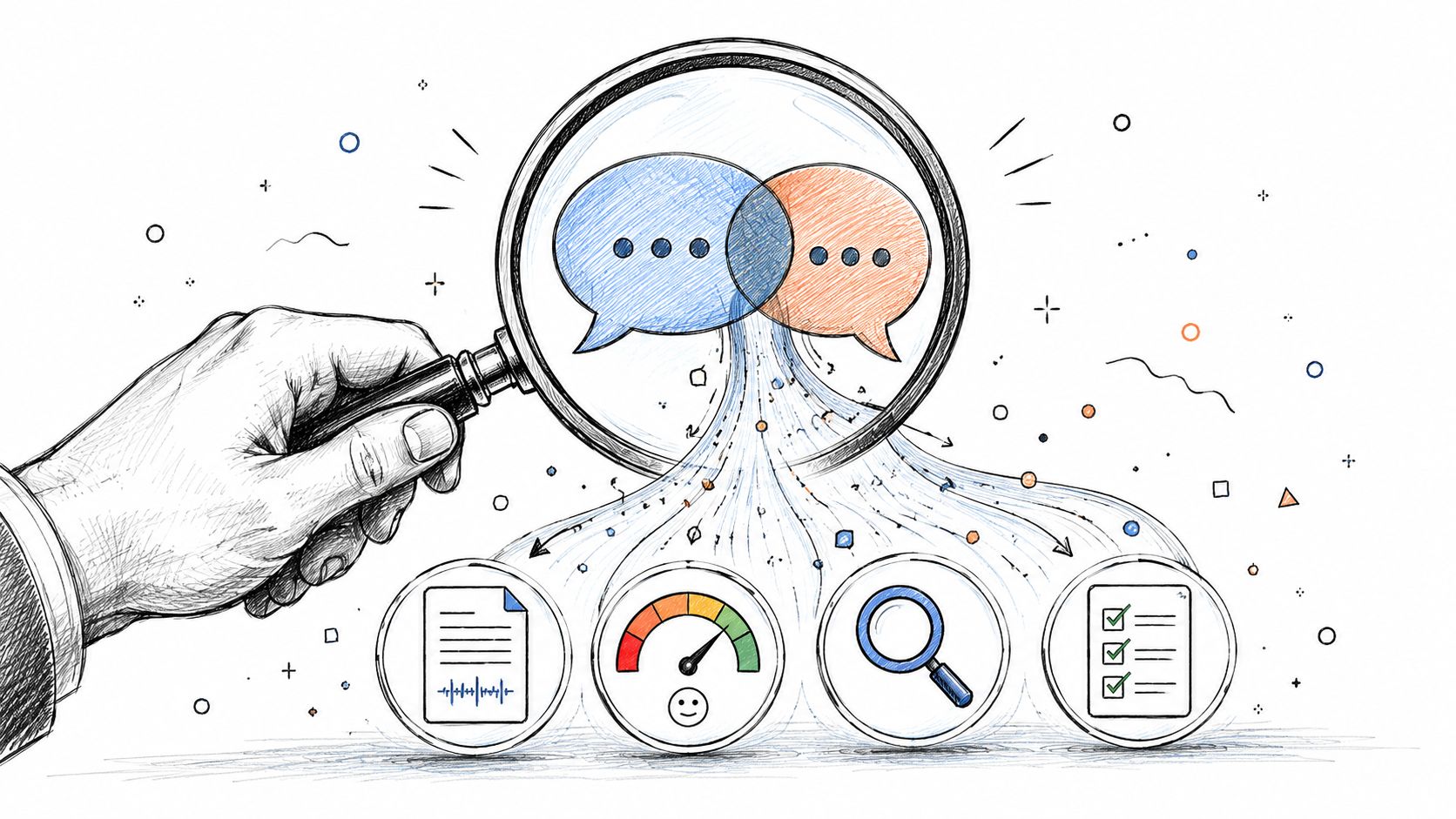
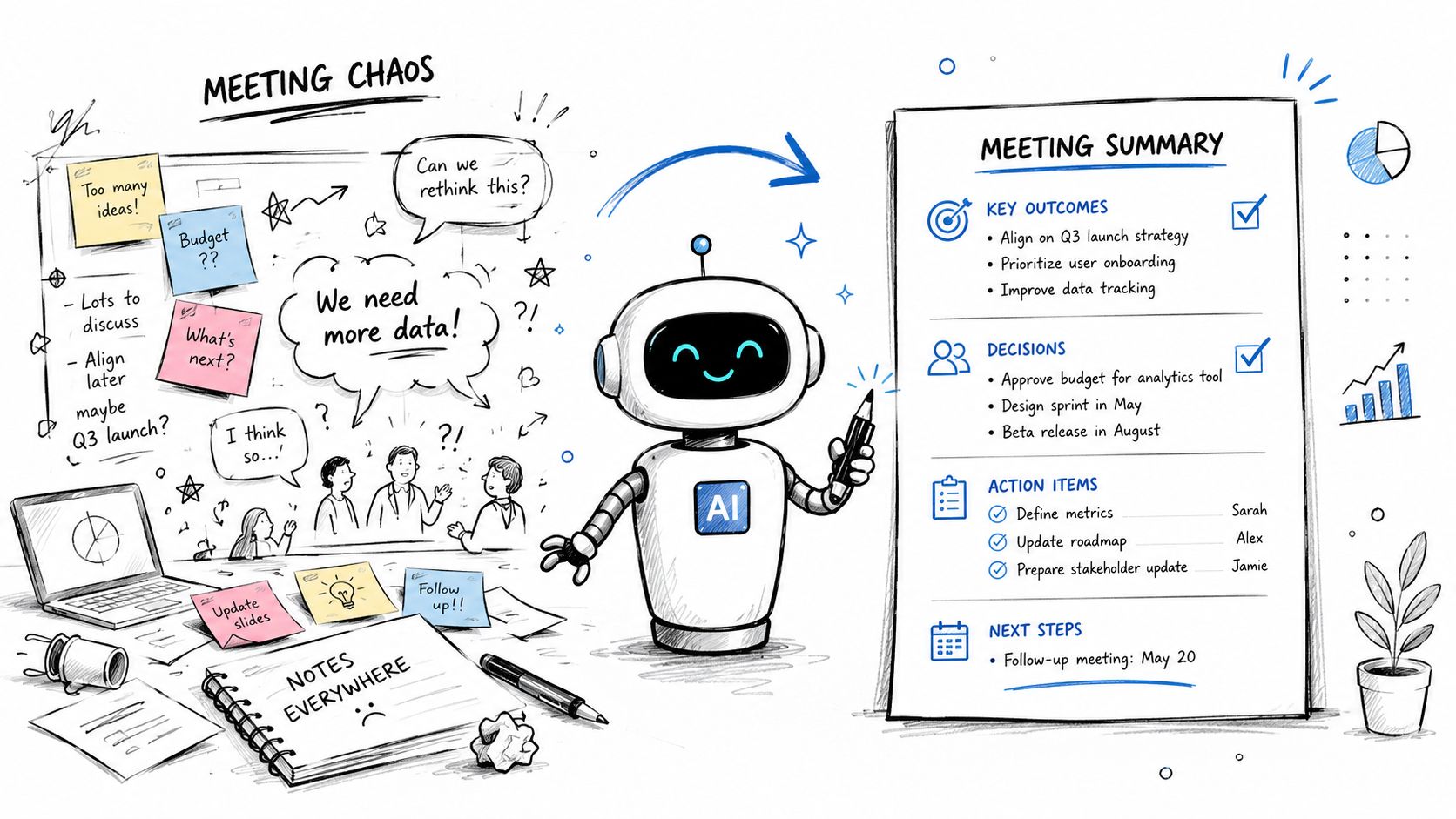
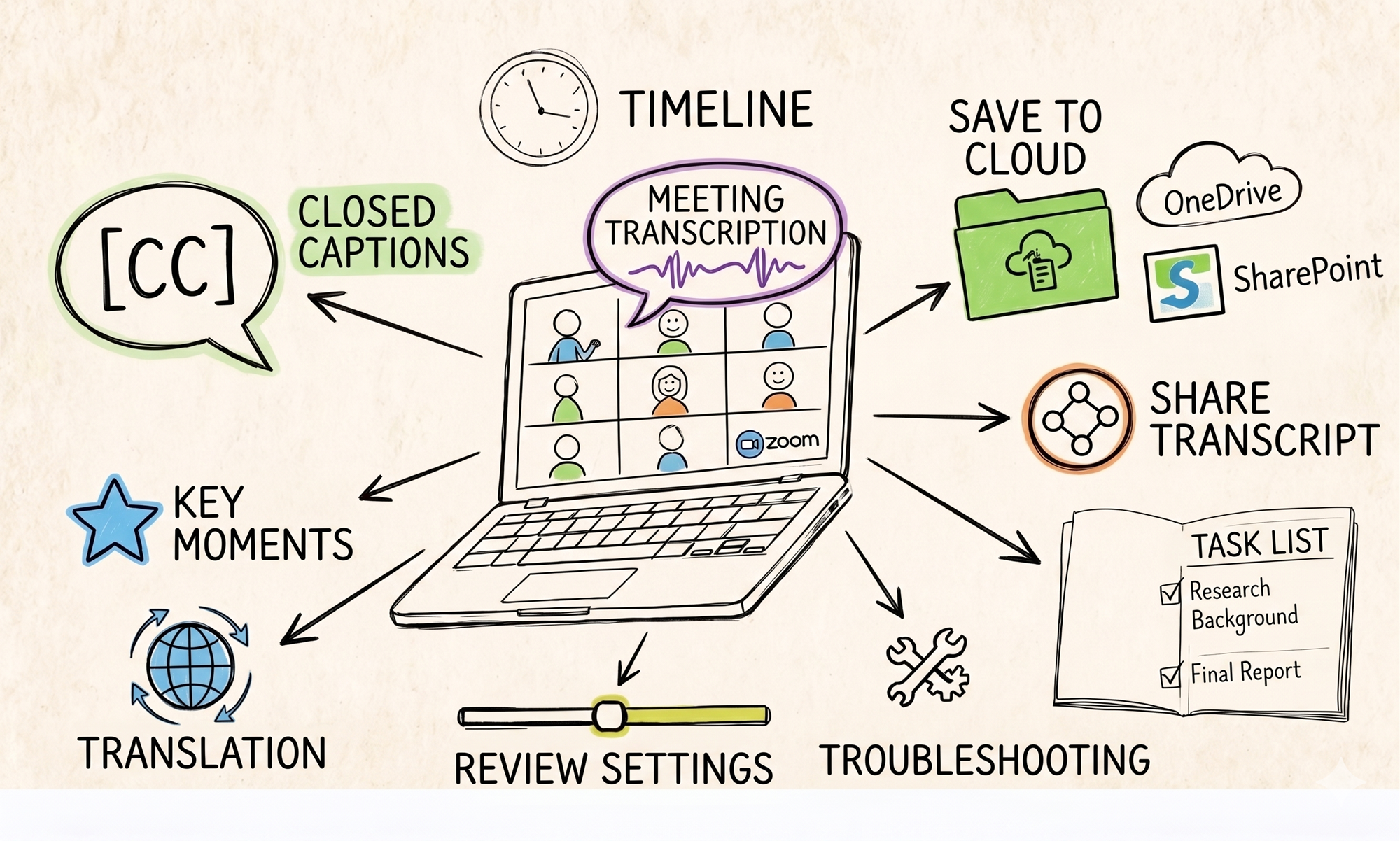
Execution matters after the meeting too. Good notes are what separate a useful conversation from a forgotten one. A simple system for capturing meeting notes and action items makes patterns easier to review across skip levels, especially when you want to compare themes by manager, team, or function.
These are the templates I'd use. Each one comes from a proven framework, and each works best under different conditions. Used well, they give leaders a repeatable way to hear what is really happening, document it clearly, and act before small issues turn into team-wide trust problems.
1. Gallup Q12 Skip Level Meeting Questionnaire
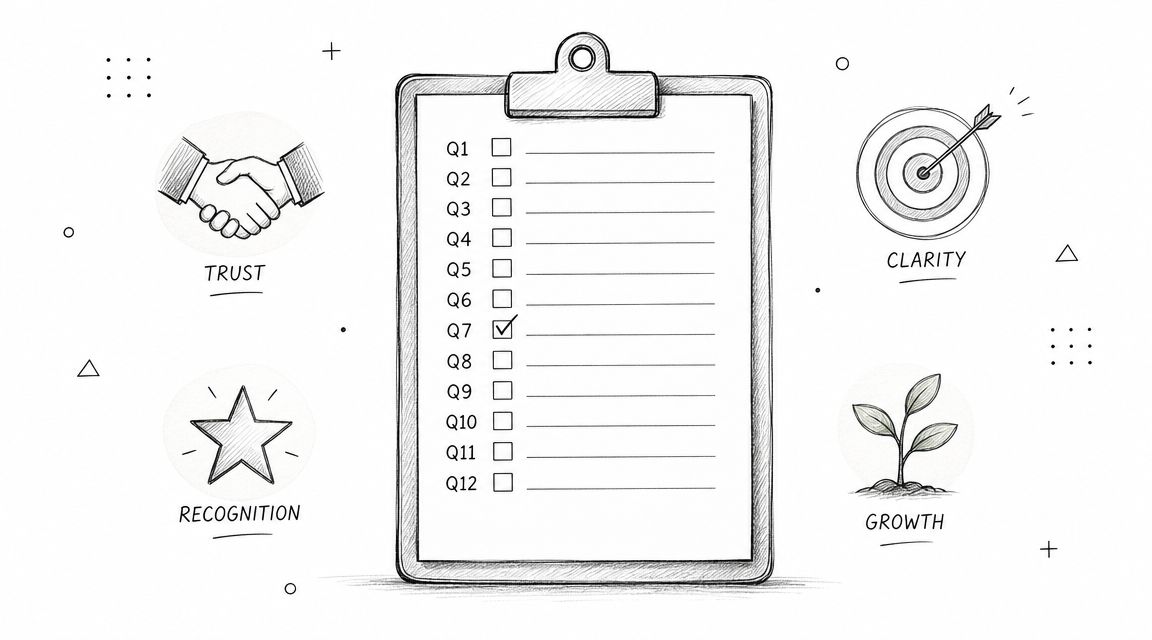
If you want a skip-level format that feels familiar and disciplined, start here. The Gallup-style approach works because it focuses on engagement signals leaders can influence: clarity, recognition, support, growth, and whether work feels meaningful.
That makes it a strong fit when you need more than anecdotal comments. You're not just asking whether people are happy. You're testing whether the basics of good management are showing up consistently across teams.
Best way to use it
Don't try to ask all twelve survey-style prompts in a live conversation. That's where leaders go wrong. A skip level meeting questionnaire works better when you adapt the framework into a small set of open-ended questions tied to the same themes.
Use prompts like these:
- Clarity: “Where do expectations feel clear, and where do they get fuzzy?”
- Recognition: “When good work happens on your team, how is it usually recognized?”
- Support: “What kind of support from your manager helps you do your best work?”
- Growth: “Do you feel you're developing in the direction you want?”
A practical guide from Read.ai recommends keeping skip-level sessions short, open-ended, and tightly scoped to 4 to 6 questions in 30 to 45 minute sessions. That fits this model well. Pick one engagement theme that matters most right now and go deeper there.
Template and email invite
Use this when you want consistency across multiple interviews.
Meeting template
- Opening: “I'm here to understand your day-to-day experience, what helps, and what gets in the way.”
- Question 1: “What part of your work feels most clear right now?”
- Question 2: “Where do you need more direction or context?”
- Question 3: “What kind of recognition feels meaningful to you?”
- Question 4: “What would help you grow faster in your role?”
- Close: “What's the most important thing you want me to remember from this conversation?”
Sample invite
Hi [Name], I'm scheduling a short skip-level conversation to better understand your experience, what's working well, and where leadership can remove friction. This isn't a performance review. I'll keep the discussion focused and confidential within appropriate leadership follow-up.
For documentation, I'd pair this with a transcript and summary workflow. Tools that create meeting notes and action items help because engagement feedback often sounds repetitive until you can compare patterns side by side.
2. Radical Candor Skip Level Framework
Some skip-level meetings fail because employees don't trust that honesty is safe. Others fail because the leader asks soft questions and gets soft answers. A Radical Candor lens helps balance both problems. You're looking for evidence that managers care personally and challenge directly, without forcing employees into a complaint session.
This framework is especially useful when a team feels polite on the surface but underperforms in feedback, accountability, or coaching.
What to ask instead of direct criticism
Avoid “What's your manager doing wrong?” That puts the employee in a corner. Better practice is to ask about behaviors and conditions.
Try this set:
- Care: “When you need support, what does your manager do that helps?”
- Challenge: “How do you usually receive tough feedback on this team?”
- Clarity: “When priorities shift, how clearly does that get communicated?”
- Candor: “Are there topics people hesitate to bring up? If so, what makes them hard to raise?”
- Development: “What kind of coaching would help you most right now?”
Practical rule: Ask for examples of moments, not verdicts on personalities.
That one change produces better data. Employees can describe what happened without feeling like they're betraying someone.
A lot of teams also need help making sense of open-text responses after these conversations. A workflow for analyzing qualitative data is useful when you're trying to separate one-off tension from a recurring leadership pattern.
Here's a useful training clip to reinforce the philosophy behind this style of feedback:
Sample invite and trade-off
Sample invite
Hi [Name], I'm holding a few skip-level conversations to understand how support, feedback, and communication are showing up in the day-to-day work. I'm not looking for a rating of your manager. I'm looking for patterns we can improve as leaders.
The trade-off is simple. This framework gives you richer insight into management quality, but only if you listen without defending anyone. The minute a senior leader explains away a concern, the rest of the meeting becomes theater.
3. Pulse Survey Skip Level Questionnaire
When things are changing quickly, an annual or occasional skip-level rhythm is too slow. Pulse-style questionnaires work better when you need a fast read on workload, morale, communication, or the impact of a recent decision.
This is the leanest format in the set. It's built for speed, but it still has to be disciplined.
Keep it short on purpose
Public guidance on skip-level structure is consistent here. Pyn says to stay within a very small number of questions, and that's exactly why pulse formats work. You can ask a few questions, get direct answers, and spot movement over time without exhausting people.
Use a rotating set like this:
- Workload: “What feels heavier than it should right now?”
- Communication: “What update or decision hasn't been clear enough?”
- Tools and process: “What is slowing the team down this week?”
- Leadership response: “What's one thing leadership could fix quickly?”
- Morale: “What's keeping energy up, or dragging it down?”
Simple pulse template
This version works well for recurring check-ins.
30-minute pulse agenda
- First minutes: Reconfirm purpose and confidentiality.
- Middle: Ask only the few questions tied to the current issue.
- Close: Summarize back the themes and identify what you'll review next.
A useful operating rhythm comes from The Management Center, which recommends doing skip-levels twice a year with each person, or quarterly if the organization is small enough, and blocking 15 minutes after each meeting to synthesize themes and next steps. Even if you use pulse-style conversations more informally during change, that discipline matters. The meeting itself is only half the job.
If you can't review notes and decide on follow-up right after the meeting, you're collecting feedback faster than you can use it.
The trade-off is depth. Pulse questionnaires are good at detecting movement and friction. They're not great for career conversations or nuanced leadership coaching. Use them when timing matters more than breadth.
4. Culture Amp Skip Level Assessment
Some organizations already run engagement or culture surveys and want skip-level meetings to add context rather than create another separate system. That's where a Culture Amp-style approach helps. You use survey categories to shape the conversation, then let the interview explain the pattern behind the scores or comments.
This is a strong option for distributed teams because it keeps the language consistent across functions. One group might be talking about recognition. Another might be talking about role clarity. A common framework makes those differences easier to compare.
Good prompts for survey-led skip levels
Pull a theme from your engagement data and ask only a few supporting questions.
For example:
- If recognition looks weak: “What kind of work tends to get noticed here, and what gets missed?”
- If alignment feels low: “Where do company priorities connect clearly to your work, and where do they not?”
- If growth is a concern: “What development conversations are you having now, and what's missing?”
- If collaboration is strained: “Where does teamwork break down between groups?”
The win here is context. A dashboard can tell you that a topic is hot. It can't tell you whether the problem is unclear expectations, a manager habit, conflicting incentives, or simple overload.
What works and what doesn't
What works is using the survey to narrow the interview. What doesn't work is asking employees to explain every weak result in one meeting.
I'd also be careful about over-relying on scoring language in live conversations. Employees open up more when you ask, “What does that look like in practice?” than when you ask them to defend a number they selected in a survey.
A good skip level meeting questionnaire in this model behaves like a follow-up interview guide, not a duplicate survey. That's the difference between collecting more data and understanding the data you already have.
5. Amazon Leadership Principles Skip Level Questionnaire
If your company has explicit values, use them. Don't let them sit on a careers page while your skip-level meetings drift into generic culture talk. A principles-based questionnaire lets you test whether leaders are living the values they claim to manage by.
The Amazon-style version works well in scaling organizations, especially when leaders want shared language around ownership, trust, judgment, speed, customer focus, or learning.
Build the questions around behavior
Employees usually struggle to answer broad values questions. They can answer behavioral ones.
Try prompts like these:
- Ownership: “When a problem falls between teams, who tends to take responsibility?”
- Earn Trust: “What does trust look like from leadership on this team?”
- Bias for Action: “Where do decisions move quickly, and where do they stall?”
- Learn and Be Curious: “How safe is it to ask questions or challenge assumptions here?”
- Customer focus: “How often do day-to-day decisions connect back to customer impact?”
This format is useful because values become observable. You're not asking whether a manager “has ownership.” You're asking how ownership shows up when work gets messy.
Sample email and practical use case
Sample invite
Hi [Name], I'm meeting with a few team members to understand how our leadership principles show up in daily work. I'm interested in real examples of what helps the team move well and what creates drag.
This is especially effective after a reorg, during rapid hiring, or when a leadership team says culture matters but employees experience something different. The trade-off is that values-based questionnaires can sound performative if leaders never act on what they hear. If trust is weak, start with day-to-day work questions and bring principles in through examples rather than slogans.
6. Psychological Safety Skip Level Scale
This is the framework I reach for when a team has become quiet. People stop challenging bad ideas. Problems surface late. Meetings feel smooth, but execution feels brittle. Those are usually signs that employees don't feel safe taking interpersonal risks.
Psychological safety belongs in skip-level work because these conversations often surface issues that normal reporting lines miss. BetterMeets highlights an important risk here. Leaders should avoid asking employees to directly critique their manager, should align with the direct manager first, and should keep an early skip-level focused on a small set of trust-building questions, which points to safety as the core design problem rather than question quality alone (BetterMeets guidance on safe skip-level design).

Questions that surface safety without creating danger
Ask about team conditions, not individual blame.
- Speaking up: “How easy is it to raise a concern when you disagree?”
- Mistakes: “What usually happens here when someone gets something wrong?”
- Help-seeking: “How comfortable do people feel asking for help?”
- Inclusion in decisions: “Whose perspective gets invited in early, and whose comes in late?”
- Challenge: “Where do people hold back instead of saying what they think?”
Some of the most important answers in a skip-level meeting are the ones people hesitate before giving.
That's why listening technique matters as much as the questionnaire. Leaders who want better answers need strong active listening in communication, especially when the topic is risk, conflict, or trust.
The operational rule most teams miss
You need an escalation rule before you ask the questions. If someone raises a serious management issue, don't improvise. Explain confidentiality boundaries in plain language, separate coaching issues from formal misconduct concerns, and be explicit about what you can and can't keep private.
Often, many skip-level programs break. They gather sensitive feedback with no protocol for what happens next.
7. 360-Degree Feedback Skip Level Model
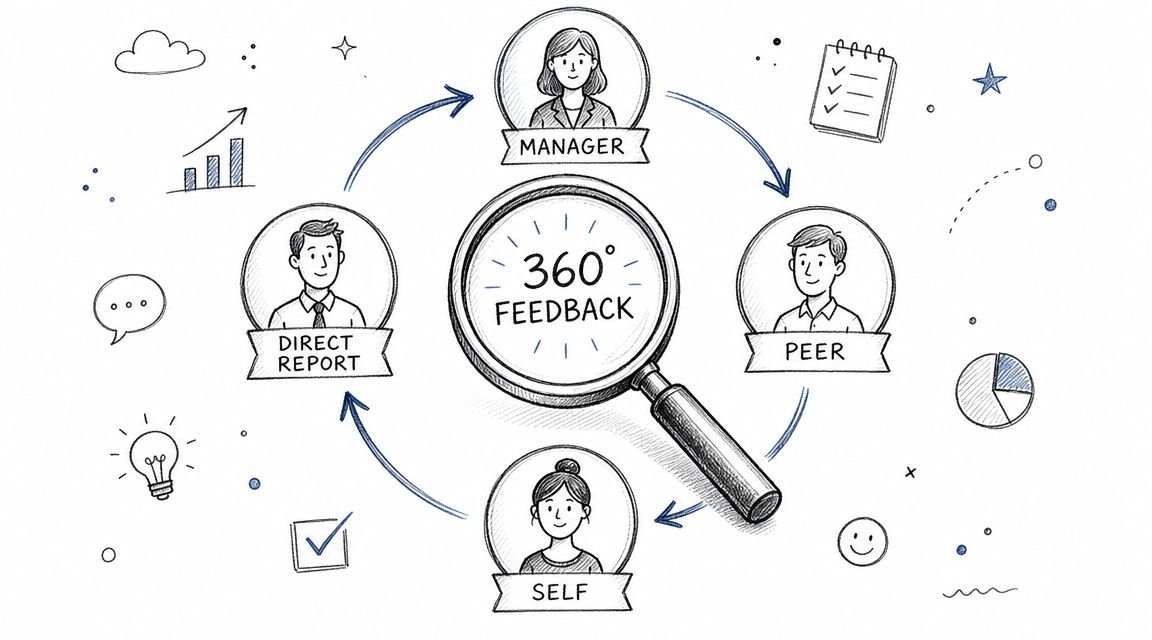
A skip-level interview gets sharper when it's one input in a broader leadership picture. The 360 model combines what a manager says about themselves, what peers say, what direct reports say, and what skip-level conversations reveal.
That matters because one perspective can mislead you. A manager may look strong upward and weak downward. Or the opposite. A 360 process helps you spot those gaps.
Better prompts for the skip-level portion
Keep the skip-level slice focused on observed leadership effects.
- Direction: “How clearly are priorities translated into your team's work?”
- Support: “What does your manager do that helps the team succeed?”
- Coordination: “Where does cross-functional work get easier or harder because of leadership?”
- Growth: “How well does your manager create opportunities for development?”
- Consistency: “What leadership behavior can you rely on, and where do you see inconsistency?”
These questions work because they can be triangulated. If peers, direct reports, and skip-level interviews all point to the same issue, coaching becomes more specific and more credible.
When to use this model
Use it for senior managers, succession planning, or development plans that need more than intuition. Don't use it for every people manager just because the framework exists. It takes real time to synthesize well, and shallow 360s do more harm than good.
A practical way to think about this model is that the skip-level meeting questionnaire supplies texture. The rest of the 360 process provides balance. Together they help you coach without overreacting to one emotionally charged conversation.
8. Peer Culture and Inclusion Skip Level Questionnaire
Some of the most useful skip-level conversations aren't about individual managers at all. They're about whether the team environment feels fair, respectful, and inclusive in practice. This questionnaire works when you need to understand whether belonging is distributed evenly or only experienced by the most established voices in the room.
It's also the framework where poor design creates the biggest trust risk. If you ask inclusion questions casually and then route specifics back through the same power structure that caused the problem, employees will notice.
Ask about patterns, not identity disclosure
A strong inclusion-focused skip level meeting questionnaire sounds like this:
- Belonging: “When do people feel most included on this team?”
- Voice: “Whose ideas tend to get traction quickly?”
- Fairness: “Where do processes feel consistent, and where do they feel uneven?”
- Participation: “Are there settings where some people hold back more than others?”
- Leadership response: “What helps people feel respected when they disagree?”
This framework is especially useful after growth, mergers, leadership changes, or complaints about inconsistent treatment that haven't reached formal investigation threshold.
Practical caution and follow-through
Leaders need training before they run these conversations. Inclusion feedback often arrives as a pattern of smaller signals, not a single dramatic incident. If you treat every answer as either harmless or a formal case, you'll miss the middle ground where culture work takes place.
Use aggregated themes for culture repair. Route specific misconduct concerns through the right process. Keep those two lanes separate.
For leaders who also run broader leadership review programs, these 360 assessment insights for HR leaders can complement inclusion-focused skip-level work by helping frame development feedback more systematically.
8-Point Skip-Level Questionnaire Comparison
No single template fits every skip-level. The right choice depends on what decision you need to make afterward, how much manager maturity you have, and whether you need a quick read on team conditions or a deeper diagnostic.
Use this comparison the way an HR team would use a playbook. Match the framework to the problem, then decide how much structure, facilitation, and follow-through your organization can realistically support.
Gallup Q12 Skip Level Meeting Questionnaire
- Best for: measuring engagement with a familiar, standardized question set
- Implementation load: moderate
- Resourcing: low to moderate
- What it gives you: trend tracking, manager comparison, and a clear engagement baseline
- Trade-off: strong for consistency, weaker for context-specific issues unless you add follow-up questions
- Use it if: you want a repeatable operating metric across teams and business units
Radical Candor Skip Level Framework
- Best for: manager coaching and feedback culture
- Implementation load: moderate
- Resourcing: low to moderate
- What it gives you: clearer signal on whether managers challenge directly and show care in practice
- Trade-off: works well only if leaders can hear criticism without getting defensive
- Use it if: your goal is to improve management quality, not just measure sentiment
Pulse Survey Skip Level Questionnaire
- Best for: fast cycles during change, growth, or reorganization
- Implementation load: low
- Resourcing: low
- What it gives you: quick directional feedback and early warning signs
- Trade-off: speed helps, but shorter pulse formats can miss nuance and root cause
- Use it if: you need frequent check-ins and can act on small signals quickly
Culture Amp Skip Level Assessment
- Best for: larger organizations that need segmented analysis and platform support
- Implementation load: high
- Resourcing: high
- What it gives you: stronger analytics, benchmarking, and action-planning workflows
- Trade-off: useful depth comes with setup time, cost, and the need for people who can interpret the outputs well
- Use it if: you already run structured people analytics and want skip-level feedback inside that system
Amazon Leadership Principles Skip Level Questionnaire
- Best for: companies that already manage through a defined leadership model
- Implementation load: moderate
- Resourcing: moderate
- What it gives you: feedback tied directly to expected leadership behaviors
- Trade-off: the framework is only as good as the quality of your behavioral examples and leader calibration
- Use it if: your organization wants skip-level conversations to reinforce strategy and operating norms
Psychological Safety Skip Level Scale
- Best for: teams where speaking up, error reporting, and learning speed matter
- Implementation load: low
- Resourcing: low
- What it gives you: a clean read on whether employees feel safe raising concerns or taking interpersonal risk
- Trade-off: it identifies climate issues well, but it does not tell you by itself which management behavior caused them
- Use it if: innovation, quality, or cross-functional execution depends on open discussion
360-Degree Feedback Skip Level Model
- Best for: leadership development, succession planning, and executive coaching
- Implementation load: high
- Resourcing: high
- What it gives you: multi-angle feedback that surfaces blind spots and development themes
- Trade-off: this model takes more coordination, stronger confidentiality controls, and better facilitation than a standard skip-level questionnaire
- Use it if: the goal is leader development with depth, not a lightweight team check-in
Peer Culture and Inclusion Skip Level Questionnaire
- Best for: identifying patterns around belonging, fairness, and team norms
- Implementation load: moderate to high
- Resourcing: moderate
- What it gives you: useful signals on inclusion friction, uneven treatment, and participation gaps
- Trade-off: the data is sensitive, so poor facilitation or weak follow-through can reduce trust quickly
- Use it if: you need to understand culture patterns that may not appear in standard engagement surveys
How to choose among the eight
If speed matters most, start with Pulse Survey or Psychological Safety.
If manager behavior is the main issue, use Radical Candor or 360-Degree Feedback, depending on whether you need a lighter coaching tool or a deeper development process.
If consistency across the company matters, Gallup Q12 gives you a common language. If your company already runs on a defined leadership model, Amazon Leadership Principles creates better alignment. If you need platform support and segmented reporting at scale, Culture Amp is often the better operational fit. If retention risk is tied to belonging and fairness, Peer Culture and Inclusion usually gives the sharper signal.
In practice, strong teams rarely stick to one framework forever. They use one as the base system, then layer in targeted questions, structured invites, and note capture. That is where a tool like HypeScribe helps. It gives HR teams a cleaner way to document patterns, compare themes across skip-level cycles, and turn conversations into actions leaders can track.
From Questions to Action: Making Your Skip Levels Count
The questionnaire is only the visible part of the system. What employees remember is what happened after they answered. If nothing changes, the next skip-level meeting will be shorter, safer, and far less honest.
That's why cadence and follow-through matter as much as question quality. The Management Center's recommendation to run these conversations regularly and leave space right afterward to synthesize themes captures the core operating discipline behind effective skip-levels. Leaders need a repeatable rhythm, a consistent question set, and a habit of turning qualitative feedback into management action, not just a folder full of notes.
In practice, I'd keep most skip-level conversations narrow. A shorter conversation should stay grounded in the employee's day-to-day experience. A longer one can widen into development, priorities, and culture. That approach matches established guidance and produces better signal because the employee doesn't have to sprint through every possible topic in one sitting.
The safest questionnaires are also the most useful. BetterMeets points out that skip-levels can create retaliation and trust risks if employees are pushed to critique their manager directly. That's the right warning. The strongest questionnaires ask about support, clarity, friction, collaboration, and what happens in real situations. They don't demand loyalty tests or invite gossip.
A tool like HypeScribe can fit well here if you need transcripts, searchable notes, summaries, and action items from these conversations. That's practical in skip-level programs because leaders often need to compare themes across multiple interviews, not just remember one conversation accurately. The value isn't automation for its own sake. The value is preserving nuance and making follow-up easier to manage.
The best results usually come from one simple sequence:
- Choose one framework: Match it to the problem you're trying to solve.
- Limit the agenda: Keep the questionnaire focused on a few themes.
- State confidentiality clearly: Explain the boundaries before the first question.
- Capture examples: Ask for moments and patterns, not ratings or accusations.
- Close the loop: Tell people what you heard and what you'll do next.
If you do that consistently, skip-level meetings stop being awkward executive rituals. They become one of the cleanest ways to understand how leadership lands on the ground.
For teams that also manage feedback systems in learning or training environments, this guide to effective course survey management is a useful companion read because the same follow-through principles apply.
If you want cleaner documentation from every skip-level meeting, try HypeScribe to record, transcribe, summarize, and organize the feedback into notes and action items your team can use.